


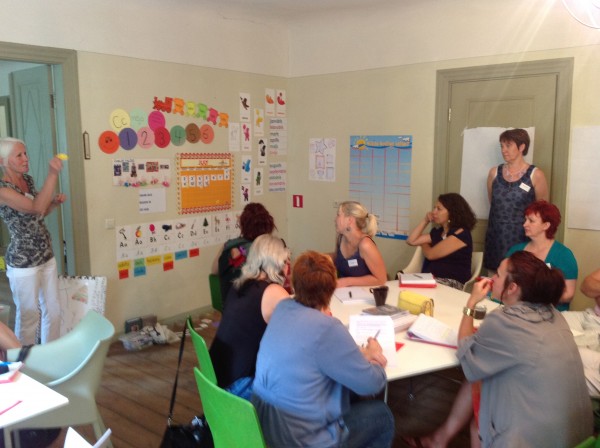
Skolotājas Baiba Jurjāne un Arita Lauka dalās pieredzē par metodiku. Foto: Daina Grosa.
Šī gada jūlija vidū, Latvijas vasaras siltumā, Rīgas pievārtē, Rāmavas muižā, trīs dienas notika Pasaules brīvo latviešu apvienības un Latviešu valodas aģentūras kopīgi rīkotie diasporas skolotāju profesionālās pilnveides kursi.
Tālo ceļu no 18 pasaules valstīm uz kursiem “Latviešu valodai un latviskai dvēselei” bija mērojuši vairāk nekā 45 latviešu valodas skolotāji: no ASV, Kanādas, Baškīrijas, Gruzijas, Lielbritānijas, Austrālijas, Ķīnas, Vācijas, Īrijas, Norvēģijas, Krasnojarskas Krievijā, Austrijas un daudzām citām zemēm.
Daļai no Eiropas valstīs dzīvojošiem skolotājiem ceļa izdevumus, ja arī ne pilnīgi, palīdzēja segt Eiropas Latviešu apvienība, izmantojot piesaistītos līdzekļus no Kultūras ministrijas programmas “Nevalstisko organizāciju atbalsts integrācijas jomā”. Taču lielākā daļa no skolotājiem savas lidojumu biļetes pirkuši paši. Ne visiem rocība atļauj daudz nedomājot izdot prāvo naudas summu. No personīgām sarunām uzzināju, cik grūti dažai skolotājai nācies sabalansēt savu ģimenes budžetu, it īpaši, ja mājās gaida viens vai vairāki bērni.
Te varētu būt jaunas iespējas, kā vecākās paaudzes latvieši, kuriem ir naudas uzkrājumi, var palīdzēt latviešu skoliņām, ar tām sadarbojoties, gūt ne tikai morālu gandarījumu, redzot latviešu bērnus ieaugam latvietībā, bet arī piedzīvojot draudzīgu tuvību ar savām tautas māsām, saskatot kopīgo mērķi – mūsu tautas nākotni.
Gadu desmitiem, cauri visiem trimdas gadiem, vērojama tendence, kas turpinās: ir darītāji un ir no malas vērotāji un kritizētāji. Varbūt tagad ir pienācis laiks mums visiem kopā saprast, ka latviešu tauta šobrīd atrodas uz izdzīvošanas sliekšņa, un mums jāsadodas rokās, lai balstot cits citu un stiprinot, darītu labāko, ko spējam mūsu nākamās paaudzes- latviešu bērnu labā.
Pirmā kursu diena informācijas bagāta
Tā kā oficiālie skolotāju kursu organizētāji bija Pasaules Brīvo Latviešu apvienība un Latviešu valodas aģentūra, tad arī uzrunas vārdus konferences atklāšanā teica gan PBLA Izglītības padomes priekšsēde un kursu vadītāja Daina Grosa, gan arī LVA direktora vietniece Dace Dalbiņa. Savā uzrunā Dalbiņa teica:”Latviešu valodas aģentūra sniedz un sniegs atbalstu diasporai, gādājot gan par mācību līdzekļiem, gan skolotāju izglītību. Kaut mūsdienās pasaule ikvienam kļuvusi plašāka un cilvēki brīvi izvēlas vietu, kur dzīvot un strādāt, mācīties un mīlēt, svarīga ir piederības sajūta Latvijai, un tā jākopj.” Noslēgumā viņa izteica novēlējumu: ”Lai būtu gandarījums latviskai dvēselei!” .
Uz kursu atklāšanu Rāmavas muižā bija ieradies arī Ārlietu ministrijas Speciālo uzdevumu vēstnieks diasporas jautājumos Rolands Lappuķe. Uzaugot Francijā, Lappuķe tikai ar 15 gadu vecumu sācis mācīties latviešu valodu. Līdz ar to viņš netieši norādīja uz to, ka arī tie latviešu bērni un jaunieši, kuri dzīvo ārpus Latvijas un līdz šim nav latviešu valodu mācījušies, jebkurā brīdī var sākt to darīt. Lappuķe ir dzīvs piemērs šādai labai gribai. Viņš novēlēja skolotājiem dot iespēju mazuļiem baudīt mūsu tautisko mantojumu.
Kultūras ministrijas Sabiedrības integrācijas departamenta direktore Ruta Klimkāne iepazīstināja kursu dalībniekus ar Nacionālās identitātes, pilsoniskās sabiedrības un integrācijas politikas pamatnostādnēm 2012. – 2018. gadam, ko sadarbībā ar ārvalstu latviešu organizācijām izdevusi Latvijas Kultūras ministrija.
Izglītības un zinātnes ministrijas Izglītības departamenta vecākā referente Olita Arkle atzina, ka nepieciešams veidot vienotu datu bāzi. Viņa izteica atzinību Latviešu Valodas aģentūrai, kura ar samērā mazu finansējumu paveikusi lielu darbu. Mājas lapā www.valoda.lv iespējams atrast bagātus materiālus latviešu valodas apguvei dažādās vecuma grupās.
Pārskatu par Latviešu valodas aģentūras izstrādātajiem materiāliem sniedza LVA parstāve Elita Pušpure. Viņa ieteica skolotājiem izmantot Izglītības ministrijas izveidoto mājas lapu www.skolas.lv, kā arī raksturoja tīmekļa vietas www.bilingvals.lv plašās izmantošanas iespējas.
Par modernajiem elektroniskajiem mācību līdzekļiem stāstīja Latvijas Universitātes Mākslīgā intelekta laboratorijas pārstāve Ilze Auziņa. Viņa skolotājus iepazīstināja ar pēdējo gadu laikā izstrādātajiem interaktīvajiem latviešu valodas mācību līdzekļiem, kas paredzēti valodas apguvei tīmeklī.
Turpinājumā LVA pārstāve Aija Otomere norādīja uz bez maksas pieejamajiem LVA izstrādātajiem jaunākajiem elektroniskajiem līdzekļiem latviešu valodas apguvei. Pavisam nesen atvērta vietne www.e-pupa.lv, pie kuras tapšanas strādājusi autoru grupa, radot šo unikālo lingvokulturoloģisko latviešu valodas vārdnīcu, ar kuru tagad var iepazīties jebkur pasaulē dzīvojošs latvietis vai latviešu valodas cienītājs un interesents.
Darbu pie šīs vārdnīcas iecerēts turpināt, bet tam nepieciešami līdzekļi, ko, cerams, kāds no lasītājiem, pieteiksies veicināt ar savu pienesumu. E-pupas nosaukums izvēlēts ar latviešu folkloras nozīmi – soli pa solim augt. Garīgā nozīmē mēs turpinām augt visu mūžu. Būsim līdzdalīgi latviskās pupas augšanā!
Otomere ieteica izmantot arī informatīvi izglītojošo portālu www.sazinastilts.lv, kurā ir bagāta informācija par Latviju 1000 vārdu apjomā, kuru var lietot angļi, vācieši, franči un krievi, mācoties latviešu valodu. Tur atrodamas arī intervijas ar Latvijā populāriem cilvēkiem.
Par drukāto materiālu Karuselis, kuru izdevusi Latviešu valodas aģentūra, pastāstīja Liene Valdmane. Šī jaunā, 800g smagā grāmata 6-8 gadus veciem bērniem iznākusi tikai pirms trim nedēļām. Pašlaik tiek gatavota līdzīga grāmata 4-5 gadus veciem bērniem, kas ir didaktisks izdales materiāls latviešu valodas apguvei. Šīs grāmatas mērķis ir attīstīt bērnu valodas prasmes un radīt pamatu latviešu valodas sistemātiskai apguvei, ko var ērti lietot gan ģimenēs, gan arī skoliņās, kuras nav bagātas ar moderniem aprīkojumiem.
Izdevniecības Lielvārds valdes priekšsēdētājs Aivars Gribusts stāstīja par interaktīvo mācību vielu un iepazīstināja ar interaktīvo tāfeli, kura maksā vairāk nekā 3000 latu. Ar šo tāfeli visās konferences dienās strādāja konferences dalībnieki, praktiski redzot šī elektroniskā mācību līdzekļa efektivitāti.
Daina Grosa no Melburnas Austrālijā deva iespēju kursu dalībniekiem iepazīties ar lietotnēm latviešu valodai un ar citām tehnoloģijām, ko var izmantot latviešu valodas apguvei. Kopā ar savu vīru Arni Grosu viņa bija sastādījusi vērtīgāko vietņu sarakstu, piemēram, www.iTunes.com – interneta veikals, kur var lejupielādēt jaunāko latviešu mūziku, Tuneln lietotni (application), kur var klausīties Latvijas radio programmas, UTalk – kur var dzirdēt un atkārtot vienkāršus vārdus un teikumus latviski, Sentence Maker lietotni teikumu veidošanai latviešu valodāi u.c.
SIA EForma pārstāvis Ardis Markss pastāstīja, kā praktiski darboties ar iPad un iPhone programmām un par apgāda Lielvārds izdotajām digitālajām grāmatām bērniem. Viņš stāstīja, ka jau 1,5 līdz 3 gadus veci bērni labprāt mācoties interaktīvo burtu Ābeci.
Aizkraukles pagasta sākumskolas skolotāja Gunta Krīgere, vadoties no savas pieredzes stāstīja par satura un valodas apguves integrēto mācīšanas metodi. Viņa iepazīstināja skolotājus ar dažādām stratēģijām valodas satura apguvei dažāda vecuma bērniem, izmantojot praksē pārbaudītus, netradicionālus paņēmienus. Kopā ar Initu Vilciņu talantīgā skolotāja praktiski demonstrēja ikdienā pielietojamas aizraujošas mācīšanas metodes, kas bija sevišķi noderīgi tām skolotājām, kuras pēc savas pamatprofesijas nav skolotājas un kurām ir sveša mācīšanas metodika.
Savstarpēja iepazīšanās un dalīšanās pieredzē turpinājās arī konferences starplaikos – kafijas pauzēs, pusdienojot un vakarējot.
Dižajos kokos un sakoptajā parkā ieskautā Rāmavas muiža, kurā savulaik dzīvojis Garlībs Merķelis, bet kura pašlaik atrodas Rīgas ev. lut. Jēzus draudzes pārvaldījumā, tik daudzveidīgu, bet tanī pat laikā vienotu latviešu pulku vēl nebija piedzīvojusi. Katrs konferences dalībnieks nesa līdzi savu pieredzi no tās zemes, kurā pašreiz dzīvo, bet tanī pat laikā- tik vienojošu un garīgi tuvu Latvijai.
Pirmās dienas noslēgumā Daces Mažeikas vadībā tika rīkots iepazīšanās vakars. Kā daudzveidīgās putnu balsis kuplajos muižas kokos, tā sabalsojās kopīgi dziedātās latviešu tautas dziesmas, kas tuvina un vieno latviešu dvēseles, lai kur arī tās atrastos ikdienā pasaules tālē.
Otrā diena – pieredzes apmaiņa
Konferences otrā diena sākās ar darbu piecās grupās. To vadītājas Rasma Gaide (Kanāda), Liene Valdmane un Aija Otomere (LVA), Zinta Ozoliņa (Austrālija), Daina Grase (Brisele) un Laila Švalbe (ASV, Mineapole) noslēgumā sniedza pārskatus par būtiskākajām nostādnēm savās darba grupās.
Tā kā pati piedalījos Lailas Švalbes vadītajā darba grupā ”Skolas struktūras izveide”, un redzot Lailas teicami prezentēto personīgo pieredzi, strādājot kā vadītājai Mineapoles un sv. Paulas latviešu skolā, radās doma – šīs vērtīgās un tieši pašlaik nepieciešamās praktiskās pieredzes vairāk popularizēt latviešu laikrakstos un portālos ārpus Latvijas, it īpaši Eiropā, kur aktīvi veidojas jaunas latviešu skoliņas, bet kur bērnu vecākiem pietrūkst praktiskas pieredzes un zināšanas, kā šo darbu uzsākt.
Būtu nepieciešams radīt kaut ko līdzīgu latviešu izglītības konsultāciju centriem, kur tādi pieredzējuši pedagogi un skolu vadītāji kā Laila Švalbe un citi savas labās pieredzes nodotu tālāk. No sarunām ar skolotājām secināju, ka nākotnē būtu nepieciešams atsevišķās valstīs organizēt skolotājiem praktiskus seminārus, pieaicinot pasniedzējus, jo ne visi finansiālu apsvērumu dēļ var mērot tālos un dārgos ceļus uz konferencēm citās valstīs. Dažkārt pat vienas valsts robežās ceļa izdevumi ir tik dārgi, ka jaunās skolotājas tos nevar atļauties segt no personīgiem līdzekļiem. Otrkārt, šādi semināri saliedētu un stiprinātu jaunos skolotājus, kuri bieži jūtas vientuļi un izolēti savās mītnes zemēs.
Lailas Švalbes vadītajā darba grupā ar savu pieredzi dalījās arī Jolanta Linde no Toronto latviešu skolas un Jana Štūlberga no Oslo latviešu skolas Norvēģijā. Skolotājas uzsvēra vecāku iesaistīšanu skolu darbā. Mineapoles latviešu skola, piemēram, ik gadu izdod Vecāku rokasgrāmatu, kurā vecāki var atrast atbildes uz sev svarīgiem jautājumiem. Taču tikpat nozīmīgi skolu darbā iesaistīt vietējo latviešu sabiedrību un arī mītnes zemes vietējos iedzīvotājus, piem., uzaicinot viņus piedalīties svētku koncertos vai skolas rīkotajos pasākumos.
Rasma Gaide no Toronto Latviešu skolas savā darba grupā bija aplūkojusi dažādas mācību programmas un dažādas pieejas, kā var strādāt ar dažāda vecuma un dažāda valodas līmeņa bērniem. Viens no interesantākiem veidiem, ko viņa piedāvāja, bija – veidot vadlīnijas, vadoties no tradicionālām vai aktuālām tēmām, kur piesaista gramatikas vielu un dažādas aktivitātes, piemēram, temats ”Lieldienas”, ”Kosmoss”, ”Ziedi” u.c. Rasmas Gaides pārliecinošā uzstāšanās liecināja par viņas panākumiem, strādājot ar bērniem pēc šīm metodēm.
Latviešu skoliņas pasaulē patiesi ir tik dažādas un tik atšķirīgas, ka piemērot vienu mācīšanas veidu visiem būtu neiespējami – uz to norāda gan bērnu atšķirīgais valodas zināšanu līmenis, gan skolotāju profesionālo iespēju dažādība – sākot no metodiski izglītota svešvalodu pasniedzēja līdz pavisam citas profesijas bērna mātei, kura palīdz skolā aiz savas labās gribas tikai tāpēc, ka tuvumā profesionālu skolotāju vienkārši nav. Tomēr neraugoties uz visu reālo dažādību, jātiecas vismaz uz tādu galveno vadlīniju izstrādi, kas būtu pieņemamas visiem.
Liene Valdmane un Aija Otomere savā darba grupā bija runājušas par mācību metodiku. Viņas norādīja uz jau LVA izdotajiem mācību metodiskajiem līdzekļiem un uzsvēra nepieciešamību vēl vairāk iesaistīt skolotājus profesionālās pilnveides kursos.
Zinta Ozoliņa no Austrālijas dalījās savā un darba grupas ilgu gadu pieredzē par mācību vielu, bet Daina Grase no Briseles, kas ir ELA Izglītības referente, sniedza pārskatu par internetā pieejamo informāciju, ko skolotāji var izmantot savā darbā: www.latviansonline.com (latviešu skolas ārzemēs, kur lūgums pievienot jaunās skolas, raksti par latvisko audzināšanu diasporā, žurnāls Mazputniņš pieejams digitāli), www.nometnes.gov.lv (šajā vietnē var atrast visu skolotāju vārdus, kuriem ir tiesības vadīt bērnu nometnes) www.zudusilatvija.lv, (senas fotogrāfijas), www.pirmsskola.lv , www.uzdevumi.lv,www.pasakas.net, www.youtube.com (folklora), www.dandari.lv (LU deju kopa, deju apraksti, notis, ieraksti, video, foto), www.dainuskapis.lv , www.jurjans.lv (interaktīva spēļu kaste), www.cirkulis.lv (papīra dekorāciju idejas), http://ilustretajunioriem.wordpress.com/ (spēles), www.dziesmas.lv (bērnu dziesmas), www.letonika.lv (vārdnīcas un enciklopēdijas), www.skolotajs.lv (jaunumi izglītībā).
Daina Grase savā referātā runāja par adaptācijas procesu, bērniem mainot mītnes zemi. Viņa minēja paņēmienus, kā veicināt adaptācijas procesu ne tikai bērniem, mainot klasi vai skolu, bet arī pieaugušajiem, mainot dzīves vietu un mītnes zemi.
LAAJ Skolu nozares vadītāja Zinta Ozoliņa bija sagatavojusi saistošu referātu par jaunākajiem sasniegumiem smadzeņu pētniecībā, ilustratīvi parādot, kas notiek ar smadzenēm, kad mēs apgūstam jaunas zināšanas un kā šo informāciju pielietot, lai mācīšanās būtu sekmīgāka. Viņa uzskatāmi norādīja uz to, kas notiek smadzeņu pieres daivā, kas ir atbildīga par kreativitāti, un skaidroja, ka traucējumu rezultātā cilvēks riskanti uzvedās un neprot novērtēt riskus.
Lilita Zaļkalne no Stokholmas universitātes dalījās pieredzē, kā mācīt latviešu valodu studentiem.
Saistoši par to, kā vislabāk palīdzēt skolniekiem, kam ir īpašas vajadzības un ko darīt, ja vecāki nav atklāti, runājot par sava bērna vajadzībām, stāstīja Toronto Latviešu biedrības sestdienas skolas skolotāja Zaiga Mikelšteina.
Pēcpusdienā Rietumungārijas universitātes lektore Lāsma Ģibiete nolasīja referātu ”Latviešu valodas mācīšana Rietumungārijas Universitātē”, daloties pieredzē, kā mācīt latviešu valodu kā svešvalodu.
Noslēguma dienā gan metodika, pārrunas, un iespējas iegūt mācību vielu
Rīta pusē konferences dalībniekus uzrunāja Latvijas Radio pārstāve Māra Eglīte, pastāstot par Latvijas radio teātri, kurš darbojoties kopš 1925.gada. Pašreiz tiekot digitalizētas ap 19 000 izrāžu, kas glabājas Radio fonotēkā. Uz šo brīdi gatavi lejupielādēšanai esot tādi iestudējumi kā Annas Brigaderes Maija un Paija, Vizmas Belševicas Bille, Andreja Pumpura Lāčplēsis, Raiņa Zelta zirgs u.c. Ja kādam ir interese, var sazināties: mara.eglite@radio.org.lv
Turpinājumā Ilze Čilipāne no Latvijas Nacionālās bibliotekas sniedza informāciju par LNB organizēto bērnu žūriju. Visi, kuri vēlas iesaistīties šajā pasākumā, var griezties pēc padoma, rakstot: ilze.cilipane@lnb.lv vai arī atrast informāciju vietnēs www.lnb.lv vai www.bernuzurija.lv. Rīgā var doties uz Tērbatas ielu 75, kur no plkst. 9.00 līdz 17.00 var uzzināt, kā pieteikties lasīšanas konkursā ”Lasi un piedalies!”.
PBLA Izglītības padomes priekšsēdes vietniece sadarbībā ar Latviju Dace Mažeika dalījās savā pieredzē par vecāku iesaistīšanu latviešu skolas darbībā, kuru viņa guva Ženēvā, dibinot tur jauno latviešu skoliņu.Viņa pastastīja, ka skola izveidojās kā latviešu centrs. Svarīgi bijis iesaistīt skolas darbā arī bērnu tēvus, kas esot arī izdevies, jo tēvi ne tikai nākuši bērniem līdzi uz skolu, bet arī kopā ar viņiem piedalījušies rotaļās. Dace stastīja par praktiskiem paņēmieniem, kā viņa iesaistījusi bērnu vecākus praktiskās skolas ikdienas norisēs, piem., uzdodot kopā ar ģimeni veikt mājas darbus, iesaistot vecākus sporta spēļu rīkošanā u.tml. Viņas pieredze sasaucas ar Lailas Švalbes pieredzi Mineapolē, kas, līdzīgi Dacei Mažeikai, uzsver vecāku līdzdalības nozīmi skolas darbā. Nepieciešams izvērtēt vecāku spējas un potenciālu, un vadoties no tā, uzticēt viņiem konkrētus pienākumus. Dace, tāpat kā Laila, norādīja uz informācijas apmaiņas nozīmīgumu saiknes uzturēsanā ar bērnu vecākiem un uz atgriezeniskās saites nodrošināšanu.
Atsevišķā sarunā Dace atklāja, ka nesen nodibināta jauna biedrība Latvijas vēstnieku kundzēm, kuras kā centrālo uzdevumu izvirzījušas bērnu izglītības jautājumu.Tā kā viņa pati ir viena no iniciatorēm šai biedrībai, tad jācer, ka ātrāk virzīsies uz priekšu kaut vai viens no aktuālajiem jautājumiem – kā bērni, kuri atgriezušies Latvijā no mācībām citu valstu skolās, visātrāk un kvalitatīvāk varētu iesaistīties Latvijas skolu sistēmā.
Laila Švalbe savā referātā dalījās pieredzē, kā strādāt ar bērniem pēc Montessori metodes un kā talantīgajiem un apdāvinātajiem bērniem dot iespēju apmeklēt nodarbības augstākā vecuma pakāpē.
Liene Salmiņa, kura no Latvijas devusies uz Krieviju, lai tur mācītu latviešu valodu un kultūru, vispirms raksturoja tur esošo situāciju. Krievijā dzīvojot veclatviešu pēcteči, kuri uz turieni devušies 19.gs.sākumā, Krievijas impērijas laikā. Tur dzīvojot arī uz nāvi notiesāto, kas izsūtīti uz Sibīriju, pēcteči, Staļina laika izsūtītie un arī tie, kuri brīvprātīgi izbraukuši, galvenokārt peļņas nolūkos padomju laikā.
Ap latviešu baznīcām sākuši veidoties latviešu ciemi. Tā radies, piemēram, Lejas Bulānu ciems. Pie baznīcas veidojās arī skolas, laikraksti, kori. Interesanti, ka otrās un trešās paaudzes izcelsmes latvieši un latgaļi stingri atdaloties viens no otra. Krasnojarskas bibliotekā, piemēram, notiekot latviešu valodas un kultūras nodarbības pieaugušajiem.
Savukārt Ilze Logina ar augstu profesionalitāti sniedza priekšlasījumu par to, kā viņa māca latviešu valodu vienā no lielākajām krievu tautības skolām – Rīgas Zolitūdes ģimnāzijā. Viņa šo darbu vērtē kā misiju. Redzot Ilzes sniegumu, nevilšus bija jādomā: ja visi latviešu valodas skolotāji Latvijas krievu tautības skolās mācītu latviešu valodu ar tādu iedvesmu un profesionalitāti, tad nebūtu neviena, kurš nerunātu latviski. Jo – atzīstam to, vai nē – skolotāja talants un harizma ir viens no pamatpriekšnosacījumiem, lai bērni ar prieku mācītos un gribētu doties uz skolu.
Tā kā konferences programma bija pārsniegusi plānotā laika robežas un vakarā vēl bija paredzēts konferences ”Latvieši pasaulē- piederīgi Latvijai” atklāšanas pasākums Rīgā, sava referāta „Latviešu bērnu garīgā dimensija” atvēlētajās minūtēs īsi pieskāros pamatjautājumam – mūsu garīgai pasaulei, aicinot skolotājus izvērtēt esošo reālo situāciju, kurā atrodas ne tikai bērni un bērnu vecāki, bet arī paši skolotāji. Lai konkretizētu faktus, lūdzu konferences dalībniekus aizpildīt anketas un atbildēt uz jautājumiem, kas palīdzētu saprast reālo ainu par ticības mācības vietu latviešu skoliņās.
Mums kopīgi jāuzņemas atbildība par to, ka, liekot uzsvaru uz prāta attīstošām nodarbībām, mēs riskējam pazaudēt tos cilvēku zināšanu aspektus, kas sekmē godīgas un altruistiskas personas veidošanos. Zinātne un tehnoloģijas nespēj aizstāt mūžsenās garīgās vērtības, kas lielā mērā ir atbildīgas par pasaules civilizācijas attīstību. Tāpēc vairāk kā jebkad jācenšas līdzsvarot materiālo attīstību un garīgo vērtību attīstību- prātu un sirdi.
Kā to vislabāk darīt Latvijā un pie latviešiem pasaulē, kura ir bagāta ar savu folkloras mantojumu un kristīgās dzīves tradīcijām? Daudzi joprojām nesaprot, ka latviskais un kristietība nav viena satura. Zīmējumā to vislabāk varētu attēlot kā krustu, kur vertikālā krusta elements simbolizē cilvēka reliģiozitāti, resp. kristietību, bet horizontālais krusta elements nozīmē etniskumu, piederību pie noteiktas kultūrtelpas konkrētā dzīves laikā. Cilvēks pats atrodas krustpunktā.
Padomāsim par to un atmetot malā visu lieko, dosim mūsu nākamajām paaudzēm iespēju saņemt mantojumā to garīgo mantojumu, ko esam saņēmuši no iepriekšējām latviešu paaudzēm!

PBLA skolotāju kursu dalībnieki Rāmavas muižas priekšā. Foto: Daina Grosa.
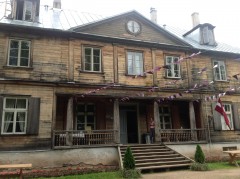
PBLA skolotāju norises vieta, Rāmavas muiža. Foto: Daina Grosa.
