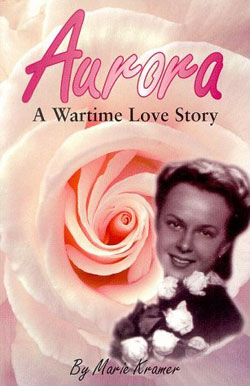
Aurora stumbles, but still valuable

Aurora

Marie Kramer’s Aurora: A Wartime Love Story stumbles in the early pages and never quite recovers. However, the based-on-a-true-story tale is still a valuable addition to the small but growing English-language literature on the plight of Latvian Displaced Persons.

Aurora tells the story of young Aurora and her love for a military man, Alfreds, whose lives are brought together and split apart during and after the Second World War.

At least two serious historical errors—mistakes that could have been checked with a number of published sources—cloud the credibility of the story. This is not a minor point, for Kramer is otherwise careful to cite specific dates when events occur in the life of Aurora. In addition, the book at times rushes forward without smooth transitions, leaving the reader with the sense of watching a badly edited movie. Finally, we don’t get much of a "love story" here.

Where we find value in Aurora is in its vivid description of refugee life, particularly given that the story is told through the eyes of a young married mother whose husband is somewhere back in Latvia battling the Soviet army. Latvians of the postwar generations already know variations on this story, for they have heard snippets of it from their parents and grandparents. But to read it, in English no less, is a new experience. Aurora joins historical studies such as Mark Wyman’s DPs: Europe’s Displaced Persons, 1945-1951 and memoirs such as Agate Nesaule’s A Woman In Amber in bringing to life what happened to thousands of Latvians a half century ago.

We are introduced to Aurora as a 17-year-old young woman celebrating Jāni, or Midsummer, on June 24, 1940. Her giddiness is interrupted by the appearance of a column of Soviet military vehicles, the full weight of which is made clear to her the following day by her uncle, who tells her that the USSR has taken over Latvia.

The problem here is that the Soviet Union had already invaded Latvia a week earlier. For Aurora not to have known a week later that her country was no longer free is hard to believe. In both published reports and from anecdotal evidence, we know that by June 24 it was clear that the Soviets were in control and that the Jāni celebrations in 1940 were dampened by this knowledge.

Then, on page 32, Kramer tells us about the deportations of June 14, 1941. She writes that "half a million Latvians were arrested, herded into boxcars and shipped to Siberia." Not so! For example, in The Baltic States: Years of Dependence, 1940-1980 by Romuald J. Misiuanas and Rein Taagepera, the authors note:

The general estimates of population losses from all causes—deportations, mobilizations, massacres, and unexplained disappearances during the first year of Soviet rule—hover around…35,000 for Latvia…

Even if we add the post-war deportations, including the devastating ones of 1949, we still don’t reach half a million Latvians.

These errors aside, we find two other problems with Aurora. First, there’s the matter of transitions. Granted, Kramer covers a span of 50 years in 185 pages, so some fast forwarding is necessary. But at times the transitions are too abrupt and beg for the caring hand of a good editor.

Second, the overall premise that this is a love story needs questioning. In the first third of the book, we see the development of Aurora’s and Alfreds’ love for each other. But in the remainder of the story, Alfreds fades into the background. Either Aurora is not a love story but instead a story about survival, or the author needed to devote more effort in helping the reader appreciate the depth of these two Latvians’ love for each other.

Where Aurora is the most compelling is in its description of a young refugee mother’s struggle to care for her baby and her own mother in Germany, England and, finally, America. The hardships Aurora and her family endure—all the while not knowing the whereabouts of Alfreds—offer some of the most touching moments in the book. Wyman, in his DPs, remarks how the Displaced Persons camps are often remembered fondly by those refugees who lived there as children. They didn’t realize the sacrifices parents made for their children. Aurora confirms this.

Aurora is the first book by Kramer for Kansas-based Ogden Publications. Kramer, a retired teacher, has published other titles similar to Aurora, tales based on people’s true stories.

(Editor’s note: This article originally appeared on the SVEIKS.com site.)

Details

Aurora: A Wartime Love Story

Marie Kramer

Topeka, Kansas:  Ogden Publications Inc.,  1998

ISBN 094167861X

Where to buy

Purchase Aurora: A Wartime Love Story from Amazon.com.

Note: Latvians Online receives a commission on purchases.
Andris Straumanis is a special correspondent for and a co-founder of Latvians Online. From 2000–2012 he was editor of the website.

How to play zolīte

Zole—or, in its diminutive form, zolīte—is by some accounts the national game of Latvia. That’s probably true… unless of course you’re a diehard novuss player. Zolīte certainly is a favorite pastime among young and old. For some North American Latvians, however, the card game has become only a memory.

We’ve searched in vain for information about the history of zolīte in Latvia. The closest we’ve come is to learn more about the German game called “sheepshead,” which has similarities to zole and may be related. Sheepshead, however, employs 32 cards rather than the 26 Latvian zole players use.

When about two months ago SVEIKS.com posted a request for zolīte rules, we didn’t get much response from people in the know. Rather, several readers sent e-mail saying they’d like to know the rules, too. Finally, however, Rūta Vitande of Chicago came through. Below, we present her understanding of the rules for zolite.

How to play zolīte

From a regular deck of cards, use only face cards, aces, 10’s, 9’s, 8 of diamonds, 7 of diamonds—a total of 26 cards. Three players are needed, but generally four are preferred. When four play, the dealer sits out.

Decide on the dealer by drawing cards. The deck is cut by the dealer’s right Deal four cards to the left, next four to his or her left, next four, then two to the pot. Repeat four at a time.

The player to the dealer’s left has first say as to whether he or she wants to “buy” the middle cards, meaning the player will add those to his or her hand and discard two (which do count for points) and take on the other two players.

The object for the “solo” player is to get 61 points or more, thus the duo wins if the solo player only gets 60 (or less).

If the first to the left of the dealer turns down the chance to “buy,” he or she defers to the next left, etc.

If all three players pass, each adds a chip to the ante, to be taken by the next winner (however, an ante is not distributed during a “zole” play). Only one set is doled out at a time to the next winner, should the ante accumulate. If a pool has been started and a player loses, he owes the ante a single round (three or four chips, depending on number of players).

The player to the left ofthe dealer leads the first card, regardless of the who the ‘soloist’ is. Each player must follow suit, if possible; if not, any card goes.

Whoever takes the trick leads the next card.

If a trump is led, trump must be played.

Zole has 12 trump, in descending order of power: Queen of clubs, queen of spades, queen of hearts, queen of diamonds, jacks in same suit order as queens, ace of diamonds, 10 of diamonds, 9, 8, 7 of diamonds.

The point system, however, seems to have nothing to do with trump power:

Ace—11 points
10—10 points
King—4 points
Queen—3 points
Jack—2 points
Other—0 points
Total possible—120 points

And remember these notes:

  • A solo player may decide to “zole,” in which case the player forfeits the cards in the middle and they are revealed only after the game and added to the duo’s score.
  • For winning with points 61 to 90, the solo player wins a chip from each player, thus two chips in a threesome or three in a foursome. A win of 91 to 119 gets the player two chips from each; 120 (or all the tricks), three from each. If the player has declared “zole,” add four chips from each player to the regular scoring schedule, thus five for a score of 61 to 90, six for leaving the opponents in “johns,” seven for an all-tricker.
  • For losing to the two opponents, add one to the above scoring pattern and, of course, these points count against the soloist.
  • The language that accompanies this game is very much a part of the game and can only be learned with time and exposure.
  • The game has many “rules” or nuances ranging from where one sits after drawing cards to determine the dealer, to not allowing the dealer to look at the two cards in the middle. Usually they differ according to the region of Latvia in which the game originated. Defining the nuances before starting is recommended, especially with serious players.

As Vitande notes, zolite has many nuances. If you know of different rules or variations, add your comments at the end of this article. In the meantime, our thanks to Rūta Vitande for supplying the rules for this game.

(Editor’s note: This article originally appeared on SVEIKS.com.)

Andris Straumanis is a special correspondent for and a co-founder of Latvians Online. From 2000–2012 he was editor of the website.

First of folk series celebrates pagan year

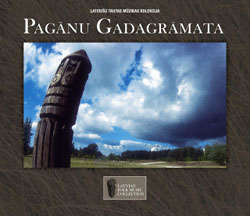
Pagānu gadagrāmata

UPE Recording, the Rīga-based music production company run by singer and disc jockey Ainars Mielavs, in February released the first of what it promises will be a series of recordings chronicling the vast catalog of Latvian folk songs. Pagānu gadagrāmata (Pagan Yearbook), the brainchild of Uģis Prauliņš, is not, however, the typical collection of folk songs.

In fact, Latvian audiences unaccustomed to what’s been happening in the field of "world music" might be taken aback by the cycle of songs on this album. Pagānu gadagrāmata is not an introductory library of folk tunes. Rather, it is a concept album tied to the theme of the passing of the seasons. During the course of 15 tracks, the listener is carried from the atkūsnis (thaw) that occurs around Easter time, forward through spring, summer, autumn and winter.

This also is an album about the Latvian countryside, home of the Latvian soul. That helps explain the various "nature" sound effects scattered through the album, a somewhat trite addition to an otherwise fine recording.

Pagānu gadagrāmata is not a singalong album that lends itself well to air play, even though tracks have been featured on Radio Latvia and some commercial stations. Instead, the album is better listened to in a single sitting, maybe even with the "repeat" function of your CD player activated, so you can experience several "years" in row.

"I wouldn’t like these songs to climb the Latvian pop charts and go down as swiftly afterwards," Prauliņš writes in the liner notes. "These songs are meant to be a retrospection of a whole year for the inner self of an urban man—at places we hardly ever visit these days."

Familiar voices, such as that of Latvian folk diva Ilga Reizniece, sing traditional lyrics (dainas) but often to the accompaniment of nontraditional instruments, such as the West African xylophone, the balafon, and the hand drum, the djembe. Thus, we find Prauliņš singing "Meitas gula ābolajē"—with Prauliņš himself handling voice, keyboards, and recorder—ending with bongos that segue into Reizniece and Māris Muktupāvels singing a percussive "Ganiņš biju" on a track punctuated by the djembe and the balafon.

The arrangements are a sign that "folk" culture does not have to be restricted to a specific time in the past to be considered genuine. Consider as an example "Baladīte," a tragic ballad composed by Prauliņš with lyrics drawn from the work of poet Ojārs Vācietis (1933-1983).

Featured performers on the album are Reizniece and Muktupāvels, both of the post-folk group Ilgi; guitarist Gints Sola of Jauns Mēness; and bassist Andris Alviķis, percussionist Nils Īle, and Prauliņš. In a recent interview in the Rīga daily newspaper Diena, Prauliņš told journalist Uldis Rudaks that the idea for Pagānu gadagrāmata came to him in 1995. For some tracks on the album, Prauliņš arranged the music around the traditional songs transcribed by the Latvian folklorist, composer, and critic Emilis Melngailis (1874-1954). Other tracks, such as the instrumental “Pirmais pērkons,” are new compositions.

We hope UPE does well with this series. Latvian folk music, important though it is to Latvian ethnic identity, has received scant recent attention from recording companies in Latvia. Mielavs tells SVEIKS.com that the second album in the series, Latviešu danči (Latvian Dances), is nearing completion, and that at least one additional album is expected this year.

(Editor’s note: This review originally appeared on SVEIKS.com.)

Details

Pagānu gadagrāmata

Latviešu tautas mūzikas kolekcija

UPE Recording Co.,  1999

UPE CD 009

Andris Straumanis is a special correspondent for and a co-founder of Latvians Online. From 2000–2012 he was editor of the website.