Latvian music for happy feet

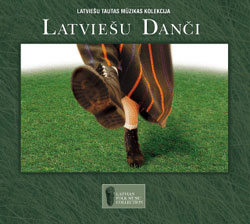
“It makes me feel happy.” A British executive of a prestigious international company said this when he heard the new Latvian Folk Music Collection’s Latviešu danči (Latvian Dances) playing as telephone on-hold music at his company. Overall, that is quite an accurate assessment of this disc.

To put it another way, the music on this album is, in two words, quintessentially Latvian. As ethnomusicologist Valdis Muktupāvels writes in the liner notes (in both Latvian and English, although a few of the English phrases are a bit awkward), Latvians love to dance. This love is truly evident in the joyous music on this disc.

The music was performed by a number of people, including Māris Muktupāvels (producer of this album) and Ilga Reizniece, both of whom are well known and highly respected in Latvian folk music circles. Other notable performers include Gints Sola, guitarist for the pop-rock group Jauns Mēness, and Mikus Čavarts, like Reizniece and Māris Muktupāvels a member of the folklore ensemble Iļģi. One surprise addition is Ilmārs Mežs and his family. Mežs, known in part for his research into Latvian demographics, also is lead singer for the folklore ensemble Eilenders.

Included in the liner notes are instructions (in Latvian only), written by Sniedze Grīnberga, for dancing the dances. It’s a wonderful idea, but does not work all that well. The directions particularly would not work well for two groups of people (other than those who do not read Latvian): those who are highly visually oriented and those who have no Latvian dance knowledge or experience. These people might be able to figure out only the simplest dances. I am quite visually oriented when it comes to dancing, never having been a big fan of written dance instructions with no illustrations because I have a very difficult time picturing the steps and formations. As for the dances on this disc, I was able to follow along the instructions mostly only to the dances that I have danced before.

However, on a purely musical level, this is absolutely fantastic music. The second track, “Cūkas driķos” is one of the more rousing versions I’ve heard and I had an almost irrepressible urge to begin dancing down the hallways of my office when I heard it. The tracks with vocals make you want to sing along at the top of your voice. The 15 dances chosen for inclusion on this disc offer a nice variety: some are fast, others are slower, some have vocals, others are instrumental. Most Latvians will be familiar with at least a couple of dances, such as “Tūdaliņ, tagadiņ” and “Mugurdancis,” which are classics that children learn at very young ages. Yet there also are tracks that will be new to many listeners.

Another enjoyable aspect of this disc is that dancers were a part of the recording. Not only does the listener hear the wonderful music, but also the actual dancing. In other words, it is very much a live recording. For those of us living outside of Latvia, at times this disc is as close as many of us will come to an authentic evening of Latvian dancing, singing and merrymaking.

This disc will make Latvians feel Latvian to the depths of their souls (and to tips of their toes) and it will give non-Latvians a greater appreciation of Latvian culture. Naturally, this is the somewhat biased opinion of a former dancer who is crazy about both Latvian dance and music, but if a half dozen co-workers from around the world at my office enjoyed Latviešu danči, I am certain all readers will as well.

Details

Latviešu danči

Latviešu tautas mūzikas kolekcija

UPE Recording Co.,  1999

UPE CD 011
Happy days are here again

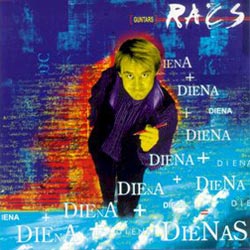
On the three-hour automobile trip to a Jāni celebration in mid-Wisconsin, our passengers included two twenty-something au pairs from Latvia. Figuring they might be starved for the latest music from back home, we took along a few newer compact discs: Prāta Vētra’s Starp divām saulēm, The Satellites’ Piens and, just for kicks, Guntars Račs’ retrospective Dienas. We thought these two young Latvian women especially would be eager to hear the latest Prāta Vētra recording. Nope. “Put in that Račs CD!,” they begged.

Even if you’ve never heard of Guntars Račs, if you’ve listened to popular Latvian music you most likely have heard his song lyrics. Does your CD or tape collection include anything by the group Bet Bet (which includes Račs)? Do you have something by the guitar rockers Līvi? How about something by Igo? Chances are you’ve heard one or more tunes penned by Račs.

Dienas pulls together 16 of Račs’ best-known songs from the past two decades. Most have been released earlier. Songs include:

  • “Diena,” performed by Račs himself in a new recording backed by the rest of the Bet Bet crew.
  • “Piedod man,” performed by the group Līvi from Liepāja. The track is taken from 1997’s Bailes par zinģēm.
  • “Vakara vējā,” performed by Bet Bet with lead vocals by Zigfrīds Muktupāvels.
  • “Tikai tā!,” performed by Liepājas brāļi.
  • “Vai ar to tev nepietiek,” performed by the pop-rock group Jauns Mēness, led by Ainars Mielavs. Recorded in 1988 when Račs was the drummer for the group.
  • “Es esmu vēl dzīvs,” also performed by Jauns Mēness and, like the song above, recorded in 1989 but not previously released.
  • “Vējs,” by the long-time group Zodiaks.
  • “Pūt, vējiņi,” also by Zodiaks.
  • “Ozolam,” another one by Līvi.
  • “Dzīve ir viena,” by Olga & Tango.
  • “Lietus,” by another long-time group, Credo.
  • “Bumerangs,” by Igo (Rodrigo Fomins), another singer from Liepāja whose career is just as notable as Račs’.
  • “Vētrasputns,” performed by Varavīksne.
  • “Romance,” performed by Neptūns and not previously released.
  • “Kapteinis,” performed by the jazz singer Laima Vaikule.
  • “Tā ir jānotiek,” performed by Zvaigžnu koris.

“Once about a hundred years ago,” music critic Klāss Vāvere writes in the liner notes, “some journal proclaimed Račs as the new hope of national poetry. Even though I never read poetry journals, I read his verses and concluded: here’s a sensible fellow.”

Reading the lyrics in Dienas (and the liner notes thankfully include them) we encounter simple thoughts wrapped in visions found in nature. For pop songs, it’s a wonderful formula. In the liner notes, Račs explains himself: “The wind blew me here from Liepāja and therefore it’s no wonder that my songs are about the wind, the setting sun and love… I am truly happy about all that is going on with me and around me at the great threshold of the millenium.”

Račs has good reason to be happy. He’s a successful pop song lyricist, he’s a successful drummer (usually performing for Bet Bet), and he’s the successful marketing director for Latvia’s top recording label, MICREC. Raitis Sametis, who produces the music e-zine Kieģelis, has tagged Račs one of the 10 most influential people in the Latvian pop-rock music scene, particularly for his efforts to make Latvian artists known outside of Latvia.

Račs also was honored during the Latvian recording industry’s “Gada Balva 98” awards ceremony in April when the song “Par to (raudāja māte)” was named the best schlager style song of last year. Račs wrote the lyrics and Raimonds Pauls the music. The tune perhaps is best recalled as the theme song for the 1998 film by director Jānis Streičs, Likteņdzirnas. We almost wish the song was on this album, if for no other reason than to offer a counterpoint to the generally fast-paced tunes.

As for the songs that do appear on the album, about the only one worth criticizing is “Diena.” The song itself is good, but the studio performance here is embellished by a couple of special effects that don’t add anything to the presentation and seem to be included only because digital technology allows them.

This one point aside, Dienas is a worthy addition to any collection of recorded Latvian music.

Details

Dienas

Guntars Račs

MICREC,  1999

Andris Straumanis is a special correspondent for and a co-founder of Latvians Online. From 2000–2012 he was editor of the website.

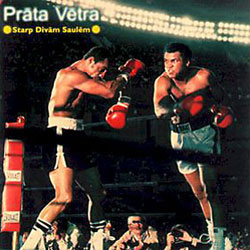
Which sun shines for Prāta Vētra?

Starp divām saulēm

One of the enduring scenes in Latvian fables is of the young man who sets off in search of adventure, returning home wealthier and wiser. Will this be the fate of the foursome from Jelgava known as Prāta Vētra? Already established as one of the most popular musical groups in Latvia, Prāta Vētra this spring released both Latvian and English versions of the same album. Recorded and mixed in Latvia, Denmark, Germany and Sweden, the album also represents one of Riga-based MICREC’s biggest marketing pushes to date. Will it succeed? Will Prāta Vētra do for Latvian pop music what groups such as U2 did for Ireland?

Under its English name BrainStorm, the group this August is scheduled to perform in the Pepsi Island Festival in Bulgaria and then head to Sweden and Turkey, according to a press release from MICREC. In addition, a video of one of the group’s latest hit songs, "Weekends Are Not My Happy Days," is due for release July 19. Whether we’ll get to see it on MTV or VH1 in the United States or on MUCH in Canada is questionable. Additional attempts to crack the music markets in Britain, Germany and South America are underway.

Is the effort worth it? Should it be precisely Prāta Vētra that carries the Latvian banner in the attempt to break into the international pop music scene? And is Among the Suns the vehicle?

Purists might well answer no. After all, there’s really nothing that differentiates this album from the multitudes of other up-and-coming pop groups the world over. Sure, the group is from Latvia, but there’s nothing Latvian about this album. Even the names of the performers have been changed in the liner notes to make them more palatable for English-speaking tongues (lead singer Renars Kaupers’ name has become Reynard Cowper, guitarist Janis Jubalts is Jonny U. White, and so on).

Unfortunately, one of the realities of the pop market is that English is the lingua franca. And keep in mind that Latvian opera star Inese Galante doesn’t sing in Latvian, either. And Latvian-born violinist Gidon Kremer… well, he doesn’t sing.

The Latvian album, Starp divām saulēm, is a nice production. But the material on the group’s first compact disc released in 1997, Visi ir tieši tā, kā tu vēlies, had more heart. All lyrics for the 11 tracks on Starp divām saulēm are by Kaupers. A number of songs have already become radio hits in Latvia, including "Brīvdienas nav manas laimīgas dienas," "Puse no sirds" and "Galvā tikai sievietes." We also like the title song, "Starp divām saulēm" and "Lēc." It’s Kaupers voice, especially his wonderful trilled "r," that carries the album.

The English album, Among the Suns, is largely a translation of the Latvian version. MICREC threw in a 12th track, "Under My Wing (Is Your Sweet Home)," the translation of a hit song off the 1997 album that saw some success in the Baltics. Again, all lyrics are by Kaupers, but the work of translating was largely given to poet Rolands Ūdris (Ūdrītis).

Comparison of the two albums reveals inconsistencies in translation, sometimes to the point where the songs yield slightly different meanings. Ūdris did use poetic license with some lyrics, MICREC Marketing Director Guntars Račs tells SVEIKS.com. For example, in "Brīvdienas nav manas laimīgās dienas" Prāta Vētra presents a song about the end of a romantic relationship ("Es meklēju vārdus kalna malā, lai teiktu tev mīļā, kad mēs būsim galā"). But the English version comes off a bit milder, with mana mīļā (my dear) changed to "my friend." Likewise, on "Galvā tikai sievietes" Kaupers sounds like a love-starved joker. But on "These Women Drive Me Crazy All the Time," the character in the song sounds more like a jerk (and perhaps that’s the same). But the English version does have one of the funniest lyrics on either album: "Got a cheesy poem in my head / Tom Jones is my favourite singer / Dreamy thoughts are calling me / Again I am in love and she’s not here."

Of course, for consumers who hear only the English version, translation problems won’t matter. What will matter is whether the album is worth purchasing. Among the Suns is a nice production with a few catchy tunes. With the right marketing effort and a good dose of luck, Prāta Vētra might just get some Western radio and video play and maybe sell a few records. We don’t expect to see them in the Top 40 any time soon, at least not on this side of the Atlantic. But the group is sure to return home to Latvia with more knowledge about the pop music market and perhaps with some profits to show for their efforts.

(Editor’s note: This review originally appeared on the SVEIKS.com site.)

Details

Starp divām saulēm

Prāta Vētra

MICREC,  1999

Andris Straumanis is a special correspondent for and a co-founder of Latvians Online. From 2000–2012 he was editor of the website.