Tas nevar būt, tas nav pa īstam

Dodoties uz darbu saulainā Vašingtonas septembra otrdienas rītā, man nebija ne jausmas, kādu nelaimi un šausmas šī diena nesīs. Pirmie vārdi, ar kuriem mani sagaidīja kolēģis no britu laikraksta The Independent biroja Vašingtonā bija: "Divas lidmašīnas ietriekušās Pasaules tirdzniecības centra torņos.”

Lūkojoties telekompānijas CNN pārraidītajos attēlos, likās, tas ir kads pārpratums, varbūt nelaimes gadījums, tikai ne plānots uzbrukums. Bet tad torņi sabruka viens pēc otra, trešā lidmašīna ietriecās Pentagonā, un ceturtā avarēja netālu no Pitsburgas. Nekas vairs nespēja apturēt notikumus, kas attīstījās sev vien zināmā kārtībā ar briesmīgu precizitāti. Pamazām sapratu, ka esmu lieciniece vienam no briesmīgākajiem terora aktiem Amerikas vai pat pasaules vēsturē.

Jau vēlāk, izejot pilsētas ielās, redzot cilvēku drūzmu pie evakuētajām biroju ēkām, dzirdot sirēnu skaņas un atduroties pie ar dzeltenām lentām, mašīnām un dzelzs nožogojumiem norobežotās teritorijas ap Balto namu, galvā riņķoja viena vienīga doma—tas nevar būt, tas nav pa īstam. Atceros, kad kāds uz ielas uzrunātajiem biroja darbiniekiem man sacīja, ka šāds teroristu uzbrukums nozīmē karu pret Ameriku, viņa secinājums likās pāragrs, pārāk attālināts un neiedomājams. Pēcpusdienā un vakarā visu mediju virsraksti jau vēstīja "Karš!", "Uzbrukums Amerikai!". CNN simtiem reižu atkārtotais kadrs, kurā lidmašīna, izdarot nelielu pagriezienu, ietriecas vienā no Pasaules tirdzniecības centra torņiem, joprojam atgādināja epizodi no kādas kompjūterspēles.

Nākošajā dienā traģēdija pamazām nogulsnējās cilvēku apziņā, atnesdama daudzus neatbildamus un uztraucošus jautājumus—kāpēc bija vajadzīgi tik daudzi nevainīgu cilvēku upuri, kā bija iespējams nolaupīt četras pasažieru lidmašīnas un kas īsti ir šo teroraktu galvenie plānotāji?

Šobrīd, trešajā notikumu dienā, precīzi noskaidrotas jau divu lidmašīnas nolaupītāju personas. Lai arī ASV valdība pagaidām izvairās izteikt oficiālus apgalvojumus, ka teroraktos vainojams no Sauda Arābijas trimdā aizgājis ekstrēmists Osama bin Ladens, valsts drošībsargājošās iestādes jau identificējušas vairākas Amerikā darbojošās teroristu šūņinas, kas ir saistītas ar bin Ladenu un, kā liecina līdzšinējā izmeklēšana, esot palīdzējušas teroraktu sagatavošanā.

Mēģinot atgūties no ciešanām par neskaitāmajiem upuriem, ASV pieteikusi karu terorismam un gatavojas sodīt teroraktu vaininiekus. Amerikas valdība jau saņēmusi spēcīgu politisko atbalstu no Eiropas, kā arī Tuvo Austrumu un Āzijas valstīm, nemaz nerunājot par bezprecendenta militārā atbalsta solījumu no NATO. Alianse trešdien deklarēja, ka, saskaņā ar NATO kolektīvās aizsardzības pantu, uzbrukums ASV tiek uzskatīts par uzbrukumu visām deviņpadsmit NATO dalībvalstīm. ASV Kongress ir izteicis gatavību piešķirt 20 miljardus dolaru prettrieciena izdarīšanai, un militārās amatpersonas jau apsver iespējamos atmaksas uzbrukuma variantus. Runa ir par vairākām prettrieciena metodēm, kas tiktu vērstas pret teroristiem un viņu atbalstītājiem. Tomēr daudzi komentētāji un speciālisti atgādina par Klintona administrācijas neveiksmīgajiem uzbrukumiem Afganistānai un Sudānai pēc teroraktiem ASV vēstniecībās Kenijā un Tanzānijā 1998. gadā un aicina nevis spert pārsteidzīgus soļus, bet gan veikt pārdomātas starptautiskās operācijas, lai aizturētu un sodītu patiesi vainīgos.

Pēkšņā atskarsme, ka Amerika, līdz šim tik neuzvaramā pasaules lielvara, patiesībā ir viegli ievainojama un pat daļēji bezspēcīga pret pāri jebkurām robežām ejošu terorismu, neapšaubāmi ir konsolidējusi Rietumu pasauli un mazinājusi anti-amerikānisko noskaņojumu Eiropā un citās valstīs.

Tomēr miljoniem Amerikas iedzīvotāju un tiem līdzi jūtošie cilvēki visā pasaulē nedomā tik daudz par teroraktu stratēģiski politiskajām sekām, bet gan joprojam pārdzīvo un šausminās par tuvu pie 5000 bez jebkāda attaisnojuma dzēstajām nevainīgu cilvēku dzīvībām.

Tāpat Amerikas pilsoņi un tās neskaitamie ārzemju viesi, studenti, pastāvīgie rezidenti un imigranti prāto par izmaiņām, ko tikko piedzīvotā traģēdija ienesīs viņu ikdienišķajā dzīvē. Skaidrs, ka visiem būs jāsamierinās ar stingrāku kontroli, izmantojot transporta pakalpojumus un šķērsojot robežas. Bet negribētos, lai amerikāņu brīvība un tiesības tiktu aizstāvētas ierobežojot citu tautību, rasu vai reliģiskās pārliecības un īpaši jau arābu izcelsmes cilvēku brīvību, tiem pienākošos taisnīgu attieksmi un nevainības prezumpcijas iespējas. Jo tad terorisms patiesi bus uzvarējis.

San Francisco Examiner

Laikraksts San Francisco Examiner bija starp tiem daudziem, kas piedāvāja speciālus teroraktu notikumu dienai veltītus izdevumus.

Iļģi not sure what to expect in America

Iļģi, Latvia’s leading folk music group, mark their 20th anniversary this year with a series of concerts abroad. Fresh from a trip to China, six members of the collective head this month to the United States for a two-week tour of Eastern and Midwestern venues. And, a week after they return to Rīga in early October, the band heads off to Norway, said Gatis Gaujenieks, the group’s bass player.

The U.S. tour will give non-Latvian audiences a chance to hear what “world music” sounds like from the Latvian perspective. Iļģi, who emerged from the early 1980s folk revival movement, have moved far from their roots. While other folk groups have joined Iļģi in seeking out unromanticized versions of Latvian folk songs, it is Iļģi who have pushed furthest into weaving into their repertoire other cultures’ folk influences, along with the sounds of modern rock music.

Founded in 1981 by Ilga Reizniece, Iļģi has seen band members come and go. The group’s early years were focused on retrieving traditional music styles that had been suppressed for many years. The group’s efforts at times were viewed suspiciously by Soviet authorities, who considered the period’s folk revival as unwelcome nationalism.

By the mid-1990s, Iļģi were experimenting with broader musical influences and moving into their “post-folk” period. While Reizniece’s voice and fiddle-playing and Māris Muktupāvels’ handling of the kokle remain integral to the band’s signature, bass, guitar and drums now round out the sound. Group members and the Iļģi sound also at times spilled over into the rock group Jauns Mēness, fronted by Ainars Mielavs, whose UPE record label has released the last two Iļģi albums.

Latvian audiences familiar with the band’s discography should expect to hear material from the last two albums, Saules meita (1998) and Sēju vēju (2000). Some new material also might be heard in the concerts, possibly including something from “Spēlēju, dancoju,” a rock opera based on the work of Latvian poet and writer Jānis Rainis, Gaujenieks said. The rock opera—a collaboration between Lithuania’s Miraklis “visual theatre” group and Latvia’s Jaunā teātra institūts—is scheduled to be performed Sept. 14 at the Daugavgrīva fortress on the outskirts of Rīga as part of the Homo Novus theatre festival. A live Webcast of the performance also is planned.

The band doesn’t know how audiences in the United States will react to the music, Gaujenieks said. In China, he said, Iļģi were generally received positively, except in one concert where the audience seemed apathetic.

Older members of Latvian audiences, Gaujenieks admitted in a telephone interview from Rīga, may not quite like what they hear. He recalled that the last time the band was in North America, playing a concert in Toronto, the reaction of some listeners was cool.

“Yes, we have heavy pieces, but we also have many light pieces,” Gaujenieks said. “But it’s 2001, and if we have a hope of Latvian folk music becoming popular in the world, we have to keep up with what’s happening.”

Among younger listeners in Latvia, Iļģi are the most popular folk artists. It’s important, he noted, that Latvian music maintain a foothold in a time when many radio stations are more focused on broadcasting the European version of the Billboard Top 100.

It’s still too early to tell whether Iļģi will please the ear of a North American producer who might give the band a record deal, but Gaujenieks said the tour will offer the band the rare opportunity to play at a number of folk festivals including Chicago’s World Music Festival, the Detroit Festival of Arts and Lotus Fest in Bloomington, Ind. In Minneapolis, the band will be the warm-up act for a Tuvan throat-singing group performing in the city’s leading world music venue, the Cedar Cultural Centre.

The band also is scheduled to play a number of Latvian community venues, where the full concert program is expected to give way to a more participatory atmosphere, with Iļģi teaching audience members Latvian folk dances and rotaļas (games).

For Gaujenieks, the U.S. tour will be a homecoming of sorts. The bass player was a member of Akacis, a popular early 1980s Latvian-American trimda rock band. Besides playing with Iļģi, he now runs the GEM recording studio in Rīga. Also on the U.S. tour will be fellow ex-Akacis member Jānis Abens who now lives in Sweden and is one of four guitarists who play with Iļģi.

Besides Reizniece (voice and fiddle), Muktupāvels (voice, kokle, bagpipes and accordeon), Gaujenieks (voice, bass and ģīga) and Abens (guitar), the other two band members on this American tour are Mikus Čavarts (percussion) and Vilijs Strods (drums).

The tour begins Sept. 13 with a concert in the Latvian Lutheran church near Washington, D.C., and continues on to New York City; Summit, N.J.; Detroit; Grand Rapids, Mich.; Cleveland; Indianapolis; Bloomington, Ind.; Chicago; Milwaukee; Minneapolis; back to Chicago, ending Sept. 30 in Kalamazoo, Mich.

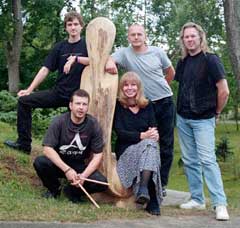
Iļģi

Current band members include (seated in front) Vilijs Strods and Ilga Reizniece, and (standing, from left) Mikus Čavarts, Māris Muktupāvels and Gatis Gaujenieks. The wood sculpture symbolizes any of the four guitarists who regularly perform with Iļģi, said Gaujenieks. On this tour, it’s Jānis Abens from Sweden. (Photo courtesy of Iļģi)

Andris Straumanis is a special correspondent for and a co-founder of Latvians Online. From 2000–2012 he was editor of the website.

Latvia, you’re on a roll

It’s a great pleasure to be with you tonight, and to have had an opportunity to chat with many of you during the opening reception and registration period. Some of you are familiar to me already from the annual receptions that I’ve hosted in my home to honor my government’s Fulbright, Muskie and Humphrey Fellows. Others of you are special to me as new acquaintances, including several who have just returned from study experiences in the United States. All of you have brought back a personal understanding of America from your studies in my country, as well as a treasure of your own adventure stories, insights, and new perceptions of the United States to share on evenings such as this one.

I am especially gratified today to see you coming together as an association, and believe that beyond sharing common experiences, you can accomplish great things together—from helping other scholars to learn about American universities and exchange fellowships, to serving on our fellowship selection panels, to organizing and hosting lectures and performances—and even, perhaps, to developing fellowships and awards of your own for enhancing U.S.-Latvian educational ties. While alumni associations in other European countries are already active in such contributions to international understanding, there is no reason why Latvian alumni can’t do just as well—or even better—once they set their course. I congratulate you, Mr. Skudra (president of the alumni association), and your current board of directors, for bringing this talented membership together tonight, and wish the association great success in the elections for the coming year’s board later in this meeting.

Some of you may know that this evening has special meaning to me for one more reason, as well: my tour of duty in Latvia is approaching its final days, and what I say to you tonight will be the last public speech that I deliver as your U.S. ambassador.

In my three years here, I have seen—and have contributed all my own best efforts, every day, to assisting—tremendous progress by Latvia in returning to its rightful place in Europe. Economically, politically, and socially, your country belongs in the West, and in many ways has already returned to the West.

No one who knows Latvia uses the label "post-Soviet" any longer, even though only 10 years have passed since the fall of the Soviet Union. Indeed, Latvia and its two Baltic neighbors are all too rare success stories emerging from the former Soviet Union. I take great satisfaction in noting that during my tenure in Latvia your country traveled most of the final distance in development to reach the very doorsteps of both NATO and the European Union. That impressive progress was the result of the Latvian government’s hard work, and its courage in making—and following through on—the right decisions. All along the way you have had clear, energetic support from the U.S. Embassy. You can count on us to continue backing you as you make the final steps through those doorways to attain EU and NATO membership, and you can be confident that we will remain your friends and allies on into the future.

"Developing nation" is another label that Latvia is rapidly shedding. In fact, it is only now that my own mission has stopped treating you as one: the fundamental development aid that the United States brought to Latvia through U.S. Agency for International Development and the Peace Corps helped you in your first years of independence to build the basic infrastructure for a free market economy and the rebirth of a business culture. But the "heavy lifting" that those agencies provided then has accomplished its goals: at present, while a few regional assistance programs continue to address specific needs remaining in Latvia, my mission’s USAID office celebrated its closing two years ago, and our Baltic Regional Peace Corps Office will close out its operations in the coming year. Here too, they represent a rarity in the assitance business: they close because of success in achieving their objectives, not because of failure.

Latvia has developed past the need for such basic assistance. The speed with which this maturation took place has been dramatic, and promises further surprises in the near future. In fact, I expect that the next step, now that you’ve become a developed country, will be to become providers of expertise yourselves to neighbors still tagged with the "post-Soviet" and "developing" designations. And some of those Latvian foreign aid projects might well include joint efforts with my own country’s international development agency.

Graduation from fundamental development aid hasn’t meant the end of U.S. support for Latvia. We will continue to support regional programs in environmental reclamation, energy efficiency, public health, social integration and rule of law. But beyond that, American university education, specialized seminars, and workshops for professionals have replaced the direct infrastructure funding and fundamental skills training of previous years. During my tenure in Rīga, my Embassy staff has steadily grown, and the fastest growth has been in programs that offer education and professional expertise.

Our new U.S. Customs Service office offers training and exchange visits for Latvian law enforcement and Border Guards officials. A team of U.S. Justice Department experts will be making regular visits this coming year to assist in the development of your Anti-Corruption Council and in the reform of the criminal procedures code. Our Office of Defense Cooperation now brings in trainers for addressing needs identified by your armed forces, everything from development of a chaplain corps to improving the skills of military public affairs officers. Early this fall a team of American military justice experts will visit to offer their expertise.

Our resident offices of the U.S. Commerce Department and the U.S. Department of Agriculture offer fellowships and exchange visits to acquaint Latvian business and government leaders with the latest ideas and trends in American business and farming. Our Public Affairs Section has gained multi-year grants to fund affiliations between American universities and Latvian institutions including the University of Latvia School of Law, the NGO Center, and the Latvian School of Public Administration. And to compensate for Latvia’s recent graduation from eligibility for further Muskie Fellowships, we have gained funding for additional Fulbright Fellowships, and have even added a new exchange program, the Humphrey Fellowships, for public officials.

And, together with Soros Fund, Latvia, the U.S. government has championed the cause of non-governmental organizations through a 10-year, multi-million dollar support program designed to build, educate and sustain Latvian NGOs. The Baltic-American Partnership Foundation is unique in this regard in Europe and will make NGOs a vibrant part of the Latvian political process well into the future.

This emphasis on education and sharing expertise will characterize the next step in U.S. assistance to Latvia, and in this matter all of you here tonight can play an important role. The knowledge that you acquired from your studies in the United States, and the broader perspectives and outlook that you gained from studying abroad, are already empowering each of you professionally, and contributing to the overall development of your country’s talent and leadership. The understanding that you gained of the United States—and the impressions that Americans gained of Latvia from you—will ensure the continued closeness and mutual high regard that have always characterized our countries’ bilateral relationship. And, there is much more that you can contribute together, as an alumni association.

I hope that this association will be energetic, innovative, and open to all who wish to join, including Americans residing in Latvia. If my wife, Connie, and I were here longer, we would both be applying for membership tonight.

Finally, I hope that your association will also be motivated by service to Latvia, and to the continuation of close U.S.-Latvian relations.

I will follow your progress from my next postings, and look forward to hearing of your accomplishments and growth. You are entering a very bright period of Latvia’s history, with wonderful, realizable prospects ahead of you—a full return to your country’s rightful place in the West, peace and stability in the Baltic region, an economy and talented workforce competitive with the best in the world, and friendly relations with neighbors to the East. Your country is, as we say in the United States, "on a roll"—enjoying a period of success that leads to more success—and the only serious obstacle to guard against is complacency. Maintain your steady progress. Stay focused on your goals. Find ways to serve your country in reaching those goals. And above all, have confidence in yourselves, and in each other. As I have witnessed repeatedly during my three years of service in your country, Latvians excel at setting ambitious goals for themselves—from rebuilding their military and rebuilding their economy, to organizing the world’s largest city-wide birthday party—and then finding ways—not always the most direct ways—to fulfill them.

Good luck to you all, and God bless Latvia.