Crime thriller places Swedish cop in Latvia

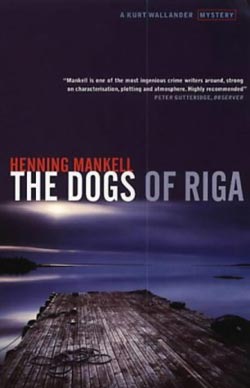
The Dogs of Riga

On the 13th day of February 1991, a life raft is found washed ashore near Ystad in southern Sweden. Inside are the bodies of two men who had been tortured, drugged, shot and set afloat on the Baltic Sea.

For police detective Kurt Wallander, the question of who they are is answered soon enough. Answering the question of why they were killed becomes the challenge.

The challenge is told in Swedish mystery writer Henning Mankell’s The Dogs of Riga, the latest in the Wallander series to be translated into English. Mankell, still little known in North America, is a superstar among many European crime fiction fans. Before Laurie Thompson’s translation of 1992’s Hundarna i Riga, five others books in the Wallander series have been brought to English-speaking audiences.

With the help of police in Rīga, the two dead men are identified as Jānis Leja and Juris Kalns, Mafia criminals in a Latvia that is still under Soviet occupation but slipping away fast.

Soon, Wallander and his colleagues on the Ystad force are visited by Maj. Kārlis Liepa of the Rīga police. Their brief collaboration results in the case—and the bodies—being handed off to the Latvians. Wallander and his colleagues are freed of the nuisance of a double murder that appears to be linked to the Russian Mafia in an era when the Soviet Union still has not crumbled. But when Liepa is murdered the day of his return to Rīga, Wallander finds himself back on the trail, this time in Latvia.

Mankell’s Wallander is one of those anti-cops who appear in so many European crime novels: competent, but self-doubting, skeptical of their place in society and of the role of the state. Wallander also is pestered by personal problems, including a gruff and demanding father and a college-age daughter with whom his relationship is strained. And on top of it, Wallander is doubly lonely, still coming to terms with the fact that his wife has left him and always trying to guess what his late partner, Rydberg, would have done when faced with various roadblocks in an investigation.

Wallander first came to my attention on film. The 1996 thriller White Lioness, based on Mankell’s book of the same title, had Wallander travelling to post-apartheid South Africa to investigate a plot to assassinate Nelson Mandela. Actor Rolf Lassgard’s portrayal of Wallander has molded how I imagine the detective looks and behaves. But it was his subdued love interest—Baiba from Latvia—that has kept me wondering and wanting to learn more.

And in The Dogs of Riga I find my answer. Baiba is Baiba Liepa, the widow of policeman Kārlis. European filmgoers may be familiar with the 1995 Swedish-Danish film Hundarna i Riga, directed by Pelle Berglund, that was partly filmed in Rīga and featured Charlotte Sieling in the role of the Latvian widow.

In The Dogs of Riga, Wallander is brought face-to-face with the uncertainties of life in the Latvia of early 1991. "You have to understand, Inspector Wallander, that you are in a country where nothing is decided," a Latvian police colonel tells the Swedish cop as they drive through Rīga. (Mankell himself, in an afterword, notes that the novel was finished a few months short of the August 1991 coup in Moscow that led most directly to Latvia’s re-emergence as an independent nation.)

The Swedish detective goes to occupied Latvia to help investigate the murder of a cop. "I investigate real crimes that have been committed by real people," Wallander tells a mysterious man named Upītis, in the process admitting his political naivete. But he soon learns that reality is not always what it seems, a characteristic of life under Soviet rule.

The Dogs of Riga is a well-written thriller. The character of Kurt Wallander is more than enough to keep the novel moving ahead, particularly as he strives to make sense of himself and the world around him. For a reader knowledgeable in recent Latvian history, it’s even more fascinating to see an outsider’s view of the calm before the storm, even if some of the situations seem a bit far-fetched.

Details

The Dogs of Riga

Henning Mankell

London:  The Harvill Press,  2001

ISBN 186046839X

Notes: Translated by Laurie Thompson.

Where to buy

Purchase The Dogs of Riga from Amazon.com.

Note: Latvians Online receives a commission on purchases.
Andris Straumanis is a special correspondent for and a co-founder of Latvians Online. From 2000–2012 he was editor of the website.

A cute adventure for Latvian kids with computers

Description of image

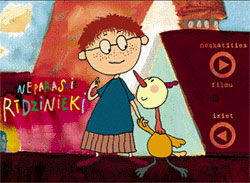
The CD-ROM includes an animation film and music.

Having never made much use of CD-ROMs before, much less never having watched a movie on CD-ROM, being asked to review the children’s animation film Neparastie rīdzinieki in this medium was a novelty for me. And not being particular technologically savvy, I did need help to install QuickTime on my computer to be able to watch the movie. Once that was done, however, I was able to sit back and enjoy the 26-minute long animation that was produced in honor of Rīga’s 800th anniversary and was first shown at celebrations this summer.

The film begins with a song and not much action. My first instinct was to think that many American-born children, having been brought up on action-packed and fast-paced movies and games, might find this particular film too slow. I, however, was enchanted.

The main character of the film, the young rooster Justiņš, is absolutely adorable. The little child he befriends is also cute. Together they have an assortment of adventures in "modern-day" Rīga. (One knows that it is the present because Riga’s 800th anniversary is mentioned.)

The film is like many other children’s films, featuring songs interspersed with dialogue. The five songs’ texts are by Pēteris Brūveris and music is by Valts Pūce. The songs are what I would consider very typical for a children’s film. My favorite was the last one, "Lai ir," which includes the lines “Lai ir, lai ir, lai putniem ligzdas ir, lai zvēriem alas ir, lai ļaudīm mājas ir. Lai ir, lai ir, lai visiem mājas ir un visiem savās mājās labi klājas!" (May the birds have nests, may the animals have caves, may the people have homes, may everyone have homes, and may everyone fare well in their homes).

And my favorite part of the film was when Justiņš and the child found themselves under Rīga, where they met the "root elves" of Rīga. These are the little (and very cute) elves who live under Rīga, taking care of the roots on which Rīga is built.

In addition to the film, the CD-ROM can be played as a compact disc on which one hears not only the five songs, but also another six songs written by many Latvian cultural luminaries. "Brīvības iela," for example, is written by Raimonds Pauls and Guntars Račs. "Jūras kalni man arami" is a folk song with musical adaptation by Imants Kalniņš. "Rīgas tilti" is by Zigfrīds Muktupāvels and Račs. The last song, "Dziesma Rīgai" (Song for Riga), is by Jānis Lūsēns and Māra Zalīte. These songs are performed mostly by the children’s chorus Knīpas un knauķi with some help from Muktupāvels and Juris Kulakovs. The film’s songs are peformed by Dace and Valts Pūce and Niks Matejevs.

I know of at least one adult who purchased this as a CD in Latvia this summer and loves the music. I, however, find it much better suited for the taste of children. Not being a big fan of synthesizer music, I was a bit turned off by its heavy use on this recording, particularly in the song "Jūras kalni man arami." Also, many of the songs’ lyrics are very repetitive—great for a young child who wants to sing along, but a bit dull for an adult. For example, in the song "Brīvības iela" it seems the chorus repeats an unending number of times. But, again, I’m sure that many young children would enjoy singing along to these songs.

As with many Latvian CDs today, the packaging is very attractive and the liner notes include all of the lyrics. However, no English translation or explanation is provided.

Overall, I think that both the movie and the music of this CD-ROM would be enjoyed by children in preschool and kindergarten, and maybe a bit older. Neparastie rīdzinieki would make a lovely gift to a Latvian family with young children.

Details

Neparastie rīdzinieki

Roze Stiebra, director

Dauka,  2001

Notes: Note: Requires minimum of any Macintosh or Windows 95/98/NT/2000/ME/XP computer with Apple QuickTime software installed.

A lively, danceable album from Maskačka

I was quite excited by the prospect of hearing the first album by Maskačkas spēlmaņi, Zirnīšiem skaisti ziedi. Having heard some of their tunes previously on the Internet, I was ready to really enjoy this one in full length.

Maskačkas spēlmaņi, led by Ansis Ataols Bērziņš, hails from from the Maskavas district of Rīga, south of the Old City and east of the Central Market along the Daugava River.

The album begins with some very good songs that got me tapping my feet and humming along. “Meitas mani melli sauca,” the first song, had that really good beat and style that makes you want to bounce along. So did “Nadūd, Dīvs, nadūd, Dīvs.”

Other tracks that I really enjoyed were “Moza beju, gonūs goju,” “Trīs putan dižan dzied,” and “Teci rikšiem, kumeliņi.” Being a Latvian folk dancer, my feet are always looking for a good tune. Maskačkas spēlmaņi do deliver in that category, giving the listener many songs that could easily be made into folk dances or just enjoyed at a party.

I also really enjoyed listening to one track, “Pats precieju, pats atvežu,” that consisted of only kokle and voices. It was close to musical styling of Andris Kapusts of the folk group Grodi. The kokle playing is clean and precise, as are the voices.

One song that got my attention was “Tālu gāju sievas ņemt.” The refrain is in Russian and my wife, who is from Latvia, says it is part of a Russian soldier’s song. Historically, this song has value in that it clearly reflects the musical and linguistic influences of that era. But details on that in the liner notes might be helpful.

The musical and technical ability of Maskačkas spēlmaņi is very good and the recording is also of good quality. The majority of the tracks is very folksy and upbeat and makes me want to dance and sing along to the tunes.  The instrument mix makes for a very diverse sound and creates a good balance of high notes and low notes. The accordions (bayan and ieviņa) have a good driving sound and the drum really keeps the beat going. Being an accordion player myself, I really enjoyed the songs that utilized the Latvian-made ieviņa button accordion. The honking bass really adds to the folksy sound the band is attempting to achieve. The cītara rounds out the sound and the violin is able to create a good counter-position to the accordion. The trejdeksnis and other percussion also help to bring the sounds all together.

The liner notes are quite nice in that they provide the words to the songs, just in case you like to sing along—like I do. And given that Maskačkas spēlmaņi sing many tunes in the Latgalian dialect, non-speakers of that will find the words to be of great help. For non-Latvians, some brief liner notes in English would also have been good.

I would have liked to have more information about the group itself in the liner notes, but Maskačkas spēlmaņi provide a Web site with information so that listeners may “get the scoop.” I would encourage people to visit the site and see their pictures. I always like to see who is playing the music I’m listening to.

Members of the band, besides Bērziņš, are Jānis Barons, Zane Kriumane, Sandra Kuzmina, Ieva Medene and Paulis Paulins.

Overall, this first album by Maskačkas spēlmaņi is very nice. Listeners will like the catchy tunes, and dancers will enjoy the driving beat.

Details

Zirnīšiem skaisti ziedi

Maskačkas spēlmaņi

Maskačkas spēlmaņi,  2001