Two films about real people in extraordinary times

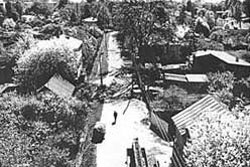
A bird’s-eye view of Crossroad Street opens the original documentary, Šķērsiela.

The best fiction films are the ones that manage to capture some element of real life. It doesn’t matter if they are set in a galaxy far, far away or taken straight from today’s headlines. They feel real no matter how contrived.

The best documentary films work in reverse. They take real life and give it scale and resonance that makes one forget that what we are watching is the mundane and common. They take things and events in life that most of us don’t pay too much attention to or take for granted and elevate them to epic status.

Ivars Seleckis’ documentaries Šķērsiela (Crossroad Street) and Jaunie laiki Šķērsielā (New Times at Crossroad Street) accomplish this with such effortless ease that one forgets that these are documentaries. They feel real and surreal at the same time. Both films take place in a small street in the Pārdaugava section of Rīga. The first was filmed in 1988 and the second a decade later in 1999.

The first film slowly introduces us to the residents of Crossroad Street.

There’s Julis the cab driver and his arch-enemy and neighbor, Aldis, a stone mason and part-time preacher, who has set up a what seems to be a major monument-making factory in his backyard. It’s a noisy undertaking and a constant source of irritation to straight-laced Julis.

There’s poor Daiga, pregnant and abandoned by her lover. She lives as an unregistered guest of her cousin in the same house as Julis, his wife and his daughter. She fears that any moment she will be kicked out into the street. The house itself was built by and belonged to her grandfather, a famous Latvian writer, during Latvia’s independence. It has been turned into communal housing by the Soviets. Daiga is now nothing more than a squatter.

There’s Osis, feeble-minded but gentle, who lives with his 80-year-old mother. There’s Tolik, the son of a Latvian mother who was deported to Siberia and a German father whom she met and fell in love with there. He speaks only Russian and can barely move because of an untreated childhood disease he contracted in Siberia. There’s Pēteris and Olga, a bickering but loving, easy-going old couple who grind horseradish in their backyard for sale in the market. There’s even a glimpse of the mysterious Casino Plūmiņš tooling around in his žigulis.

There are many more, but they all present a cross-section of Latvia and, as the title suggests, find themselves at the crossroads as a dying empire takes its last gasps. Their lives are filled with chaos and pathos. Aldis, the stone mason preacher, keeps mouthing homilies about the spiritual life while in constant pursuit of earthly rewards. Julis finds himself lost in this new chaotic world, not nostalgic for the past, but resentful at having to live in a world in which a taxi driver no longer has the same status as his enterprising stonemason neighbor. Then there is poor Daiga who, despite it all, keeps smiling through the tears.

Jaunie laiki Šķērsielā revisits the neighborhood 10 years later. Nothing is the same and at the same time it all seems strangely familiar.

Daiga, the helpless young woman, is now a mother with a 10-year-old son. The house from which she was kicked out is now entirely hers and she is busy making it into her little safe haven. She has a job and a man and a healthy and happy son. She is strong and vibrant and in full control of her life.

Aldis is still as devout as ever, if not more so, but his business has fallen on hard times. Racketeers have burned down his modern workshop and he now has to fight for control over his property with Gaļina, his father’s second wife. Daiga has just turned off his water, water which he has been poaching off her pipes for his workshop all of those years.

Pēteris and Olga are still making horseradish in the back yard and bickering in loving fashion. And Casino Plūmiņš is now tooling around in a brand new Mercedes and living in a house right out of the pages of Architecture Digest with his beautiful artist wife.

A lot of old shacks on Crossroad Street are being torn down or remodeled and rebuilt. There is also a huge new addition to Crossroad Street: a mansion built by a mysterious and wealthy Gypsy. Side by side we see modest, well-kept family homes with tidy gardens and run-down buildings with junk-filled yards. Times have changed mostly for the better, but in some ways for the worse. Latvia is independent and people have freedom to take control of their lives. But there is still chaos and uncertainty. People are rebuilding, but the first thing everyone seems to put around their property is a sturdy fence.

An abandoned freight train rests on the nearby railroad tracks. Everyone has to duck and walk under it if they want to get to the store. Osis now receives his disability pension in lats and not rubles, but it is still barely enough to get by and perhaps even less than it was before. Tolik’s health has taken a turn for the worse. And Casino Plūmiņš, despite all of his wealth, seems sad and lost and hungry for something that he just can’t reach.

The magic of Šķērsiela and Jaunie laiki Šķērsielā is that they allow us an entry into these peoples’ lives. It’s an honest look that neither glamorizes nor minimizes real life—real life as lived by real people in extraordinary times.

Details

Šķērsiela & Jaunie laiki Šķērsielā

Ivars Seleckis, director

European Documentary Film Symposiums,  1988 and 1999

Notes: Šķērsiela: Documentary, black-and-white, 85 minutes. In Latvian. Script: Tālivaldis Margēvičs; camera: Ivars Seleckis; music: Ivars Vīgners. Jaunie laiki Šķērsielā: Documentary, color, 85 minutes. In Latvian. Script: Tālivaldis Margēvičs; director of photography: Ivars Seleckis; editing director: Maija Selecka; music: Ivars Vīgners; producer: Leonīds Bērziņš.
The poetry of Elsbergs gets the Dimiters treatment

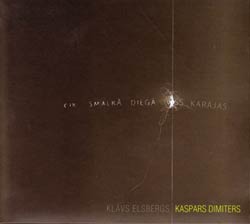
Cik smalkā diegā viss karājās

Before Latvia regained independence, and before the rise of the Internet, information about things going on in Latvia was tough to get. This was especially so for those interested in Latvian music. In fact, unless you had relatives or friends living in Latvia, you wouldn’t know anything about Latvian music, except for the rare occasion when a Latvian musician or group was allowed to venture outside of Latvia.

Luckily for me, my family had friends who were still living in Latvia and who were as devout music listeners as I was, even though I was still in my early teen years then. They would send us records and cassette recordings of all the latest music, and this was my only source of information about the Latvian music world. I would listen to each tape and record numerous times until they wore out.

One of the tapes our friends sent us contained songs by Kaspars Dimiters. This cassette recording bore the brunt of my abuse, as I would listen to this one more than any other. The first time my family and I went to Latvia, I promptly went to the record store and found the album Mans kumoss pilsētas baložiem, which contained many of the songs I had loved on the cassette. This has become one of my favorite recordings by any artist and is an album I listen to frequently to this day.

As it turned out, Dimiters had written many other songs that I had liked, but I never had known who performed them. They included favorites such as “Princesīte” (from the 1981 Mikrofons record) and “Mana neveiksminiece” (from a 1982 Mikrofons “bonus” 7-inch record).

Dimiters was an important songwriter during the Soviet occupation, a time when the government often threatened him and prevented his songs from being played on the radio or television. However, as times changed so did Dimiters’ songwriting style. Many of his more recent work has slanted toward political themes and societal commentary. All in all, Dimiters has released about 10 albums.

Last year saw the release of the album Cik smalkā diegā viss karājās. Dimiters is a man of many talents. Not only does he sing, but he also plays the guitar and all the other instruments on the record, and even did all the recording and production work.

Normally, Dimiters writes both the lyrics and music to his songs, but this time he chose to add music to the poetry of Klāvs Elsbergs. All the lyrics on this record were taken from the Elsbergs collection Bēdas uz nebēdu. Elsbergs, son of famous Latvian writer Vizma Belševica, died under mysterious circumstances in 1987.

Elsbergs’ poetry contains a wide range of emotions and feelings that fit perfectly with Dimiters’ sincere and earnest delivery. Because the words are Elsbergs’, this album comes across differently than the rest of Dimiters’ recordings. Dimiters’ lyrics can be very biting and critical; in fact, some of his songs make certain listeners downright uncomfortable.

The album is on the mellow side. Many of the 19 tracks feature just guitar and vocals. However, that does not mean the record is dull, as the songs have varied tempos.

The opening track, and one of my favorites on the album, is the subdued “Viens.”

Another favorite on the record is the very sad song “Asaru krelles.” The lyrics describe a girl who makes a necklace of tears. Dimiters’ voice is ideally suited to tell the tale of this lonely girl who wonders whether someone will ever hold her.

“Es neesmu vientuļā” is a song about the dilemma of a songwriter: if you don’t feel lonely, how do you write songs for the lonely? Dimiters allows the words of Elsbergs to speak for themselves in this song, while providing a simple but effective guitar background.

Fans of the 1980s rock group Pērkons will recognize two of the songs here: “Neatvadīsimies” and “Pasniegtās rokas.” Pērkons’ interpretation of these two songs appeared on their 1987 album Labu vakar (“Pasniegtās rokas” was called “Lampas un zvaigznes” on that record). Although the lyrics are the same, it is quite a treat to hear the more stripped-down treatment of Dimiters, compared to the full band approach of Pērkons.

Many of the songs are on the slower side, but “Āmurzivs” is a more up-tempo offering from the album. The lyrics tell the tale of a boy who was thrown overboard from a ship and is struggling against the tide, trying to stay alive while watching the boat he was on get farther and farther away.

Cik smalkā diegā viss karājās is one of my favorite records of last year, from one of my favorite artists. Though most of the songs are laid back and mellow, it still strikes a chord in a listener, and Elsbergs’ lyrics are compelling listening. (Thankfully the lyrics are included, which helps the listener develop a better appreciation for his words). Dimiters’ songs, whether the lyrics were written by himself or by others, are about the importance of the words and text of the song—about getting certain thoughts across to the listener.

Hopefully this release will be a success, which will lead to Dimiters’ earlier works being re-released. Thankfully these days it is much easier to obtain music from Latvia, so perhaps this album will help introduce the rest of the world to one of Latvia’s most singular songwriters.

Details

Cik smalkā diegā viss karājās

Kaspars Dimiters

Gailītis-G,  2001

Egils Kaljo is an American-born Latvian from the New York area . Kaljo began listening to Latvian music as soon as he was able to put a record on a record player, and still has old Bellacord 78 rpm records lying around somewhere.

Naumova does it her way on French album

Ma voix, ma voie

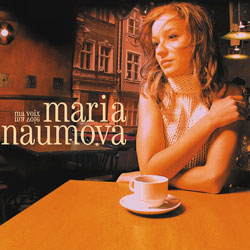
During a year when a number of pop artists in Latvia turned to English as the language of their music, Marija Naumova decided on French. Her Ma voix, ma voie (My Voice, My Way) showcases not just her French-language skills, but also her ability to modify her singing style and image to fit the mood.

Ma voix, ma voie is Naumova’s third album. The first, in her native Russian, saw little exposure in Latvia. But her second, the Latvian-language album Ieskaties acīs, had her teamed with Niks Matvejevs in an effort that resonated with audiences, sending the record to platinum status.

Released late last year, Ma voix, ma voie features 11 tracks. Several are compositions by Raimonds Pauls, whom Naumova credits for helping launch her career. Lyrics were written by several songwriters, but in “Une voix” we are treated to a translation of Vizma Belševica’s words, while in “Cher ami” it’s Imants Ziedonis’ work. Also lending a hand with the lyrics was Astra Skrabane, an instructor of French.

Listening to this album, don’t expect to hear Naumova trying to emulate such well-known French singers as the late Edith Piaf or the contemporary Patricia Kaas. Instead, Naumova here tries to carve out her own style, sounding more like an up-and-coming bistro singer. In doing so, she’s gone as far as to change her looks from her previous album, as well as the presentation of her name. On Ieskaties acīs, she was Marija Naumova, but on Ma voix, ma voie the “j” disappears. Naumova also will represent Latvia in the 2002 Eurovision Song Contest in Tallinn, where she will be known as Marie N.

The album opens with the jazzy “Sous le soleil du nord” (Under the Northern Sun). Credited to Pauls and Skrabane, the song is about a person’s search for her way in the world. It sets the mood for the rest of the album, both emotionally and musically.

Naumova’s voice on this recording is soothing, not as throaty as with other French singers. She succeeds in using her voice to set the tone of each song.

My favorite track is “Je t’aime!” (I Love You!), in which the singer acknowledges her love for another, but not yet publically, to the world. I’ve been calling this a “2 a.m. song”: as a private moment wanes, perhaps the last sways of a slow dance in a subdued bar, a rising saxophone heralds the lights coming up, signalling that it’s time to part.

A feeling of nostalgia seeps through several songs. In “Ecris-moi” (Write Me), for example, the singer laments that she once made fun of a clumsy fellow who used to write love notes to her in school. Now, years later, she longs to be with him, to have someone send her something written on paper, not in e-mail.

Some bright songwriting comes through in “Aux coins du vieux Riga” (On the Corners of Old Rīga). Credited to Matvejevs and Skrabane, the song has Naumova walking through the cobbled streets of the city while musing on the vagaries of fate in relationships: “Un pas, Et tu ne partiras jamais…” (One step, And you will never leave…).

While not a consistently strong album, nothing overly bothersome leaps out, either. If anything, listeners who aren’t huge fans of Pauls’ style of piano music might be irritated by his presence on songs such as “Cher ami” (Dear Friend), where his work on the keyboard seems just a bit out of place. However, on “Souviens-toi” (Remember) his playing is more reserved and fits better with the song.

The liner notes are a linguistic challenge. The lyrics and the acknowledgements are all in French. Short descriptions of the songs are provided in Latvian and Russian.

Listen to this album at the end of a long day and you might just find your mind drifting away to the French quarter of Rīga.

Details

Ma voix, ma voie

Marija Naumova

Baltic Records Group,  2001

BRG CD 114

Andris Straumanis is a special correspondent for and a co-founder of Latvians Online. From 2000–2012 he was editor of the website.