Russia has called on the United Nations Commission on Human Rights to not remain silent over what it says is “the absolutely inadequate humanitarian situation” in Latvia and Estonia.
Yuri V. Fedotov, Russia’s deputy minister for foreign affairs, told the commission March 17 in Geneva, Switzerland, that the two Baltic nations are not observing basic human rights, especially for their large Russian-speaking minorities.
In response, Latvian Foreign Minister Artis Pabriks told Russian Ambassador Viktor Kalyuzhny he cannot understand Russia’s recent unwarranted criticisms of Latvia’s human rights and minority policies. Pabriks told the ambassador that such comments by Russian officials will not help relations between the countries, according to a March 18 press release from Latvia’s Ministry of Foreign Affairs.
“Every second Russian-speaking person in the states has no citizenship,” Fedotov told the Commission on Human Rights, according to an unofficial translation of his speech. He said this is a “blatant violation” of the Universal Declaration of Human Rights.
Fedotov had further harsh words for Latvia, with which Russia has had chilly diplomatic relations for months.
The inability of non-citizens to vote in Latvia’s municipal elections, he said, is one factor in a “deficit of democracy.” An estimated 480,000 Russian-speakers were barred from voting in Latvia’s March 12 municipal elections. Fedotov said other European Union members allow non-citizens to vote in local elections.
Fedotov also raised the issue of Latvia’s education reform, which aims to increase the use of Latvian in secondary schools. Last summer, the planned changes in language use resulted in several protests in Rīga.
“Socially significant reforms are being prepared without consulting whom they affect,” Fedotov said. “Taking into account Rīga’s complete lack of readiness for dialogue, there is nothing surprising about the fact that such an approach results in massive protests.”
However, the largest protests in Rīga drew about 20,000 people on May 1, the day Latvia joined the European Union, and about 5,000 people on Sept. 1, the first day of school, according to news reports. (Some Russian-language media said the number of protesters on Sept. 1 reached 25,000.)
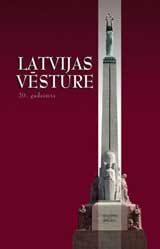
Fedotov also said “continuing reprisals” against military veterans who fought against German forces during World War II, glorification of veterans who fought with German forces, and attempts to rewrite the history of the war are fueling “contemporary forms of racism and neonazism.” He was referring to trials of suspected Soviet war criminals, to events such as the March 16 commemoration by Latvian Legion war veterans in Rīga, and the recent publication of a controversial book, Latvia’s History: The 20th Century (Latvijas vēsture: 20. gadsimts).
The human rights commission began its annual six-week meeting on March 14. The meeting concludes April 22.
Andris Straumanis is a special correspondent for and a co-founder of Latvians Online. From 2000–2012 he was editor of the website.