Konkursa ‘Starp tevi un mani ir valoda’ uzvarētāji zināmi

Eiropas Valodu dienā 2011 gada septembrī Latviešu valodas aģentūra (LVA) izsludināja konkursu skolu jaunatnei. Konkursa mērķis – popularizēt latviešu valodas lietojumu, sekmēt valodas kā personiskas un valstiskas vērtības apzināšanos.

Skolēnus aicināja piedalīties radošo darbu konkursā “Starp tevi un mani ir valoda”. Šogad konkursā piedalījās jaunieši ne tikai no visas Latvijas, bet arī no latviešu skolām ārvalstīs – no Melburnas, Briseles, Stokholmas, Bostonas, Adelaides un Hamiltonas. Kopā iesūtīti 334 literārie darbi, 101 zīmējums, tajā skaitā arī audiovizuāli darbi un komiksi.

Radošo darbu vērtēšanā tika ņemta vērā darba atbilsme tematam, oriģinalitāte, kopta valoda, kā arī motivēts izteiksmes līdzekļu izmantojums satura atklāšanai.

Radošo darbu konkursa “Starp tevi un mani ir valoda” uzvarētāji no ārpus Latvijas:

1.–4. klašu grupa:

  • 1. vieta: Kaija Lārmane (Melburnas Latviešu skolas “Daugava” 3. klase)

5.–9. klašu grupa:

  • Atzinība par klasisko vērtību iedzīvināšanu: Henrijs Princis (Briseles Eiropas skola II)
  • Atzinība par oriģinalitāti: Gustavs Zilgalvis (Briseles Eiropas skola II)
  • Atzinība par žanra izvēli: Toms Salenieks (Briseles Eiropas skola II)
  • Pateicība skolotājai ārpus Latvijas: Ineta Cara, Briseles Eiropas skola II

Kaijas Lārmanes domraksts “Starp tevi un mani ir valoda”

Mani sauc Kaija Lārmane un man ir deviņi gadi. Es esmu latviete, piedzimusi Austrālijā. Es mājās runāju tikai un vienīgi latviski. Es katru darbdienu eju austrāļu skolā, kur man jārunā angliski, bet sestdienās apmeklēju latviešu skolu. Latviešu skolā man ir daudz latviešu draugu un draudzeņu.

Es domāju, ka zināt valodas ir ļoti svarīgi. Es māku tekoši runāt latviski, angliski un ļoti nedaudz krieviski. Kādreiz sestdienās pēc latviešu skolas mēs iebraucam krievu veikalā un pērkam rupjmaizi. Tur es iemācos mazliet krieviski, jo prasu mammai kā pateikt vienkāršus vārdus, kā piemēram, „četras austiņas“ un „paldies“. Mana mamma māk runāt latviski, angliski, krieviski un vāciski. Es mammai prasu vārdiņus arī vācu valodā, jo man viena draudzene austrāļu skolā saprot vāciski.

Mana austrāļu skola ir kurlo bērnu dzirdes centrs. Tas nozīmē, ka šajā skolā ir kurlmēmās valodas zinātāji, kuri ar pirkstiem māk ar šiem bērniem saprasties. Man skolā šo valodu māca kā svešvalodu. Tik un tā, ja tā nav valoda, kura nāk no mutes, tā ir valoda. Daudzi no kurlmēmiem bērniem nevar skaidri izrunāt vārdus.

Valoda ir vienojošs spēks, tā satur tautu kopā. Ja tu esi ārzemēs un dzirdi kā runā tavu valodu, tas ir kaut kas ļoti kopējs. Tu šo cilvēku vari uzreiz uzrunāt, jo tā ir tava valoda.

Valoda ir bagātība. Jo vairāk valodu kāds zin, jo tas bagātāks. Ja kāds zin ļoti daudz valodu, viņš ir ļoti bagāts un viņam dzīvē ir daudz iespēju.

Es nesen izlasīju šādu joku par valodu zināšanu:

„Kaķis dzinās pakaļ pelei, bet tā paspēja noslēpties alā. Tad kaķis piegāja pie alas un sāka riet. Pele izbrīnījusies, domāja: „Kā tad tā, ka kaķis pēkšņi rej!?“ Izbāza no alas ārā galvu, bet kaķis tūdaļ viņu sagrāba un apēda. Pēc tam kaķis nolaizījās un teica: „Cik veselīgi ir zināt vismaz vienu svešvalodu!““

Mums visiem jābūt priecīgiem, ka mums ir valoda un mēs varam savstarpēji sazināties. Kopēja valoda cilvēkus vieno un es esmu lepna, ka varu sarunāties ar latviešiem gan Latvijā, gan visā pasaulē.


Feb. 18 referendum is very dangerous

The Feb. 18 referendum has raised considerable emotion, and its outcome will continue to be fervently and diversely interpreted long after the event.

Latvia’s Central Election Commission is predicting a very large turnout of voters in line with the attendant public debate over whether Russian should become the second official state language. Many voters who have little bothered with recent parliamentary elections are likely to participate this time.

The result of the referendum is not in doubt. A majority vote will vote pret (against it), and there is no chance of the pro-Russian forces gaining the 771,350 votes needed to prevail. This figure may well be close to the number who vote against, with those voting par (for) an official status for Russian likely to receive half as many votes, or even less.

While the result is not in doubt, everything will rest on the post-referendum interpretations, and these will be strongly influenced by two factors.

First, the size of the vote against will be crucial. If the against figure is indeed around the 700,000 mark, with the for vote half of that, the pro-Russian party Harmony Centre (Saskaņas centrs) will be ecstatic. It will point out that something close to a third of the electorate wishes Russian to have this status, too large a percentage to ignore, and drive this issue relentlessly both in Latvia and in Europe, demanding a higher status for Russian where Russian-speakers are a significant proportion of the population.

Second, the distribution of the vote is important. If in certain large centres (particularly Daugavpils, with only a small proportion of Latvians, or in Rīga where the population is almost equally divided between Latvians and Russians or other Slavs) a majority of the locals vote for the official status of Russian, this will increase the push at the municipal levels to grant Russian particular privileges.

Awareness of these consequences has done a lot to mobilise Latvian politicians, albeit belatedly. While in the beginning many Latvian politicians seemed to view this event as a second-order issue, and had demonstrated little concern for language issues in the past, the outpouring of sentiment over the proposal—seen as a slap in the face by many in Latvia—has turned the politicians to urge voters to come to the referendum, even passing a resolution to that effect in the Saeima. Notable here also has been the much-despised Union of Greens and Farmers (Zaļo un Zemnieku savienība, or ZZS), seen as an oligarch party and partly responsible for Latvia’s economic crisis, which has tried to reassert its national credentials by urging that a million Latvians come and vote against the proposal. This would be an impressive figure, and give the Latvian side a far stronger position in post-referendum affairs.

An altogether woeful example of such belated realisation of the crucial nature of this referendum unfortunately has been Latvian President Andris Bērziņš, himself a former ZZS figure, who originally placed little stress on the referendum and said he would not even participate in it. While this no doubt was his attempt to pose the position of the president as above seeming political squabbles, there was so much criticism of him that eventually he changed his stance. In rather weasel language he asserted that citizen Bērziņš might have one view, but recent events have convinced President Bērziņš to nonetheless participate in the referendum and vote against the proposed amendments. This is perhaps just as well for him, otherwise there would be serious consideration of impeaching him for failing to uphold the Latvian language.

Meanwhile, as if in a parallel universe still, Bērziņš and other Latvian politicians continue to often use Russian in press conferences, on Russian television and other places, not seeing the long-terms consequences of such practices.

The campaign will continue

The success of the obnoxious Nationalbolshevik Vladimirs Lindermans (not even himself a Latvian citizen) in getting enough signatures to run this referendum presages a growing and orchestrated attack on Latvia, well supported by Moscow, where a mix of constitutional measures and dirty tricks will continue to be used to undermine the basis of the Latvian state.

Already a signature-gathering exercise has started to grant automatic Latvian citizenship to all permanent residents, bypassing the present system of naturalisation that requires a test of Latvian language, history and constitution to gain citizenship. At a social level, increasing numbers of incidents have been noted where individuals deliberately demand the use of Russian in public events or use Russian-only public signage where the use of Latvian is mandated.

Curiously, this all goes against the actual language situation in Latvia. Surveys from various agencies have shown that there is not a large unmeltable mass of Russian speakers who know no Latvian. In fact only about 8 percent of non-Latvians have no knowledge of Latvian, and all young non-Latvians command Latvian, thanks to heightened Latvian teaching in Russian-stream schools. Yet despite the spread of the knowledge of Latvian, the well-known propensity for Latvians to switch to Russian when in the presence of Russian-speakers persists, not among politicians alone.

Against this de facto improvement of the Latvian language situation, the politics will continue to be threatening. This campaign has seen a radicalisation of Russian political endeavours in Latvia. It will be interesting to see the outcome of this for Harmony Centre. This party has shown remarkable hypocrisy in its actions. Its leader Nils Ušakovs, mayor of Rīga, was instrumental in encouraging others to sign for the referendum when he himself signed—even though his party’s policy is for Latvian as the only official state language. He justified this by arguing this was not a referendum about language (!) but about self-respect. Parliamentary leader Jānis Urbanovičs and others have indicated they will vote for the proposal, thus directly going against their oath on taking up a parliamentary seat, where deputies swear to uphold the Latvian language. Some Harmony Centre members however are opposed to giving Russian official status; in order not to make such divisions public, the party decided to walk out of the two votes that the Saeima had on the referendum issue.

Whether this chain of events may lead to a split in Harmony Centre is an interesting question. Waiting in the wings are far more radical elements that will exploit any weakness in Harmony Centre to continue to champion that small but loud rump of the population that cannot abide an independent state of Latvia not under their control.

Every vote on Feb. 18 against the proposal is vital.

Aggressive tempo of ethnic trance marks third album by Auļi

Grupa Auļi

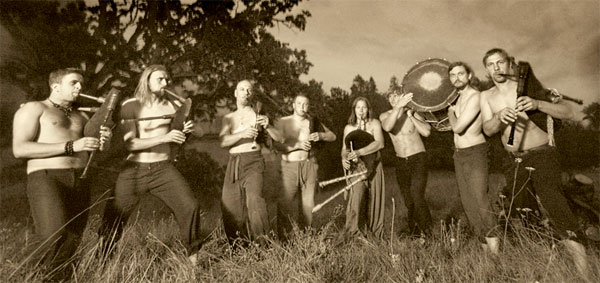
The drum and bagpipe group Auļi has carved out an unusual niche in Latvian folk music. (Publicity photo)

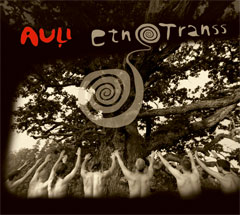
Etnotranss

Drum and bagpipe ensemble Auļi occupies a particular niche not just in Latvian music, but in world music in general. Combining drums and bagpipes might not have been the most logical decision, but Auļi has found success and fame for its style and performances.

Making the band’s already eclectic niche even more unusual, Auļi has given a name to its style of music, which is used as the title of its most recent album, 2010’s Etnotranss (or ethno-trance music).

The general idea is that the drums and bagpipes, performing music inspired by Latvian folklore, will mesmerize and put you in a trance-like state, which is what Etnotranss quite effectively accomplishes.

Auļi is made up of bagpipe players Kaspars Bārbals, Leanne Barbo, Gatis Indrēvics, Māris Jēkabsons, Edgars Kārklis and Normunds Vaivads, as well as drummers Mikus Čavarts, Edgars Krūmiņš and Kaspars Indrēvics. The drum and bagpipe sounds are supplemented by Gatis Valters on trough fiddle and special guest Andris Grunte on double bass.

Though Etnotranss is now the group’s third album (after 2005’s Sen dzirdēju and 2007’s Auļos…), the group shows no sign of exhausting the possibilities of this style of music.

The album begins with the aggressive, almost military like “Diņķi,” the introduction to which features the sharp sound of the double bass, foretelling the sonic adventure that lays ahead.

In fact, much of the album is at a fast tempo, with few calm moments along the way. One of the brief moments of calm is the beginning of the song “Karotājs,” but it does not last very long, as the tempo picks up rather dramatically, with an almost Middle Eastern-like melody in the bagpipes.

“Ozols” is a majestic tribute to the mighty oak tree, filled with reverence and awe. My favorite composition is probably “Dieva dēli,” with a particularly catchy melody, and a quite enjoyable bagpipe arrangement, featuring creative interplay between the bagpipes. Also, the song is one of the few “milder” songs on the album, and it strikes me as being a kind of a celebratory dance.

Clearly Auļi is influenced by pagan Latvian traditions and symbolism, judging by the song titles the band has given to the compositions, such as “Dieva dēli,” “Austras koks” and “Krustukrusti.” I get the impression that the group wants to evoke the spirit of ancient Latvia, weaving together mythology and history.

The album booklet features brief essays in Latvian (with English translations) on each song and other topics by author Laima Muktupāvela. The essays are full of pagan Latvian spirituality and philosophy.

Though one might think that the possibilities of just drums and bagpipes might be limited, Auļi once again displays its creativity in the arrangements and performances. With so much of the album being in a fast, almost aggressive tempo, this music is not for the faint of heart! With barely a chance to relax over the course of the album, by the end the listener may very well be truly in a trance-like state, overwhelmed by the intensity of the interplay between the instruments. Etnotranss is truly a remarkable achievement, and the members of Auļi have certainly carved out a rather notable niche for themselves.

Details

Etnotranss

Auļi

Lauska,  2010

87200

Track listing:

Diņķis

Ozols

Dieva dēli

Zemzeme

Karotājs

Krustukrusti

Naidnieks

Dzīvais ūdens

Senā zeme

Tāltālu

Brammanis

Austras koks

Where to buy

Purchase Etnotranss from BalticShop.

Note: Latvians Online receives a commission on purchases.

Egils Kaljo is an American-born Latvian from the New York area . Kaljo began listening to Latvian music as soon as he was able to put a record on a record player, and still has old Bellacord 78 rpm records lying around somewhere.