Experience is key to Toronto festival

While there’s always something to criticize if you’re Latvian, most early reviews of the recent 11th Latvian Song Festival in Canada have been favorable. And, according to the man who led the festival’s organizing committee, it is Toronto’s long experience that helped make the Canada Day weekend (June 30-July 3) a success for an estimated 5,000 participants and spectators.

Arvīds Purvs, chair of the committee and one of the conductors during the large choir concert, should know: He’s been involved with the Toronto song festivals since 1959 on both the administrative and artistic sides.

“Toronto is the largest Latvian center…and the other smaller Latvian centers are around Toronto: Hamilton, London, St. Catherine’s, Niagara,” Purvs noted. Plus, Toronto has the facilities for large-scale events.

Toronto’s experience has evolved into a formula that appears to work, Purvs said. He said he doesn’t see the need to change much in the way things are done.

Several events during this year’s festival were sold out and had people talking about the performances. Among the highlights:

  • The chamber choir concert, featuring performances by well-known artists from Latvia (such as Dita Kalniņa and Arvīds Klišāns) as well as from the North American Latvian community (such as Rasma Lielmane, Artūrs Ozoliņš and Pēteris Zariņš).
  • The three-day run of "Minhauzena precības," a play by the late Mārtiņš Zīverts directed by Gunārs Vērenieks. Among the actors were Tālivaldis Lasmanis of the Drama Theatre of Valmiera and Mirdza Martinsone of the Dailes Theatre of Rīga.
  • The New Choreography Show in which top honors went to young choreographers Ināra Blatchina and Katrīna Tauriņa of Toronto for their children’s dance, “Vasaras rotaļa”; Iveta Asone of Indianapolis for her dance, “Mūsu pulkā nāc,” designed for fewer than eight pairs of dancers, and Zigurds Miezītis of Toronto for his “Dīžā žīga,” a choreography for eight or more pairs of dancers.
  • The spiritual music concert, featuring the women’s choir Ausma from Latvia as well as a number of choirs from Canada and the United States.

The first song festival in Canada was held in Toronto in 1953, only a few months after Latvians in Chicago organized the first song festival in the United States. And even though the number of Latvians who attend song festivals has dropped in recent years, the Toronto organizers did not question whether a festival should be held this year.

“The biggest unknown is how much the Latvian public is collapsing,” Purvs said in a July 2 interview in the Sheraton Hotel, headquarters for this year’s song festival. “If you look through the Latvian newspapers (in North America), then almost two pages are full of death notices. Those are people who at one time went and sang and danced and attended events, and now they no longer will go.”

Not knowing how many might come to the festival forced the Toronto committee to put together a conservative budget. Initial results, according to Purvs, appeared better than expected.

Profits from this year’s festival probably will not be as great as in years past, when the nonprofit society that runs the song festival in Canada was able to use proceeds to offer scholarships and other funding to Latvian organizations. More likely, any profits will be churned back into financing the next song festival—and Purvs is sure there will be another song festival in four years.

“One of the main reasons (to continue the festivals) is to support the work of choirs and folk dance groups,” Purvs said. “If there’s not a song festival, then the choirs will not be as active, they don’t have a goal.” Of course, he added, choirs and folk dance groups don’t exist just for the festivals, but the festivals do serve as milestones.

Canada’s experience with the song festivals actually goes back to 1952, when the Daugavas Vanagi veterans aid group organized a day of song on Sept. 6, similar to those held in Displaced Persons camps in Europe, according to a history of song festivals written by Valentīns Bērzkalns. About 2,000 people attended the event in Toronto’s Massey Hall.

The first song festival in Canada took place in October 1953. Attendance was in part dampened by the fact that the first festival in Chicago had already taken place in May, according to Bērzkalns’ book. An estimated 3,200 people listened to the joint choir concert, the festival’s main attraction.

Over the years, attendance and participation grew, reaching its high point during the fifth festival, when 10,600 people listened to the joint choir concert, according to song festival records. However, the renewal of Latvia’s independence in 1991 sharply cut into attendance. Only about 4,400 people attended the joint choir concert that year, a nearly 50 percent plunge from attendance at the previous festival in 1986. This year’s joint choir concert was expected to draw an audience of 2,800, Purvs said.

The numbers continue to be low, yet Purvs said he senses a resurgence of interest in the song festival and other Latvian community activities—despite the naysayers who predicted the end of song festivals outside of Latvia. Even though many Latvians now spend the summer months traveling from North America to Latvia, the initial euphoria has worn off.

“People began to slowly realize…we’re not returning home to Latvia. We’ll live right here and probably die here,” Purvs said. “And we need our own festival.”

Although for years many of the same people worked on arranging the festival, younger faces are now seen more often among the organizers. But, Purvs added, the younger organizers have grown up with the festivals.

However, he does not expect that the number of younger organizers and participants will replace the numbers of song festival veterans who have passed away.

(Editor’s note: This article originally appeared on SVEIKS.com.)
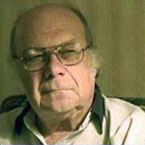
Arvīds Purvs

Arvīds Purvs is chair of the Toronto song festival’s organizing committee. (Photo by Andris Straumanis)
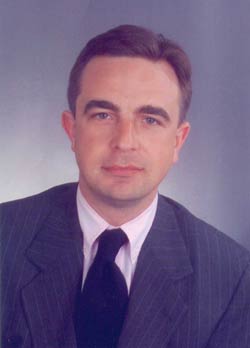
Andris Straumanis is a special correspondent for and a co-founder of Latvians Online. From 2000–2012 he was editor of the website.

Enlarged NATO among his priorities

Aivis Ronis is the third Latvian ambassador to the United States since 1991. The new envoy, who succeeded Ojārs Kalniņš in April of this year, brings with him nine years of experience at the Ministry of Foreign Affairs. He has served as deputy secretary for foreign affairs and also as ambassador to Turkey in 1999. In a profession where gray hair is considered a virtue, the 31-year old ambassador is an exception. In fact, citing his age, the Latvian parliament’s foreign affairs committee deadlocked Ronis’ nomination as the new ambassador. Ronis was appointed without the committee’s approval. The new ambassador, who takes over at a time when Latvia is trying to join both NATO and the European Union, now has a challenging tenure ahead. He recently spoke with SVEIKS.com in the Latvian embassy in Washington, D.C.

Question: What are your priorities as the ambassador to the United States?

Ronis: I have five priorities. First, ensuring the continuity of the Latvian-American relationship once the next administration takes charge early next year. Second, garnering wider support for NATO enlargement and the invitation of the Baltic states to join the alliance. Third, enhancing U.S.-Latvian economic cooperation, in particular U.S. investment in Latvia in the fields of energy and information technologies. Fourth, ensuring the participation of American non-governmental organizations in the integration and modernization of Latvian society. And last, strengthening Latvian identity among Latvian Americans and enhancing their ties with Latvia.

Q: Concerning NATO expansion, what are the chances that all the nine candidates are invited to join NATO at once, especially after the Vilnius statement (made during May’s conference in Vilnius between representatives of the nine NATO candidates) received wide international response, including support of both U.S. presidential candidates?

Ronis: The chances to get invited are as bright as the chances not to get invited. It is important that the solidarity of the nine countries has attracted attention and, even more importantly, gained approval in the United States and Europe. The NATO aspirants are heading in the right direction by showing solidarity and agreeing on a common goal. (The NATO aspirants are Albania, Bulgaria, Estonia, Latvia, Lithuania, Macedonia, Romania, Slovakia and Slovenia – ed.). This increases the possibility of the U.S. deciding in favor of inviting all of the nine countries to join either simultaneously or in small groups. These countries have to become members of NATO, if Europe is to be united and free.

Q: There are apprehensions about Latvia being left alone while Lithuania is advancing towards NATO and Estonia towards European Union.

Ronis: Analysts say different things. Their conclusions and prognoses often change, nevertheless they influence the opinion of people who are not very familiar with the NATO expansion issue. I don’t see any logical, persuasive and rational argument for not inviting all the Baltic countries at the same time. In general, all the current NATO aspirants have reached the same level, with only slight differences, as regards defense structures, democracy and other areas. The only exception is a different degree of economic development in these countries. And that is where Latvia, Estonia and Slovenia stand out.

Q: As far as Latvia is concerned, which U.S. presidential candidate would be ideal, with respect to U.S.-Latvian relationships, particularly NATO enlargement?

Ronis: Both Democrat Al Gore and Republican George Bush are excellent candidates if one considers them from the perspective of Latvia and the whole Baltic region. But the U.S. policy vis-a-vis Europe, the Baltics and Russia will depend rather on the evolution of world affairs (such as the effectiveness and speed of reforms in the Baltic region, European integration and security, and the tendencies in the hot spots of the world, as well as internal processes in Russia and America). The above-mentioned factors, not the presidential candidate who wins, will determine the policy of the next U.S. administration.

Q: How do you see the role of Baltic American organizations—such as Joint Baltic American National Committee, Baltic American Freedom League, and Expand NATO—in the NATO expansion debate?

Ronis: Local Baltic organizations will, of course, be of great importance in the debate. Nevertheless, it will be hard for these organizations alone, without the support of other ethnic groups of Central European origin, to impress themselves upon U.S. legislators. That’s why the cooperation not only among the nine NATO candidates in Europe, but also among the respective ethnic groups in the United States, is so important. Baltic organizations in America are very efficient, despite the relatively moderate size of Baltic population. Still, one has to keep in mind that other ethnic groups, for example Poles, Hungarians and Czechs, are much bigger and could be of great help.

Q: Does the embassy have a good cooperation with Latvian-American organizations?

Ronis: Yes, we have an excellent working relationship. The embassy is grateful to these organizations for the support they provide in helping different Latvian organizations and individuals, as well as cooperating with Latvian state institutions. We are frequent guests at the American Latvian Association and other organizations, as well as at different Latvian communities here in America. Likewise, Latvian Americans are greatly interested in what Latvian Embassy does and what happens in Latvia. For instance, we were very pleased to see that the previous ALA congress in Boston was devoted to Latvia’s integration to NATO.

Q: What do you think are the main interests of the United States in the Baltic region?

Ronis: First and foremost, it is security. Second, it is a free and united Europe, one that could be a more unified partner of America on the global stage.

Q: How would you evaluate U.S.-Latvian economic relations?

A: Until now, American companies that wanted to participate in the investment projects in Latvia encountered different problems, due to hindrances posed by Latvian legislation and the privatization process. Also, American companies were not as interested in these projects as we would like them to be. It seems that the remote geographical position and the different scope of Latvian and American industries also slowed down the business contacts. Even though many projects were hampered by the drawbacks of Latvian legislation and too strict an administration policy both on the level of local municipalities and central government, the cooperation has been successful. We shouldn’t be shy about it. At present, we feel a stronger U.S. interest in the Latvian economy. As it is approaching the European Union, Latvia has become more attractive. European integration and the economic development of Russia will be the main factors that will influence U.S.-Latvian cooperation in future. If reforms in Russia are successful, we can expect a more active U.S. involvement in Latvian economy.

Q: What are the most promising areas of cooperation?

Ronis: Several American energy companies are interested in the Latvian energy monopoly Latvenergo (which is being offered for privatization, although that privatization is being challenged by some officials and members of the public – ed.). The other lucrative field is information technologies where different projects, for example, between IBM and Latvian companies, have already been started. It is important that the Latvian government is willing to make the investment environment more hospitable, particularly in relation to these areas.

Q: What do you consider your main achievement since you became ambassador?

Ronis: (Laughs.) I have adjusted to the time difference.

Q: What do you like in America? What do you dislike?

Ronis: I don’t like calling people and hearing an answering machine. Very rarely, there is a live voice answering. It’s almost always a mechanical answer by robot or a recorded tape. That’s irritating, and it makes me say, “Come on, I want to talk to a human being.” I’m also surprised that American football games take place on Monday evenings. That’s a unique phenomenon; you can’t find it in Europe. Europeans either work at that time on Mondays or watch TV. But things that baffle me can also please me. It all depends on mood, situation and environment.

(Editor’s note: This article orginally appeared on SVEIKS.com.)

Aivis Ronis

Aivis Ronis is Latvia’s third ambassador to the United States since 1991.

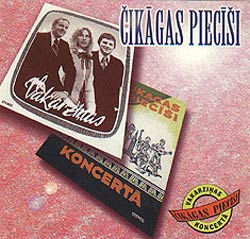
Čikāgas Piecīši re-releases are history lessons

Čikāgas piecīši

For nearly 40 years, Čikāgas Piecīši have been recording songs in their unique Latvian style, as well as playing to audiences all over the world. The Piecīši, although their number has rarely been five, have long been an institution and an important musical voice during the years that Latvia was occupied by the Soviet Union. Unfortunately for many of their fans, the records they released in the 1960s and 1970s have been long out of print and extremely difficult to find. And even when found, the years had taken their toll on the recordings, leaving the original releases scratchy and unlistenable.

Thankfully in this compact disc age, those great old albums have found a second life in digital format. These two compact discs collect four older albums: Sanfrancisko – Rīga, No Lielupes tilta, Vakarziņas and Čigākas Piecīši koncertā. These albums were recorded in a time when the prospect for Latvia’s future independance was very bleak. They paint a picture of what it was like to be a Latvian exile at that time, about people adapting to life in the United States and other foreign countries, while still never forgetting their Latvian origins.

Actually, three of the four albums reviewed here are not true Čikāgas Piecīši recordings. Sanfrancisko – Rīga and No Lielupes tilta are recorded solely by Alberts Legzdiņš and Janīna Ankipāne; Armands Birkens joins them for Vakarziņas. The only album that features the entire Piecīši ensemble is Čikāgas Piecīši koncertā. However, all the records fall under the Čikāgas Piecīši umbrella due to the presence of their leader and main songwriter, Alberts Legzdiņš. Legzdiņš is perhaps one of the greatest Latvian songwriters and lyricists, and these albums are a testament to that.

Čikāgas Piecīši draw influences from all areas, including Latvian folk songs and American instruments and sounds—such as the banjo and harmonica. Their songs range from humorous observations on everyday life to more melancholy melodies. A recurring theme throughout many of their songs is what it is like to be Latvian in the United States.

The oldest album here is Sanfrancisko – Rīga, a collaboration between Legzdiņš and Ankipāne released in 1969. Here the Latvian folk song influence is at its most apparent, as many of the recordings on this album are either Latvian folk songs or sound very much like them. The Latvian folk songs include “Es adiju raibus cimdus,” “Staburadze” and “Mans brūtgans ir jātnieks,” a song I remember singing in Latvian camp. A favorite on the record is “Es savai līgavai,” a Legzdiņš original. A recurring theme in Legzdiņš’ songwriting is the paucity of Latvians around the world. This theme appears in the song “Tautas skaitīšana.”

No Lielupes tilta, released in 1971, also teams up Legzdiņš and Ankipāne, for a very similar record as Sanfrancisko – Rīga, as it is also a folk song-influenced record. One of my favorite Latvian folk songs, “Nāks rudentiņis,” is performed here. Another favorite Legzdiņš original is “Piektdienas vakars,” a song about the adventures of the narrator and “Braunu kundze” (Mrs. Brown) while the narrator waits for ground beef to thaw in the sink one particular Friday night.

The track listing on Sanfrancisko – Rīga / No Lielupes tilta appears to have one error, as the song “Ezers tīruma galā,” although listed as being on the Sanfransisko – Rīga portion of the CD, actually appears later on the No Lielupes tilta portion.

Vakarziņas, originally released in 1970, contains some more melancholy moments. One of the sadder songs on the record is “Mātei dzimtenē,” a song about a mother in Latvia who in vain awaits the return of her sons. Vakarziņas also contains one of the most beautiful songs in the Piecīši library: “Līgo dziesma,” a song about the Latvian celebration of Jāņi (Midsummer). “Līgo dziesma” is a song urging mothers and fathers to teach their children all the songs of Jāņi so that they will never be forgotten.

The humorous side of the Piecīši also is very much alive and well on this record, as songs like “Man garšo alus,” a song with a well-known Latvian theme: beer, and how no other alcoholic beverage can compare to it.

Čikāgas Piecīši koncerta, released in 1975, as far as I can tell is a live recording of a Čikāgas Piecīši performance. I’m not entirely positive that it is a live recording, as the audience’s clapping and song introductions seems to be pasted together with the songs themselves. However, it is still a collection of great songs. This is the only album (of the four reviewed here) to feature the full Čikāgas Piecīši group. Perhaps one of the most famous Piecisi songs is “Pazudušais dēls” (The Prodigal Son), with words written by Uldis Streips about Latvians returning to visit Latvia after having left the country many years ago. The “Amerikāņu popurijs” (American Potpourri) on Čikāgas Piecīši koncertā is different than the one on the 1996 “best of” collection, Agrīnie gadi. This version contains a lengthy section about Latvian-American leader Uldis Grava. Another beautiful tune from the pen of Legzdiņš is “Es redzēju bālēliņu,” a song about young men going to war and how they leave behind loved ones, as well as how their great deeds are forever remembered in the words of folk songs.

One of the more amusing tracks is “Sekss ir labs” (Sex Is Good), which is a song about procreation sung to the tune of a Latvian children’s song. As introduced on the record, the song is meant to be taught to children at a young age to decrease the low childbirth rate among Latvians. And how can you argue with a line like “Gliemeži ir pacietīgi, eži dara uzmanīgi, vāveres uz katra zara, Dievs zin kā to čūskas dara” (“Snails are patient, hedgehogs do it carefully, squirrels on every branch, Lord knows how snakes do it”)?

The major complaint I have about the CDs is the packaging. There is very little of it. Besides the album cover and list of songs (and, in the case of the Sanfrancisko – Rīga CD, a brief statement from both Legzdiņš and Ankipāne) there isn’t anything else! Lyrics are especially missed. Many times I can’t really catch what is being sung. Legzdiņš being the great songwriter that he is, I think it would be of benefit to many to have the lyrics available. And because Čikāgas Piecīši have such a lengthy and interesting history, pictures and stories from their past would be fascinating, too.

Packaging aside, these are great records, and I recommend them highly. Hopefully the interest in these CDs is great enough to warrant the re-release of the other Cikagas Piecisi albums. I’m especially waiting for Mēs, puisēni, an album I used to listen to over and over again when I was a little kid. I still have the severely battered vinyl record somewhere.

These records show a great group at the height of their songwriting and performing, and still sound great today, almost 40 years later.

(Editor’s note: This article orginally appeared on SVEIKS.com.)

Details

Vakarziņas and Čikāgas Piecīši koncertā

Čikāgas Piecīši

Čikāgas Piecīši,  1998

Notes: Also reviewed is San Francisko – Rīga / No Lielupes tilta, a 1998 re-release of two albums by Janīna Ankipāne and Alberts Legzdiņš.

Egils Kaljo is an American-born Latvian from the New York area . Kaljo began listening to Latvian music as soon as he was able to put a record on a record player, and still has old Bellacord 78 rpm records lying around somewhere.