Katalogs ar atskatu uz grafiķes Zirnītes darbu

Laika rezervuārs

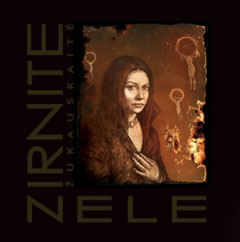
Grafiķe Nele Zirnīte šogad atzīmēja savu 50 gadu jubileju ar izstādi “Laika rezervuārs” Latvijas Nacionālajā mākslas muzejā. Šajā sakarā izdota arī grāmata ar tādu pašu nosaukumu, kas iecerēts kā izstādes katalogs, taču tā dizains un iekārtojums pāraug kataloga robežas. Izdevums ir iespiests trīs valodās—latviešu, lietuviešu un angļu, jo jubilāres izstāde tālāk ceļo uz Lietuvu.

Māksliniece ir lietuviete, grafiku sākusi studēt Viļņas Mākslas institūtā, bet ģimenes apstākļu dēļ—viņa apprecas ar grafiķi Andri Zirnīti – beigusi Latvijas Mākslas akadēmijas Grafikas nodaļu (1984). Kopš tā laika viņa dzīvo un strādā Latvijā, kļūdama par ļoti respektējamu grafiķi. Viņa strādājusi par pedagogu vairākās augstskolās, ir Latvijas Mākslinieku savienības biedre un sabiedriskās organizācijas “Grafikas kamera” valdes locekle un oforta darbnīcas vadītāja.

Zirnīte ir plaši pazīstama pasaulē, rīkodama gan personālizstādes (arī dažādās ASV pilsētās, Ksantivā (Xativa), Spānijā), gan piedalīdamās dažādos konkursos, saņemdama respektējamas godalgas (Tallinā, Gločesterā, ASV; 2005.gadā – Grand Prix Mazo formu biennālē GRAFIX Breslavā, Čehijā; 2007. gadā—1.prēmija IX Starptautiskajā grafikas biennālē “Josep de Ribera” Ksantivā (Xativa), Spānijā).

Zirnītes grafikas lapas izceļas ar ļoti skrupulozu detalizāciju, tehnisko iespēju izmantojuma perfekciju, tēmu neordināro risinājumu. Centrā cilvēks un daba, cilvēks un kosmoss. Izmantotie tēli bieži nes sevī daudznozīmīgu simboliku un tulkojumu, viņas darbi ir daudzslāņaini, filozofiskajā domā dziļi, ar biezu jo biezu kultūrslāni. Darbos nekas nav pateikts viennozīmīgi, katrs skatītājs tajos ieraudzīs kaut ko sev tuvu.

Tā kā māksliniece pati novelk savus darbus, viņa cenšas panākt to tehnisko pilnīgumu. Zirnīte strādā gan melnbaltajā, gan krāsainajā grafikā, bieži jaucot grafikas tehnikas—visbiežāk akvatintu ar ofortu.

Grāmata mākslas maģistre Eva Rotčenkova iepazīstina lasītājus ar Zirnītes daiļradi, atzīmēdama: “Darbu smalkais, filigrānais un niansētais raksturs atklāj jutīgu personību un demonstrē spēcīgu, arī starptautiski novērtētu māksliniecisko profesionālismu”.

Raksta autore iedziļinās gan mākslinieces tēlu pasaulē, sniegdama rūpīgi analizētu tulkojumu, gan jubilāres darbu tehniskā izpildījuma niansēs. Tas palīdz labāk un pilnīgāk izprast Neles Zirnītes opusu saturu un filozofisko domu.

No sava viedokļa par savu tautieti raksta arī divas kolēģes no Lietuvas – mākslas eksperte Vaidilute Brazauskaite un filozofe Jūrate Baranova.

Izdevuma lielāko daļu aizņem 128 grafikas reprodukcijas un Zirnītes fotouzņēmumi. Pielikumā mākslinieces dzīves dati, personālizstāžu un godalgu saraksts.

Details

Nele Zirnīte. Laika rezervuārs

Eva Rotčenkova et al.

Rīga:  Epicentrs,  2009

Māris Brancis ir mākslas vēsturnieks un autors, vairākus gadus bija Latvijas Valsts arhīva Personu fondu un trimdas dokumentu daļas vadītājs.

Gain Fast’s second album heads in wrong direction

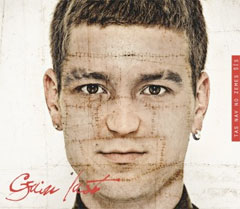
Tas nav uz zemes šīs

Gain Fast’s first album came out in 2007 with a decent amount of commotion—a new concoction of musically inclined, fresh-faced guys with a heart for alternative (possibly Christian) rock. What’s not to like?

But it was entirely by accident and surprise that I learned of the group’s second album Tas nav uz zemes šīs, which came out in 2008 somewhat quietly and with unfortunately little to show for itself. That being said, what one might expect to be a “big bang” before Gain Fast would be put on pause instead, for the most part turns out to be a little lethargic and disappointing.

Since then there hasn’t been much said of the group and, after putting out its sophomore effort the guys decided to take a “well-deserved break.” Several of the group’s members are trying their hands at different projects, among them lead singer Kaspars Zlidnis, who not only has put out a solo single, but has started making on-screen appearances (as the host of the Latvian youth reality TV show “Jaunie Rīgas sargi” (The New Defenders of Rīga) as well as starring in the movie Somebody).

Tas nav uz zemes šīs came out after the release of three singles, “Smaids” (Smile), “Cik laimīgi esam” (How Lucky We Are) and the title track “Tas nav uz zemes šīs” (It’s Not in this World). Gain Fast is made up of Zlidnis (vocals), Didzis Bardovskis (bass), Andžejs Grauds (drums), Gatis Vanags (guitar) and Oskars Tretjuks (keyboard).

The first track of Tas nav uz zemes šīs, “Man nevajag sirdi” (I Don’t Need a Heart), has a funk underbeat to it and is very laid back. But it completely lacks the drive of the first album and does nothing to make me want to keep listening on. The only reason I do keep listening is because I’m waiting for Track 3, “Cik laimīgi esam.”

“Cik laimīgi esam” would technically be my favorite track of the album, though in hindsight I understand it’s more for how the song sounds instead of what it is. The lyrics aren’t all that original. In truth what first drew me to the song was the music video for it. Catchy ‘80s guitar and keyboard combinations lead you through a message about how people take their lives for granted and how even when something is going well, we’re reluctant to admit this is so. I take the song as a nice homage to the double-negative way of looking at the world that Latvians are so accustomed to expressing. The sound is a little reminiscent of the group’s first album, and is at least more dynamic than the first track. I also definitely suggest checking out the corresponding music video.

After that the album is rather unrefined sounding. There are parts where I actually cringe at what I’m hearing and I start to think I know why the album wasn’t highly publicized. Although the album has merit in that each song is different from the last, there isn’t a lot to write home about, unless you count cynical cut-downs. Like the title track? Gaaah! Longest four minutes and 15 seconds of my life. But then oh, scratch that, because I hadn’t been introduced to Track 10 yet.

Another of the album’s “hits” is “Smaids,” which has a more polished sound to it, but is relatively sappy for my tastes. The song is, however, a bit more of a favorite than “Cik laimīgi esam” because of the lyrics: “Vārdu tik daudz šai pasaulē, bet izmantojam mēs tikai nedaudz no tiem. Vai vēlies būt vel tuvāk, vel mazliet tuvāk tikai nedaudz?”

It’s kind of a despair-ridden questioning plea that does pull on the heartstrings. The song also sounds less cookie-cutter because of the breaks in Zlidnis’ voice as he belts out the higher notes. It’s the most grown-up and real sounding piece of the album.

What irks me the most about this compact disc is the incessant use of words like life, heart, love, feelings and togetherness. No, I’m neither jilted nor an emotional void; I’ve cried during a peanut butter commercial before. These words just strike a chord and leave me with two disturbing thoughts: 1) are these words that the music business thinks tween and teenage girls want to and will swoon over? and 2) Dear Lord, are these words that I, as a teenage girl, swooned over?

It’s at this point that I wonder if it’s OK to feel embarrassed or want to take back my gushing response to the band’s first album in 2007, Viss mainījies. But then I go back and listen it and see that there has been a gross decrease in quality. Tas nav uz zemes šīs sits stunted in comparison to its older sibling. Luckily, such online music stores as Platforma Music or DoReMi provide picky listeners such as myself the option of only buying the few tracks that stand out.

The music is all over the place and not in a good way. I can’t really make heads or tails of all of it, minus the two songs I’ve mentioned favorably. True, there are a few bits that are nice touches, such as the choral ending to Track 6, “Saules gaisma” (Sunlight), and the excellent guitar line to the closing track, “Miega dziesma” (Lullaby). The most pressing matter would seem to be for the group to invest in a Latvian thesaurus, or maybe read some of Latvia’s great poets for inspiration in the usage of words. Different ones. Latvian is a rich smorgasbord of literary language, but Gain Fast seems to have skipped out on the buffet and is snacking on power bars.

Details

Tas nav uz zemes šīs

Gain Fast

Platforma Records,  2008

PRCD220

Track listing:

Intro

Man nevajag sirdi

Cik laimīgi esam

Par spīti cerībām un sapņiem

Šīs dienas

Saules gaisma

Ir kāds vārds

Smaids

Tas nav uz zemes šīs

Miega dziesma

Čikāgas Piecīši collection spans group’s career with ‘trejdeviņi’ tracks

Čikāgas Piecīšu zelts

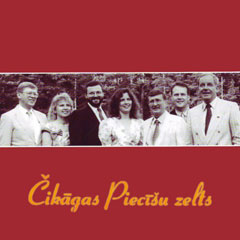
With just two years to go before its 50th anniversary, the Latvian-American group Čikāgas Piecīši shows little sign of slowing down. Founded in 1961, the group is still performing, including a long-awaited return to Latvia that took place in 2008 and a concert during the 2009 Latvian Song Festival in Canada. In conjunction with this renewed activity, the group last year released its first career-spanning retrospective compact disc, Čikāgas Piecīšu zelts. Though the group already released a collection of its older songs, 1996’s Agrīnie gadi, this new collection covers the group’s entire recorded history.

The group has been a rather fluid ensemble, with many participants coming and going, but the central member has always been singer and songwriter Alberts Legzdiņš. Penning almost all of the group’s most recognizable hits, he has tirelessly guided the ensemble over its many decades, making the group, as well as himself, one of the most recognizable entities in Latvian music, with many triumphant performances in the United States, Canada, Latvia and many other places.

Distilling the essence of the Čikāgas Piecīši to one single CD is a difficult task, but Zelts, with its collection of trejdeviņi (27) songs, captures almost all of the definitive musical moments in the group’s history.

One can track the growth and evolution of the group throughout the decades. In the 1960s, when its humor was at its sharpest (“Supermarketā”), Čikāgas Piecīši still contained plenty of the good old Latvian melancholy (“Pēc 20 gadiem”).

In the late 1960s and early 1970s, Legzdiņš went in a different direction, recording two solo albums with singer and guitarist Janīna Ankipāne. Though not officially Piecīši albums, they are represented here by songs like “Sapnis par Latgali” and “Vecpiebalga”.

With the arrival of singer and guitarist Armands Birkens in the 1970s, the Piecīši reformed. The group recorded some of its most popular songs, including “Pazudušais dēls,” “Līgo dziesma” and a personal favorite of mine, “Kurzemnieki Viskonsīnā.”

The Piecīši continued work into the 1980s, with songs taking a more patriotic feel to them, such as “Made in Latvia” and “Par mani, draudziņ’, nebēdā,” but not losing the humor exhibited since the group’s inception, displayed in songs like “Kurpniekzeļļi.”

A nice surprise in this collection is that there are three songs from the group’s underrated 1994 album Vai debesīs būs Latvija? including “Sprīdītis Rīgā,” “1989. gads” and the title track. Though long a musical voice for diaspora Latvians, many of whom longed to visit a free Latvia, the group was no less relevant after the restoration of independence in 1991. Vai debesīs būs Latvija? included songs about the changing times and moods in Latvia itself, as the euphoria from independence began to diminish and the difficult reality of the situation began to present itself.

Conspicuous by their absence are “Es redzēju bāleliņu” and “Mūsu mīlestība,” two very popular songs. However, the CD does contain “Mister, Kurzemniek!” a previously unreleased (at least not on CD, that is) calypso-style song about the natives of Tobago inviting settlers from the Kurzeme region of Latvia to visit them.

The set could have also used a few more selections from the group’s 1960s incarnation, but that era was reasonably well covered by the Agrīnie gadi set.

Album packaging, which has never been the strong suit of these releases, at least contains a few pictures and the group’s album covers, but no lyrics. It would have been nice to get some sort of commentary from at least Legzdiņš on the songs themselves, but my understanding is that he is preparing another book about the history of the group, so that should certainly provide more information.

The release of Čikāgas Piecīšu zelts and the group’s tour of Latvia at the end of 2008 coincided with one of the sadder moments in the group’s history: the death of founding member and long time skit and joke writer Uldis Ievāns. 

A single CD of music is hardly enough to convey the importance of the group and its songs to diaspora Latvians. After all, the songs here are rather simplistic, and the lyrics themselves display a slight, though perhaps intentional, naïveté. But that is one of the main reasons these songs have become so beloved and still today are sung when Latvians get together. Alternatively light hearted, sentimental, patriotic and even poignant, the songs of Legzdiņš and the Čikāgas Piecīši have endured the test of time. Čikāgas Piecīsu zelts is yet another reminder of the group’s contribution to Latvian life.

Details

Čikāgas Piecīšu zelts

Čikāgas Piecīši

Balss,  2008

BA CD 082

Track listing:

Made In Latvia

Mēs puisēni jaun’ būdami

Kurzemnieki Viskonsīnā

Sapnis par Latgali

Ciema meita

Tautas skaitīšana

Sekss ir labs

Pēc 20 gadiem

Vecpiebalga

Turaidas Roze

No Lielupes tilta

Sanfrancisko-Rīga

Ziedojiet, ziedojiet!

Piektdienas vakars

Šūpuļdziesma

Man garšo alus

Līgo dziesma

Supermārketā

Kurpniekzeļļi

Sprīdītis Rīgā

Mister, Kurzemniek!

Ziemeļamerikas polka

Pazudušais dēls

Lai visa pasaule to redz

1989. gads

Par mani, draudziņ, nebēdā!

Vai debesīs būs Latvija?

On the Web

Čikāgas Piecīši

The group’s page on the social networking site draugiem.lv includes samples of songs and a short biography. LV

Čikāgas Piecīši

The group’s site on the Web site of Rīga-based recording company Platforma Music, from which digital downloads of all Čikāgas Piecīši albums may be purchased. LV

Where to buy

Purchase Čikāgas Piecīšu zelts from BalticShop.

Note: Latvians Online receives a commission on purchases.

Egils Kaljo is an American-born Latvian from the New York area . Kaljo began listening to Latvian music as soon as he was able to put a record on a record player, and still has old Bellacord 78 rpm records lying around somewhere.