
Ambitious choir project celebrates the sun

World Sun Songs

Besides leading the prestigious professional choir Latvija, the visionary Māris Sirmais also directs Kamēr…, generally considered to be the best amateur youth choir in Latvia. The choir’s accomplishments are stunning and include victories in several international competitions.

Founded in 1990, Kamēr… has worked directly with many distinguished composers and has released several compact discs.

A few years ago Kamēr… embarked on one of the most ambitious efforts in Latvian choir music history: the World Sun Songs project. The project was inspired by former President Vaira Vīķe-Freiberga, herself a researcher of Latvian folk songs and traditions, who mentioned to conductor Sirmais the great number of folk songs that reference the sun. That led to the idea of performing and recording a series of choir works about the sun by composers from around the world.

Seventeen composers from 16 different countries (from the United States to Uzbekistan, from South Africa to Japan) responded to the invitation, and the results were performed and released in 2008 on the two-disc World Sun Songs

To assemble, learn and perform 17 brand new works is a feat that few other choirs would be able to accomplish. To be sure, this collection is not for the faint of heart. This is modern choir music, which can often be a challenge to sing, not to mention listen to. But for those who endeavor to make the 95-minute journey, the reward is substantial, as you have a collection of choir music by some of the best international composers.

Latvia is the only country represented by two different works, which book-end the collection. “Grezna saule debesīs” by Raimonds Pauls (A Resplendent Sun in the Sky, text by Inese Zandere) begins the set, while the 10-minute opus “Piedzimšana” (Birth) by Pēteris Vasks (text also by Zandere) closes it out.

Pauls’ lyricism and excellent sense of melody shine through the brief (less than two minutes) “Grezna saule debesīs.” Not too surprisingly, given his background as a composer of popular music, the song is the most accessible on this collection.

That an amateur choir was able to commission a work by Vasks is notable, considering the fact that the composer is not very prolific.  True to Vasks’ style, “Piedzimšana” is ominous yet beautiful, with thundering drums performed by Rihards Zaļupe.

Uzbekistan’s Polina Medyulyanova provides the wordless vocal work “Ofiyat,” based upon “Yor-yor,” an Uzbek wedding song. The word ofiyat has multiple meanings, including “cleansing from sin,” “welfare” and “luck.” The work begins with pulsating melodies, featuring the women’s voices, that gradually expand to a crescendo with the men’s voices, then alternating lyrical melodies between the men’s and women’s voices.

Perhaps one of the most difficult works on the album is “Comme un arbuste” (Like a Tree) by Norwegian composer Bjorn Andor Drage, which begins with barely perceptible melodies and rhythms, which transform into a sombre middle, then an anxious and tense finale.

One of my favorites on this collection is “Imet loomas päikesele” (Creating a Miracle for the Sun) by Estonian composer Urmas Sisask. Influenced by astronomy, Sisask’s work combines both modern sounds with traditional Estonian melodies, to weave together a particularly beautiful musical tapestry.

Among other composers showcased on World Sun Songs are Giya Kancheli, John Taverner and John Luther Adams.

The packaging of the CDs contains copious liner notes, in English and in Latvian, both on the project itself as well as write-ups on each composer and the works they composed.

World Sun Songs is an extremely impressive collection not just of songs, but of performances by the amateur choir. Lyrical, melodic and captivating, these songs celebrating the sun from many different international perspectives are a worthy addition to the long list of the choir’s accomplishments.

Details

World Sun Songs

Kamēr…

Kamēr…,  2008

Track listing:

Raimonds Pauls, Grezna saule debesīs

Sven-David Sandström, Ah! Sun-flower!

Polina Medyulyanova, Ofiyat

Bjørn Andor Drage, Comme un arbuste

Stephen Leek, Knowee

Thierry Pécou, Les effets du jour

Hendrik Hofmeyr, Desert Sun

John Tavener, The Eternal Sun

Urmas Sisask, Imet loomas päikesele

Leonid Desyatnikov, Утреннее размышление о божием величии

John Luther Adams, Sky With Four Suns

Vytautas Miskinis, Neiseik, Saulala

Ko Matsushita, Jubilate Deo

Dobrinka Tabakova, От Слънце Родена

Alberto Grau, Salve al celeste sol sonoro

Giya Kancheli, Lulling the Sun

Pēteris Vasks, Piedzimšana

On the Web

Kamēr…

Official Web site for the youth choir Kamēr…, led by Māris Sirmais. EN LV
Egils Kaljo is an American-born Latvian from the New York area . Kaljo began listening to Latvian music as soon as he was able to put a record on a record player, and still has old Bellacord 78 rpm records lying around somewhere.

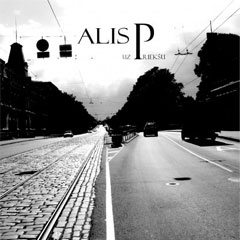
20 years is long time to wait for Alis P, but worth it

Uz priekšu

Twenty years after Latvian-Swedish band Alis P released its first album, the sole remaining member has returned with Uz priekšu. The group was founded in 1979 by Gundars Rullis (vocals and bass), Māris Rozenbahs (drums) and Pēteris Šmitmanis (guitar), and released its first album, Alis iet pastaigāt, in 1988.

Today, Rullis is the only remaining member of the group, and performed all guitar, bass and vocal parts on Uz priekšu. He was joined in the recording by Swedish drummer Svante Drake.

Alis P has always been a “do it yourself” kind of group. The spirit of its music has been based in simplicity, rather than complex arrangements and songs —an almost “punk” style, if you will. In fact, the album notes state that “the songs were recorded and worked on in the kitchen and in bedrooms.” However, Alis P has been influenced by many different types of music throughout the years, including new wave, blues, rock, punk, even folk elements (the band’s Latvian version of Bob Dylan’s “Shelter from the Storm,” entitled “Aizvēja,” was a hit for both Alis P and Bet Bet).

Uz priekšu is certainly a unique record in the Latvian rock world. Where today many groups concentrate more on making sure all their songs have a slick and polished song, Alis P happily presents an enjoyably rough-around-the-edges style of music, with the focus being on the songs themselves. With many recordings today, one can tell that computers were overused when creating the music, taking much of the soul and spark out of the music. Thankfully, Uz priekšu exhibits quite the opposite: a vitality and freshness that one doesn’t hear much of in Latvia.

Rullis’ lyrics contain a notable amount of sentiment and reflection, even after 30 years. As if to answer the question about why it took 20 years to release another album, the song “Kā var 20 gadi” reflects upon the quick passage of time and asks where did all the time go, with Rullis mentioning many things he would still like to do in life, such as see the art of Michelangelo in Rome and eat oysters in France.

Another song along those same lines is “Arī panki precās,” about how even punks, who supposedly rebel against just about everything that has come previously, eventually do settle down and get married and have children, as well as reflecting on their past with humor.

Certainly, the rock element of this record is not missing, as exhibited by the rough riffing of the opening number “Gaismas ceļš,” and the aggressive sounds of “Es gribu (iet gulēt),” where Rullis is joined by members of Latvian hard rock ensemble Dzelzs vilks on the chorus. There is also the dirty blues of “Vienmēr bēdas,” where Rullis lists things that can bring sadness, including cholesterol, bills, debts, not to mention women.

A more mellow moment on the record is “Tālu, tālu Latvijā,” a melancholic song about those who choose to stay in Latvia, and those who choose to depart to live and work elsewhere. Also, the tiny village of Naukšēni in northern Latvia gets another mention in a rock song (Labvēlīgais tips had first name-dropping it in its song “Naukšēnu disko”).

The song I like the most on the album is “Atzīstos,” which, at first listen, is simply about enjoying riding around Rīga on the tram. But the song is far deeper than that. It is about how even a tram can be a source of peace and tranquility at times, and of all the different types of people and places that can be seen from the windows—even in a smaller city like Riga.

Rullis speaks lyrics by Latvian-Swedish poet Juris Kronbergs in the song “Ņujorka,” where Kronbergs details an adventure around New York City and the many different types of people and places he encounters on that journey.

Twenty years is certainly a long time to wait for another album, but Alis P has made a record that made it worthwhile. With Rullis’ honest, plainspoken lyrics, not to mention simple, yet effective, songs, Uz priekšu is a refreshing change of pace from the slew of overproduced albums to be found in record stores today. At times exuberant, other times somber and subdued, this record is a truly emotional journey covering many different styles and sonic textures, making for a very enjoyable album.

Details

Uz priekšu

Alis P

Gauja Records,  2009

GAUJA 006

Track listing:

Gaismas ceļš

Zinu, zinu

Kā var 20 gadi

Uz priekšu

Vienmēr bēdas

Man salst

Es gribu (iet gulēt)

Atzīstos

No Tapešu ielas

Arī panki precas

Tālu, tālu Latvijā

Ņujorka

On the Web

www.alispudelis.lv

The Web site of Alis P provides a history of the band and samples of its music. LV

Egils Kaljo is an American-born Latvian from the New York area . Kaljo began listening to Latvian music as soon as he was able to put a record on a record player, and still has old Bellacord 78 rpm records lying around somewhere.

Band’s rebirth results in great rock album

Otra puse

Formed in 1992, the Latvian rock band Otra puse has been reborn and has released two albums since 2007. (Publicity photo)

Nakts vai rīts

The rebirth of the band Otra puse has been one of the most welcome events in Latvian popular music in recent years. Originally founded in 1992 by former members of Jumprava, the group recorded a number of great songs in the early 1990s, only to go very quiet for the next decade or so. After reintroducing itself with the retrospective album Pēc lietus in 2007, the group set about working on an album of all new songs, releasing Nakts vai rīts earlier this year.

Returning for Nakts vai rīts are vocalist Normunds Pauniņš as well as keyboardist Ivars Makstnieks. Guitar duties are divided between Gints Saulītis and current guitarist Arnolds Kārklis (formerly of the Latvian-American band Akacis and a member of Otra puse in the early 1990s), bassist Mārtiņš Burkevics and drummer Rihards Zaļupe. The music was written by Pauniņš and Makstnieks. As in the early 1990s, the lyrics to a number of the new songs are by Ivars Kurpnieks.

The group’s music, as always, is based around synthesizers and keyboards, as evidenced by the opening title track “Nakts vai rīts,” one of my favorite songs on the album. It has all the hallmarks of earlier songs by Otra puse: catchy, romantic lyrics (that neither night nor day will help forget someone); the unique and passionate voice of Pauniņš; and the intricate synthesizer work of Makstnieks.

Included is an ode to the capital of Latvia, simply called “Rīga,” in which the singer wishes to be wound into the beloved and endless city. Also on the album is the captivating “Ieskaties,” one of the first songs the band recorded after reuniting (and also included on the Pēc lietus collection). “Ziemas šūpuļdziesma” is a beautiful song with a Christmas theme, featuring as guest vocalists Hobos frontman Rolands Ūdris and new singing star Aisha.

I also like the fact that although there is a heavy emphasis on keyboards and synthesizers, they never overwhelm the music, such as on “Dievs dod” (lyrics by Ūdris), featuring a particularly memorable vocal by Pauniņš.

Not only is the return of Otra puse very welcome, but I think the band has exceeded all expectations in its return with this truly great album. Proving that its success in the early 1990s was no fluke, and building on the Pēc lietus collection, many of the songs on the album have already become hits locally. Nakts vai rīts is one of the best Latvian rock albums in recent memory. Now let’s hope the group does not disappear for another decade.

Details

Nakts vai rīts

Otra puse

Platforma Records,  2009

PRCD228

Track listing:

Nakts vai rīts

Rīga

Savādā

Lombo

Kad paliek auksts

Dievs dod

Ieskaties

Jūtu ceļotājs

Mans okeāns

Atbalss

Ziemas šūpuļdziesma

On the Web

Otra puse

The band’s official Web site includes a biography, videos and other material for fans. LV

Otra puse

The band’s page on the social network draugiem.lv. LV

Otra puse on MySpace Music

The band’s page on MySpace has some song samples and photos. EN

Where to buy

Purchase Nakts vai rīts from BalticShop.

Note: Latvians Online receives a commission on purchases.

Egils Kaljo is an American-born Latvian from the New York area . Kaljo began listening to Latvian music as soon as he was able to put a record on a record player, and still has old Bellacord 78 rpm records lying around somewhere.