Režisors Streičs pārsteidz ar veltījumu Blaumanim

Romualds Ancāns

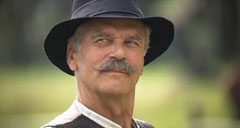
Romualds Ancāns filmā Rudolfa mantojums tēlo Rūdolfu.

Rūdolfa mantojums ir jaunākais Latvijas pilnmetrāžas kino ražojums plašākai publikai. Atzīšos, ka es uz to aizgāju lielākoties aiz pienākuma sajūtas, ka vietējā prece jāatbalsta (un jo draudzene aicināja), nevis aiz īstas sajūsmas par filmas ideju vai sižetu. Bet laikam jau nu biju arī ziņkārīga…

Filmā, protams, var atrast par ko piekasīties, bet es biju pārsteigta cik man – skeptiķei – viņa tomēr patika. Īsumā, Rūdolfa mantojums ir režisora Jāņa Streiča veltījums latviešu rakstniekam Rūdolfam Blaumanim un viņa brīvā interpretācija par notikumiem pirms Blaumaņa pazīstamās lugas “Skroderdienas Silmačos”. Tāpēc filmas nosaukums. Bet arī tāpēc, ka viens no galvenajiem tēliem saucas Rūdolfs. Nav tomēr vajadzīgi pazīt Skroderdienu stāstu, lai izbaudītu un saprastu filmu.

Režisors ir devis Skorderdienu tēliem citus vārdus un arī pārnesis darbību uz vēlāku laiku nekā Blaumaņa darbā. Tātad, Streiča Rūdolfs ir turīgs zemnieks 20. gadsimteņa pašos pirmajos gados. Viņš ir vecāks kungs, kas saimnieko skaistā lauku sētā. Pēc dabas Rūdolfs ir labs cilvēks, bet viņš ir lepns – pat iedomīgs – un sacenšas ar vietējo muižkungu. Pie Rūdolfa ciemos atbrauc krustdēls Kārlis ar draudzeni – kalponi Emīliju, un tālāk veidojas filmas galvenais sižets: mīlestības trīsstūris, kurā Rūdolfs ir viens no dalībniekiem. Filma ir viegla un ar labu humoru, bet ir arī nopietnas ainas. Lai arī filmā ir daudz joku, tie laimīgā kārtā nav veidoti tikai uz laucinieku rēķina. Tas ir, filmā attēlotie zemnieki lielākoties nav “Johnny Appleseed” tipa karikatūras, kas prot tikai ākstīties un dumji uzvesties un kādi pārāk bieži redzēti Latvijas filmās, teātros un pat tautas dejās.

Rūdolfa mantojums ir filmēts retro stilā, šur tur lietots sēpijas tonis un iestarpinājumi, kas atgādina vecās kinolentes. Šis stils filmai ir piemērots un tas manuprāt ir arī labi izdarīts. Bet filma ir arī mūsdienīgā tajā ziņā, ka tā notiek ātri – ātri mainās ainas, aktieri ātri runā, reizēm pat notiek divas sarunas vienā laikā. Skatītājam ir ko turēties līdzi! Var gadīties, ka tas aizsapņojas un palaiž garām kādu sižeta blakuslīnijas detaļu. Lai nu kā, galvenais stāsts paliek viegli saprotams.

Komponists, mūziķis un dziedātājs Uģis Prauliņš sarakstīja tautisku mūziku filmai. To spēlē riktīga lauku kapela, un nezinātājs varētu domāt, ka filmā izmantota tikai autentiska tautas mūzika. Bet filmā dzird arī pazīstamas ziņģes un folkloras ansambļu gabalus, un svinību ainās atpazīstami Rīgas Danču kluba dejotāji, kas liek ticēt, ka dejas ir autentiskas 20. gadsimta sākumam. Tāpat kā ar augšminētiem “Johnny Appleseed” lauciniekiem, tik dominējoša tautas mūzikas izmantošana šādam masu publikas projektam varēja potenciāli izdoties ļoti slikti. Bet Streičs un Rūdolfa mantojums to ir izdarījuši patiesi veiksmīgi. Īpaši aizkustinošas ir bēres- to dēļ vien ir vērts redzēt filmu.

Rūdolfu tēlo aktieris Romualds Ancāns. Rēzija Kalniņa spēlē galveno sieviešu lomu – Emīliju – un Artūrs Skrastiņš krustdēlu Kārli. Lai arī abi pēdējie savām lomām īstajā dzīvē ir par vecu, viņu tēli labi izdodas un ir ticami. Pazīstamie aktieri Uldis Dumpis un Jānis Paukštello arī tēlo filmā.

Protams, ka būs skatītāji, kam Rūdolfa mantojuma stils neies pie sirds. Galu galā, tā ir Blaumaņa garā veidota filma un skatītājs nevar no tās Skroderdienu gaisotnes izsprukt. Uz filmu var vest bērnus līdzi – tajā ir tikai pāris neuzbāzīgi kailumi un nav vardarbības, lai gan aina ar tramvaju ir satraucoša – bet ļoti iespējams, ka saturs viņiem būs garlaicīgs. Savukārt pieaugušajiem tas patiks.

Details

Rūdolfa mantojums

Jānis Streičs

Cinevilla Studio un Platforma Filma,  2010

Notes: Komēdija un drāma. Krāsu, 114 minūtes. Latviešu valodā. Režisors: Jānis Streičs; galvenājās lomās: Romualds Ancāns, Rēzija Kalniņa, Artūrs Skrastiņš, Uldis Dumpis un Jānis Paukštello.
Just another travel guide? For Rīga, fortunately not!

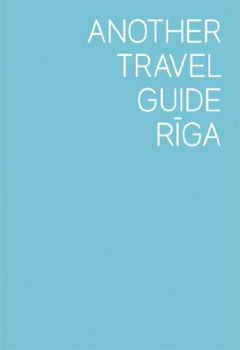
Another Travel Guide Rīga

Are all travel guides the same? Is this really just “another travel guide”? Fortunately not! Around Christmas a breath of fresh air could be felt wafting through the streets of RĪga. Although Rīga was in the depths of a financial crisis, this has not been a hindrance to many creative souls in the capital. New shops, cafes, cafeterias have sprung up. The new travel guide, Another Travel Guide Rīga is proof of this itself. The guide is presented in an unusual format—proving that not all travel guides are of the same ilk.

The places described in the guide also show the ingenuity of the local community, not only among artists but all manner of entrepreneurial types, people who have brought their ideas to life in the past six months and opened their own small business. The phenomenon has most certainly been aided by the Latvian government lowering the costs associated with registering and setting up a business, but these incentives would have fallen on deaf ears if the ideas had not been latent, waiting for their time to arrive.

The brainchild of the creators of anothertravelguide.com, a Web site for intrepid travellers, the travel guide differs first in its look. The cover is one tone, made of rudimentary canvas, the outer spine multicolored as it is unbound. This half-finished look does not translate to the contents, however. The book is a very friendly compendium of unique places to visit or activities to try out while in Rīga. And not only of the recently opened kind. While most run-of-the-mill guide books will have the standard yawn-inducing photographs and descriptions of must-see sights, this guide provides a succinct list of the places in Rīga that are slightly quirky, sometimes off the beaten track, often unheard of by tourists, a well-kept secret of the locals.

Then there is the language issue. It is still surprising to see guide books written supposedly with the tourist in mind but with the foreign language still embarrassingly lacking. Often the only language that is of high quality in these guide books is Latvian—great for the locals, who often know the subject matter inside out anyway. This guide book is different. The language of choice is English and the language is top-notch, so you are spared the customary cringe when reading the text.

At first glance this guide is aimed at the twenty- and thirty-something crowd. Covered are cool trinket shops, trendy galleries, cheap eateries—mostly meant for those who are still in a perpetual state of finding themselves. Glance a bit further and you’ll see gems uncovered that are priceless: the local Vidzeme Market for its fresh produce; the Maternity Hospital for its fresh produce of a different sort; the Latvian Academy of Sciences for its architecture (love it or hate it, but it has a character of its own); the Sakta Flower Market, for flowers 24/7; the New Rīga Theatre with its avant garde approach, still going strong. Together with the legendary stalwarts of the city such as Café Osiris, the chess players at Vērmaņu Park, the ice fishermen (or bļitkotāji, as they are referred to by the locals) on the Daugava River and the Latgalīte Market, these people and places are all woven into the fabric that is the city of Riga.

Rīga is not only the Old Town and the few streets beyond. This vibrant city has many suburbs, some worth noting, some not so much. The more vintage of these, only getting a second lease on life in the past few years as they are rejuvenated, are the places to get to before they are fully refurbished. The thrill of viewing the run-down juxtaposed with the brand-spanking new is still to be had and is applicable to the Maskavas Suburb, Andrejsala, Ķīpsala, Pārdaugava, Bolderāja, the Spīķeri Quarter, Kundziņsala, to name only a few.

Another Travel Guide Rīga reveals the secrets of the locals, unveils the recent undertakings of folks who are brave and creative, and also looks at the traditional from a new perspective.

Details

Another Travel Guide Rīga

anothertravelguide.com

Rīga:  anothertravelguide.com,  2009

ISBN 9984399192

Daina Gross is editor of Latvians Online. An Australian-Latvian she is also a migration researcher at the University of Latvia, PhD from the University of Sussex, formerly a member of the board of the World Federation of Free Latvians, author and translator/ editor/ proofreader from Latvian into English of an eclectic mix of publications of different genres.

Compilation of audio and visual recordings documents Siberian Latvian culture

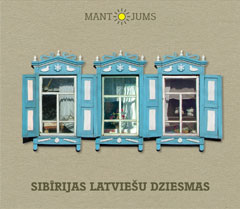
Sibīrijas Latviešu dziesmas

Latvians are scattered throughout the world for various reasons. One of the most remote parts is Siberia. The first Latvians ended up in Siberia in the middle of the 19th century as deportees, later many emigrated to the region hoping to start a new life with the promise of cheap or even free land. In the 1940s and 1950s the biggest influx was those who were deported to the far east by the Soviets. Consequently, Latvians can be found in villages and towns all over Siberia.

Assimilation into the local Russian and other national communities was inevitable. A large proportion of descendants of the original Latvians and Latgalians do not speak their native language or remember traditions, although there have been a few very resilient villages where the culture has survived well into the second and third generations. It is their story that is presented in the audiovisual collection Sibīrijas Latviešu dziesmas.

Since 1975 individual enthusiasts from Latvia have been keen to document for future generations the culture and language of these stalwarts who, defying all odds, still not only speak the language of their forefathers, but also have a mental repertoire of their cultural heritage.

Sibīrijas Latviešu dziesmas is the result of many decades of meticulous work, criss-crossing the Siberian landscape during expeditions to these far-away villages. The beauty of this double-disc edition is the audio and visual elements. Not only can you listen to the compact disc and follow the words of the songs in the liner notes, you can also read the translation in either English or Russian. But the best way of capturing the mood of the Siberian villages is the DVD, as the audio format alone can’t conjure up the image of the singers in their home setting.

The audio tracks—52 in total—show the diversity of songs in Siberia. Some are exact replicas of the folksongs or popular songs (ziņģes) still heard in Latvia today, others have variations on the text and melody. Some, it seems, have “frozen in time” and are songs that were sung in Latvia more than 100 years ago and have since changed their form. Other songs are a merging of traditional Latvian and local Russian songs. Others still have been “brought over” to Siberia during the past decades, as teachers from Latvia who have come to these villages have passed on their cultural knowledge.

The liner notes are particularly informative as they give a descriptive overview of the villages, the different ways each was settled and their fate. It’s also interesting to learn from the liner notes about the different people who have been involved in the expeditions to Siberia through the years and the films and books that have been made about the region. An outline of contact with Latvians from Latvia (or lack of it because of Joseph Stalin’s and later repressions during the Soviet era, where virtually all contact was cut off) over the years is also valuable, sketching in the timeline as well as the ebb and flow of Siberian Latvian village life.

Many of the women singing on the DVD and CD have since passed away, so we are lucky to be able to hear the legacy of this generation before it fades and becomes a distant memory. For various reasons, the DVD leaves one with an uncanny feeling. Here we have modern technology that has captured, almost intruded upon, and documented these elderly farming folk, almost in the manner of a Discovery Channel film, but the object of this documentary is Latvians. The oddest feeling comes over you when you see these women, looking pretty much like any scarfwearing, toothless peasant women from a poor farming community somewhere in Russia. But when you listen closely to the text, you realise that you actually recognise the song! The melody may be different and the singers’ deep, monotonous voices may make it slightly more difficult to recognise, but once you get it, a feeling of sisterhood overwhelms you. Our folksongs are one of our main unifying links—whether we sing them in the heat of the Australian sun, or in the Midwest of the United States, in busy smog-filled Shanghai, in the fields of Zemgale or in these remote Siberian villages.

These are all our people, scattered the world over. This realisation overwhelms because with it comes the duty to not let these songs fade. These songs, and the traditions that go with them, accompany a world-view. If this world-view is forgotten, we will merely become one of the many cultures in the world that have been and gone over the centuries.

So wherever we may be, let’s immortalize these songs by documenting them. But not only that: Let’s teach them to the next generation, and let’s not forget to sing them ourselves and learn new ones every year, so that by the end of our lives we have a mental repertoire like these old folk, the Latvians in Siberia.

Details

Sibīrijas Latviešu dziesmas

Various artists

Upe tuviem un tāliem,  2009

Daina Gross is editor of Latvians Online. An Australian-Latvian she is also a migration researcher at the University of Latvia, PhD from the University of Sussex, formerly a member of the board of the World Federation of Free Latvians, author and translator/ editor/ proofreader from Latvian into English of an eclectic mix of publications of different genres.