Projects collect Latvian life stories

Each of us has a life story, each with a different color and texture, with moments of joy and moments of despair or sadness. Older Latvians’ lives in particular are full of trauma and often tragedy as the Latvian people have been subjugated by neighboring forces in the first decades of the 20th century as a result of two world wars. This was followed by even more tragedy as families were torn apart again in the 1950s by mass deportations from Latvia and at the same time emigration of thousands of families to the United States, Canada, Australia and various countries in Europe.

One way of documenting these biographies is by recording the oral histories of individuals. This way a physical recording or written transcription of a person’s life story can be passed on to future generations. Just as Krišjānis Barons recorded Latvian folksongs in the 19th century, there are many researchers continuing his job and adding much more to the documentation of people’s lives.

One project involved in this is Dzīvesstāsts (Lifestory), undertaken by the Institute of Philosophy and Sociology at the University of Latvia. Called the National Oral History project, its aim is to record the life stories of people with a connection to the nation of Latvia “regardless of the ethnicity or nationality of the interviewee who is an inhabitant of Latvia or where—even outside Latvia—this lifestory is recorded.” The material collected via these interviews provides resources to various fields of academic research: sociology, social and cultural anthropology, linguistics, individual and social history, ethnology, and folklore psychology. The Dzīvesstāsts project has a partner, “Dzīvesstāsts – trimdā” (Lifestory – Diaspora), with coordinator Maija Hinkle in the United States organising interviewers who, in contrast to the project in Latvia, work independently, thousands of miles away from one another, according to the Web site.

A similar project homes in on an even more specific group, the refugees from Latvia living in German Displaced Persons’ camps after World War II. The project, called DP Albums, invites people to send in testimonies as well as photographs of life in these camps. The team involved in this project is an eclectic group all too young to remember the events but keen to document them as they are part of their heritage. Funded by various foundations and associations with an interest in supporting Latvian cultural heritage projects, this is one project with a “use-by date,” as those who remember the DP camps age and pass away.

An interactive virtual encyclopedia project is Latvijas ļaudis uz 21. gadsimta sliekšņa (Latvia’s People at the Turn of the 21st Century), where individuals are invited to add biographical data about people who have “contributed to promoting Latvia’s freedom and growth. The people, who are the real wealth of our country, will write a book about themselves, thus creating a collective portrait of the country.” Collating Latvian biographies since 2002, the project is partially funded by the Soros Foundation. The biographies that can be seen there so far are a real cross-section of the community, both those Latvians living in Latvia as well as those who have lived outside Latvia for the past six decades. Many are people with a recognizable name, outstanding each in their particular field, while others have been “quiet achievers” who have made a significant contribution nonetheless.

All these projects have helped to document the personalities, both big and small, that have helped to create the mosaic of Latvia and its people. Each person and family has their own thread to add to the complex tapestry of Latvian history.

Details

Daina Gross is editor of Latvians Online. An Australian-Latvian she is also a migration researcher at the University of Latvia, PhD from the University of Sussex, formerly a member of the board of the World Federation of Free Latvians, author and translator/ editor/ proofreader from Latvian into English of an eclectic mix of publications of different genres.

Higinsoni covers folk songs with punk, metal

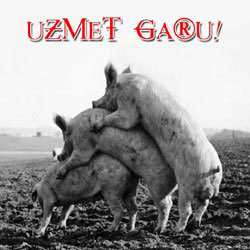
Uzmet garu!

A promotional photo of the band Higinsoni shows two masked Santas, one military man and a wig-wearing “I ‘heart’ NY” T-shirt-sporting mystery man. Whatever first impressions this may suggest, it turns out the band’s debut compact disc Uzmet garu! is just another modern take on traditional Latvian folk songs. It actually doesn’t get more normal than this.

Higinsoni (Zoltāns, E Minor, Blokis and Tēvocis) are a self-proclaimed four-man ethno-punk-metal band from Latvia—or Sweden. The album insert (as well as Web site) says Higinsoni, the grandsons of Latvian emigrants, arrived in Rīga toward the end of 2005 and, after a few month’s hardships and a side job of stealing light bulbs only to resell them at the market, wound up in the music business. One can guess the information is largely fictional—the band’s Web site updates happenings and events that seem too outlandish to be true—but the “information” is entertaining enough. Unfortunately, their music doesn’t match the animation of their write-up.

The album started out well enough, with a peppy ska-goes-death-metal rendition of “Mīlu mazo Lulu.” This song will doubtless bring up memories for people other than myself, as “Lulu” was a song often sung at the weekly Gaŗezers vasaras vidusskola campfires in Michigan. The opening is played by an accordion, which sets up that intimate campfire feel. Then the ska-punk beats kick in, followed by some heavy metal guitar and screaming, gravely vocals. For a first track it’s not spectacular, but so far it had my attention, which is what counts.

The album’s second track, “Kur gaismiņa,” flat out did not impress me. Unlike “Mīlu mazo Lulu,” this is a traditional folk song.  However, the track was a disappointment. It sounds like the band is trying too hard to achieve…whatever it is the band is trying to achieve.

That being said, the beginning of the third track, “Div’ dūjiņas,” made me very nervous. It’s happened before. Bands will lull you into a false sense of “this CD is good, we promise!” with track one, and then it’s all the same the rest of the way through. “Div’ dūjiņas” redeems itself quickly and becomes a less depressing version of the popular folk song. The track is overall well executed and the instrumental break is even catchy.

Track four keeps up appearances with “Līgo.” A bit of a tribal-sounding intro and nicely harmonized vocals balance out the heavy metal break in the middle of the song. “Līgo” shows Higinsoni at its highest point in the album. The song is not only the best track on the album, but it is the most originally done out of all of the covers. It even has a hint of Korn toward the end, accompanied by a very James Bondesque bass guitar line.

From this track on most of the songs are a monotony of synthesizer, heavy guitar and vocals.  It’s one of those albums that starts to drone on after a while. The attention span of a person can last only so long, and once the rhythm and sound patterns are exhausted, it’s over. 

Two more tracks should be noted: “Tur es biju tur man tika” and “Mērkaķītis.”

“Tur es biju tur man tika” is worth mentioning because it strikes me as one of those songs that are heard anywhere Latvians and beer can be found. The track starts off calmly and sweetly enough, then rails into the good old “Šur tur, it nekur, krodziņā zem galda!” Another point of interest in the song is toward the end, where a musical break closely resembling George Michael’s “Faith” is heard. If anything else, Higinsoni isn’t oblivious to catching the attention of listeners familiar with classic riffs.

“Mērkaķītis” is another one of those songs sung at Latvian children’s camps. What surprised me is that Higinsoni decided to go with the “clean” version of the song:

Manu mazo mērkaķīti, ū-ū-ū,
nepaliec par vientulīti, tu tu tu,
noglaudīšu tavu galvu
sasukāšu tavu spalvu
došu tevīm mazu bučiņu.

If you don’t know the “unclean” version, then you probably didn’t go to a Latvian kids camp.

I can think of a handful of my friends who would get a kick out of this album for a party scene, but I don’t think that it would make a reoccurring appearance. It doesn’t offer anything that permanently catches one’s attention, that stays on the mind days or even hours after listening to it. I would hope that if the band puts out another album, Higinsoni will explore its abilities and try to shake things up a bit more. The band comes across as a highly creative group of guys, and it would be nice to see that creativity applied to the music.

Higinsoni

Higinsoni, a band said to be made up of the grandsons of Latvian emigrants to Sweden, plays in an ethno-punk-metal style on its debut album. (Promotional photo)

Details

Uzmet garu!

Higinsoni

MICREC,  2006

MRCD 318

Where to buy

Purchase Uzmet garu! from BalticShop.

Note: Latvians Online receives a commission on purchases.

‘Asya’s Laws’ autore atbild recenzijai

Asya's Laws

(Redaktora piezīme: Seko rakstnieces Asjas Raines atbilde 2007.g. 7.februāra recenzijai Laikam mīlestības stāsts, taču grūti spriest.)

Pirmkārt, gribu atvainoties par recenzentes minētām kļūdām vēsturiskajos faktos, kuras tika pieļautas grāmatā. Es atdzīstu atbildību par tām.

Bet es nejūtos atbildīga par recenzentes Ilzes Ostrovskas rūgtajiem vārdiem un indīgo jūtu plūdiem pāri manam dzīves stāstam. Jā, mēs dzīvojām Latvijā padomju laikos. Jā, mēs necīnījamies pret to un arī nebēgām no tās. Mēs centāmies, neraugoties uz padomju sistēmas bezjēdzībām, audzināt sevis un mūsu bērnus par noderīgiem cilvēkiem, spējīgiem darīt darbu, domāt, mīlēt, būt labiem draugiem, cienīt savas zemes dabu, cilvēku darbus un baudīt mākslu – ne tikai latviešu tautas mākslu, kuru es pazīstu un mīlu no agrās bērnības, bet arī vispasaules mākslas vērtības, kuru skaitā ir angļu, franču, vācu, amerikāņu, japāņu, itāļu, krievu, lietuviešu, igauņu un citu tautu literatūra, teātris, mūzika un glezniecība.

Es neiešu cauri visai recenzijai, tāpēc ka tajā ir pārāk daudz naida, un tā ir drīzāk personiskais uzbrukums, nevis grāmatas kritika. Kad recenzents ievieto savas domas un attieksmes autora domu vietā, tad grāmata vairs nav uztverama kā autora darbs.

Nobeigumā gribu tikai piebilst, ka recenzente nespēja saprast, cik spēcīgas un dziļas ir manas jūtas pret Latviju. Tā ir mana dzimtā zeme, un ne recenzentes rūgtums, ne viņas naids nevar to mainīt. Ņemiet to, kā vēlaties – es mīlu to Latviju, kurā es izaugu, un es mīlu šo jauno Latviju, kuru es apciemoju tagad, cerot ka tā tiešām kļūs par augsti civilizētu valsti, kuras valdība rūpēsies par visu iedzīvotāju labklājību.

Ostrovskas kundzes recenzija atgādināja man otro Atmodas vilni, kad neatkarības vienotajā svinēšanā sāka iejaukties neliels, bet diezgan skaļš demonstrantu pulks ar plakātu ”Latvija Latviešiem!” Bet, gribot vai negribot, arī latviešiem ir jāatzīst, ka neviena tautība nevar izdzīvot pati par sevi šodienas jaunajā datoru tehnikas un vispārējās integrācijas pasaulē. Latvijas iestāšanās Eiropas Savienībā un NATO to pierāda.

Novēlu Jums visu labu un ceru , ka Ostrovskas kundzes dzīvē kaut kas mainīsies uz labāko, un viņa būs spējīga redzēt ne tikai tās tumšās krāsas, un sapratīs, ka pasaulē pastāv lietas, svarīgākas par nacionālo identitāti. Viena no tām ir Mīlestība.

Details

Asya’s Laws

Asya Raines

Farmington Hills, Mich.:  Right Brain Books,  2006

ISBN 0976386828

On the Web

Asya’s Laws

Vairāk informāciju par grāmatu Asya’s Law var iegūt grāmatas oficiālā interneta lapā. LV

Where to buy

Purchase Asya’s Laws from Amazon.com.

Note: Latvians Online receives a commission on purchases.