Remnants of 19th century Industrial Revolution found around Latvia

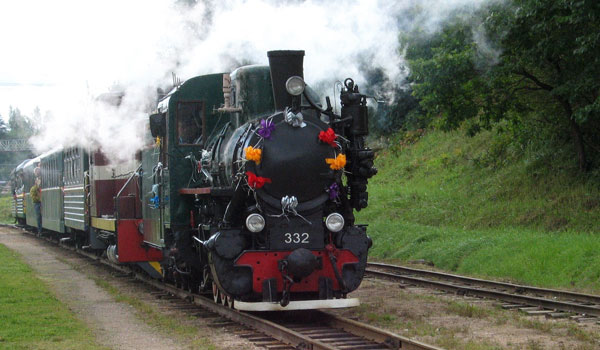
Bānītis

The Kč-4-332 steam engine was restored in 2005 and runs on the Alūksne-Gulbene narrow gauge railway line. (Photo courtesy of the Industrial Heritage Trust of Latvia)

The Industrial Revolution was born in 18th century Britain with the cotton mill, advances in metallurgy and the harnessing of steam to mechanize production and transportation. Society was transformed as labourers abandoned the countryside and small workshops to work in factories that in turn spurred the rise of modern industrial cities.

Although steel manufacturers and shipyards can be traced back to the Duchy of Courland and Swedish Vidzeme in the 17th century, Latvia had to wait until the 19th century before it was hit by large-scale mechanization. The first modern factory in Latvia was the cast iron foundry and machine shop Wörman & Sohn, founded in Rīga in 1832. Textile and paper mills and tobacco factories soon followed.

The 1870s and 1880s saw the explosion of large-scale industry as Rīga became a major industrial centre in Czarist Russia. Liepāja also followed. Industrial enterprises that became known throughout Russia included the Russo-Baltique carriage factory, which later produced tanks and airplanes; the Leutner & Co. bicycle factory; the Phoenix carriage factory, which went on to build automobiles; the electronic concern Union, which later became the renowned VEF (Valsts Elektrotehniskā Fabrika, the State Electrotechnical Factory); rubber manufacturer Provodnik; the Waldschlöschen Brewery, which is still in existence as today’s Aldaris; Wolfschmidt’s distillery; A. Kriegsman cork factory; the naval workshops in Liepāja; the Līgatne paper mill, and many others. The names of these enterprises attest to almost exclusive ownership by Baltic Germans.

On the eve of World War I, there were 1,032 industrial enterprises in Latvia and the 753 biggest ones employed 108,565 labourers. During the war, the machinery from many factories was evacuated to the Russian hinterland, severely setting back industry in independent Latvia.

The Industrial Revolution also saw the mechanization of transportation and the introduction of railways, which stimulated manufacturing by providing a cost effective method to distribute manufactured goods. The railroad arrived in Latvia in 1860 when the Warsaw–St. Petersburg line crossed eastern Latvia through Daugavpils and Rēzekne. A year later the Rīga–Daugavpils line was completed and was then connected to the rail network in Russia. It stimulated the growth of Rīga’s harbour. Liepāja and Jelgava were connected soon afterwards. By 1877 there were 799 kilometres of railways in Latvia. At the turn of the 20th century, the construction of narrow-gauge railways began as branch lines to connect rural towns. They fell into disuse in the 1950s and 1960s as the automobile and trucks took over. The last of the narrow-gauge lines survives on the 33-kilometre run from Alūksne to Gulbene and is now a popular tourist attraction.

Industrialization required labour and 19th century Latvian factories were fuelled by newly enfranchised but landless peasants and labourers who flocked from the countryside to the towns and cities. The population of Rīga ballooned. Between 1881 and 1900, for example, it jumped from 169,000 to almost 300,000. Factories were concentrated in newly founded industrial districts such as Sarkandaugava, a few kilometres downstream from Rīga on a branch of the Daugava River. One of its main arteries is still named Tvaiku iela (Steam Street) and attests to the area’s industrial roots. Workers were housed in two- and three-storey rooming houses that sprang up around the factories. These neighbourhoods helped spawn Jaunā strāva (the New Current social democratic workers movement) and were the breeding grounds for the violent 1905 Revolution that exploded in Rīga and spread to the rest of Latvia as workers rose up against their German and Russian overlords demanding better working conditions including shorter hours and higher wages.

Other technology and communication milestones in Latvia include: the first postal station established in Rīga under Swedish rule in 1632 and linked with Jelgava, Liepāja and Konigsberg; building of a pontoon bridge across the Daugava by Swedish army engineers in 1702; the first hot air balloon flight over Jelgava in 1785; an optical telegraph or semaphore telegraph line that crossed Latvia on its way from St. Petersburg to Warsaw; the first telegraph line strung between Riga and Boderāja in 1860; the opening of the Rīga Polytechnic Institute in 1862; the establishment of a water utility system in Rīga driven by steam powered pumps in 1863; laying of an international underwater telegraph cable between Liepāja and Denmark in 1868; the 1874 introduction of the omnibus or horse drawn carriages as a means of public transport in Rīga; horse drawn streetcars and a telephone exchange that could handle up to 3000 subscribers in 1882; the introduction of electric lighting in factories in 1884; showing of the first movie film and introduction of imported automobiles from France in 1896; the first electric street cars in Rīga as well as the opening of the Smiltene hydroelectric plant, both in 1901; electric power transmission with the 1905 opening of the thermal power plant at Andrejsala; the roll-out of automobile taxis in Rīga in 1907 followed a year later by intercity bus transportation; and the first powered aircraft flight in Latvia that lasted 56 seconds in 1910. One would be remiss not to mention the 1937 start of the mass production of Minox, the world’s smallest camera, by VEF.

Latvia is also home to two survey points of the Struve Geodesic Arc, a chain of survey triangulations stretching from Norway to the Black Sea established between 1816 and 1855 by Tartu-based Russian scientist Friedrich Georg Wilhelm von Struve (1793-1864)  in order to measure the Earth. Both points are in the UNESCO World Heritage List. One is in Strūve Park in Jēkabpils and the other is at Sestu Hill or Ziestu Hill south of Ērģļi.

Fast forward to 2001 when the Industrial Heritage Trust of Latvia was founded to survey, research, preserve and promote Latvia’s industrial, scientific and technical legacy. It was the successor to the Latvian Technical Monument Trust established earlier in 1992. The trust is a non-profit volunteer organization that unites researchers, academics, engineers, architects and enthusiasts.

The trust has published a number of books including No Leitnera līdz Ērenpreisam. Velosipēdu rūpniecība Latvijā 100 gados, which is a history of bicycle manufacturing in Latvia between 1886 and 1963; Vidzemes bānītis, a history of the narrow gauge railroad between Alūksne and Gulbene; the multi-lingual publication Latvijas industriālā mantojuma ceļvedis or Guide to Industrial Heritage of Latvia; and Dzelsceļi Latvijā or Railroads in Latvia, published separately but one of whose authors is a board member of the trust. Some publications can be found in Rīga bookstores, while others like the guide are hard to find and are best sourced by directly contacting the trust.

The trust has also initiated a number of projects including the restoration of the Kalnienas railway station and the 2005 restoration of a Kč-4-332 steam engine, both on the Gulbene–Alūksne line as part of the international SteamRail.Net program; the restoration of the Gr-319 steam engine; the assessment of heritage railroad stations across Latvia; participation at various international conferences; and the creation of a comprehensive database of industrial heritage sites.

Defining objects of interest for the trust was not quite as easy as it sounds. According to the trust’s Chairman Andris Biedriņš (no relation to the NBA basketball star), one could argue that castle ruins and hill fort sites that date back to the ancient Letts and the Teutonic Knights could be included along with later military fortifications such as the Daugavgrīva fortress at the mouth of the Daugava River re-built during Swedish rule. Likewise in other countries, remnants of Roman smithies might be objects of interest along with 19th century foundries. The trust had to draw the line somewhere and it focuses on industrial objects enabled through modern manufacturing, construction and communication technologies that took root in Latvia primarily in the 18th and 19th centuries in what is commonly called the Industrial Revolution.

The Guide to Industrial Heritage of Latvia lists 230 objects of interest divided into the following categories: factories and manufacturing plants; water and wind mills; thermal and hydro electric power plants as well as sub-stations; roads and bridges including viaducts, postal relays stations and mileposts; railways and railroad stations; lighthouses, harbour pilot towers, dams, dikes, canals and dry docks; public utilities such as transit, water supply systems and fire halls; as well as fortresses, fortifications and cannons. Although objects are scattered throughout Latvia, the largest concentration is in Rīga, followed by Liepāja.

Objects of interest to the trust also include those from the modern era. For example, a 2,000-square-metre bunker 9 metres underground near Līgatne and fully equipped with electric generators, air conditioners, water supply and waste disposal and telecommunications equipment was meant to house Soviet Latvia’s leadership in case of nuclear war. The 32-metre radio telescope near Ventspils was taken over from departing Soviet forces and is now run by the Latvian Academy of Sciences. A number of former Soviet rocket bases like the one at Zeltiņu township in north east Latvia are also in relatively good shape.

The state of Latvia’s industrial heritage sites varies, according to Biedriņš. In good shape are facilities like the fire station on Hanza Street in Rīga that now houses the Firefighting Museum of Latvia or the gas reservoir on Matīsa Street that converted into a sports hall. Most facilities are not and suffer from neglect and lack of interest by officialdom and public alike who see little aesthetic or economic value in them. Many are in danger of being torn down, but there are signs that Latvia may yet be re-evaluating seemingly derelict industrial sites as is the case in many western cities.

Brewer Aldaris, owned by Danish brewing conglomerate Carlsberg, took Latvia’s Office for the Protection of Cultural Monuments to court to contest additional demands by the office regarding preservation of 19th century structures on its site. Aldaris lost the case.

The chalk factory at Ķīpsala, an island on the left bank of the Daugava, has been converted to residential dwellings by architect Zaiga Gaile. She has been one of few architects in Latvia to see the potential of industrial structures. Another is the particularly ambitious urban renewal project on Andrejsala, an industrial port area of Rīga that is slated to be transformed into a mixed use neighbourhood with offices, dwellings, open spaces, stores, entertainment, galleries and museums. Although most existing structures will be demolished, a number of industrial heritage buildings such as the decommissioned thermal power plant and a grain silo will be refurbished as cultural hubs highlighting the area’s historic links. Latvia’s economic crisis has stalled development, but in the meantime Rīga’s avant-garde has seen Andrejsala’s potential and galleries, nightclubs and concert venues have moved in.

Those interested in visiting industrial heritage sites should note that many owners are reluctant to host visitors. Given that many sites are derelict, safety is also a concern. The best approach is to contact the Industrial Heritage Trust of Latvia. It offers a number of tours including the Lighthouses of Northern Kurzeme, the Gulbene–Alūksne narrow gauge railroad, and a trip from Ventspils to Liepāja with various stops. Small groups can set their own itinerary in Rīga. Some sites do accept visitors and the trust’s guide provides contact information. The guide also lists 23 technical and engineering museums in Latvia.

For further information about the Industrial Heritage Trust of Latvia including contacts, visit the trust’s website at www.i-mantojums.lv.

Provodnik factory

The imposing pre-World War One Provodnik rubber factory in Sarkandaugava. In its time, it manufactured tires, galoshes, linoleum and rubberized fabrics. It is now owned by the Rīgas Electro Machinery factory. (Photo courtesy of the Industrial Heritage Trust of Latvia)
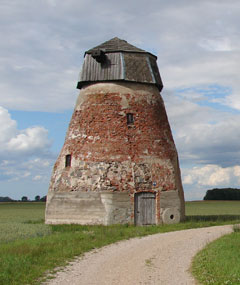
Vējdzirnavas

The Ūziņu windmill in Zaļenieku township southwest of Jelgava dates back to the 1880s. (Photo by Viesturs Zariņš)

Latvia readies for Winter Olympics; record contingent heads to Canada

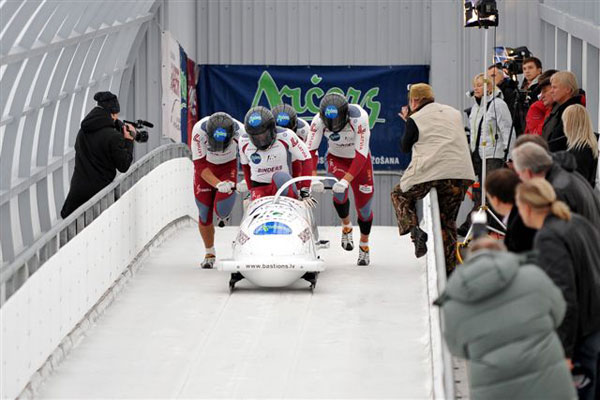
Latvian bobsleigh team

The Latvian bobsleigh team, led by driver Jānis Miņins, is among those set to compete in the 2010 Winter Olympics in Canada. (Photo courtesy of the Latvian Bobsleigh Federation)

The Winter Olympics, which this year begins Feb. 12 in Canada, is all about speed and finesse on ice and snow. For that you need cold weather or mountains. While Latvia has no mountains to speak of, it is the 10th most northerly country in the world and traditionally has had lots of snow and cold winters.

Not surprisingly, Latvia was one of 16 nations to participate in the first Winter Olympics in 1924 in Chamonix, France, sending just two athletes. This year, the country is sending its largest contingent ever—59 athletes competing in 10 disciplines.

Latvian Olympic Committee chair Aldonis Vrubļevskis on Jan. 26 announced the make-up of the team heading to Vancouver and Whistler.

Haralds Silovs is entered in both short- and long-track speed skating. Veterans Ilmārs Bricis will lead a team of nine in the biathlon. Pilot Jānis Miņins is part of an eight-man bobsleigh team. Also competing are two cross-country skiers, three downhill skiers and a snowboarder. Turin medalist Mārtiņš Rubenis and veteran Anna Orlova head a team of 10 lugers, including brothers Andris and Juris Šics. Brothers Mārtiņš and Tomass Dukurs will start in the skeleton.

Latvia’s men’s hockey team will play in Vancouver against Russia, the Czech Republic and Slovakia in the so-called “Group of Death” in the preliminary round. The top three teams in each of three groups will advance to the qualification playoffs and then on to the quarterfinals, semifinals and finals.

The National Hockey League is taking a break during the Olympics, allowing NHLers to join their national squads. Dallas Stars veteran defenceman Kārlis Skrastiņš will anchor Latvia’s 23-man squad. Sixteen of the players are from Dinamo Rīga of the upstart Kontinental Hockey League (KHL). Familiarity with each other will help the Latvian players as they face squads studded with top NHL stars. Also joining Latvia’s team will be rookie NHL blueliner Oskars Bārtulis; American Hockey League player Kaspars Daugaviņš, who got called up to the NHL for one game this season; a couple of players from Latvia who play elsewhere in the KHL; and two who play in the top German circuit.

As usual, there is some controversy around the selection of the national team, this time with the exclusion of the NHL Los Angeles Kings pugilist Raitis Ivanāns and top Atlanta Thrashers prospect defenceman Arturs Kulda, who has the best +/- results (calculated by subtracting the times the opposing team scores from the times your team scores in even strength or shorthanded play when you’re on the ice) in the AHL. This is typically indicative of a player’s defensive play and Kulda is waiting for a shot at the NHL. Kulda was recently included as one of three spares who will only play if others are injured.

Heading into the Vancouver 2010 Winter Olympic games, Latvia’s medal favourite is skeletonist Mārtiņš Dukurs. Born in 1984 and competing since 1998, Dukurs won this year’s World Cup skeleton title ensuring that he’ll start first at Whistler, the Olympic venue 124 kilometers north of Vancouver. His brother Tomass finished fourth. Dainis Dukurs is their father and coach.

Miņins’s four-man bobsleigh crew is currently ranked second in world standings and this third generation of Latvian bobsleighers could finally bring home a medal. Even though Haralds Silovs is the current European short track champion, at the Olympics he will have to compete against power Canadian, American, Chinese and South Korean squads that have dominated the sport.

Latvia’s team includes nine women. The average age is 27. The oldest competitor is back-up goaltender Sergejs Naumovs at 40 while cross-country skier Aneta Brice and downhiller Kristaps Zvejnieks are both 18. Ilmārs Bricis and Anna Orlova will have competed in all six Winter Games since Latvia regained its independence while lugers Rubenis and Guntis Rēkis are back for their fourth time. A total of 29 athletes, many of them from the hockey team, are making their Olympic debut. Six will celebrate birthdays during the games.

Latvia’s delegation will include a support crew of 46, primarily coaches and medical personnel with a few functionaries from the Latvian Olympic Committee. President Valdis Zatlers will be at the opening ceremonies and will be around for another four days to catch some of Latvia’s athletes in action before returning home.

For North American readers at home watching the games, the best chance of catching Latvian athletes will be in the bobsleigh, skeleton and luge where some of the athletes will have Top 10 starting positions as they go head-to-head with Winter Olympic powerhouses such as Canada, the United States and Germany.

The opening ceremonies for the Vancouver 2010 Winter Olympics kick off Feb. 12 and the games run through Feb. 28. More than 5,000 athletes from 91 countries, including some not so cold countries, are expected to compete in 15 sports. The Paralympics Games will follow March 12-21. Readers can follow the results on the official games site at www.vancouver2010.com. The uniforms that Latvia’s team will wear at the opening ceremonies can be seen on the Latvian Olympic Committee’s Web site.

Latvia’s Winter Olympic history

Latvia was at the first three Winter Olympics held before World War II. Speedskater Alberts Tumba and cross-country skier Roberts Plūme competed in the games in Chamonix, France, while Rumba returned and was the only entrant in 1928 at St. Moritz.

The number jumped to 26 athletes at Garmisch-Partenkirchen in 1936. They included 11 from the men’s hockey team. Latvians athletes were entered in speed skating, figure skating, downhill and cross-country skiing. Figure skater Alīse Dzegūze, pairs figure skater Hildegarde Švarce and downhiller Mirdza Martinsone were the first Latvian women in the Winter Olympics. Speed skater Alfons Bērziņš was 14th on a 500-meter course but three years later in 1939 he was crowned European champion in Rīga and a few weeks later earned a silver at the World Championships in Helsinki.

Even though Latvia’s pre-war Summer Olympians bagged two silver and one bronze as well as a bronze in 1912 during the Czarist era, the winter athletes came home empty. It was well into the Soviet occupation before Latvian athletes mounted the winter podium.

That happened at the 1980 Games in Lake Placid, when Latvian athletes competing for the Soviet team picked up a gold, silver and bronze. Vera Zozuļa won the gold in the women’s luge while Latvian hockey star Helmūts Balderis received the silver medal as a member of the Soviet team that lost to the United States in the famed “Miracle on Ice” game. Luger Ingrīda Amantova picked up a bronze. Zozuļa, like others, has gone on to coach and one of her charges is Anna Orlova, who has been Latvia’s top female luger since independence.

The luge, bobsleigh and, recently, the skeleton emerged as big winter sports in Latvia during the latter part of the Soviet occupation and in newly independent Latvia, whose athletes returned to the Winter Olympics under their own flag in 1992 at Albertville in France. The Latvian Olympic Committee was reestablished in 1988.

Luge was the first. The foundations were laid in 1967 by a group of enthusiasts who built a run near Cēsis. This was followed by the Soviet decision in 1972 to officially adopt the sport. Latvian athletes were off and running, quickly earning positions on the Soviet squad.

One of the lugers, Rolands Upatnieks, moved on to become the first head coach of the Soviet bobsleigh team in 1980 after the decision was made to participate in that sport. Here, too, Latvian bobsleighers quickly dominated the Soviet team. Ten of 16 athletes on the first bobsleigh team were Latvians. Most crossed over from track and field. At the Sarajevo games in 1984, Zintis Ekmanis from Latvia and Vladimirs Aleksandrovs from Russia proper won the bronze in the two-man bobsleigh.

During the Calgary games in 1988, Jānis Ķipurs was a member of the gold-winning Soviet two-man crew while three Latvians, Jānis Ķipurs, Juris Tone and Guntis Osis, were on the four-man crew that won bronze. Ķipurs painted his sleigh in Latvia’s national colours to protest the Soviet occupation.

Backup goaltender Vitālijs Samoilovs from Rīga on the Soviet hockey squad also returned from Calgary with a gold medal.

Following January 1991, when thousands of people—including Latvian athletes—blocked off and manned the barricades for days in the Old Town of Rīga in an attempt to protect their parliament from a possible Soviet attack, Latvian bobsleighers and hockey star Arturs Irbe refused to ever again participate on Soviet sports teams.

A huge stimulus for the luge and bobsleigh was the 1986 completion of the track at Sigulda. Starting at almost 20 meters above the ground in a tower high above the Gauja River, the track plummets in hair-pin turns down the valley. It was designed for the two-man bobsleigh and is shared with the luge and now the skeleton, a sport which returned to the Winter Olympics in 2002 after a 54-year absence. However, the first turn on the elevated portion of the track is too tight for the four-man bobsleigh.

With the restoration of Latvia’s independence there were high hopes that former Soviet athletes would come through big at the Albertville (1992) and Lillehammer (1994) games. That was not the case. Latvia was turned inside out as it struggled to transform itself after 50 years of Soviet occupation and the sports community was no exception. Especially hard hit were the bodsleighers. Their sport is high-tech and bobsleighs are expensive. Then there’s the cost of participating in the annual World Cup circuit and lugging the sleighs around.

It was now easier to qualify as part of the Latvian rather than Soviet team and Latvian bobsleighers were joined by those competing in speed skating, short-track skating, biathlon, figure skating, cross-country and downhill skiing. Unfortunately there were only a lot of distant and a few close finishes but no medals. With the qualification of the men’s hockey team at Salt Lake City (2002) and Turin (2006), the number of athletes from Latvia in the Winter Games increased by more than 20.

Even though Latvia’s winter athletes were winning medals at European championships in the luge, bobsleigh, biathlon and short-track skating, the country had to wait until the 2006 Turin games for its first post-independence Winter Olympics medal. Rubenis won a bronze medal in the luge.

Only one athlete from Latvia’s post-war diaspora made it to the Winter Olympics. That was Canada’s speed skater Silvia Burka from Winnipeg, who participated in three games at Sapporo (1972), Innsbruck (1976) and Lake Placid (1980). Her best result was fourth place in the 1,000-meter competition at Lake Placid.

Jānis Miņins

Jānis Miņins pilots the Latvian bobsleigh team that is ranked second in the world. (Photo courtesy of the Latvian Bobsleigh Federation)

History of beer in Latvia spans centuries

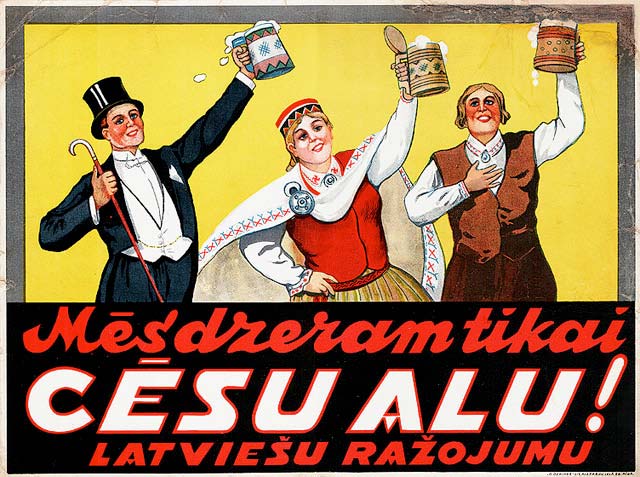
Cēsu alus advertisement

An advertising poster for Cēsu alus, dating from 1935.

If there’s any beverage that can claim to be Latvia’s national drink, it’s beer. Hundreds of dainas and folk songs about beer have been passed down through the centuries. Beer has always been consumed by Latvians. It has accompanied Latvians through life’s joys and sorrows. Sadly, it has also brought much despair as many have taken to beer and alcohol to escape life’s burdens.

Beer is not a uniquely Latvian drink. It is common to many agricultural societies. The origins of beer are murky. Like other alcoholic beverages, it was probably discovered by accident when harvested grains were left outside in the rain and wild yeasts did their magic to produce a mildly intoxicating beverage that has evolved into what we know today as beer.

At the time of conquest by German crusaders in the 13th century, beer was well known to the Latvian tribes. It is mentioned in crusader chronicles. Beer was a weak beverage brewed both for festive occasions and day-to-day consumption. The Latvian name for beer is alus and it shares a common etymology with other European languages—English ale, the Swedish term ol or Finnish olut.  Beer or alus should not be confused with mead or miestiņš, an alcoholic beverage made from honey, or medalus, where honey is added to beer. All three were known to ancient Latvians.

The German conquest saw the fusion of Western European brewing traditions, largely developed in monasteries during the Middle Ages, with the more primitive techniques of the Latvian tribes. Brewing was carried on in the monasteries and castles of Livonia. Many of the workers employed by the German nobility and monks were Latvian. Invariably, western techniques made their way into home brewing, which was still allowed unlike other parts of Western Europe. According to Linda Dumpe, author of Alus tradicijas Latvijā (Beer Traditions in Latvia), this allowed many traditional home brewing techniques to survive in Latvia until the modern era. But various herbs that had been used in brewing were now displaced by hops as a preservative and flavouring agent.

Beer was a profitable commercial good for both the German estates and mercantile class in the cities. The Large and Small Guilds in 14th century Rīga quarreled over exclusive rights to brew beer. Of note is the establishment of the Beer Porters Guild in Rīga in 1396. The guild survived into the 18th century but by that time it had been renamed as the Wine Porters Guild. Two porters would carry a beer barrel (an invention that also allowed beer to completely ferment in a closed vessel) hung from a carrying beam from brew houses to taverns and households.

Taverns in Latvia played a key role in the history of beer. Their development is described by Arno Teivens in his book Latvijas lauku krogi un ceļi (Latvia’s Country Taverns and Roads). They were the primary outlet for estates to sell beer. Taverns sprung up by the roadside, often at crossroads or near river ferries, to provide travelers with food, lodging and beer. They evolved into long structures with a large room for commoners and a smaller room for the gentry. Some of these taverns can still be found in Latvia, albeit converted into residential dwellings or commercial stores. As elsewhere, taverns in Latvia were the first public halls (the word pub is derived from public house) where landowners and peasants alike could meet. Taverns were often pressed into service as courtrooms or for administrative sessions of the municipal government. During the Swedish reign over Vidzeme, taverns served as postal relay stations providing fresh horses for couriers. Surprisingly, most innkeepers were Latvians.

Taverns also sowed the seeds of political dissent as travelers from the west to points east in the Russian Empire brought news of the Enlightenment and revolution sweeping Europe. The leaders of the 1802 Peasant Uprising in Kauguri plotted over a tankard of beer in a tavern at Brenguļi. The ideals of the National Awakening were discussed at taverns throughout Latvia. Taverns also served as venues for musicians, choir rehearsals and theatre performances. In the purges that followed the 1905 Revolution and in retribution for attacks on their manors, the German gentry razed many taverns, which had been used as countryside meeting places for revolutionaries.

In the latter part of the 17th century, many country estates shifted production from beer to spirits. The reasoning was simple. Profits were five times greater. By 1860 in Vidzeme for example, there were 198 breweries but 247 distilleries and more than 2,400 country taverns. The spread of spirit consumption coincided with ever-increasing repressions of the peasantry by the German nobles and Czarist Russia. It also saw many Latvians sink into despair and alcoholic haze. The rise of Hernhute congregations or Brālu draudzes in central Vidzeme between 1730 and 1749 was a reaction to these repressions and the spread of alcoholism. The German landowners pressured the Czarist administration to shut down the congregations, partly because revenues at their taverns plummeted.

The 19th century brought the Industrial Revolution to Latvia. Large mechanized breweries sprung up in the cities, particularly Rīga, and were able to brew better beer and sell it for less. They replaced small country estate breweries that had employed only a few workers and brewed on average 4,000 buckets (1 bucket equals 12 litres) a year. They could not afford the capital investments required to upgrade. In the second half of the 19th century, 26 new modern breweries were built but many older ones folded. In the 1860s there were 147 breweries in Kurzeme. By the end of the century the number had dropped to 50. The boom in railway construction and building of regional warehouses allowed beer from cities to the distributed throughout Latvia. Prior to World War I, beer from Rīga was even sold in places as far as Warsaw, Baku and Vladivostok.

Beer styles brewed in the late 19th century included Porter, Honey Beer, Bavarian, Pilsner, Munchener, Table, Export, Light, Dark, Bock and March beers. Porters were sold in separately in Porter salons.

Standard size bottles were introduced in 1842. This was done to make collection of excise taxes easier for the Czarist administration. Bottle sizes were denoted in 1/16, 1/20 and 1/40 bucket units. Bottles were a significant expense for breweries. Nineteen Rīga area breweries in 1906 imposed a deposit on bottles to encourage consumers to return them. The cost of beer at that time ranged from 80 kopecks to 1.10 rubles and the deposit for each 1/20 bottle was 4 kopecks.

The first industrial brewery in Rīga was Kimmel, founded in 1815. Like many factories, its machinery was evacuated to the Russian hinterland during World War I, in this case to the city of Toropets. In 1924 Kimmel was Latvia’s largest brewery and it survived until 2007 after production had been moved to Adaži in 2002. Its structure is still standing in Rīga on Bruņinieku street.

The Waldschlossen Brewery was established in 1865 in the industrial Rīga suburb of Sarkandaugava. In 1906 it hosted the European Brewers Congress, testimony to Rīga’s position as a well-known brewing centre. Waldschlossen Brewery shut down operations during World War I. It was resurrected in 1937 as Aldaris when the Kārlis Ulmanis government forced a number of breweries to amalgamate, breaking up a cartel that had kept beer prices artificially high. Today, Aldaris is Latvia’s largest beermaker. The old 19th century tower brewery where beer moved from top to bottom through various stages of brewing with the help of gravity still stands next to the modern plant.

Other breweries established in Rīga in the 19th century included:

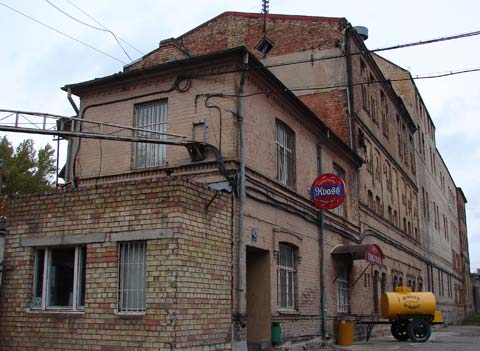
  • Iļģuciems, founded in 1863. It survives today as a producer of kvass, a popular non-alcoholic East European drink made of fermented rye bread.
  • Kuncendorf (1825).
  • Stritzky (1854).
  • Josef Hindel (1865), which survived until the 21st century under the banner Vārpa before ceasing operations.
  • Livonia (1870).
  • Tannhauser (1875), which was one of the breweries folded into Aldaris.
  • Classen (1875).
  • Lovis (1879-1907).
  • The short-lived Bertels (1883-1888) and Jozefi (1887-1892).

Further afield, the Daugavpils brewery, renamed Latgales brewery in modern times, was established in 1860, a year before opening of the Riga–Daugavpils railway. It was brewing up until recently.

Gulbenes Brewery, which stopped producing beer in 2008, was founded as Alt-Schwenenburg Bierbrauerei in 1824.

The Lodiņa brewery was established in Bauska in 1873 and survived until 1958 after the descendants of the German founder had repatriated to Germany in 1939. The brewery was resurrected in 1998 in its original facility. It is an example of the fine 19th century industrial architecture that can still be found in Latvia.

Like many things, beer brewed in Latvia during the Soviet era was nondescript. The breweries lagged by Western standards and the quality of their beer was poor. It would quickly sour. Several of today’s better known breweries were founded in Soviet times on the backs of collective farms: Lāčplēša (1949), Tērvetes (1971) and Bauskas (1981).  A number of breweries were able to attract capital and modernize when Latvia regained independence in 1991.

As a footnote, a brew with the name Senču (Ancestor), was produced by most Latvian breweries during Soviet times. Use of the name is similar to use of the term “country style” in North America for products rather than being a true beer style. Today,  the Tērvetes, Piebalgas and Bauskas breweries produce their own Senču.

Latvian Scrabble players should take note of a rich brewing vocabulary. Terms include mieži (barley, the primary grain used to brew beer), apiņi (hops, a preservative and bittering agent), raugs (yeast), iesals (malt, grains that have been allowed to germinate converting starches into fermentable sugars), iejava (mash, a mixture of malt and water heated to extract fermentable sugars), misa (wort,  the resultant liquid that is then boiled to produce unfermented beer), raudzēšana (fermentation, yeast plus fermentable sugars produce carbon dioxide and alcohol), pēcraudzēšana (conditioning) and ogļuskābe (carbon dioxide). Brewing implements include tīne (a wooden container used to store malt), čerpaks (a large ladle) and zlauksts (a long wooden vessel used to heat wort).

Today, Latvia’s breweries face the same challenges as those elsewhere. At one end of the spectrum there are large breweries, often part of well-capitalized international conglomerates. At the other end are microbreweries with niche products. In between regional breweries are being squeezed out by the two, unable to compete with the big guys on price yet too big to be daring and innovative.

Aldaris is Latvia’s biggest brewer with approximately 40 percent of the market. It is now part of Denmark’s Carlsberg group, which through its Baltic Beverages Holdings subsidiary has breweries in each of the Baltic states and Russia.

In 2004, Denmark’s Royal Unibrew purchased Lāčpleša brewery. Liepāja’s Līvu alus, founded in 2000, was also acquired in 2008. Production was consolidated and Lāčpleša beer production was moved from Lielvārde to the plant in Liepāja.

Cēsu brewery rounds off Latvia’s big three. It is part of the Finnish OLVI Oy group, which also includes sister breweries in Estonia, Lithuania and Belarus. Cēsu Brewery claims it is the oldest in Latvia and traces its roots back to the founding of an estate brewery in 1590.

The Brenguļu, Krāslavas, Valmiermuižas, Lodiņa and Alus tirdzniecības grupa operations can be classified as microbreweries. The Užavas brewery started as a microbrewery and had a near cult following. Since moving in 2001 to a new plant in Ventspils from Užava, it has expanded rapidly. The Lido entertainment complex in Rīga houses Latvia’s only microbrewery.

Bauskas, Tērvetes, Piebalgas and Inčukalna breweries are somewhere in the middle. Tērvetes brewery is part of a large agrofirm southwest of Rīga. It is trying to carve out a niche for itself through Green Spoon (Zaļā karotīte) certification, which is a national program that certifies products produced with at least 75 percent local raw materials. In Tērvetes case, only the hops are imported.

Looking at the beer section of a large supermarket in Rīga, it may appear that there is a huge selection. Unfortunately that is not the case. The majority of beer brewed in Latvia is a pale lager brewed with bottom fermenting rather than top fermenting yeasts as is the case in Britain and Belgium, broadly in the export or pilsner style. Tumšais or dark beers are less hoppy and sweeter but they are really only amber coloured.

Aldaris gets credit for continuing to brew a strong dark Baltic Porter, a beer style that has a rich history going back to the court of Russian Czarina Catherine II and 17th century London. Cēsu brewery also brews a porter on a periodic basis. Brenguļu brewery produces two unfiltered and unpasteurized draft beers that come closest to Britain’s real ales. Until recently one had to head out to Brenguļi near Valmiera to savour the company’s beers. Several outlets in Rīga have now opened where the consumer can purchase draft beer from a number of breweries, including Brenguļi. The beer is poured right from a barrel into plastic bottles for home consumption.

Perhaps the most adventuresome brewery in Latvia is Alus tirdzniecības grupa. Originally founded in 1993 as Sandriko Brewery and based in Spilve on the outskirts of Rīga, the brewery makes Latvia’s only wheat beers. Its signature line consists of ginger-flavoured wheat beers that include a light, reddish and black brew. In 2009 it released a cherry-flavoured wheat beer.

Most Latvian breweries today are trying to compete with each other with similar products. It is difficult for the smaller players to match the big breweries on price point.

For those abroad who can’t make the trip to Latvia and wish to sample a Latvian beer, the best chance is locating one of the brands produced by Aldaris, most likely the mainstream Zelta or Luksus beers, although Porteris and the odd beer from other breweries has may be found. Being part of a large international conglomerate does have its benefits and allows Aldaris to leverage the distribution network of its parent company providing beer drinkers in other countries the opportunity of connecting with a proud brewing tradition dating back centuries.

Ilģuciems brewery

The 19th century Ilģuciems brewery now makes kvass. (Photo by Viesturs Zariņš)

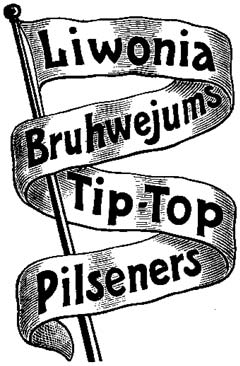
Livonia

A newspaper advertisement from 1906 promotes the Livonia brewery’s Pilsener beer.