Owing to his star turn on the second season of the reality singing show Koru kari, singer Žoržs Siksna has been experiencing quite the career renaissance in the past few years.
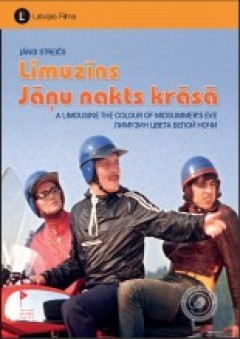
One of Latvia’s biggest singing stars of the 1970s and 1980s, the crooner of such songs as ‘Muļķe sirds’ and ‘Valodzīte’ (both immortalized in the 1981 Latvian film Limuzīns Jāņu nakts krāsā), Siksna, like many other Latvian 80s stars, faded a bit after the renewal of Latvian independence. However, he, along with his ‘Jelgava Turquoise Choir’, was the breakout star of that season of Koru kari (though, in the end, they had to settle for 2nd place).
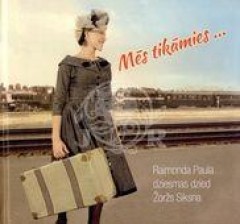
Siksna, like many singers in the 1980s, is indelibly associated with composer Raimonds Pauls. For that reason, with a nod to the past but still firmly in the present, Siksna released an album of new recordings of Raimonds Pauls songs entitled Mēs tikāmies…
Interestingly, Siksna’s repertoire on this CD does not include any of his best known songs, so if you are looking for ‘Ģenovēva’, for example, you will need to look elsewhere, as the songs here are lesser known Pauls songs. However, that is part of the allure of this collection, as it brings back some songs that might have been forgotten over the years.
The recordings are in a jazz/lounge style, which should come as no surprise considering the musicians involved in making the album. All the arrangements are by distinguished Latvian jazz drummer Māris Briežkalns (who also plays on the album), and Briežkalns is joined by well-known jazz pianist Viktors Ritovs, as well as Gints Pabērzs on saxophone, Lauris Amantovs on trombone, and Normunds Piesis on trumpet. Joining Siksna on backing vocals is the trio ‘Limonāde’, made up of Ieva Katkovska, Kristīne Tkačuka, and Iluta Valtere.
Siksna’s evocative and expressive singing style was one of the many reasons he rose (and rose again) to stardom in Latvia, and is on full display on Mēs tikāmies… – both tender and powerful, Siksna’s voice and vocal style is immediately recognizable, for example on the soaring vocal on the song ‘Zaldātiņš un balerīna’ (lyrics by Jānis Peters).
Briežkalns’ percussion provide the backbone for all the songs, particularly the rhythm on the first song on the CD, ‘Ziemas vakars’ (lyrics by Biruta Riemere), with Pabērzs also providing a memorable saxophone solo.
The song ‘Pie avota’ is actually a new Pauls song, with lyrics by Guntars Račs, composed in honor of Siksna’s 55th birthday. Here the trombone by Amantovs stands out, providing a soft yet rich sound to this delicate song.
The gentle ‘Annijas dziesma’, lyrics by Jānis Elsbergs, with its tender guitar, is one of the highlights of the album,
The only slightly negative thing I’d note is that perhaps there is a bit too much of the backing vocals. There is no doubting the beautiful voices of ‘Limonāde’, but at times the backing vocals are a bit much and slightly distracting.
The booklet for this CD is impressive. In a hardback case, the booklet is full of pictures and has an extensive biography of Siksna in both Latvian and English. Unfortunately, however, lyrics are not included. Also, considering that one of the main sponsors of this album is the Gulbene-Alūksne Narrow Gauge Railway, there is an extensive write-up, with many pictures, of this unique Latvian tourist attraction. In fact, the CD comes with a ticket for a journey on the ‘bānītis’.
The final song on the album – ‘Ripo tvaika bānītis’ is not actually a Raimonds Pauls song, but is composed by Edmunds Goldšteins. The song is performed with Siksna’s Turquoise Choir. The clarinet part, performed by Indriķis Veitners, gives the song an almost swing feel, making it a sound like a song you might have heard in a speakeasy during the Prohibition era.
Now that Siksna has had a resurgence of popularity, perhaps a Latvian record label will release a comprehensive collection of the original recordings of his best known songs – the closest we ever got was Vasaras vīns in 1995, which had a number of his popular favorites, but was still missing many. In fact, many of Siksna’s recordings have never been released on CD and this seems quite the oversight, considering that many 1970s and 80s stars have had their songs released on CDs.
Backed by some of the most talented jazz musicians in Latvia, Siksna shows that his voice is as strong as it was decades ago. Mēs tikāmies… and its lounge music/crooning style might not be everyone’s cup of tea, but for those looking for something in a more retro style, or someone simply looking for a talented singer and musicians at the top of their form, look no further. Siksna has reasserted himself as one of the premiere singers in Latvia, singing, as he did more than thirty years ago, the songs of Raimonds Pauls. This romantic music, perhaps appropriate for a candlelit dinner, evokes a distant past – slightly sentimental, at times wistful, but a memorable recording.
Details
Mēs tikāmies…
Žoržs Siksna
Upe tuviem un tāliem, 2013
UPETTCD072
Track listing:
1. Ziemas vakars
2. Mēs tikāmies martā
3. Kad zvaigznes krīt
4. Pie avota
5. Hansa dziesma
6. Zaldātiņš un ballerina
7. Sidraba mākoņi
8. Un kad mīla atnāks
9. Vecie vītoli
10. Tikai prieks
11. Zelta mute
12. Annijas dziesma
13. Ripo tvaika bānītis (with the Jelgava Turquoise Choir)
Egils Kaljo is an American-born Latvian from the New York area . Kaljo began listening to Latvian music as soon as he was able to put a record on a record player, and still has old Bellacord 78 rpm records lying around somewhere.