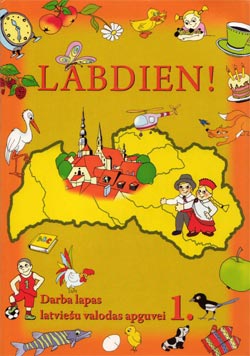
Jaunas darba lapas latviešu valodas apguvei

Janvārī klajā nākušas Latviešu valodas apguves valsts aģentūras (LVAVA) izstrādātas darba lapas, ko var izmantot mācību procesā ar 7-13 gadus veciem bērniem. Darba lapas, kas domātas latviešu diasporas un mazākumtautību izglītībai, sadalītas pa tēmatiem un vecuma kategorijam: jaunākajiem bērniem iespēja iepazīties ar latviešu alfabetu ar krāsainām bildēm, ko paši var arī iekrāsot; bērni, kas jau prot rakstīt var vingrināties jaunapgūtos burtus, norakstot un atkārtojot īsus alfabeta teikumus. Pārējās darba lapas sadalītas pa tēmatiem, kas ar katru līmeni kļūst sarežģītāki resp. domāti arvien vecākiem bērniem.

Tēmati ir sekojoši:

  • Es un citi: Es tāds pats, kā tu, Mana skolas ikdiena, Esmu vesels, Manas intereses un nākotnes nodomi
  • Ģimene: Mana ģimene, Ģimenes ikdienas darbi, Tradīcijas ģimenē
  • Mājas: Mēbeles, skolas piederumi, Istaba, Dažādas mājas, Dažādi priekšmeti
  • Latvija: Ko dara bērni Latvijā? Latvijas simboli, Latvijas reljefs un klimats, Latvija – zeme pie Baltijas jūras, Latviešu tautas pasakas
  • Pilsēta: Rīga – Latvijas galvaspilsēta, Iela, Brīvdienas pilsētā, Māja un mājas
  • Daba: Gadalaiki, Zemeslode, Augu pasaule, Dzīvnieki – mūsu draugi

Darba lapās arī saistošā veidā iepīti elementāri gramatikas vingrinājumi. Šīs lapas labi papildinātu mācību vielu, jo tajās skolēnam ir pašam jābūt radošam – jāzīmē, jādomā, jāiesaistas. Krāsainās bildes un mainīgā viela visos līmeņos palīdzēs bērniem vienmēr uzturēt interesi. Tēmati paši arī izvēlēti tādi, kas attiecas uz skolēnu, lai viņš pats justos uzrunāts un rezultātā ieinteresēts.

Darba lapu autori: Raimonds Arājs, Vita Drulle, Ingūna Helviga, Vita Karule, Agrita Miesniece, Antra Sirmā, Una Veinberga. Darba grupas vadītāja Inta Rakēviča. Māksliniece Anita Markeviča.

Darba lapas var iegādāties LVAVA birojā Lāčplēša ielā 35-2, Rīga, kā arī lielākajās grāmatnīcās.

LVAVA darba lapas

Latviešu valodas apguves valsts aģentūra janvārī sāka izdot jaunas darba lapas diasporas un mazākumtautību izglītībai.

Daina Gross is editor of Latvians Online. An Australian-Latvian she is also a migration researcher at the University of Latvia, PhD from the University of Sussex, formerly a member of the board of the World Federation of Free Latvians, author and translator/ editor/ proofreader from Latvian into English of an eclectic mix of publications of different genres.

Kids’ adventure shows life in Latvia

Kur pazudis Elvis?

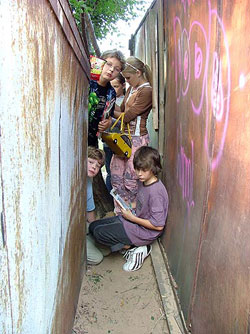
When their classmate goes missing, a group of Latvian schoolchildren takes up the search in the new film Kur pazudis Elvis?, which is directed by Una Celma.

The new Latvian children’s film released Oct. 25, Kur pazudis Elvis?, is a cause for celebration. Una Celma, director of various feature films over the past few decades (Olu kundze, Augstuma robeža and others), has taken on the task of depicting the kids of today in a realistic adventure film.

Since Latvia regained independence in 1991, the film industry has seen better times. Producers have not had a guarantee of government funding, which was the case during the Soviet era. New film production companies have emerged, but they have all had the same financial worries as the state-run film industry. The release of Latvian childrens’ films, in particular, is a rare event. And as the country is inundated with foreign films—the main cinema in Rīga, Coca Cola Plaza, mainly screens U.S. titles and Russian films are also not hard to track down— movies showing everyday issues in Latvia are few and far between, but always welcome.

Kur pazudis Elvis? provides a glimpse into the daily lives of five 5th grade children. Central to the plot is a 5th grade pupil, Elvis, a good student who doesn’t turn up for classes. The teacher seems disinterested in tracking him down (“I’ve tried calling his mother on various phones and can’t get through on any of them—what am I to do?” is the only attempt she makes), dumping the task onto one of her pupils. The boy takes it on himself to tackle this problem head on. With the help of a few classmates he begins the sleuthing job, trying to piece together the puzzle of where their classmate has disappeared to.

The adults in the film, even the powers-that-be don’t seem to appear sympathetic or helpful in any way, leaving the children to their own devices. One is left with the overwhelming feeling of the individual left to fend for themselves at an early age, always a shock to the system in Western countries.

Although this is an adventure film, the most memorable parts are the seemingly mundane, everyday ones: the latch-key kid who comes home to an empty house and ends up staring desolately at his pet tortoise; the heart-breaking phone conversation where a mother regrettably informs her daughter she won’t be able come back from Ireland for her daughter’s birthday; the overworked, disinterested father who has a phone permanently attached to his ear. It seems all the families in this film are dysfunctional, leading one to the question if there are any “average” families left anywhere in the world today? And what kind of a future can these children hope for? The situations are not confined to Latvia; they could be easily transferrable to any other country in the Western world.

Some of the characters are classic stereotypes. Villains are either bumbling clown types or of the Addams family type, complete with the mansion on “Zirnekļu iela 13.”

The kids are the stars here. They are very believable, complete with Russian-Latvian slang and an acute imagination. The insight into the behaviour in the Latvian classroom and the reality faced by teachers and kids is a real eye-opener. Sensitive pre-teens the world over face their own age-old issues: budding relationships, bullying, loneliness, finding themselves. Many of these are briefly touched on in Kur pazudis Elvis? Kudos to the director for combining all these elements and bringing them to the big screen.

Latvia is a like a big country town. The same actors from the Rīga theatres and TV soap operas appear sporadically on the big screen. So it was no surprise to see New Rīga Theatre (Jaunais Rīgas teātris) actors Baiba Broka and Guna Zariņa as well as Daile Theatre (Dailes teātris) actors Ģirts Ķesteris, Ieva Pļavniece, Harijs Spanovskis, Rēzija Kalniņa and Ilze Vazdika all cast in the “minor” adult roles in this movie.

It would be interesting to see how taking part in this movie will influence the 11- and 12-year-old child-actors and if their futures will evolve in this direction. They have certainly shown talent in the brief opportunity they have been given here.

Details

Kur pazudis Elvis?

Una Celma, director

Latsfilma,  2008

Notes: In Latvian. Feature, 78 minutes, in color. Cast: Emīls Desainis, Matīss Kaža, Mārtiņš Ivanovs, Gerda Grobiņa, Margareta Cilinska, Harijs Spanovskis, Ieva Pļavniece, Zane Daudziņa, Andris Bērziņš, Juris Gornovs, Ilze Vazdika; camera: Jānis Eglītis; screenplay: Ingrīda Elerte.

Daina Gross is editor of Latvians Online. An Australian-Latvian she is also a migration researcher at the University of Latvia, PhD from the University of Sussex, formerly a member of the board of the World Federation of Free Latvians, author and translator/ editor/ proofreader from Latvian into English of an eclectic mix of publications of different genres.

Group pursues museum on Latvian diaspora

Work on a new museum documenting the life of Latvians in the diaspora is well underway. Formed in September 2007, the association Latvians Abroad – Museum and Research Centre (Latvieši pasaulē – muzejs un petniecibas centrs) has now hired an office manager and has launched a Web site.

Under the leadership of Maija Hinkle, the association was founded by a group of Latvians in the U.S., Canada and Latvia. The group is pursuing several projects, including finding a location for a permanent museum, according to a Dec. 10 press release and the Web site.

The Web site, www.diasporamuseum.lv, informs visitors about the mission of the museum and research centre, which is the preservation and interpretation of diaspora Latvian history over the past 200 years. The envisaged programs and activities aim to build bridges between Latvians living in Latvia and diaspora Latvians, and between Latvia and the various other countries in which Latvians reside.

Marianna Auliciema, a Latvian from Canada and Australia who now lives in Rīga, has been hired as the association’s office manager. She also is a member of the association’s board of directors. (Latvians Online Editor Andris Straumanis, an assistant professor of journalism at the University of Wisconsin-River Falls, is a consultant to the museum and research centre.)

One of the projects being developed is a travelling exhibition that will display a suitcase owned by Albins Simsons. The approximately 100-year-old suitcase has “seen” both the East and West. It was brought to Latvia in 1921 by 22-year-old Simsons, who was returning to his home in Bauska, having lived in Ukraine as a refugee after World War I. Twenty-four years later the suitcase continued its journey, this time to the West, when the Simsons family fled to Germany in 1945 and later moved to the United States in 1951.

The second focus of the exhibition will be a weaving loom, made out of scrap wood in Germany, taken to Australia by a Latvian weaver and donated to Museum Victoria as part of a display in the Melbourne Immigration Museum.

A further exhibition, planned to be completed over a period of three years, will be a DVD of the previous exhibition materials titled “Latvian Tracks Over the World: A Suitcase Exhibition on DVD.”

The association is actively seeking a location for a permanent museum. Various potential locations have been assessed, but a decision regarding the location is still to be made. In the meantime the association is keen to accept documents, photographs, material culture, video and audio recordings and other archival material that could be donated to the collection. The association is also glad to accept new members and supporters as well as other forms of assistance, including the founding of support groups abroad. For more information, contact Auliciema via e-mail at lapainfo@gmail.com.

Daina Gross is editor of Latvians Online. An Australian-Latvian she is also a migration researcher at the University of Latvia, PhD from the University of Sussex, formerly a member of the board of the World Federation of Free Latvians, author and translator/ editor/ proofreader from Latvian into English of an eclectic mix of publications of different genres.