Why Latvians should love fir

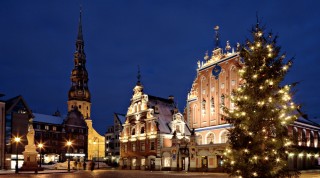
Finland has Santa Claus. Russia has traditional handmade Christmas ornaments. Germany has Christmas markets.  But arguably the most well-known of Christmas traditions—decorating the Christmas tree—may have its origin in Latvia. And it’s all but unknown.

The story goes that in 1510, Martin Luther, a founder of the Protestant faith, was walking through a Rīga forest one evening. He came upon a fir tree the branches of which glistened in the light of the moon and stars. Impressed by its beauty, he chopped down a smaller tree and took it home for his children. To recreate the moonlight, he fixed candles to the branches. With that, the first decorated Christmas tree in history was born.

For lack of a better word, call the Christmas tree story a legend. It has been mentioned on CNN and there are countless references to it on the Internet (search for “Christmas tradition” and “Latvia”). It appears in books on the origins of Christmas trees.

But ask a local Latvian about the legend and receive a puzzled expression in response. No one seems to know about it.

This is probably not surprising, because during Communist times a Western, Christian tradition originating in Latvia would have hardly been publicized.

Why the story remains such a secret is a mystery. Making it well known could certainly be beneficial, given Latvia’s recent negative publicity. Images of a dying Konrāds Kalējs and a teenage girl slapping a royal Rīga visitor with a red flower come to mind from recent news events. Wouldn’t being known as the “home of the Christmas tree” be a pleasant change?

Latvian Institute Director Ojārs Kalniņš, who works to promote Latvia, agrees.

A foreign-born Latvian who repatriated to Latvia two years ago, Kalniņš said Latvians are often curious about how the rest of the world perceives Latvia. The truth sometimes hurts: He said he tells them the vast majority of the world knows nothing. People who take a special interest in world events or cultures have usually heard of Latvia. If they know anything specifically about the country, he said, it is often a negative association with the former Soviet Union. Others may have had a chance encounter with a specific issue in the foreign press.

“At the moment, most people who have a passing knowledge of the country know about the Russian population,” Kalniņš explained. “The business community may know about corruption here.”

Kalniņš said the Christmas tree legend is the sort of trivia the Latvian Institute can incorporate in the information it distributes. Part of the institute’s work is to encourage foreign journalists to cover Latvia and to provide them with information.

Aldis Tilens, an Australian-Latvian and longterm Rīga resident who sells Latvian handicrafts in Latvia and abroad, has long wondered why the country doesn’t make more of the Christmas tree story. Tilens first heard of the legend several years ago. He was surprised when he asked his local Latvian employees about it and found it was news to them.

The Christmas tree legend is a unique marketing tool because it is not contrived, unlike, for instance, Lithuania’s boast that it has the world’s tallest Christmas tree this year. The information on Martin Luther, whether you believe it’s true or not, is already out there. Tilens described it as "simply a mechanism for people to learn about Latvia." Aside from the potential effects on business and tourism, Tilens said the legend would help to foster a positive image in the world.

“(The Christmas tree legend) sets the geography of the country, it gears the culture toward Western traditions and Christianity,” he said. “It brings up the spirit of giving and well being, and has warm and positive connotations.”

But bringing a warm and fuzzy feeling about Latvia to the collective consciousness of the world is not the only reason for trying to promulgate the Christmas tree story. This simple legend could further help to unify Latvia’s idea of itself.

In an essay on the tragedy of Central Europe, Czech writer Milan Kundera in 1984 forcefully reminded the world that Europe did not end at the Iron Curtain or the eastern border of the then European Community. The essential tragedy, Kundera wrote, is that these countries were removed from the map of Europe. This artificial division temporarily severed cultural ties that are still healing.

“Latvians are still coming to terms with their identity,” Tilens said. “Is it an event, a cultural difference or geography that sets them apart? (The Christmas tree story) is something that Latvians can latch on to that could be a source of pride.”

Kalniņš points out that Latvia is a country of dual cultures. He was not referring to Russian vs. Latvian. Instead, he meant that Latvia has pre-European traditions that are purely Latvian. These include folk art, costumes and culture, Iļģi-type music and folk dancing. This aspect of Latvia’s culture is portrayed through the popular song and dance festivals. It must be preserved, as it makes Latvia unique.

But at least as important—especially now that Latvia is aiming for European Union membership—is that Latvia’s is also a European culture, Kalniņš said. The opera is an example of Latvia’s European cultural heritage. The country’s performers who have made their name in the world of arts have done so through European cultural traditions.

Latvia, perched on the periphery of Europe, its eastern neighbor a close reminder of the recent past, needs to reaffirm its position in Europe.

“People often say Latvia is returning to Europe,” Kalniņš said. “We’re not returning to Europe—we always were a part.”

Such a simple thing as the birth of the tradition of decorating a tree to celebrate Christmas, started by Martin Luther some 500 years ago in Latvia, serves as but another reminder that Latvia was, and still is, European.

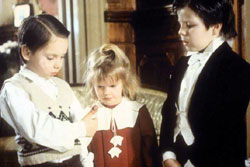
Image of drunkenness damages album’s effort

Alus dziesmas

Think of the cute farmer’s daughter in overalls, straw hat, freckles, pig-tails and a piece of straw between her teeth. Now think of the Latvian version of this scene. That’s what the first half or so of the album Alus dziesmas (Beer Songs) sounds like to me: a caricature.

According to the liner notes, Latvians enjoy beer, but their tradition doesn’t condone drunkenness. The liner notes correctly state that "beer was an integral part of the ritual meal at all ancient Latvian celebrations." Beer was a part of socializing, feasting and singing—a beverage to enjoy, instead of a means by which to get drunk. But you’d never know it by listening to some of the songs on this compact disc, nor by looking at the cover picture!

I admit it—the cover photo put me off from the very beginning: a museum-quality traditional Latvian house with four men partying, one of whom is passed out at the table. The first half of the CD sounds like the picture looks: more or less traditional music, but then there’s that one passed out guy that messes it up. The mood sounds exaggerated, like a parody.

If you’re drunk, then not only would your singing and judgment suffer, but also your playing of musical instruments. The playing on Alus dziesmas does not suffer. In fact, it is quite good, as one would expect from the musicians associated with the UPE Recording label. But to me it sounds like they started recording the vocal tracks at the height of their drinking. Thankfully, after about half a dozen songs the music seems to have mellowed them out some. After a somewhat bitter first taste, the CD ends with several really nice songs, leaving a good aftertaste in my mouth.

A few highlights of the CD:

"Es bej loba īmetēja" is very interesting, being a song from the woman’s point of view. This woman does not lament about her husband’s drinking, as one would expect, but rather jokes about her own fondness for imbibing: "Whoever plans to marry me should first build a brewery so that I can start each day by going there…"

The men’s a capella "Kur tu biji alutiņi" is a nice change from the previous songs and leads into "Redz kur nāca alus kanna," sung by three very confident women. "Redz kur" is the traditional drinking song where I come from, aside from the common ziņģes. It rarely has a set text, because people are expected to just add verse after verse. The melody line is almost too simple, but the elaborate ways people keep the strong beat going (for example, pounding anything made of wood) keep the song fun and exciting.

While all the songs on the CD (except the two instrumentals) are truly pretty much about beer and beer alone, "Pie alus galda sēdēja" is a love song of sorts that mentions beer only in the title. "Alus, alus, laid mani iekšā" is a great waltz-polka combination.

Actually, there are quite a few good, merry, lustīgas songs on Alus dziesmas. But like I said, I don’t care for the treatment they receive on this recording. I also got a bit tired of the constant accordion (as well as the Cajun-inspired playing of it, for example, on "Aiz kalniņa dūmi kūp"), but I guess the instrument does seem to fit well with beer.

A warning to connoisseurs of ultra-traditional music: This CD contains a whole lot of whoops, yips, grunts, squeals, calls and shouts. For some reason these have become quite popular in Latvian traditional music lately. They’re not really at all out of place at a wild party or even just a fun evening of dancing and singing. But some people do not like to hear them on recordings.

Alus dziesmas contains just a few of the many, many songs on the topic of beer and drinking (a great number of which are, need I say, heart-rending laments about drunk husbands, but we hear none of those on this CD). Despite the treatment they receive, the collection of songs is pretty good, and the goal of the CD is noble: to once again intertwine the drinking of beer with the singing of traditional beer songs.

Details

Alus dziesmas

Latviešu tautas mūzikas kolekcija

UPE Recording Co.,  2001

UPE CD 026

A small, gentle film about Christmas

The Cīrulītis children in a scene with the child prodigy.

Great films don’t always need to be “great” films. They don’t have to be perfect or about important topics. Sometimes they can just simply be small, gentle films that tell their story with heartfelt sincerity, humor and warmth. Ziemassvētku jampadracis is such a film.

Jampadracis tells the story of the Cīrulīši, a tight-knit family down on their luck, and their trials and tribulations during the Christmas season.

Father Cīrulītis has just been turned down for a job as a music teacher. He can barely support the family as a piano teacher with far too few students. They can’t even afford a Christmas tree. The landlord is threatening to kick them out. The kids have just received their report cards and some of the marks are not, well, they are not the kind that you would want your parents to see. The eldest son has been summoned to the police station falsely accused of hitting a policeman with a snowball. And, to top it all off the child prodigy—whom the two youngest kids have been entrusted with entertaining—has just been injured on the eve of his concert. The pair is sure to be blamed.

What ensues is a story that is as genuine as it is warm, a wonderful tale that transcends whatever weaknesses it might have simply because it is told from the heart. The Cīrulīši might be poor and going through hard times, but the love that they have for each other can triumph over anything that comes their way.

In contrast, the family of the child prodigy, which has all the wealth and status that anyone could possibly need, seems lost and sad because they lack precisely the one thing that the Cīrulīši have been blessed with.

The winner of several awards,  among them Chicago’s and Frankfurt’s children’s film festivals, Jampadracis might be characterized as a children’s film, but it is a film for the child in all of us. It transcends the genre. The performances do not contain a single false note and Varis Brasla’s direction and the script by Alvis Lapiņš are exemplary.

Details

Ziemassvētku jampadracis

Varis Brasla, director

AL KO,  1993

Notes: In Latvian. Comedy, color, 72 minutes. Screenplay by Alvis Lapiņš, based on a story by A. Zapere; camera: Dāvis Šīmanis; music: Mārtiņš Brauns; principal cast: Dace Everšs, Jānis Paukštello, Ināra Kalnaraja, Uldis Dumpis, Līga Zostiņa, Lāsma Zostiņa, Liene Zostiņa, Almārs Zostiņš, Edgars Eglītis and Kaspars Ādamsons.