The poetry of Elsbergs gets the Dimiters treatment

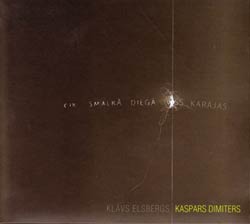
Cik smalkā diegā viss karājās

Before Latvia regained independence, and before the rise of the Internet, information about things going on in Latvia was tough to get. This was especially so for those interested in Latvian music. In fact, unless you had relatives or friends living in Latvia, you wouldn’t know anything about Latvian music, except for the rare occasion when a Latvian musician or group was allowed to venture outside of Latvia.

Luckily for me, my family had friends who were still living in Latvia and who were as devout music listeners as I was, even though I was still in my early teen years then. They would send us records and cassette recordings of all the latest music, and this was my only source of information about the Latvian music world. I would listen to each tape and record numerous times until they wore out.

One of the tapes our friends sent us contained songs by Kaspars Dimiters. This cassette recording bore the brunt of my abuse, as I would listen to this one more than any other. The first time my family and I went to Latvia, I promptly went to the record store and found the album Mans kumoss pilsētas baložiem, which contained many of the songs I had loved on the cassette. This has become one of my favorite recordings by any artist and is an album I listen to frequently to this day.

As it turned out, Dimiters had written many other songs that I had liked, but I never had known who performed them. They included favorites such as “Princesīte” (from the 1981 Mikrofons record) and “Mana neveiksminiece” (from a 1982 Mikrofons “bonus” 7-inch record).

Dimiters was an important songwriter during the Soviet occupation, a time when the government often threatened him and prevented his songs from being played on the radio or television. However, as times changed so did Dimiters’ songwriting style. Many of his more recent work has slanted toward political themes and societal commentary. All in all, Dimiters has released about 10 albums.

Last year saw the release of the album Cik smalkā diegā viss karājās. Dimiters is a man of many talents. Not only does he sing, but he also plays the guitar and all the other instruments on the record, and even did all the recording and production work.

Normally, Dimiters writes both the lyrics and music to his songs, but this time he chose to add music to the poetry of Klāvs Elsbergs. All the lyrics on this record were taken from the Elsbergs collection Bēdas uz nebēdu. Elsbergs, son of famous Latvian writer Vizma Belševica, died under mysterious circumstances in 1987.

Elsbergs’ poetry contains a wide range of emotions and feelings that fit perfectly with Dimiters’ sincere and earnest delivery. Because the words are Elsbergs’, this album comes across differently than the rest of Dimiters’ recordings. Dimiters’ lyrics can be very biting and critical; in fact, some of his songs make certain listeners downright uncomfortable.

The album is on the mellow side. Many of the 19 tracks feature just guitar and vocals. However, that does not mean the record is dull, as the songs have varied tempos.

The opening track, and one of my favorites on the album, is the subdued “Viens.”

Another favorite on the record is the very sad song “Asaru krelles.” The lyrics describe a girl who makes a necklace of tears. Dimiters’ voice is ideally suited to tell the tale of this lonely girl who wonders whether someone will ever hold her.

“Es neesmu vientuļā” is a song about the dilemma of a songwriter: if you don’t feel lonely, how do you write songs for the lonely? Dimiters allows the words of Elsbergs to speak for themselves in this song, while providing a simple but effective guitar background.

Fans of the 1980s rock group Pērkons will recognize two of the songs here: “Neatvadīsimies” and “Pasniegtās rokas.” Pērkons’ interpretation of these two songs appeared on their 1987 album Labu vakar (“Pasniegtās rokas” was called “Lampas un zvaigznes” on that record). Although the lyrics are the same, it is quite a treat to hear the more stripped-down treatment of Dimiters, compared to the full band approach of Pērkons.

Many of the songs are on the slower side, but “Āmurzivs” is a more up-tempo offering from the album. The lyrics tell the tale of a boy who was thrown overboard from a ship and is struggling against the tide, trying to stay alive while watching the boat he was on get farther and farther away.

Cik smalkā diegā viss karājās is one of my favorite records of last year, from one of my favorite artists. Though most of the songs are laid back and mellow, it still strikes a chord in a listener, and Elsbergs’ lyrics are compelling listening. (Thankfully the lyrics are included, which helps the listener develop a better appreciation for his words). Dimiters’ songs, whether the lyrics were written by himself or by others, are about the importance of the words and text of the song—about getting certain thoughts across to the listener.

Hopefully this release will be a success, which will lead to Dimiters’ earlier works being re-released. Thankfully these days it is much easier to obtain music from Latvia, so perhaps this album will help introduce the rest of the world to one of Latvia’s most singular songwriters.

Details

Cik smalkā diegā viss karājās

Kaspars Dimiters

Gailītis-G,  2001
Egils Kaljo is an American-born Latvian from the New York area . Kaljo began listening to Latvian music as soon as he was able to put a record on a record player, and still has old Bellacord 78 rpm records lying around somewhere.

Naumova does it her way on French album

Ma voix, ma voie

During a year when a number of pop artists in Latvia turned to English as the language of their music, Marija Naumova decided on French. Her Ma voix, ma voie (My Voice, My Way) showcases not just her French-language skills, but also her ability to modify her singing style and image to fit the mood.

Ma voix, ma voie is Naumova’s third album. The first, in her native Russian, saw little exposure in Latvia. But her second, the Latvian-language album Ieskaties acīs, had her teamed with Niks Matvejevs in an effort that resonated with audiences, sending the record to platinum status.

Released late last year, Ma voix, ma voie features 11 tracks. Several are compositions by Raimonds Pauls, whom Naumova credits for helping launch her career. Lyrics were written by several songwriters, but in “Une voix” we are treated to a translation of Vizma Belševica’s words, while in “Cher ami” it’s Imants Ziedonis’ work. Also lending a hand with the lyrics was Astra Skrabane, an instructor of French.

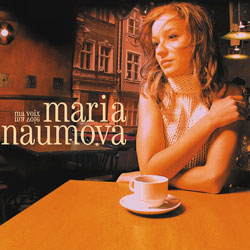
Listening to this album, don’t expect to hear Naumova trying to emulate such well-known French singers as the late Edith Piaf or the contemporary Patricia Kaas. Instead, Naumova here tries to carve out her own style, sounding more like an up-and-coming bistro singer. In doing so, she’s gone as far as to change her looks from her previous album, as well as the presentation of her name. On Ieskaties acīs, she was Marija Naumova, but on Ma voix, ma voie the “j” disappears. Naumova also will represent Latvia in the 2002 Eurovision Song Contest in Tallinn, where she will be known as Marie N.

The album opens with the jazzy “Sous le soleil du nord” (Under the Northern Sun). Credited to Pauls and Skrabane, the song is about a person’s search for her way in the world. It sets the mood for the rest of the album, both emotionally and musically.

Naumova’s voice on this recording is soothing, not as throaty as with other French singers. She succeeds in using her voice to set the tone of each song.

My favorite track is “Je t’aime!” (I Love You!), in which the singer acknowledges her love for another, but not yet publically, to the world. I’ve been calling this a “2 a.m. song”: as a private moment wanes, perhaps the last sways of a slow dance in a subdued bar, a rising saxophone heralds the lights coming up, signalling that it’s time to part.

A feeling of nostalgia seeps through several songs. In “Ecris-moi” (Write Me), for example, the singer laments that she once made fun of a clumsy fellow who used to write love notes to her in school. Now, years later, she longs to be with him, to have someone send her something written on paper, not in e-mail.

Some bright songwriting comes through in “Aux coins du vieux Riga” (On the Corners of Old Rīga). Credited to Matvejevs and Skrabane, the song has Naumova walking through the cobbled streets of the city while musing on the vagaries of fate in relationships: “Un pas, Et tu ne partiras jamais…” (One step, And you will never leave…).

While not a consistently strong album, nothing overly bothersome leaps out, either. If anything, listeners who aren’t huge fans of Pauls’ style of piano music might be irritated by his presence on songs such as “Cher ami” (Dear Friend), where his work on the keyboard seems just a bit out of place. However, on “Souviens-toi” (Remember) his playing is more reserved and fits better with the song.

The liner notes are a linguistic challenge. The lyrics and the acknowledgements are all in French. Short descriptions of the songs are provided in Latvian and Russian.

Listen to this album at the end of a long day and you might just find your mind drifting away to the French quarter of Rīga.

Details

Ma voix, ma voie

Marija Naumova

Baltic Records Group,  2001

BRG CD 114

Andris Straumanis is a special correspondent for and a co-founder of Latvians Online. From 2000–2012 he was editor of the website.

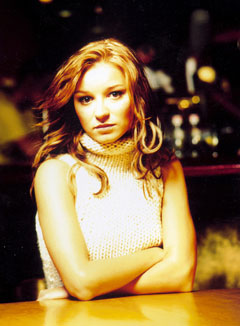
Naumova gives up Tibet for trip to Tallinn

No one can predict the future, singer Marija Naumova agrees. All she knows is that if she wasn’t headed for Tallinn next month to compete in the Eurovision Song Contest, she would be on her way to a monastery in Tibet.

Naumova, who speaks five languages including her native Russian, will represent Latvia as one of 24 countries participating in Eurovision. Sometimes maligned as a showcase for packaged pop, the contest nonetheless draws a large international television audience and momentarily heightens feelings of national pride across Europe. Last year, in the contest held in Copenhagen, the Estonian duet of Tanel Pader and Dave Benton won first place, earning Estonia the honor of hosting this year’s competition on May 25.

Could Latvia and Marie N, as Naumova’s stage presence will be known in Tallinn, come out on top this year? Perhaps. But that’s not a goal she’s set.

“I have a wish for myself,” Naumova said in a telephone interview from Rīga, “and that is that I always have plenty to do.”

And right now she does. Naumova is perhaps one of few musical artists in Latvia who, for the moment, can make a living as just a musical artist. Even before she and her backup performers could begin to make final preparations for Eurovision, Naumova was setting her sights on an upcoming concert with Raimonds Pauls in Moscow as well as continuing a tour around Latvia. At the same time, work was continuing on a compact disc that is to contain several of Naumova’s songs, including a couple of mixes of the Eurovision entry, “I Wanna.”

The album in part will showcase Naumova’s ability to sing in English. She’s already released albums in Russian, in Latvian and in French. Those albums, especially Ieskaties acīs and Ma voix, ma voie, combined with her acclaimed performance in the musical production of “Sister Carrie” to help make her one of the most popular performers in Latvia.

Her victory in the national Eurovision contest in March was resounding, with more than 26,500 votes cast by fans to take her to No. 1. (The second-place winners, Linda Leen and Horens, scored about 18,100 votes.) Not bad, considering she came up with the song just two days before entries were due in early January.

“In the shower I’m always humming something,” she said. That’s how “I Wanna” came to her. Although she won, it was not without the requisite controversy that seems to have attached itself to the Latvian run-up to Eurovision. Critics claimed “I Wanna” was plagiarized from Ricky Martin’s hit song from 2000, “She Bangs.” But a group of experts determined that while “I Wanna” may have been inspired by “She Bangs,” it was not plagiarism. Still, some fans of other contestants remain disgruntled that Naumova won. One fan even posted an MP3 file on the Internet, weaving together Naumova’s and Martin’s songs in a mix that may leave some to wonder whether more than inspiration was at work.

Whatever the criticism over “I Wanna,” Naumova is still viewed by many as a talented individual. Besides speaking five languages, she also holds a bachelor’s degree in law.

Naumova credits the popular composer Pauls with kicking off her singing career. It was Pauls who discovered Naumova performing in Jūrmala several years ago. Their collaboration has continued.

Although Naumova said she avoids the politics of ethnicity, she noted that with her surname it usually would be difficult to get a break. But thanks in part to Pauls’ endorsement, “Many Latvians think that I am Latvian.”

Naumova also has kept her image and her music fresh by constantly updating it, trying different styles.

“A character that changes is interesting,” Naumova said. For example, on the cover of Ieskaties acīs she looked like a modern-day flapper, with short hair and an expression of happy innocence. But on Ma voix, ma voie, she literally let down her hair and appeared more distant.

Her stage presence for the Eurovision contest is sure to be different again, especially considering “I Wanna” is touched with salsa rhythms.

But winning a song contest isn’t the most important thing for her. “A contest is a lottery,” she said. First place isn’t represented by a number. “First place is a feeling you have inside,” Naumova said.

Last year, Naumova was passed over for a spot in Eurovision. Instead, Arnis Mednis went for Latvia, but finished 18th out of 23 countries participating. Two years ago, Prāta Vētra (BrainStorm) finished third and saw its star slightly rise among European music fans.

And as for the future beyond this year’s Eurovision? Naumova said she would like to improve her Italian and also learn Spanish. More concerts also are in the offing, perhaps some day even in America. But for now, her plans to travel to Tibet for some quiet time are on hold.

Marija Naumova

Marija Naumova adopted a new image for the release of her French-language album, Ma voix, ma voie. (Photo courtesy of Baltic Records Group)

Andris Straumanis is a special correspondent for and a co-founder of Latvians Online. From 2000–2012 he was editor of the website.