Latvian’s first feature film opens in Australia

The Illustrated Family Doctor, the first feature film by Latvian-Australian writer and director Kriv Stenders, opens in Australian theatres March 3.

The film, Stenders said in a prepared statement, “is a dark comedy that centers around the story of Gary Kelp, a young man who condenses reference books for a company called the Info Digest. The film begins with Gary’s father death, and Gary having to start work on condensing a home medical journal called The Illustrated Family Doctor.”

The film is based on a 1997 novel by David Snell and stars Samuel Johnson as David Kelp. In 2002, the film received funding from the Film Finance Corporation Australia.

Stenders previously has directed music videos and short films, as well as the award-winning 1994 documentary, Motherland, about his two Latvian grandmothers. Stenders also wrote the script for Motherland. The documentary was filmed in Brisbane, Australia, and in Latvia.

Stenders is a 1989 graduate of the Australian Film, Television and Radio School.
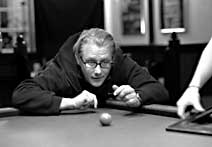
Kriv Stenders

Kriv Stenders directs his first feature film, The Illustrated Family Doctor. (Photo courtesy Palace Films)

Andris Straumanis is a special correspondent for and a co-founder of Latvians Online. From 2000–2012 he was editor of the website.

Latvian embassy moves to new site in Ottawa

Latvia’s embassy in Canada has moved to a new location in Ottawa, according to the Ministry of Foreign Affairs. Telephone and fax numbers remain the same.

As of March 1, the embassy is located at 350 Sparks St., Suite 1200, Ottawa, ON K1R 7S8.

Latvia opened its embassy in Ottawa in 1994. The current ambassador, who began his tour of duty in 2003, is Atis Sjanīts. Latvian also has honorary consuls in Montréal, Toronto, and Victoria, British Columbia.

Andris Straumanis is a special correspondent for and a co-founder of Latvians Online. From 2000–2012 he was editor of the website.

Rīga is 63rd most expensive city, says study

Rīga is the 63rd most expensive city in the world, but the Latvian capital is less costly than either of its Baltic counterparts, according to a new study by the Swiss banking group UBS.

Oslo, Norway, tops the list of the bank’s latest “Prices and Earnings” study, UBS announced in a Feb. 28 press release. The study updated the bank’s 2003 ranking of purchasing power in 71 cities around the world.

Copenhagen, because of the changing value of Denmark’s national currency, has risen to the second most expensive city, while cities in the United States have become relatively less expensive.

“The weak U.S. dollar has seen U.S. cities fall in the global price rankings, so that a shopping spree in the U.S. is now an attractive proposition for Europeans,” UBS said.

Tallinn, the capital of Estonia, ranked 47th, between Dubai in the United Arab Emirates and Manama in Bahrain. Vilnius, the capital of Lithuania, ranked 52nd, between Sao Paulo, Brazil, and Caracas, Venezuela. Rīga, meanwhile, was listed between 62nd-ranked Lima, Peru, and 64th-ranked Sofia, Bulgaria.

As a measure of purchasing power, the study also looked at how many minutes a person has to work to afford a Big Mac hamburger. In Rīga, it’s 44 minutes, while in Tallinn it’s 46 minutes. In Vilnius, however, a person would have to spend nearly an hour—57 minutes—to earn the sandwich.

Andris Straumanis is a special correspondent for and a co-founder of Latvians Online. From 2000–2012 he was editor of the website.