Double Faced Eels emerge from alternative scene

Double Faced Eels

When Latvian rock group BrainStorm was preparing for its 2005 summer concert tour of Latvia, I was interested to see who would be the opening acts. One of the groups named caught my eye: Double Faced Eels. “Double Faced who?” I had never heard of this group, even though it was formed in 2000 and was already known in Latvia’s alternative music circles.

Smoked eel is a traditional delicacy on the Latvian Christmas dinner table. Likewise Double Faced Eels’ debut album,  Zilais valis (The Blue Whale), is a Latvian music delicacy. Having listened to this album nonstop for the past few days, it’s clear to me the sound created by the band is something new and exciting. A brand of guitar-based power rock combined with solid drumming, along with some crazy lyrics, make this album a strong buy. The Eels’ music is sometimes heavy, yet at other times poppy, almost ska-like. With nearly 50 minutes of music, Zilais valis should go down well at parties and on the road in the car stereo.

The album actually has 15 tracks (if you count track No. 3 with no name, just 11 seconds of storytelling by an elderly lady speaking to a bunch of kids about kaņepu sviests, or hempseed butter).

The album starts off with the band’s big hit, “Zilais valis” (The Blue Whale). It has been nominated for best rock song of 2005 at the annual Latvian Music Awards scheduled March 10 in Rīga.

In the trail of the whale follows “100g,” a reference to the size of a shot of liquor in Latvia (100 grams is about 3.5 U.S. fluid ounces, or about a triple shot in the United States). It’s a quick ska-tempo drinking song.

The fourth track, “Cemme” (Anger), is a witty, angry power guitar Green Day-type song. Then comes a song sung in English, “To Take Breathe.” It probably should be called, “To Take My Breath Away,” as per its lyrics. The song is fairly musically mundane. The lyrics are unfortunately uncomprehensible and the pronounciation poor.

“16,” on the other hand is an uptempo modern remake of Olga Rajecka’s repetoire song, “Kad man vairs nebūs 16.” Rajecka even sings solo in the last part of the track.

“Ja esi stulbs” (If You’re Stupid) features a moving bass line and some weird chord modulations towards the end of the track, making for a good dancing song.

Next is “Krokodils” (The Crocodile). This is my favorite on the album, offering a compact rythmic barrage, with good lead vocals and harmonies, great drumming and nice counterpoint work between the guitars and bass guitar. All members of the band are in the zone on this song.

“Bikses” (Pants) is a light-hearted song with rather foolish four-line lyrics. The track includes a little kid who tries to sing one of the verses and an elderly woman who complains about her state pension.

“Sha la la” goes the chorus of the next track, just an average party song.

“Prasīt aizmirsto” (Ask for the Forgotten) has been one of the singles from the album. It’s of the few songs on the album with serious content.

Track 12, “SEX,” returns to the lighter side of things. The song starts out with acoustic guitars and vocals, then has some whistling combined with appropriate sound effects and a nice melodic chorus complete with harmonies and handclaps. The rest of the band joins in later on in the song, which fits in quite well.

“No Lies” is the other song sung in English. It’s another average heavy song with some pretty awful-sounding lyrics.

“Pa jokam” (Just for a Joke) is the current radio single. But there’s nothing funny about the song, which features power chords and a strong, rocking chorus. It’s one of the best songs on the album, without any doubt. The song ends with a bridge part that is quite unusual.

The final and longest song on the album is “LPDZ” (perhaps a reference to “The Proud Family” characters LaCienega, Penny, Dijonay and Zoey). It starts off with the now familiar ska rhythm and has verses sung in Latvian and the Livonian language. There’s an abrupt turn to heaviness about one minute into the song, almost as if a completely different song is beginning. During the final 90 seconds the track gradually speeds up, as does the guitar solo, and the band goes into a little ego trip, showing off what it can do, rounding off with a big ending.

I hear Double Faced Eels does a great live show, going all out. The members of the group are all young, between the ages of 18 and 23. They include Mārtiņš Gailītis (Marka) on guitar and lead vocals, Reinis Briģis (Reinis) on lead guitar and vocals, Eduards Zagainovs (Chikis) on bass and Pauls Ķesteris (Pauls) on drums. The band’s main musical influences are Green Day, Limp Bizkit, Linkin Park, Foo Fighters and The Beatles.

The past year proved to be somewhat of a breakthrough for Double Faced Eels. Having played on the BrainStorm concert tour and, in January, releasing its first album, Double Faced Eels is now considered one of the top bands in Latvia. There has been discussion in Latvia about the band’s lyrics being offensive to some people, but I wouldn’t try to read too much into them and just accept the lyrics for what they are. It’s just music and these guys are singing and playing about the pillars of youth: sex, drugs and rock ‘n roll.

It will be worth watching how Double Faced Eels follows up on the success its debut album.

Details

Zilais valis

Double Faced Eels

Platforma Records,  2006

PRCD 171

On the Web

Double Faced Eels

The band’s official Web site includes some background on the group, news of upcoming concerts, a bulletin board and other features. EN ES LV
Raitis Freimanis lives in Stockholm, Sweden, and is a founding member of the Latvian-Canadian band Skandāls.

Jansons wins Grammy for Shostakovich record

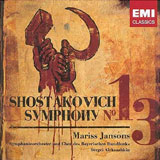
A recording of Dmitri Shostakovich’s “Symphony No. 13,” with Latvia-born conductor Mariss Jansons leading the Symphonieorchester des Bayerischen Rundfunks, has won a Grammy award for best orchestral performance.

The recording, released in August on the EMI Classics label, was one of five albums nominated in the category. Results of the Grammy awards were announced during a Feb. 8 ceremony in Los Angeles and posted on the Grammy Web site.

The award goes to the conductor and the orchestra.

The album also was nominated for best classical recording, but did not win.

An opera recording, Vivaldi: Bajazet, that includes Latvian mezzo-soprano Elīna Garanča was nominated for best opera recording, but also did not win. The recording was released in May on the Virgin Classics and EMI Classics label.

Shostakovich, Symphony No. 13

A recording of Dmitri Shostakovich’s “Symphony No. 13″ has earned a Grammy award for Latvia-born conductor Mariss Jansons.

Andris Straumanis is a special correspondent for and a co-founder of Latvians Online. From 2000–2012 he was editor of the website.

Small-town Canada man plays hockey in Latvia

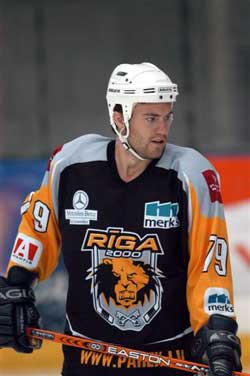
Many young émigré Latvians in the West have made their way back to the home of their parents or grandparents. But 23-year-old Vilis Ābele from Perth, Ontario, went back as a professional athlete. He plays hockey on the Rīga 2000 team.

Ābele played junior hockey in his hometown, located about 80 kilometers (about 50 miles) southwest of the Canadian capital of Ottawa, then moved to New York to study and play college hockey. The 190-centimeter (about 6 feet, 2 inches) and 97-kilogram (about 213 pounds) player joined Rīga 2000 last year. He shoots left.

Rīga 2000 is acknowledged as one of the best—if not the best—hockey teams in Latvia. Six of its players are on the national Latvian team scheduled to play in the Winter Olympics in Turin, Italy.

How does a kid from small-town Ontario end up playing hockey in Latvia?

It’s a wonder I ended up here but it really was a goal for me. I wanted to play hockey in Europe and playing in Latvia and being able to speak the nation’s language is a huge bonus and experience. This has been the first year in my life I have been able to experience Latvia, which was something I always wanted to do while growing up learning about Latvian culture.

How did you make the move from Canadian junior hockey to college hockey in the United States?

I played junior hockey for three years in my hometown, Perth, while going to high school. During my first year I suffered my first shoulder dislocation, which was disappointing because it prevented me from stepping up to higher levels. After finishing high school I decided I needed a change and also finish my academics. The United States was a great option being able to play and finish university at the same time. I first went to a junior college in Canton, N.Y. I had a very good year and won the All-American award. With this successful season I had NCAA (National Collegiate Athletic Association) teams interested in me and I decided to go to State University of New York at Potsdam. I played two years at Potsdam and graduated with a bachelor of science in business administration. It wasn’t the easiest being in three different schools in four years and still being able to get my degree.

Did your parents have any problems hauling you out of bed on those cold Saturday mornings before the crack of dawn to suit up for practices or games?

Being a young player it’s never a problem getting up to play hockey. I’m sure it was more a problem for my parents. I always had a skating rink in my backyard and usually had to be dragged off it at night for bed or before I froze my feet off. I remember being really happy when my father wired lights around the pond to be able to take advantage of the early winter nightfall. My father did most of the driving, but if my mother was able to come she was more than happy to. I also remember summers playing AAA hockey before junior. Every weekend there were tournaments and it was fun as a family to travel and stay in hotels and have a little vacation.

Tell us about your family.

I have a very supporting family. I am the youngest of the three kids. My parents are Baiba and Andris. I have two older sisters, Alīze and Indra. Indra is 25 and is newlywed and living in Mississauga, Ontario, and working as a nurse. Alīze is 27 and living in Brooklyn, N.Y., and working as a grade six teacher. My mother and father are still working hard but hopefully will relax more with their children all out of school and in the work world. All those times while playing, my family would make a great effort to come and watch, even if it required driving more than six hours just to be there. Without my parents and their support I probably wouldn’t be here right know still playing hockey.

How did you maintain your Latvian identity living in a small Ontario town?

There were no Latvians in Perth. We were one of a kind, with others not having any clue where Latvia even was. Growing up we always spoke Latvian at home, but as the years went on it was tougher. Every Saturday I was dragged to Latvian school in Ottawa with my mother. She was a teacher and I didn’t enjoy it very much. I didn’t like getting up early on Saturdays and driving just over an hour to go to school again. All this has seemed to work, living here in Latvia now and being able to speak and understand others around me. I also attended Tērvete, a Latvian summer camp in Québec, which was fun. Here we learned a lot about Latvian culture and folklore.

How difficult was it to crack the Rīga 2000 line-up?

After I arrived I had a week until my first game with Rīga 2000, which was an exhibition game against the Latvian national team. I was playing pretty well and riding on a high. They seemed very interested and wanted me to stay and play. Like all European teams they have an impression that any Canadian player must be good. I played around three games and then dislocated my right shoulder for the first time. Ironically I had dislocated my other shoulder over 20 times and had two surgeries on it. After my arm just about fell out during physiotherapy, I needed surgery on my right shoulder. I’m now playing again and need to prove to Rīga 2000 once again that I can crack the line-up of the first team.

Rīga 2000 has two teams. What is the difference?

One team plays in the Belarus league and one plays in the Latvian league. The first team, which is in the Belarus league, is very good. It has around nine players who play on the Latvian national team. Players that have come from the American pro leagues say that this league is better than the East Coast Hockey League, but below the American Hockey League. The second team competes with teams throughout Latvia. We call it the farm team. If you are playing well on the second team you could have the opportunity to play on the first team. Any player from the second team can be called up to the first team and vice versa.

What position do you play? How is the game in Latvia different from the one played in North America?

I play defense. I like to think that I’m an offensive defenseman like (Sandis) Ozoliņš and enjoy jumping into the rush. However, with my size, I’m more useful focusing on playing defensively. The game is totally different here than in North America. At home it was a much more physical game. Here you will be lucky to see five hits in a game. In the NCAA the two-man forecheck was used almost always, while here the forecheck trap is much more common. Over here it is a more “fancy-dancy” game, which unfortunately is not one of my strengths. I am more of a physical player. There is a lot of talent here in Latvia. A lot of young players have great potential to play professionally in North America.

Who was your hockey idol when you were growing up?

My idols were Artūrs Irbe and Sandis Ozoliņš, who then played on the San Jose Sharks. I still remember seeing Artūrs after an Ottawa Senators NHL game and getting an autograph. It was amazing to meet and train off ice with Artūrs this season when he was playing for Rīga 2000. It was a couple of weeks after my surgery when he arrived but before I was healthy he went off to play in Austria. It was great to work out with him while he was suffering from a groin injury. He was very nice and interesting. It was disappointing when he left because it would have been great to be able to play a game as a defenseman in front of him.

The Rīga 2000 teams have ethnic Latvians and Russians from Latvia as well as Estonian, Slovak, American, Canadian-Latvian and Canadian players. How do you communicate on the team?

Rīga’s coaching staff run their practices in Russian, everyone from Latvia seems to understand and were raised being coached in Russian. I don’t understand Russian and just ask the guy next to me what was just said or what is supposed to be done in the drill. I just look at the drawing board and figure it out most of the time. The head coach is Slovakian and doesn’t speak Latvian but speaks enough English for me to understand.

How often do you play and practice in Rīga? What do you do away from the rink?

We usually train, practice and play six days a week and have one free day to relax. It is a pretty busy schedule. Things are strict so I don’t have a lot of time to go crazy. I usually visit and relax with friends when I have the opportunity. I live in Jūrmala in a nice hotel right by the Baltic Sea and enjoy walking along the beach.

What are your future plans?

I’m not sure of my future plans. Hockey will probably not provide me with a long career. I’m fortunate to have a degree to fall back on. I would like to go home for the summer and spend time with my family and work back there. I’m fortunate for my present opportunities and only time and hard work will tell what is in store for me.

Vilis Ābele

Vilis Ābele, whose hockey career started in a small town in Canada, last year began playing for Rīga 2000. (Photo courtesy of Rīga 2000)