How many times have you heard the phrase “the younger generation just doesn’t read Latvian books anymore” said about those now in their 30s, 40s and 50s? It’s true—but why? Is it simply because our Latvian is not as competent as that of the older folks or is the problem subject matter? I would like to think it’s a combination of both.
Latvian books (those written outside Latvia, anyway) are often autobiographical memoirs or novels loosely based on the author’s own experiences. These are informative but difficult to relate to if you have not been through those times yourself. Of course there are also books written by contemporary Latvian authors living in Latvia, but the style of writing is quite different to what people living outside Latvia are used to. The free association and dream sequence-style musings of many modern Latvian writers are all well and good from a creative point of view, but nothing beats a solid story line with believable characters.
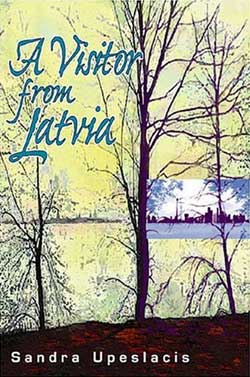
Sandra Upeslācis has this and more in her first novel, A Visitor from Latvia. The book is written in English, so no one has the excuse of finding it difficult to read. The plot contains many elements that Latvian readers can relate to. Set in Toronto, many contemporary issues are raised: the ongoing traditions of the Latvian community that still continue today, juxtaposed with the life and career of the next generation in their homeland, Canada. Throw into this setting a visitor from the old “homeland”—the now independent Latvia—and you have the ingredients for an interesting mix of human interaction. This scenario is also easily transposable to any other Latvian setting outside Latvia. The story could just as well be set in Sydney in Australia or Los Angeles in the United States. The intergenerational attitudes and issues, as well as the differences between Latvians from Latvia and those who have lived most of their lives outside Latvia, are similar all over the world.
Other usually taboo subjects in more or less classical Latvian literature such as love, sex and interethnic relationships are also covered, making for quite scintillating reading. The main character, Klāra, is a feisty, independent Latvian-Canadian whose high-powered, career-oriented life is the epitome of what everyone seems to strive for these days. She comes from a traditional Latvian background, where mum is the homemaker and dad the retired breadwinner, and is one of three children in the family. You can probably start seeing the similarities with your own family already. The relative from the homeland, Andrejs, is also the traditional guest from Latvia—everyone has had at least one such over the last 15 years. Glimpses of his life back in Latvia show that he, too, is one of the younger generation with trials and tribulations that await him on his return.
The interaction between the main characters—mainly Klāra with her family, her new love Philippe and her cousin Andrejs—is quite well developed. The racy pace make this book compelling reading. Let’s hope Upeslācis’ creative juices continue to flow and we can look forward to more fresh and perceptive exposes of the lives of Latvians today, wherever the setting may be.
Details
A Visitor from Latvia
Sandra Upeslācis
Toronto: Town Press, 2004
ISBN 0973660104
Where to buy
Purchase A Visitor from Latvia from Amazon.com.
Note: Latvians Online receives a commission on purchases.
Daina Gross is editor of Latvians Online. An Australian-Latvian she is also a migration researcher at the University of Latvia, PhD from the University of Sussex, formerly a member of the board of the World Federation of Free Latvians, author and translator/ editor/ proofreader from Latvian into English of an eclectic mix of publications of different genres.