


Here in Rīga, there’s a notorious street called Čaka iela, which acts as a dividing line between the relatively posh Center with its Art Nouveau buildings, luxury automobiles and brand-name stores, and the more rundown outlying sections of town, filled mostly with stray cats, staggering drunks and dark slot-machine dens.
The street itself, which has certainly inherited more from the latter than from the former, was named after one of Latvia’s most beloved twentieth-century poets, Aleksandrs Čaks, who lived nearby and spent his days roaming the streets and frequenting the small taverns found there before the war.
Čaks, who died in 1950, is famous for crafting sublime little poems—in volumes like Apašs frakā (Apache in a Frock Coat) and Mana Rīga (My Rīga)—about the characters he encountered in the streets, courtyards and bars of his neighborhood, whose tragic beauty inspired his singular vision of the city, his muse.
During the Soviet period, the famous bars on Čaka iela, as elsewhere in Rīga, were shut down and the public consumption of alcohol was outlawed, at least for intermittent periods. The state considered bars and restaurants not so much dens of iniquity, to be eradicated in order to protect the morals of Communist society, but meeting places that could potentially foster and harbor anti-government ideas and bourgeois ideals. They were therefore replaced by kafejnīcas, a cross between a cafeteria and a café, which were intended to nourish the hungry laborer with meals that can still be found throughout Rīga today: sorrel soup, mayonnaise-covered pork chops, beet salad, potatoes and chanterelle gravy, buckwheat groats with sour cream, and, of course, those ubiquitous tall glasses of kefir and buttermilk and kvass.
When the Soviet Union collapsed and Rīga was overrun with poverty and crime, Čaka iela underwent yet another transformation, becoming the city’s infamous red-light district. Much to the delight of men from Scandinavia and Germany, who came to Latvia to seek new business opportunities, prostitutes now sauntered up and down the street that the poet Čaks had once strolled, decades earlier, with his cane, three-piece suit and fedora hat atop his signature bald dome. Many of the prostitutes hung out in what was left of the old Soviet-era cafeterias, where they sat sipping bitter black tea and smoking acrid Prima cigarettes as they waited for clients to get up the nerve to come in.
As the nineties wore on and Latvians acclimated to the transition from a Communist state to a free-market economy, poverty and crime were gradually replaced by corruption and greed. The changes could be gauged on Čaka iela as well. The former red-light district moved farther away, to a more convenient location near a large park, and many of the old kafejnīcas were replaced by stores selling women’s lingerie. The majority of these establishments were merely money-laundering fronts for local mafioso, most of them former members of the Cheka, who had ingeniously conceived of a way both to clean cash and to occupy their girlfriends during the day. For this reason, many of the stores were presided over by immaculately made-up women, dressed from head to toe in Dolce & Gabbana outfits, who perched on stools in front of the register all day long, filing their nails, reading glossy magazines and chattering on their cell phones, ignoring the few stray customers who happened to wander in.
After the turn of the century, a new era dawned in Latvia. In 2004, the country became a full-fledged member of the NATO defense alliance and the European Union; the year before, Rīga had hosted the Eurovision Song Contest, an event that seemed almost like a prerequisite for EU accession. Credit lines opened up, business blossomed, foreign companies moved in, tourism soared, and the city was treated like a lost gem that had been rediscovered by the world once again.
Čaka iela, in its latest incarnation, became home to the sector that served as the middleman for this unprecedented growth, the oil for the machine: the translation industry. Signs advertising “speedy, high-quality, notarized translations” now appeared above the dusty sidewalks. Practically anyone with a college degree could get a job rendering texts from Latvian to English, or German or Swedish, at one of the tiny translation operations, which claimed “to solve all your translation problems,” located a few flights up from the street. As a result, everything adorned with the printed word suddenly appeared in multiple languages, making even the simple process of perusing a restaurant menu feel like the arduous task of studying a work of continental philosophy.
The great boom in translation had another role, much larger than the duty of accommodating foreign visitors or easing business transactions. Latvia is a small, relatively unknown country, and is therefore faced with the constant task of explaining itself, or justifying itself, to the outside world. There is this perpetual need to say, “This is who we are.” The translation industry, from its Čaka iela headquarters, became the pioneer dispatched to spread the good word about Latvia to the uninitiated.
It was the translators’ job to render, into inevitably broken English, the dozens of amateur guidebooks to the city, which now lay in stacks in the new bars and restaurants, extolling the virtues of “most wonderful ancient old city Rīga” and “dynamic thousands year heritages of magnificent peoples of Latvia.” These translators had to keep up with the strings of hyperbole spun by fledgling Latvian copywriters to describe the many entertainment establishments—throbbing clubs and faux Irish pubs, cheap pancake houses and sushi bars staffed by Chinese immigrants from Russia—that suddenly appeared all over town. They also had to translate the endless series of state-issued books and brochures about the history and culture of Latvia, which rapturously detailed the country’s many invaluable contributions to the world, such as the little metal rivets on the pockets of Levi’s jeans—those tiny achievements that small nations often revel in.
For translators, there was a perpetual stream of work to be done. In the first couple of years after joining the EU, Rīga won the right to host a number of international events and competitions, like the World Ice Hockey Championships and the NATO Summit in 2006. These events—gold mines for the translation industry, which rendered the Web sites, schedules, newsletters, leaflets, meetings and seminars into foreign languages for visitors and the press—were treated like coming-out parties for the new EU member state of Latvia. Rīga organized dazzling concerts featuring Latvian pop singers from reality TV shows, performing alongside folklore ensembles and symphony orchestras; elaborate fireworks displays accompanied by mass choruses, who belted out popular songs from the 1980s Singing Revolution; and huge crafts fairs selling an unlimited array of woolen socks and mittens, linen blouses, amber necklaces and ethnographic jewelry—all stuff that the locals never wear but are constantly being peddled to visitors, through the efforts of earnest translators, as genuine Latvian souvenirs.
As the layers of translation piled up, so did the various identities for Rīga—identities that were themselves mere interpretations, or translations, of the city. One of the dominant identities was Rīga as a paradise for so-called “sex tourism”: a capital for debauchery. Indeed, men of all ages packed into cheap Ryanair flights in Liverpool and Dublin and came in search of cheap booze and eager strippers. The public groused about being forced to endure these roving bands of blokes, whose belches reverberated at night through the streets of the Old Town. During the summer months, when most of Rīga was away in the countryside and there was nothing better to report, evening news programs carried special broadcasts about the problem, complete with shaky cameras hidden inside duffel bags capturing drunken men trying to hire prostitutes from burly strip-club bouncers. Several times, inebriated tourists were arrested for urinating on the Freedom Monument—a sin roughly equivalent to pissing on the Eternal Flame in Arlington Cemetery. Sketchy clubs, with names like Mary, Monroe and Rolexxx, popped up all over the Old Town, and taxis idled on the corners ready to take fares to nearby erotic massage parlors. Those who had been opposed to the EU shouted, I told you so, as if having balding British bachelor partiers in skirts and halter tops puking on the sidewalk at three in the afternoon were the price of joining the New Europe.
The other popular interpretation of Rīga during these years was the city as real estate boom town. Rīga’s famous Art Nouveau buildings, many of which had been abandoned since the early nineties, were suddenly snatched up and renovated into condominiums and office space. The compulsive buying and selling of properties quickly jacked up property prices to astronomical heights, though the steady supply of easy credit assured that homebuyers could keep up with the inflating bubble. Shiny new luxury automobiles, mostly S-class Mercedeses (for him) and Porsche Cayennes (for her), parked on the sidewalks in front of the city’s new gourmet restaurants and deluxe health spas. Rīga was lauded as the hottest city for business this side of the Baltic Sea, and everybody wanted a piece of the action.
But neither of these interpretations of Rīga was ready for the economic crisis that came crashing down upon the region in the fall of 2008. Bachelor-party tourism has dropped considerably this season, and many of the old strip clubs have been forced to get dressed and close up shop. Now, instead of news reports about how stag parties are staining the medieval face of the Old City, Rīga has tried to coax back its former enemies by ensuring them how safe the city has become. The city loudly promises to crack down on crooked cab companies and to defend tourists against getting grossly overcharged for a bottle of champagne and a lap dance. But regardless of these efforts, the teenagers in the Old City who once handed out fliers for free drinks at Pussy Lounge or Mademoiselle Cigar Club now stand about idly, smoking cigarettes and eating pelmeņi dumplings with sour cream and horseradish from Styrofoam take-out containers.
Likewise, the bursting of the real estate bubble has left citizens with colossal mortgages to repay on apartments whose value has been cut in half. Entire office complexes and condominium buildings, completed just before the economy went bust, now stand empty, the labels still affixed to their window frames, strips of industrial plastic wrap flapping in the breeze. Those who can bail out of their properties move back to the sprawling districts of Soviet-era block-style apartment buildings, the so-called mikrorajoni that surround central Rīga, which are now seeing an unprecedented influx of luxury cars parked on their labyrinths of broken asphalt. Many of the gourmet restaurants and health spas have also closed, adding to the lines of empty storefronts beneath the sculptures of gargoyles and maidens that adorn the Art Nouveau facades in the center of town.
One evening not too long ago, I took a midnight stroll across the city and somehow ended up on Čaka iela, near my first apartment in Rīga. Gone are the prostitutes of the early nineties, who stood on the corners in fishnets and bustiers. Gone are the lingerie shops opened before the turn of the century, leaving empty shells spewing electrical wire in their place. Gone are the Soviet-era kafejnīcas, with their flies buzzing around plates of jellied meats and bowls of creamy salads. And with the current economic crisis in full swing, gone are most of the EU-accession-era translation offices, too. There’s not much to work on anyway: the gross domestic product is down almost 20 percent, and the government announces new budget cuts on a near weekly basis, which means there won’t be any texts left to write soon, much less to translate. The apache of Čaka iela has shed his frock coat and awaits his newest incarnation. In the meantime, Rīga is, as the countless signs in empty windows declare, “For Rent,” and merely lays there, untranslated, in all its tragic beauty.
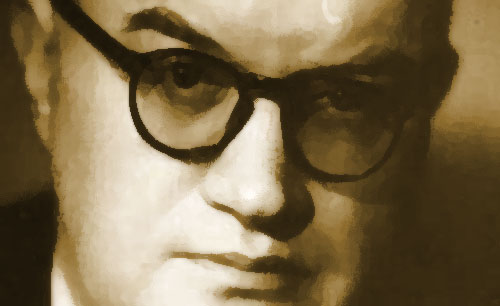
What would the late poet Aleksandrs Čaks say about the latest incarnation of the street that now bears his name?
