Baltic premiers sign declaration calling for day of remembrance

In observance of the 20th anniversary of the 1989 Baltic Way demonstration, the prime ministers of Estonia, Latvia and Lithuania have signed a joint declaration supporting a call to make Aug. 23 a European day of commemoration for victims of both Stalinism and Nazism.

Meeting in Vilnius, Estonian Prime Minister Andrus Ansips, Latvian Prime Minister Valdis Dombrovskis and Lithuanian Prime Minister Andrius Kubilius put their names to the declaration that also notes the renewal of their countries’ independence in 1991 led to a new era of cooperation between the Baltic states, according to a press release from Latvia’s Cabinet of Ministers. The leaders pledged to strengthen their ties with the European Union and the NATO defense alliance.

“Estonia, Latvia and Lithuania will continue to jointly work to preserve historic memory and for the honest and open awareness of totalitarian heritage in 20th century Europe,” according to the Aug. 23 declaration.

On Aug. 23, 1939, the Soviet Union and Nazi Germany signed a non-aggression treaty called the Molotov-Ribbentrop Pact. The treaty included secret protocols that led to the Soviet occupation of the Baltic republics. The Baltic Way demonstration, in which an estimated 2 million people linked hands in a human chain spanning Estonia, Latvia and Lithuania, was a protest organized on the 50th anniversary of the pact.

The European Parliament has adopted a resolution calling for the establishment of a European Day of Remembrance for Victims of Stalinism and Nazism “in order to preserve the memory of the victims of mass deportations and exterminations, and at the same time rooting democracy more firmly and reinforcing peace and stability in our continent.”

The Parliamentary Assembly of the Organization for Security and Co-operation in Europe (OSCE), in a July meeting in Lithuania, adopted a resolution that equated Stalinism with Nazism and gave its support to setting aside Aug. 23 as a day of commemoration.

Russian officials reacted negatively, walking out of the meeting. The Russian Foreign Ministry and the State Duma called the OSCE resolution insulting.
Andris Straumanis is a special correspondent for and a co-founder of Latvians Online. From 2000–2012 he was editor of the website.

Pirmais tautas deju ‘flash mob’ notiek Rīgā

Skaidrs, ka tā bija sava veida reklāma mobilo sakaru operatoram Bite Latvija, taču negaidītais tautas deju flash mob Rīgas centrā 20. augustā bija arī vienkārši foršs pasākums.

Pirmās ziņas par notikušo “1st Latvian Flash Mob Dance” noklausījos Latvijas Radio, tagad jau skatāms “oficiālais” video ieraksts uz YouTube, ka arī viens no kāda garāmgājēja.

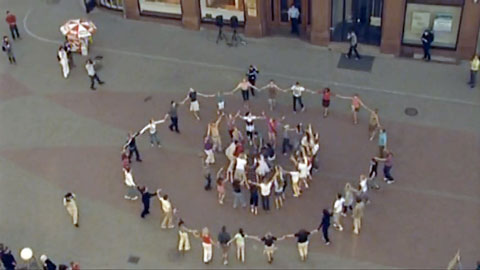
“Rīga savu pārsteiguma dāvanu saņēma ceturtdienas pēcpusdienā pie ‘Laimas’ pulksteņa, kad vairāki cilvēki negaidīti sāka izpildīt īpaši flashmob pasākumam veidotu horeogrāfiju,” Bite paziņoja preses relīzē. “Priekšnesums ilga trīsarpus minūtes, un tajā iesaistījās vairāk nekā 60 dejotāji no četriem tautas deju kolektīviem no Rīgas, Jelgavas un Salaspils. Ar šādu dāvanu Bite ir sniegusi savu pienesumu, parādot Rīgu kā pilsētu, kura savus apmeklētājus spēj patīkami pārsteigt.”

Kas ir flash mob, jeb zibpūlis? Tas ir kad vairāki cilvēki, uzzinājot caur internetu vai īsziņām par notikumu vietu un laiku tikai pēdējā brīdī, sanāk kopā publiskajā vietā un kaut ko izdara – dejo, dzied, piedalās spilvenu kaujā, u.t.t. – un tad atkal izklīst.

Negaidītā tautas deju akcija nebija pirmais flash mob Latvijā. Piemēram, kādā 2007. g. ziemas sestdienā cilvēki akcijā Follow Me garā rindā pastaigāja pa Vecrīgu. Tā gada oktobrī jaunieši Rīgā sarunāja Bang-bang flash mob Galerija Centrā, viens otru “nošaujot”. Un agrāk šomēness, turpat, kur notika tautas deju akcija, vairāki pāri nodejoja salsa par godu nelaiķim Maiklam Džeksonam.

Bet 2008. g. janvārī jauniešiem ne īpaši izdevās pārsteigt Rīgas Centrālstacijas garāmgājējus ar pēkšno sastingšanu, jo par ieplānoto flash mob sabiedrībā jau bija izplatītas ziņas.

Lai gan flash mob parasti domāts kā izklaide, kas iepriecina garāmgājejus, tā nevaram teikt par 2007. gada 26. oktobra akciju, kad daži jaunieši uz ceļiem pie Brīvības pieminekļa pielūdza Mildu. Žurnālists Juris Kaža nosauca š.g. 30. janvāra akciju protestējot pret Latvijas Radio budžetu samazināšanu par vienu no pirmajiem flash mob Latvijā ar politisku noskaņu, tomēr varu jautāt, vai tas bija riktīgs zibpūlis, jo video ierakstā redzam, ka žurnālisti jau gaida notikuma vietā, un pūlis ne pēkšni nez no kurienes parādās, bet atstaigā no radio nama uz Saeimu. Tātad viens no flash mob principiem attiecībā uz garāmgājeju – pārsteigums – bija pārkāpts.

Varbūt nākamajos Dziesmu svētkos vai Kultūras dienās ārzemēs vajadzētu sarunāt latviešu tautas deju flash mob. Bez šaubām, vietējie noteikti būtu pārsteigti par tādu pasākumu.

Zibpūlis

Rīgas centrā ap 60 tautas dejotāji piedālās 20. augusta flash mob akcijā, kas skatāms YouTube video ierakstā.

Andris Straumanis is a special correspondent for and a co-founder of Latvians Online. From 2000–2012 he was editor of the website.

Clinton hails Baltic Way anniversary; human chain planned in Washington

U.S. Secretary of State Hillary Rodham Clinton has applauded Estonians, Latvians and Lithuanians on the 20th anniversary of the Baltic Way protest against Soviet rule, calling the Aug. 23, 1989, event “a landmark in the struggle for self-determination.”

In a statement released Aug. 21, Clinton said the protest inspired many people around the world.

The 1989 demonstration saw an estimated 2 million people in the Baltic republics create a human chain that stretched 600 kilometers. The date, Aug. 23, marked the 50th anniversary of the 1939 Molotov-Ribbentrop Pact between the Soviet Union and Nazi Germany. The pact included a secret protocol that led to Soviet occupation the Baltics.

Clinton noted that people in the Baltics will commemorate the anniversary with various public and private activities.

“They have many reasons to be proud,” Clinton said in the statement. “The same determination and spirit that fueled the Baltic Way protests have helped the Baltic republics become champions of human rights and democracy. They are valued members of NATO and the European Union and provide leadership around the world.”

“On this historic occasion,” she added, “let me reaffirm the commitment of the United States to strengthen and deepen our partnerships with the people and governments of Estonia, Latvia, and Lithuania.”

Events in Washington

In Washington, D.C., the Baltic Way will be commemorated in an Aug. 23 reenactment in which participants will be asked to link hands in a human chain from the Embassy of Latvia at 2306 Massachusetts Ave. N.W. to the Embassy of Estonia at 2131 Massachusetts Ave. N.W. The demonstration begins at 2 p.m.

The reenactment will be preceded with observances beginning at 11 a.m. in the Embassy of Lithuania, 2622 16th St. N.W.

A demonstration of solidarity with Georgia is planned at 2:30 p.m. at the Embassy of Georgia, 2209 Massachusetts Ave. N.W.

In addition, the documentary film The Soviet Story will be screened at 1:15 p.m. and 3 p.m. in the Embassy of Latvia.

The events are being coordinated by the Joint Baltic American National Committee. Further information is available by visiting jbanc.org.

Andris Straumanis is a special correspondent for and a co-founder of Latvians Online. From 2000–2012 he was editor of the website.