Ar īpašu piegaršu, firma ‘Zafte’ meklē savu vietu dizaina pasaulē

Dizaina grupa “SIA Zafte” ir 2008. gada nogalē Rīgā nodibināts uzņēmums, kas izteicis sev trīs pamata darbības virzienus – dizaina priekšmetu un modes kolekciju veidošana, Latvijas autoru dizaina preču tirdzniecība un citi pakalpojumi ar dizainu saistītās jomās. Firmas “galvenās vārītājas” ir Ināra Gauja un Ingrīda Zābere, abām šis ir jauns pavērsiens dzīvē.

“Baltā nakts” mūsdienu kultūras festivālā, kas notika Rīgā naktī no 12. uz 13. septembri, “Zafte” guva plašu ievērību, foruma ietvaros rīkojot savu jauno tērpu kolekciju modes skati ar nosaukumu “Boutique Fashion Recycled jeb turies pie Raiņa!”. Kolekcijām bija unikāli pārtikas produktu nosaukumi – sāls, cukurs, milti, ingvers, piens. Pamatideja – apģērbu radīšana, pārstrādājot lietotus apģērbus, lai tiem būtu svaigs pielietojums.

Par savu uzņēmumu, kā arī par dizaina grupas projektu “RECYCLED.LV”, Gauja un Zābere pastāstija e-pasta intervijā ar Latvians Online.

Latvians Online: Pastāstiet mazliet par sevi, savu izglītību, darbu līdz šim un kā radās ideja veidot šo modes kolekciju?

Ināra Gauja: Esmu profesionāla scenogrāfe ar Latvijas Mākslas akadēmijas izglītību. Ar pārtraukumiem darbojos teātros kopš astoņdesmito gadu beigām – Nacionālajā teātrī sadarbībā ar režisoru O.Kroderu, Valmieras teātrī sadarbībā ar režisoru F.Deiču, neatkarīgajā teātrī “Kabata”, Jaunatnes teātrī, Krievu Drāmas teātrī, Liepājā, Daugavpilī. No teātra pasūtījumiem brīvajā laikā esmu darbojusies kā interjera dizainere, dizaina žurnāliste un stiliste. Veidot Recycled modes kolekciju mani pamudināja skolas biedrene Ingrīda Zābere (kopā mācījāmies Rīgas Lietišķās mākslas vidusskolā astoņdesmito gadu sākumā) – man pašai bija ideja veidot recycled dizaina priekšmetu kolekciju, jo radošais process, kā viena lieta pārtop par citu, mainot savu vizuālo tēlu, mani vienmēr ir saistījis.

Ingrīda Zābere: Esmu beigusi Rīgas Lietišķās mākslas vidusskolu un Latvijas Mākslas akadēmijas dizaina nodaļu. Jau aptuveni 20 gadus strādāju grafiskā dizaina jomā. Manas darbavietas bijušas reklāmas aģentūras, žurnālu un grāmatu izdevniecības. Tā kā maketēšana pārsvarā ir ilgstošas stundas pie datora, bīdot pa ekrānu tekstu klučus un bildes, laiku pa laikam paliek sagribas darīt kaut ko sievišķīgāku un radošāku. Nejaušā sarunā ar Ināru atklājās, ka abas esam gatavas uzsākt kaut ko jaunu. 

Latvians Online: Izstādes atklāšana notika “Baltā nakts” ietvaros. Jūsu darbi arī izstādīti vairākās citās vietās Latvijā. Kā esat iecerējuši tālāk virzit šo projektu – atvert veikalu, tirgot preces internetā?

Zābere: Nedēļās garumā izbaudījām prieku “pašām savs veikals” un būtu jauki to turpināt, lai mūsu izstrādājumiem rastos iespēja nodzīvot savu otro dzīvi, ko esam tiem devušas, nevis tikai karāties uz pakaramā. Jāatzīst, man pašai pats kleitu tapšanas process ir interesantāks par tā pārdošanas darbu, tomēr nevaru noliegt, ka ir patīkami, ja manis radītās lietas kādam patīk.

Gauja: Mēs būtu priecīgas atvērt savu dizaina veikalu, taču mums tam būtu vajadzīgs kāds investors. Vispirms pārbaudīsim savu kolekciju komerciālo veiksmi jau esošajos latviešu modes veikalos Rīgā. Paralēli arī turpmāk piedalīsimies dažādos dizaina konkursos un mākslas projektos, skatīsimies arī pāri robežai. Un darbs pie jaunu kolekciju radīšanas arī prasa daudz laika un enerģijas.

Latvians Online: Vai modes dizains ir ilgi bijis jums sirds lieta?

Gauja: Nekad neesmu domājusi būt par modes dizaineri. Esmu māksliniece, kam ir interesanti izpausties dažādās nozarēs, tai skaitā veidot un piedāvāt citiem savu īpatnēju skatījumu uz apģērbu.

Zābere: Kad biju maza, man bija jāstāv mammai blakus nebeidzami garās veikalu rindās, un atceros, kā ar interesi vēroju sieviešu kurpes un pētīju to dažādos fasonus. Vēlāk akadēmijā ģērbos vecmāmiņas jaunības laiku kleitās un sāku kolekcionēt seno laiku apģērbus. Doma par darbošanos modes virzienā vienmēr bija likusies kā neaizsniedzams augstais kalns, bet tam nedaudz pietuvojos, strādājot žurnālā Cosmopolitan. Mani ļoti aizrāva modes un stila fotosesiju veidošana, un redzu kā tas šobrīd ietekmē recycled bilžu rokrakstu.

Latvians Online: Kādas izjūtas bijušas, strādajot pie šīs kolekcijas – to veidojot, virzot ideju uz priekšu?

Gauja: Darbu pie apģērbu kolekcijas uztveru tikpat racionāli, kā citus savus mākslinieka darbus publikai – tas ir radošs, profesionāls izaicinājums pašai sev, kura rezultātam būtu jārosina īpašas, pozitīvas izjūtas citos. Ceru, ka tas man izdodas.

Zābere: Prieks, ka recycled ideja apvieno gan modi, gan manu milestibu uz vintage. Neuzņemoties pienākumu cieši sekot modes tendencēm, varu dauzīties un jokot uz nebēdu. Recycled lietas ir modernas ar savu ekoloģisko ideju.

Latvians Online: Vai sis ir pirmais privātais uzņēmums, ko dibinat? Kāda pieredze gūta, ejot cauri firmas dibināšanas procesam?

Zābere: Pirms 15 gadiem tiku rakstījusi biznesa plānu izmeklēti krāšņu second-hand jeb vintage lietu veikalam, bija pat iespēja dabūt kredītu, bet pēdējā brīdī pārdomāju. Pirms tam ir bijusi arī sava izdevniecība, tāpēc ir pieredze darboties privātā uzņēmumā. 

Gauja: Šis ir mans pirmais privātais uzņēmums. Firmas dibināšanas process ir diezgan vienkārša formalitāšu ķēde. Tālākais – attīstība, izaugsme – ir pašu rokās. Mūsu starta laiks sakrita ar ekonomiskās krīzes izsludināšanu, un mums atteica cerēto un jau apsolīto projekta atbalsta finansējumu – tas radīja grūtības un palēnināja iecerēto uzrāviena tempu – ar visu bija jātiek galā pašām.

Latvians Online: Vai šī projekta katalizators ir bijusi ekonomiskā krīze, jeb vai iecere būtu realizēta arī bez krīzes?

Gauja: Projekta iecere radās pirms krīzes. Bez krīzes tā būtu realizēta raitāk, bet krīzes kontekstā mūsu projektam ir citāda publicitāte. Neviens nezina – kā būtu, ja būtu…

Latvians Online: Ko varat ieteikt citiem, kam ir vēl nerealizētas idejas?

Gauja: Ja ideja ne tikai pašam, bet vēl kādam šķiet realizēšanas vērta – vajag visu apsvērt un drusku paskaitļot, un – uz priekšu!

Zābere: Uzdot sev jautājumu “Ko es vēlos?”. Es draudzenei pagājšvasar neviltoti naivi reiz izteicu: Gribu šūt. Nākamajā dienā viņa zvana un jautā, vai man esot vajadzīgs manekens un šujmašīna, esot nolikti pie vinas mājas miskastēm. Ja zin, ko vēlas, noteikti radīsies ideja, kā to iegūt. Kurš meklē, tas atrod jeb klauvē un tev tiks atvērts.
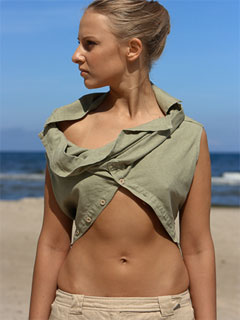
Zaftes mode

Ināras Gaujas modes dizains ieskaita šo topu, lina izstrādājumu, kas firmas interneta katalogā aprakstīts ar paskaidrojumu, ka tas “valkājams ar apkaklīti uz leju divos veidos – ar apģērbtiem pleciem vai tikai virs krūtīm”.

Daina Gross is editor of Latvians Online. An Australian-Latvian she is also a migration researcher at the University of Latvia, PhD from the University of Sussex, formerly a member of the board of the World Federation of Free Latvians, author and translator/ editor/ proofreader from Latvian into English of an eclectic mix of publications of different genres.

Iedomu Spārni releases second album

It has been six years since the band Iedomu Spārni released its debut album, Dienasgrāmata. At the end of October the group released its second compact disc, Lidojums.

The band was formed in 2000 and now includes Ieva Zēģele (voice), Jānis Dreiškins (guitar), Viesturs Butāns (bass) and Jānis Kuršs (percussion).

Lidojums includes 10 tracks, all in Latvian. According to a press release announcing the new record, Iedomi Spārni invited a number of guest musicians to help on the album, including Gints Stankevičs (keyboards, tambourine, bass and guitar), Andris Šīrants (guitar and bass), Todd Sorensen (drums), Aldis Zaļūksnis (bass and drums) and Jānis Zvirgzdiņš (keyboards).

Among the tracks are two singles that have had plenty of airplay on Latvian radio stations: “Viss vienmēr būs tāpat” (a duet with Ivo Fomins) and “‘Vai tu nāc, vai tu ej.”

Released by Rīga-based recording company MICREC, tracks on the CD include:

  1. Lidojums
  2. Kas noticis?
  3. Vai tu nāc, vai tu ej
  4. Kā miglā
  5. Meitene ar sapni
  6. Viss vienmēr būs tāpat (piedalās Ivo Fomins)
  7. Aiziet rītausmā
  8. Nē, nē, nē
  9. Palaid
  10. Izrāde galā

More information about the band is available on its official Web site, www.iedomusparni.lv, as well as on its page found on the social networking site draugiem.lv.

Lidojums

The second album from Iedomu Spārni is Lidojums.

Andris Straumanis is a special correspondent for and a co-founder of Latvians Online. From 2000–2012 he was editor of the website.

Indecisive politics surround a decisive budget

The grueling budgetary process in which Latvia has been engaged for months is coming to some resolution with a final adoption of the 2010 budget scheduled by Dec. 1.

Latvia’s politicians are faced with unpalatable choices of cutting more expenditure and trying to raise revenue in a declining economy. They are being carefully watched by international institutions fearful that a total collapse in Latvia’s economy may rebound onto other countries, but concerned that Latvia is still able to meet its obligations to pay its considerable debts.

At the heart of the problem of revenue has been Latvia’s reliance on two taxes that most affect those on poorer incomes: an income tax with a flat rate of 23 percent and a value-added tax, which was raised from 19 percent to 21 percent this year for most goods. The huge property boom of the past 10 years, when Rīga prices hit those of the largest European capitals, was unhindered by any capital gains tax (a sure sign of the economic interests of previous governments), and unhindered too by any tax on bank interest.

The disproportionate reliance on income tax is linked to two features that underlie both official corruption and the sources of the private debt bubble that has now enveloped Latvia. As part of employees’ desire to reduce their taxes (and for employers to escape other charges associated with labour costs), the system of payment by “envelopes”  was widespread. In other words, workers were getting a lower official salary on which they paid tax but receiving under-the-table topping up that was untaxed. Readers will no doubt remember that President Valdis Zatlers fell into trouble with one variant: “envelope payments” to doctors and surgeons so that patients would be looked after better. For many in the workforce, such payments ensured a higher untaxed income at the expense of government revenue, a loophole that previous governments did very little to combat.

One disincentive for such envelope payments was provided by the social security system, which bases pensions on a base minimum plus regard to salary earners’ income and social service tax contributions, so those declaring less income than they received would gain a lower pension in the future. This was only a future disincentive, often not considered by present employees; moreover, constraints on the budget have meant that the gap in pension payments, between those who contributed substantially through their taxes and those who contributed little, has diminished.

However, the envelope payment system is also linked to private debt, as investigations into the operations of the banks have revealed. In determining loans to private individuals, banks would ask for what people earned, but would ask for total payment—official as well as envelope payments—to determine risk. Thus the corruption of the public sector tax evasion also affected private borrowing.

The government’s negotiations with the International Monetary Fund and European Commission to plug deficits and to enable structural reform are nearing their end, with the government agreeing to cut another LVL 500 million from the 2010 budget to minimise the budget deficit, and look to new revenue-raising methods. But the negotiations have been continually interrupted by the political positioning of some coalition parties, and a difficulty in having a rational debate over budgetary measures. International institutions were concerned when some coalition partners doubted whether further budgetary cuts were necessary. With populist language, those coalition partners claimed the cuts will hurt those most vulnerable, but dragged their feet over new and long-overdue tax measures: a capital gains tax, a tax on bank interests and discussions over a progressive income tax. The various proposals are before the Saeima (parliament) now together with the 2010 budget.

The big picture needs to be kept in mind. Latvia must eventually be able to balance its own budget, not continually borrow from international institutions. Moreover, for Latvia to be able to enter the eurozone by 2014, the budget deficit cannot afford to blow out. The problem for Latvia’s politicians is to focus on this, knowing the pain inflicted by them on the population may be well remembered at the next year’s Saeima elections.

Of the measures proposed, the capital gains tax seems to now have approval. The taxes would amount to a tenth of a percent of cadastral value for owner-occupied properties, with progressive rises for those not owner-occupied, an important move but one that will only bring returns in future years and be very dependent on the property market improving. Intense debate is continuing over reform of income tax. It now seems clear that no progressive tax will be introduced, as no other Baltic country has one, and it is feared companies would register in Estonia or Lithuania to take advantage of flat tax. Debate now centres on whether there should be a reduction of the tax-free threshold (from LVL 35 to LVL 25 a month, a move that would hurt the poorest people) or an increase in the tax rate as a whole from 23 percent to 25 percent.

In other cases, desperate measures have been proposed. Prime Minister Valdis Dombrovskis should have known better, but his government raised a short-term proposal to ease private debt pain by adopting the American solution of limiting the debt incurred on a property loan to the value of the property. In other words, if one has borrowed more than the current property is worth because of the declining property market,  one is only responsible up to the value of the current property. Such a provision in the United States has seen thousands of debtors simply walk away from their properties, leaving them to the banks that cannot chase up the balance of the debt. Originally introduced to ensure banks would lend money with due and careful regard to the property market, the phenomenon of sub-prime lending threw this caution to the wind. Luckily, the howl of protest quickly sunk the proposal in Latvia. 

Finally, two other issues deserve comment. Many readers of this column will have used the Internet version of Latvia’s leading newspaper Diena, whose outspoken commentaries on Latvian politics, and relentless exposure of corruption and political chicanery, was one of the antidotes to Latvia’s odious political culture. But in moves that have not yet been fully explained, Diena‘s ownership changed (it was previously owned by a Swedish publishing company), and the new owners (seemingly related to murky British interests but with suspicious links to some of Latvia’s oligarchs) began an immediate cleaning out of the most outspoken journalists, causing others to resign in protest. While the official explanation for these machinations was falling advertising revenues, the change in the character of Diena has been marked, with a decidedly less critical edge to current journalism. Meanwhile, the Diena refugees have started their own online publication, Cita Diena.

And despite the priority of the budget, the Saeima has no forgotten other political necessities as well. In a shock result for the Latvian judicial system, the Saeima in a secret ballot refused to appoint Administrative Court Judge Māris Vīgants to the Supreme Court. Vīgants, supported by the Judicial College and by the Saeima’s own Judicial Committee, was one of the judges who sent Venspils mayor and chief oligarch Aivars Lembergs to prison in 2007. His political opponents in the Union of Greens and Farmers, who had once proposed Lembergs as prime minister, ensured the defeat and underlined once more the considerable forces that still protect corruption at the highest levels in Latvia. In a sublime footnote, Lembergs claimed that he should be considered to have furthered Vīgants’ career, not hindered it.