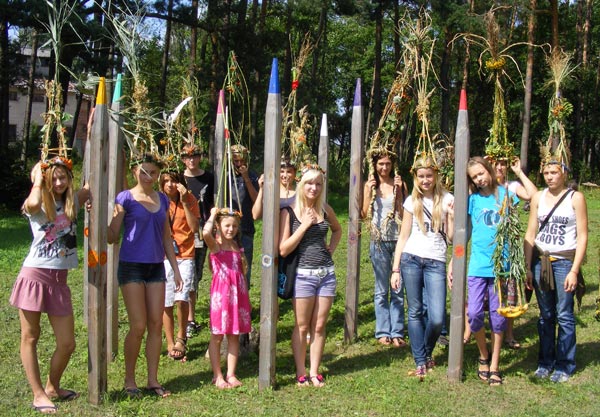
Bērni pozē ar savām augu cepurēm Jaunpiebalgas mākslas skolas rīkotā nometnē. Cepures rotātas ar zīlēm, pīlādžiem un sūnām. (Foto: Sandra Strēle)
“Rudenī ir daudz svētku un izdarību. Lauki ir nopļauti, ved seru – no laukiem uz sētu graudus ar sēnalām. Rudenī sākas latviešu skolas”, saka Lilija Kluce, daiļamatniece un simtgadniece. Tā iesākas mūsu saruna par rudens laiku.
Esmu atbraukusi ciemos pie latviešu tautas mākslas un tradīciju kopējas un uzturētājas ASV, uz pussalu okeānā Keipkodu, Masačūsetas pavalstī, lai parunātos par rudens laiku un to, kādas zinības būtu labi mācāmas latviešu skolās, kā ievīt skolas kalendārā tos latviešu svētkus kurus svin, iezīmējot gadskārtas. Tās ir Meteņi, Lieldienas, Ūsiņi, Jāņi, Māras, Miķeļi, Mārtiņi un Ziemassvētki. Klasē dziedamās dziesmas un pamācības iesaku meklēt Ilgas Reiznieces grāmatā Folkloras mācība.
Lai skolēns saprastu principu, kā svētki tiek svinēti, jāiepazīstas ar Saules kalendāru, jo tas ir pamatā laika skaitīšanai, sekojot saules astronomiskajam ceļam debesīs. “Visgarākais laika posms – gads – kas ritmiski atkārtojas un tadēļ ir noderīgs laika mērīšanai, rodas, Zemei ritot ap sauli,” rakstīja Marģers Grīns un Māra Grīna savā grāmatā, Latviešu gads, gadskārta un godi. “Šīs parādības rezultātā arī rodas gadalaiki, un laika posmu starp diviem vienāda nosaukuma gadalaikiem sauc par Saules gadu.”
Saules zīme – aplis ar astoņām iedaļām, ir dabas pulkstenis, kuram ik gadu sekojam un iezīmējām latviešu gadskārtu svētku svinēšanu. Ziemas saulgriežos tautas dziesmās dzied par četriem brāļiem Ziemassvētkiem. Vasaras Saulgrieži jeb Jāņu diena tautas dziesmās attēlo Dieva dēla Jāņa atnākšanu pie mums, vedot ziedu vezumu, un bagātais Jāņu svinēšanas rituāls ļauj arī šodien pieslēgties kosmisko ritmu plūsmai, kas ikvienam, kurš izdzied “līgo” vārdu, vij Jāņu zāles vainagos, pušķo māju, saulrietā iekur uguni un īso Jāņu nakti izdzied dziesmās, sagaida saules uzlekšanu ir atjaunojošs spēka rituāls. Svētkos līgotājs ir uzņēmis zemes un saules, Visuma harmonijas spēku. Mūziķe un tautas tradīciju kopēja Reizniece jau vairākus gadus Latvijā kopā ar citiem tautas tradīciju zinātājiem vada mācības “Piedzīvosim Jāņus”. Tā ir plaša tautas tradīcijas mācība visos Latvijas novados. Pateicoties mācībām, Jāņu svinēšana iegūst dziļāku, sakrālāku un tradīcijām bagātāku svētku būtību, latviski izjustu saplūsmi ar dabu, saules ceļa kulmināciju gada ritumā.
Bet mēs, kas dzīvojam ārpus Latvijas un tomēr savus bērnus vedam uz latviešu skolām, mēs varam pietuvoties arī citiem latviešu gadskārtu svētkiem un skolas pulciņā piedzīvot Miķeļus, rīkojot gadatirgu, piedzīvot Mārtiņus, jo tik pat cik Jāņos esam Jāņa bērni, tik Mārtiņos pārtopam par Mārtiņbērniem. Kā tas iespējams? Svētki atnāk, ja tiem gatavojas, ja tos gaida un saņem!
Ik svētkiem, svinētiem latviešu tradīcijā varam tautas dziesmās atrast metaforu ainu svētku un to svinētāju attiecībām: svētki nāk pār kalnu, nāk pa ceļu, brauc rakstītās kamanās, atjāj zirgā, ierodas sētā, atrībina, klaudz, pat grab. Tiek turēts kopīgs svētku mielasts, veikts rituāls.
Mārtiņos, Ziemassvētkos un Meteņos iet ķekatās, budēļos no mājas uz māju. Ķekatas tiek gaidīti un saņemti, cienāti, jo tie mājai atnes senču svētību un svētku prieku. Tad svētki tiek pavadīti līdz citam gadam. Dabas ritums ik gadu sētā atved mums kādu viesi, ko mūsu senči prata uzņemt un daudzināt. Kā mēs varam uzņemt rudens laika viesus – Jumi, Māru, Miķeli, Mārtiņu latviešu skolā?
Visu pirms iepazīstināsim skolēnus ar viņiem un lomu, kāda tiem ir piešķirta latviešu mitoloģijā.
Jumis
Rudens ražas novākšanā, lauku nokopšanā tautas dziesmās tiek minēts Jumis. Interesanti, ka katrai labībai ir savs Jumis – Miežu Jumis, Rudzu Jumis, Linu Jumis, pat Riekstu Jumis.
“Skolās bērniem vajadzētu pastāstīt – kas Jumis ir,” saka Klucis. “Jumis ir gādātājs, Jumis ir latviešu lauku un druvu dievs. Kad lauks rudenī bija nokopts, pēdējais kūlītis, ko krāva, ko grāba, to saņēma ar pēdējo kūli Jumī. No tā nopina vainagu un atnesa mājās, un nolika zināmā vietā.”
Jumja simbols ir labības stiebrs ar divām vārpām, tas simbolizē auglību, dzīvības turpināšanos, un dabā augšanas ciklā no graudam līdz vārpai ar jauniem graudiem ir nepieciešama auglība, labas ražas izdošanās.
Sarunu par Jumi un viņa lomu latviešu mitoloģijā var turpināt gadu pēc gada, bet būtiski ir, runājot par rudens un ražas svētkiem, skolēnu iepazīstināt ar latviešu mitoloģijas auglības dievību Jumi, kurš gādā par dzīvības vairošanos.
Kā šo jautājumu akcentēt latviešu skolā? Veidosim “Rudens saulīti” un Jumja zīmi rokdarbos. Darbošanās ar rudzu, citām labību vārpām ienesīs lauku un druvu ražas klātbūtni klasē.
Vajadzīgas rudzu vārpas, sauja salmu, kvadrāta izmēra drēbīte, labi ja raiba un rudens toņos, plāna katūna.
Uz drēbītes uzber apaļā formā salmus un ar karsto līmi, tie pielīp viens pie otra un pie drēbītes, salmu izkārtojums var būt gluži kā kopā saslaucīti, saņemti salmiņi.
Pagaida, lai sažūst pamats, tam pāri krusteniski liek vārpas – kā astoņos saules starus, izveidojot saules kalendāru. Vidū “Rudens saulītei” var ielīmēt mazu dzintara graudiņu. Darot darbiņu, ir labi izrunāt, kurš saules stars rāda kuru svētku dienu.
Jumja zīmi var skaisti izlikt uz cietāka papīra vai pamatnes ar pupām, zīlēm, riekstiem, tad pielīmēt un likt klasītē pie sienas rotājumam.
Apjumības un Miķeli
Būtiskākais, kas skolēnam būtu jāuzzina par Miķeļiem, ir ka tie ir ražas svētki, kas tiek svinēti ar bagātīgu mielastu, un tos sauc arī par Apjumībām, jo tad no lauka simboliski pārnests Jumis ir svētku viesis. Saimniece cep Jumja maizes klaipu, arī skolā varam aicināt kādu no vecākiem vai vecvecākiem, lai parāda, kā cep latviešu rudzu maizīti, un kopīgi to paveikt.
Skolā var sarīkot Rudens ražas svētkus, kad skolēns atnes savu veidotu ziedu kompozīciju no dārza ziediem vai izgatavot no kartupeļiem, burkāniem un ķirbīšiem “rudens ražas cilvēciņus”, salmu Jumīti, vai no liela kartupeļa un citiem dārzeņiem pagatavot lelles – saimnieci ar pīlādžu krellēm un salmu bizi, saimnieku, kas jāj uz salmu zirga. Mūsu senči ar Miķeļdienu arī zirgus vairs negana pieguļā, jo zirgi kopš pavasara Ūsiņdienas ir naktis vadījuši ganoties pļavās.
Paliek vēsāks, iestājas veļu laiks, salna apciemo dārzus. Sākas lapkritis, gājputni ir aizlidojuši. Sals novembrī ir biežs viesis, un jūtama ziemas elpa.
Mārtiņi un Apkulības
Kā savā grāmatā rakstīja Grīni, “Senajā latviešu gadskārtā Mārtiņi iezīmē rudens beigas un ziemas sākumu. Mārtiņdiena vislabāk izprotama, ja to apskata salīdzinājumā ar Ūsiņiem. Kā Ūsiņa, tā Mārtiņa būtības pamatā ir Saules ritēšana un tās stāvoklis pie debesīm. Latviešu Ūsiņš ir rīta ausmas teiksmas tēls un Ūsiņdienas cilvēkojums, kam pretī nostājas Mārtiņš kā Saules dilšanas teiksmu tēls.”
Sekojot šai atziņai mēs ar skolēniem varam izrunāt Mārtiņdienas vietu citu svētku vidū, jo šie svētki ir priekšvēstnesis tik svarīgam punktam saules ritumā- ziemas saulgriežos saule griežas atpakaļ un dienas kļūst garākas. Tamdēļ Mārtiņdienai, šķiet, piedien tā rēnākā, skopākā saulītes gaisma. Toties tautas dziesmu pasaulē Mārtiņš klāj sniega segu laukiem, tādējādi pasargā jaunos graudiņus, kas iesēti zemē, lai tie neizsalst.
Jāņu bērnus mēs katrs varam iztēloties – vainagi galvā un zāļu klēpis rokā. Bet Mārtiņbērnus?
Vaicāju Klucei, vai viņa bērnībā gāja Mārtiņdienas ķekatās.
Simtgadniece iesmejas un priecīgi iesaucas, ”Kažociņš uz otro pusi un aiziet! Mārtiņbērni, jā, Mārtiņbērni tika gaidīti katrā mājā, tika cienāti! ‘Mārtiņam gaili kāvu ar deviņiem cekuliem’, Mārtiņbērnus saimniece cienāja un saimnieks deva saldu alu. Lai uzturētu un turpinātu senču tradīciju, mēs, bērni, staigājām no mājas uz māju. Atceros, lai nepazītu, uzvilkām zeķi uz galvas un acu vietās izgriezām caurumus, lai redz, kur iet, un laidām Mārtiņbērnos! Mārtiņdienas galdā bija bagāts rudens ražas mielasts. Daudz gaļas, jo pirms ziemas tika kauti arī lopi. Mārtiņdienā – Apkūlībās tika dancots ‘Pērkonītis rībināja visu cauru vasariņ’, un pie bagātā mielasta galda vietas bija visiem!”.
Rudens laika svētkus iezīmējot skolas dzīvē, Mārtiņdienā varam kopā visi iet ķekatās, kad “kažociņš uz otro pusi”. Varam, Mārtiņdienai gatavojoties, taisīt budēļu, ķekatu maskas- tās arī noderēs turpmāk Ziemassvētkos un Meteņos.
Tautas tradīcijā maskas ir dzīvnieki vai dabas parādības, mitoloģiskas būtnes. Šovasar Jaunpiebalgas mākslas skolas nometnē mācīju gan gatavot salmu cepures, gan runājām par maskām, un skolotāju vadībā tās tika gatavotas. Lai maska labi der ir svarīgi, ka tajā iemiesojas atdarinātā dzīvnieka īpašības – izskats, raksturs. Maskas vērtība ir rūpīgumā, materiālu saskaņotībā, atjautīgā risinājumā un iespaidā, ko maska un tās valkātājs rada. To gatavojot, var izmantot lupatiņas, vecu kažokādu, spalvas, smilgas, papīru, maisa drēbi.
Latviešu raksti
“Parunāsim par latviešu rakstiem!”, uzrunāju mākslinieci, kad sēžam pie viņas goda istabas galda, kura virsmā Kluce jaunības gados, kad ieradās ASV, iededzināja latviešu zīmes – Saulīti, Māras līkloci. Māksliniece visu mūžu vāzēs un sienas segās ir ierakstījusi latviešu zīmes.
“Mūsu latviskos rakstus ir jāmāca bērniem, tie ir jāzīmē uz rūtiņu papīra, ģeometriski precīzi,” atbildēja Kluce. “Jo latviskais raksts kā tāds ir katrs ar savu nozīmi, ar savu īpatnību, ar savu raksturu. Studiju gados Latvijā man latviešu rakstus mācīja Ernests Brastiņš, viņa palīgs Jēkabs Bīne. Ernests Brastiņš iepazīstināja mūs ar rakstu zīmēm, un to, ka nevar zīmes lietot atsevišķi, bet kopā, lai veidojas noteikts raksts. Nevar mūsu latviskos rakstus paņemt un stilizēt, latviskais raksts ir ģeometrisks, katra strīpiņa ar savu nozīmi. Viens līklocis ar strīpiņām raksturo tūlīt Zemes māti, ja gali liecas, tad tā ir Jūras māte. Tad ir Saulīte. Tad no Saulītes iziet Saules stari. Man ir savi 50 dažādi sazīmēti Saules koki”.
Vaicāju Klucei: “Jūs sakāt Saules koks. Ko latviešiem nozīmē Saules koks? Piemēram, es bērniem vienkāršā veidā mācu par kokiem – ir eglīte, ir ābelīte, kas dārzā aug, ceļa malā aug bērziņš, baltos svārciņos, stiprs ozoliņš, ko mēs Jāņos aplīgojam, un ir tāds Saules koks. Un Jānītis man prasa, kur tas aug?! Kur aug Saules koks?”
Un viņa atbildēja: “Saules koku izstaro tikai saule. Un tas, ko tu redzi pie debess, no tā nāk stari dabā. Saule ir silta, un tikai pateicoties saulei un saules stariem, mums ir dzīvā daba. Saules stari, tad tie ir tie kas visu pasauli vada”.
Pie galda sēžam un mirkli pārdomājām runāto.
Viņas dārzā rudenīga aina ar pielijušiem augusta ziedu puduriem, vēja atpūsta migla no tuvējā okeāna liedaga, lietū iedziedas putns, vējā gar māju pagrabinās kāds zars. Vēl Kluce man stāstīja par latviešu Dieviņu, kas lietus mētelītī dažkārt parādās cilvēkam, un viņa lietus mētelītis apklāj visu pasauli. Kā to iztēloties? Kā sajust? Viens stūrītis Latvijā, viens stūrītis te, mūsu istabā, viens stūrītis latviešu skolā, kur to aicinās un sagaidīs, viens stūrītis tautas dziesmā.

Skats no Daces Micānes Zālītes pasaku lugas “Reiz bija…” kas uz skatuves ir Jumis (Kārlis Krūmiņš), Zemes Māte (Anita Grūbe) un bērni (ansambļa “Knīpas un Knauķi” dalībnieki). Mūziku izrādei komponēja Gatis Gaujenieks un Ilga Reizniece. (Foto: Jānis Pipars)

Lilija Kluce savā Masačūsetas mājā, pie galda kurā iezīmēti latviešu raksti. (Foto: Dace Micāne Zālīte)


