NATO would defend Baltics from Russian attack, WikiLeaks reveals

Nine divisions of U.S., British, German and Polish troops could be called on to defend the Baltic states and Poland in the event of an attack from Russia, according to a secret NATO defense alliance contingency plan revealed by the WikiLeaks organization.

The plan, reported on Dec. 6 by the Guardian newspaper in London, would include Latvia, Estonia and Lithuania along with Poland in a regional defense strategy called “Eagle Guardian,” according to one diplomatic cable. Its approval was urged by Germany.

The document is one of about 250,000 U.S. diplomatic cables the WikiLeaks organization says it has acquired and is releasing on its website and through several newspapers.

U.S. Secretary of State Hillary Rodham Clinton in January signed off on the NATO plan, according to the cables, the Guardian reported. The plan is part of an effort to refocus NATO’s defense strategy.

Latvia in 2004 joined NATO along with Bulgaria, Estonia, Lithuania, Romania, Slovakia and Slovenia. Under Article 5 of the NATO defense treaty—originally approved in 1949—all members of the alliance agree to defend each other in the event of an armed attack. However, the Guardian noted, “the three Baltic states have complained they are treated as second-class members because their pleas for detailed defence planning under NATO’s ‘all for one and one for all’ article 5 have been being ignored.”

Although economic relations between the Baltics and Russia have improved, political tensions remain. Russia has frequently alleged Latvia and Estonia discriminate against their large Russian-speaking minorities.  In 2007, the Guardian story reminded readers, a cyber-attack against Estonia was suspected to have originated in Russia. Last year, Russia staged military exercises that simulated an invasion of the Baltics and a nuclear attack on Poland, the newspaper reported.

The contingency plan pleased Latvia, according to a December 2009 cable from the U.S. Embassy in Rīga posted on the Guardian website.

Kaspars Ozoliņš, director of security policy in the Ministry of Foreign Affairs, “expressed his government’s profound happiness” at the plan, according to the cable.

The contingency plan apparently also was discussed during last month’s NATO summit in Lisbon, Portugal.

NATO leaders adopted a new and broad Strategic Concept during the summit. The document is meant to serve as a roadmap for the alliance over the next 10 years. It reaffirms NATO’s principle of mutual defense, but also opens the door to increased cooperation with Russia.

“NATO-Russia cooperation is of strategic importance as it contributes to creating a common space of peace, stability and security,” according to the Strategic Concept. “NATO poses no threat to Russia. On the contrary: we want to see a true strategic partnership between NATO and Russia, and we will act accordingly, with the expectation of reciprocity from Russia.”

Latvia leaders—including President Valdis Zatlers, Defense Minister Artis Pabriks and Foreign Minister Ģirts Valdis Kristovskis, all of whom attended the Lisbon summit—endorsed the Strategic Concept, saying the document strengthens the country’s defense.

Zatlers is scheduled to visit Russia from Dec. 19-21.
Andris Straumanis is a special correspondent for and a co-founder of Latvians Online. From 2000–2012 he was editor of the website.

Turaidas Roze, legendary 1980s group, returns with CD, tour

Latvian composer Imants Kalniņš hasn’t always just penned popular and symphonic music. He also has taken to the stage as a rock musician, most notably with his group Turaidas Roze.

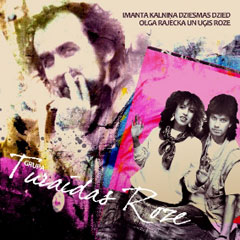
Although Kalniņš left the group three years after starting in 1985 and Turaidas Roze began to fade, the band has come back together this year to tour around Latvia. On Dec. 2, Turaidas Roze released its first compact disc on the MICREC label, compiling 17 of the group’s best-known songs on a self-titled album.

Fronted by singers Olga Rajecka and Uģis Roze, and featuring Kalniņš on keyboards, the group was among the most popular musical efforts of the late 1980s National Awakening period. Given Kalniņš’ composing talent, Turaidas Roze distinguished itself with an “art rock” sound.

The current concert tour features Rajecka and Roze, as well as original group members Juris Helvigs on drums and Aivars Gudrais on guitar, according to a press release from MICREC.

Among the group’s best-known songs is “Nelaid, māte, bērnus mežā,” which along with “Kas dzīvo tanī pusē”
appears on the CD as a new studio recording.

Tracks on the CD include:

  1. Apvij rokas
  2. Kas jūs esat?
  3. Svētku diena
  4. Rīta serenāde (Trubadūrs)
  5. Balāde par viņu un viņu (No rīta mazā gaismiņā)
  6. Saulgriežu cikls – Variācija Nr.1
  7. Saulgriežu cikls – Variācija Nr.2
  8. Saulgriežu cikls – Variācija Nr.3
  9. Balāde par Tevi mākoņos
  10. Uz nakti atkal durvis vaļā
  11. Notikums
  12. Sonets (Sweet Love)
  13. Upei pāri (Ai, māsa Lietuva)
  14. Vējš un liepa
  15. Pūt, vējiņi (koncertieraksts)
  16. Kas dzīvo tanī pusē (2010)
  17. Nelaid, māte, bērnus mežā (2010)

The group’s final concert of the tour is scheduled Dec. 18 in Rīga, according to the ticket service Biļešu paradīze. An additional concert is set June 30 in the Dzintari Concert Hall in Jūrmala.

Turaidas Roze

The legendary 1980s group Turaidas Roze has released its first compact disc, a self-titled album.

Andris Straumanis is a special correspondent for and a co-founder of Latvians Online. From 2000–2012 he was editor of the website.

So far, almost no details about WikiLeaks cables from Latvia

To the embarrassment of U.S. diplomats, the latest exposé by the WikiLeaks media organization digs into tens of thousands of cables from American embassies around the world—including the one in Rīga, Latvia.

Details regarding what’s in the dispatches from Rīga have yet to emerge, but they apparently are nothing compared to cables from embassies such as the one in Ankara, Turkey. Only about 700 cables from Rīga are in the database available from WikiLeaks, compared to more than 7,900 from Ankara.

WikiLeaks, whose parent company Sunshine Press is registered in Iceland, has more than 250,000 cables in the data set from 250 American embassies. About half of the cables are described as secret or confidential.

The cables from Rīga date from March 2006 to February of this year, according to data made available by London’s Guardian newspaper through Google Fusion Tables.

News organizations such as The New York Times have been digging into “Cablegate,” but are not publishing all details because of security concerns.

Based on the “tags” that help diplomats categorize the nature of information contained in the cables, the most popular topics of messages from Rīga dealt with external political relations and internal government affairs. However, without access to the text of the cables, that does not say very much.

Media in Latvia, such as the daily newspaper Diena and the weekly news magazine Ir, are not reporting much at this point except to say that the country’s name appears in some of the dispatches.

Andris Straumanis is a special correspondent for and a co-founder of Latvians Online. From 2000–2012 he was editor of the website.