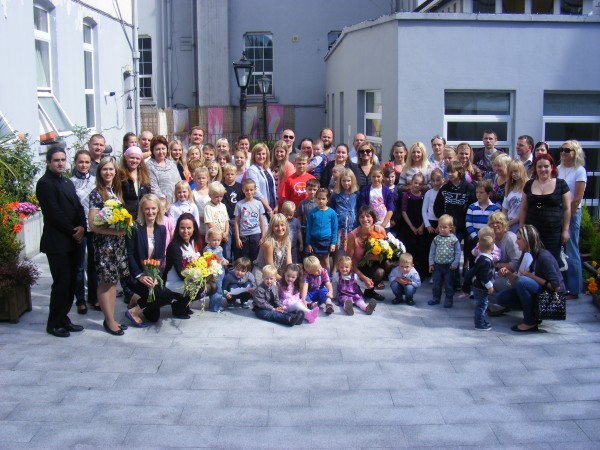
Latviešu Biedrības Īrijā bērnu mūzikas studijas – skolas “Mazais Letiņš”, skolas “Saulgriezīte” un deju kopas “Podziņa” skolēni un vecāki. Foto no Ingunas Grietiņas personīgā arhīva.
Vasarīgi saulainajā septembra pirmās nedēļas nogalē skolas zvans iezvanījās sešās Īrijas latviešu bērnu nedēļas nogales skoliņās.
Skolu skaits Īrijā ar katru gadu pieaug. Tieši pagājušajā nedēļā darbību uzsāka Latviešu biedrības Īrijā bērnu mūzikas studijā – skolā “Mazais Letiņš”, kurā patreiz darbojas 35 skolēni un 3 skolotājas, skolā “Saulgriezīte” , kurā mācās 30 skolēni Dublinā, Latviešu bērnu un sieviešu asociācijas bērnu un jauniešu centrā Limerick pilsētā, kurā mācās 34 skolēni, Īrijas latviešu bērnu skoliņā Newry pilsētā, kurā mācās 14 skolēni, Mayo latviešu skoliņā un jaunatvērtajā (šogad pirmais mācību gads) Latviešu biedrības Īrijā reģionālā centra Portlaoise pilsētas skoliņā “Sauleszaķēns”, kuru apmeklē 30 skolēni.
Kā jau katru gadu skolas sākumu pavada jautrie bērnu smiekli, atmiņu stāstījumi par piedzīvojumiem vasarā, atkalredzēšanās prieks kopīgās rotaļās un spēlēs, kā arī nopietnās sapulcēs, kur vecāki iegūst jaunāko informāciju par skolās plānotajiem notikumiem jaunajā mācību gadā.
Vēl tādas rudenīgo dāvanu dienas priekšā ir pārējām četrām skolām – Īrijas latviešu bērnu nedēļas nogales skoliņai Drogheda pilsētā, kur mācīsies 49 skolēni, Īrijas latviešu bērnu skoliņā un jauniešu apvienības projektu grupā Navan pilsētā (šogad pirmais mācību gads) , Cork pilsētas skoliņā, kur mācīsies 25 bērni un latviešu bērnu nedēļas nogales skoliņā Blanchardstown, kur mācības uzsāks 20 skolēni.
Daudzsološs un radošs jaunais mācību gads solās veidoties skoliņā Limerick pilsētā. Skolas vadītāja Kristīne M. Walshe stāsta, ka līdz decembrim paredzētajās 15 nodarbībās bērni rakstīs un izdos paši savu skolas grāmatu, vadīs nodarbības skolotāju dienā, ceps gardu kūku Latvijas dzimšanas dienā, skaitīs, lasīs, rakstīs un zīmēs, veidos atmiņu un ankešu burtnīcas, piedalīsies multikulturālajā spēļu dienā, ko rīko Limerick pilsētas sieviešu forums, piedalīsies Mārtiņdienas tirdziņā un dāvās Ziemassvētkus meža iemītniekiem.
Savukārt Īrijas skolu asociācija Dublin pilsētā šogad rīkos pirmo Īrijas latviešu bērnu talantu konkursu “Protu?Protu!”, kurā katram bērniņam tiks dota iespēja skatītājiem demonstrēt skatuves priekšnesumu sev pieņemamā un pateicīgā sfērā, ko vēros mīļie vecāki, skolotāji, viesi no Īrijas latviešu apvienībām, vēstniecības un domes, bet bērniem saistošāku to veidos latviešu tautas paskas “Putni māca balodim ligzdu darīt” amizantais varonis- balodis.
Lai veiksmīgs mācību gads un vienmēr gudrās pūces padoms mūsu latviešu atvasītēm, neizsīkstošas enerģijas apdāvinātajām skolotājām un apzinīgajiem vecākiem visās desmit Īrijas latviešu skolās un mūsu draugiem plašajā pasaulē.