Obtaining Latvian Citizenship

Since October 1 of this year, the Republic of Latvia has once again been allowing Latvians abroad to obtain Latvian citizenship without giving up their original citizenship. This was possible in the early 1990s, but not afterward. Now it is possible once again.

The process is open to people who were citizens of Latvia prior to June 17, 1940 (the start of the Soviet occupation) and to their children and grandchildren, provided that the original citizens departed from Latvia after the occupation began and could not return to Latvia because of it (the process is different for those who have ancestors who left Latvia during the interwar period or even earlier, but I will assume that most readers of Latvians Online do not fall into that category).

In order to obtain citizenship, you can visit the Citizenship and Migration Board in person in Rīga should you happen to be visiting, or you will have to contact the Latvian Embassy in your country of residence. You will have to submit an application for citizenship. The relevant application form can be found on the homepage of the Citizenship and Migration Board.

The homepage offers an English version, so if you don’t speak Latvian, you can still take a look. Latvian language skills are not necessary for émigré Latvians and their successors to obtain citizenship, as is the case for those who seek naturalisation in Latvia, so that is no worry for you. You will, however, need to provide personal identification, as well as evidence that you have ancestors who were citizens of independent Latvia prior to World War II. If you have your father or mother’s birth certificate, that will be sufficient. If not, you may seek information from Latvia’s state archives, which have census records and other documents that may be of use. Please note that in some cases, the relevant documents will have to be notarised (the homepage goes into detail about this). If you have children, once you have obtained citizenship, they will only need to fill out the application form and present personal identification to do the same.

If you live far away from the Latvian Embassy in your country, contact it anyway, because the Citizenship and Migration Board says that embassies are organising field trips to locations where Latvians live in order to help with the citizenship issue. Perhaps the embassy in your country is planning to do so in the foreseeable future. Of course, you may also submit documents to the embassy by mail, though perhaps you will not wish to send your passport in the mail, lest it be lost on the way.

Another source of information about this may be your country’s central Latvian organisation such as the American Latvian Association in the United States, because they will surely have collected all of the information that is needed.

What are the benefits of Latvian citizenship for you? Of course, there is the symbolic element of wishing to be linked to your fatherland and to have a document which testifies to this. In practical terms, a Latvian passport will allow you to travel freely in the countries which are part of the European Union’s Schengen system without having to show your passport on the relevant borders (though, of course, you will have to present it when entering the zone). Also, you will be able to vote in Latvian elections, though only in national, not local ones, because local elections, of course, depend on your place of residence. I would like to say that if you do not regularly follow political and social events in Latvia, you might refrain from voting in parliamentary elections, because you will not be aware of the issues that are of importance or the things which political parties that are seeking election are saying about them, but the possibility is there nonetheless.

Above all, there are comparatively few Latvians in the world, and Latvia is happy to welcome one and all. The Latvian passport will allow you and your children to travel freely to Latvia, and that is something that is to be recommended for every single person of Latvian origin, much as a trip to Mecca is strongly recommended for every Muslim in the world. Perhaps your children will someday wish to study at a Latvian university (though in that case, of course, they will require excellent Latvian language skills), and citizenship will make that easier (and in many cases less expensive), as well. One way or another, please check out the opportunity. I do believe that you will be glad that you did.

Kārlis Streips was born in Chicago, studied journalism at the University of North Illinois and University of Maryland. He moved to Latvia in 1991 where he has worked as a TV and radio journalist. He also works as a translator and lecturer at the University of Latvia.

PBLA skolu video konkurss slēdzies, piedalies balsošanā!

image

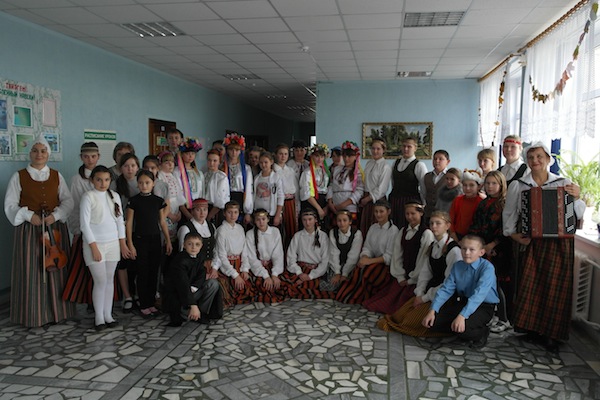
Ņudžersijas latviešu skolas saime 2013. gadā. Foto: no NJ latviešu skolas video ieraksta.

PBLA septembrī izsludināja video konkursu “Mana latviešu skola” visām latviešu skolām, kas atrodas ārpus Latvijas. Izsludinātajā konkursā skolām kā skolas kopīgu projektu bija jāsagatavo video par savu latviešu skolu.

Video bija jāiekļauj īsu informāciju par savu skolu – cik ilgi tā pastāv, kur tā atrodas, cik bērnu to apmeklē, ar ko skola lepojas, kas skolai īpašs. Tad pārējais video ieraksta saturs ir bijis atstāts katras skolas pašas rīcībā – tas varētu būt emocionāls, smieklīgs, patriotisks, dokumentāls, māksliniecisks, vai dažādu stilu sajaukums. Video nedrīkstēja pārsniegt 3 minūtes. Visus video ierakstus PBLA bija jāiesniedz līdz 31. oktobrim.

Konkursa mērķis: Celt diasporas skolu lepnumu pašiem par savu skolu un tai pat laikā iepazīties ar citām skolām; uzzināt, cik liela ir diasporas bērnu saime.

Vērtēšana ir žūrijas rokās, kas darbus vērtēs pēc sekojošiem kritērijem:

1) radošums – gan tehniskā, gan vizuālā kvalitāte;

2) informācijas apjoms – uzziņas materiāls par skolu un tās vidi

Žūrija arī saskaitīs YouTube “Like” skaitu katram video ierakstam.

Konkursā piedalījās 16 skolas no visas pasaules – Dānijas, Zviedrijas, Beļģijas, Lielbritānijas, Gruzijas, Vācijas, ASV, Austrālijas un Kanādas.

Tālāk varat iepazīties ar katras skolas video ierakstu. Varat arī katrs piedalīties balsošanā, izvēloties skolas ierakstu, kas jums vislabāk patīk, spiežot “Like” podziņu līdz 13. novembrim.

Konkursa uzvarētājus pasludināsim 14. novembrī un uzvarējušās skolas apbalvos skolas/kopienas valsts svētku sarīkojumā.

Ziemeļkalifornijas latviešu skola

Čikāgas Krišjāņa Barona latviešu skola

Latviešu skola Hamiltonā, Kanādā

Līdsas jauniešu un bērnu skola “Pūcīte”

Bostonas latviešu skola

Bristoles latviešu bērnudārzs “Sauleszaķi”

Ņudžersijas latviešu skola

“Ave Sol” bērnu skola

Melburnas latviešu biedrības Daugavas skola

Štutgartes latviešu skola Vācijā

Kopenhāgenas latviešu skoliņa

Bonnas latviešu skoliņa Kamolītis

Stokholmas latviešu skola

Sidnejas latviešu skola

Mineapoles un Sv. Paulas Latviešu skola

Briseles sestdienas skoliņa

Daina Gross is editor of Latvians Online. An Australian-Latvian she is also a migration researcher at the University of Latvia, PhD from the University of Sussex, formerly a member of the board of the World Federation of Free Latvians, author and translator/ editor/ proofreader from Latvian into English of an eclectic mix of publications of different genres.

Latvian pioneers in Manitoba

image

Hardy Latvian pioneers at the Fairville School north of Dauphin in the early 20th century where they held social functions and religious services. Photo credit: Ojārs Kļaviņš (deceased).

What started out as an article on the history of Latvians in Canada’s Manitoba province is now morphing into a book as more and more material gets uncovered. Why Manitoba? Before World War I, Manitoba had the largest concentration of Latvians, or the Lettish as they were called back then, in Canada. It was home of perhaps up to 1,000 Latvians living in three areas of the province.

The first Latvian in Manitoba was Jānis Ālers (John Aller) who settled near Sifton north of Dauphin. He arrived there in 1895 via the United States after spending five years in South Dakota. He invited friends and relatives from the Bauska area to join him. Land was cheap and the climate was similar to Latvia’s. And $10 bought you 160 acres, as long as you cleared a quarter of it and put up a dwelling within three years. Nineteen families followed over the next 10-15 years. They settled around Sifton, Fork River, Fishing River and Oak Brae. For the most part, the arrivals were peasants who were pursuing the dream shared by many Latvians of that time, namely to own a piece of land that they could farm.

Other Latvians homesteaded northeast of Winnipeg in Libau, Lac Du Bonnet, further east in Lettonia, Lee River and still further east in Bird River where the Prairie gives way to the boreal forest of the Canadian Shield near the Ontario border. Among the Bird River settlers were a number of families who had arrived via Brazil which they abandoned because of the heat and tropical diseases.

The area east of Lac Du Bonnet was also home to Latvians who fled Czarist retributions following the 1905 Revolution when workers and peasants inspired by Marxist teachings rose up against the hated Russian factory owners and Baltic German landowners who ruled most of the countryside. They made their way to Manitoba through the United States. Some were committed Marxists or Socialists, others were caught up in the events of the time, while still others fled to avoid conscription.

There is documented evidence that the “politicals” continued to meet in Manitoba well into the 20th century holding lectures and discussion evenings in some cases with visiting speakers. Some gravitated to the nascent Canadian Communist party while others joined the socialist and labour movement on the Canadian Prairies. Many became disenchanted by what they saw in Stalinist Soviet Union. Still others abandoned their youthful zeal and farmed or became entrepreneurs.

Then there were those who preferred cities and settled in Winnipeg. In 1912 Jānis Šmits founded the Lettish Friendly Association of Winnipeg and in 1913-14 published Kanadeetis, the first Latvian newspaper in Canada. It was written in old Latvian orthography using Gothic script. When Latvia gained independence, Šmits and his family moved back to Latvia only to be deported by the Soviets in 1941 and then perish.

The Latvian pioneers maintained their traditions. There were community events. Christmas and Easter were celebrated the Latvian way. So was Midsummer Night’s Eve or Jāņi. There were dances to phonograph records sent from Latvia. Local musicians played. They read Latvian books and newspapers. Some even visited Latvia or had relatives come over for visits. Once or twice a year visiting Latvian, Estonian or German Lutheran pastors held services and christenings. The first generation born in Canada typically spoke Latvian at home with their parents and in some cases grandparents who had also come along.

There were rural schools where 75% of the students were Latvian. Teachers ordered the children who only knew Latvian to speak English. Community halls were built in Lettonia and Lee River. The one in Lee River is still standing today. Businesses were formed and some still exist – Lindenberg Seeds in Brandon and Osis Lumber in Lac Du Bonnet.

Over time assimilation took its toll. Many of those born in Canada or in turn their children married locals. Many moved away to cities looking for jobs. However the early pioneers were still there to “greet” the Post World War II refugees who had fled the Soviet occupation of Latvia. They came from European Displaced Persons camps to Manitoba as contract farm workers, lumberjacks, construction and hospital workers or domestics. They were free to go after two years and many then headed for cities like Winnipeg. The Post War Winnipeg Latvian community was born.

For the most part, the earlier pioneers and their descendants, got along well with the new arrivals. There were intermarriages and some bought properties or farms in the original colonies. Throughout the 1950s, Latvian pastors from the newly founded community headed out to the countryside to hold services. Local Latvian theatre troupes from Winnipeg also entertained those in the pioneer communities. The two groups often celebrated Jāņi together. But as the original settlers grew old, the pioneer communities petered out by the late 1950s.

Meanwhile throughout the 50s, 60s and 70s, there was a thriving Post War Winnipeg Latvian community. Perhaps numbering up to 500 at its peak, there were two Lutheran congregations, the Winnipeg Latvian Society, the Daugavas Vanagi veteran’s organization, a university student alumni organization, a youth group, a Sunday School and many functions ranging from formal commemorations on November 18 when Latvia celebrated its independence to dances and outings. For decades, the Society published Informators, a monthly news bulletin. Among its subscribers were the pioneers and their children or at least those who could still read Latvian.

The Post War Winnipeg community went into decline in the 1980s. The earlier refugees were ageing. Their Baby Boomer children had gone to university, started careers, intermarried, were raising families or moved away from Manitoba looking for better jobs. Manitoba was also isolated and far from the larger and still thriving Latvian communities in Canada and the United States. The community stalwarts who had run things since day one held the fort but by 2007 everything in Winnipeg had been shut down.

This September it was time for me to head out west to Manitoba and to supplement my research by seeing the pioneer colonies with my own eyes and meeting contacts that I had established by phone or email. Over the course of 6 days, I covered 1,400 km or 870 miles.  I met with several dozen people, most of them descendants of the early pioneers but some post-war arrivals and their children. Several joined me as we visited buildings on pioneer homesteads still standing although in disrepair, as well as cemeteries where Latvians lie. We stopped in Libau and Lettonia, two of the Latvian place names in Manitoba. On the trip east of Lac Du Bonnet, I was joined by local historians.

In Swan River about 6 hours northwest of Winnipeg I met Aina (Gulbis) Turton. Originally from the other side of Manitoba, her family was one of those who arrived from Brazil around 1910. Aina was born in 1926 and grew up in Bird River. Several years ago she authored a delightful book of personal memories called The House Beside the Rock Hill – A story of pioneer life in a Latvian settlement.

Although few descendants of the early pioneers could still speak Latvian (but none had problems pronouncing Latvian names), I was pleasantly surprised that most were cognizant and proud of their Latvian roots. I was shown recently-printed books on Latvia and its history. There are readers of Latvians Online in rural Manitoba. Some have visited Latvia. Some have been down East to attend Latvian Song Festivals. Others have shopped for Latvian goods online or stopped by the Latvian Centre in Toronto. There were Latvian hockey jerseys and t-shirts. Some had immersed themselves in family histories, digging through archives and tracing their roots back to Latvia.

One of the projects that a couple of us decided to see if we could make happen is getting the province to set up several official historical markers attesting to the Latvian footprint in Manitoba. This year, the Lac Du Bonnet Historical Society is planning a Latvian-themed annual wine & cheese reception.

While their numbers are not huge, the descendants of the Latvian pioneers in Manitoba represent a constituency to which the Latvian community in Canada has given little thought. Manitoba is perhaps unique in that there are few places where the pioneers or veclatvieši as they are called in Latvian, settled in numbers. Alberta is the only other place in Canada and the numbers were smaller and the communities dissipated sooner. There is Wisconsin in the United States and the Boston, New York and Philadelphia Latvian communities trace their roots back to the late 19th century.

The story of Latvian pioneers is a fascinating one and my project continues as I try to digest and work new information, stories, photographs and artefacts into my manuscript. It is also an important story for the Latvian community abroad to ponder as the ranks of the veclatvieši are swelled by descendants of the post-war Displaced Persons as they get assimilated into the fabric of Canada and the United States. The dates their parents or grandparents arrived may be different, the stories of their predecessors may be different, but they represent a similar constituency with connections to Latvia and the Latvian heritage that cannot be ignored.


image

93 year old Arnold shows his family’s homestead near Lettonia. His parents arrived from Latvia in 1910. Photo: Viesturs Zariņš.