Folk ballad group Mielavs un Pārcēlāji release “Atsaukties”

Singer, songwriter, producer, DJ, and record company director Ainars Mielavs has long been a significant presence in Latvian music. Starting in the late 1980s when, with the group Jauns Mēness, he became one of the most recognizable vocalists in Latvia, and the group became one of the most popular ensembles in Latvia during the 1990s. At the start of the 21st century, Jauns Mēness went on extended hiatus and Mielavs became a solo artist (though he did keep the core of Jauns Mēness in his solo ensemble). Later he renamed the ensemble Mielavs un Pārcēlāji (after one of Jauns Mēness’ earliest hits – the song “Pārcēlājs”) and, most recently, in 2015, the group released its latest album – Atsaukties.

In his music and lyrics, Mielavs has frequently combined various influences, including the Celtic rock of U2 (particularly during the Jauns Mēness years), and the introspective lyricism of Peter Gabriel, as well as Latvian folk music. Mielavs’ distinctive vocal style also was a major aspect of Jauns Mēness’ and his solo success, particularly as he moved away from the rock approach to a more ballad like approach – like in his hit “Tu saviļņoji mani”.

Seven years have passed since the group’s last album of original material – 2008’s Bezgalīga lēna deja. However, Mielavs remained busy during that time, releasing the albums Nospiedumi (2009)and Nospiedumi 2 (2012), collections of cover songs performed by himself and friends, as well as 2011’s Latviešu romances, a collection of well-known Latvian ballads such as “Miglā asaro logs” and “Vēl tu rozes plūc”.

Though Jauns Mēness is no longer active, the group Mielavs un Pārcēlāji retains much of the core of Jauns Mēness – besides vocalist Mielavs, there is also guitarist and music co-author Gints Sola, drummer Juris Kroičs, guitarist Aigars Voitišķis, and Jānis Stafeckis on double bass.

Atsaukties, as Mielavs himself has said, is a particularly autobiographical record, inspired by many events in his life, particularly during childhood. Mielavs often paints vivid pictures with his lyrics, and one such example “Par Daini un krievu kaimiņiem”, a story of a childhood neighbor of Mielavs – Dainis – as well as some Russian neighbors. Mielavs returns to this childhood scene with a nuanced portrait of Dainis – a frequent drunk who also showed tenderness to the young boy – “Dainis dzēra un kāvās, bet pieplaka vienmēr” (Dainis drank and fought, but always was kind to me). Mielavs balances the bitter reality of adulthood with the optimism of youth in this engrossing song.

Further childhood memories are related in the song “Gandrīz”, a song about accidents that almost happened to him, and, even though these terrible things (including almost getting hit by a car on two separate occasions) were close to happening, the optimism was not lost – “Es turpinu balināt matus ar bērnības saules stariem” (I continue to bleach my hair with the sunshine of childhood).

Aspects of adult life are presented in parallel with childhood games in the song “Kaļimbamba”, a children’s game (similar to Red Rover) where one team demands that a member of the other team tries to break through their line. Guitarist Gints Sola has always been an integral part of the music, in both Jauns Mēness and Mielavs’ solo work, and this is one of the few songs on the album to have a heavier tone and allows Sola to move to the forefront.

Also in 2015, author Jānis Žilde published his book on the history of the group Jauns Mēness – entitled Piekūns skrien debesīs (published by “Dienas grāmata”, 207 pages). The book provides biographies of the band members, and follows the history and successes (and also endeavors that were less successful) of the group from the 1980s until today. The book also provides an honest description of the challenges and difficulties of achieving success in the music industry, particularly in Latvia.

Piekūns skrien debesīs 001

Still, at the end of this relaxed and mellow album one does wish that Mielavs would stray out of his comfort zone and go into a higher gear and take a chance or two. Though he has not lost his knack to write a catchy melody with thought-provoking lyrics, Atsaukties will be for some, quite familiar and reassuring territory and, for others, maddeningly restrained. In fact, during a recent concert in Riga, it seemed that drummer Juris Kroičs has to use all of his available self-control to not start whaling away at the drums. Only at the end of the concert, with songs like “Kad mēness jūra krīt” and “Ai, jel manu vieglu prātu” did things start getting truly lively.

Clearly, Mielavs is satisfied and happy with his particular Latvian folk ballad niche, and Atsaukties is certainly one of his better efforts in this field. Though musically it may cover already well known ground, lyrically Mielavs’ personal and autobiographical lyrics provide a depth that is rare in Latvian popular music today. Backed by some of the most talented musicians in Latvia, the album is one of Mielavs’ most memorable efforts, showing that, even after thirty years, Mielavs retains his unique voice, lyrical style, and ability to make compelling music.

For further information, please visit the Mielavs un Pārcēlāji website.

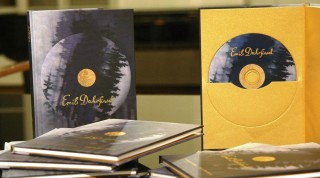
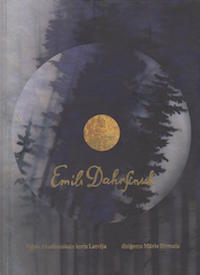
Mielavs un Pārcēlāji - Atsaukties 001

Atsaukties

Mielavs un Pārcēlāji
Upe, UPEAMCD003, 2015

Track listing:

  1. Gandrīz
  2. Vieni un otri
  3. Kaļimbamba
  4. Varis
  5. Latvju zīmes
  6. Ar sakniebtām lūpām pa liepu gatvi
  7. Par Daini un krievu kaimiņiem
  8. Zelta skalošana
  9. Ķīvītes, dzērves un mēs

Egils Kaljo is an American-born Latvian from the New York area . Kaljo began listening to Latvian music as soon as he was able to put a record on a record player, and still has old Bellacord 78 rpm records lying around somewhere.

Latvian musical ambassadors vocal group Latvian Voices release new CD

Female a cappella vocal group Latvian Voices have found success and have received much recognition in the short time since their founding in 2009. Having performed all over the world (the United States, Australia, Asia, and many European countries), winning many awards, and releasing multiple acclaimed albums, the groups’ fame and renown continues to grow. The group was also selected to be the musical ambassadors of Riga when it was the European Capital of Culture in 2014.

The past few years have seen many albums from the group. These include the albums inspired by Latvian folk songs – Tā kā taka (2011) and Sounds of Latvian Nature (2014) as well as a second Christmas themed album Zeit der Wunder (2014) – with German vocal group Viva Voce. At the end of 2015, the group released their latest album – Pāri robežām (Beyond Borders) which has a more popular music approach – vocal arrangements of some well-known popular songs, world music selections, as well as original compositions. Though the style of the album is a departure from their previous albums, Latvian Voices continue to display their talent and versatility, whatever the genre may be.

Latvian Voices, now a sextet, is made up of singers Laura Jēkabsone, Zane Stafecka, Andra Blumberga, Elīna Šmukste, Nora Vītiņa, and Laura Leontjeva. Many of the group members also actively work with Latvian choirs and vocal ensembles.

Though the group has moved away from the traditional and academic performances of their previous albums and has made a conscious decision to make an album that could potentially have world wide appeal (half of the songs on Pāri robežām are in English), the group has never shied away from the influences of popular music, which have been part of their repertoire since their first album – 2010’s Waving World Wide.

Group member Laura Jēkabsone also proves herself to be an adept songwriter and arranger, as the record includes Jēkabsone’s original works. These include the bouncy “Honey Tree” and the rousing “Pāri Robežām”.

Some of the arrangements stay quite faithful to the original, such as Jēkabsone’s arrangement of Alanis Morissette’s “Thank U”, where even Morissette’s vocal style is imitated. Then there is the arrangement of the Beatles’ “Strawberry Fields Forever” which, for much of its running time, is almost unrecognizable.

Continuing the theme of being beyond borders, the group also presents their interpretation “Elas”, a song by Mercedes Peón, an artist from Galicia in northwestern Spain. To ensure authenticity, the singer even underwent special training in Galician pronunciation. Besides showing the group’s versatility, the song captures the spirit and enthusiasm of the original Iberian version.

For those that still expect the traditional and academic, Jēkabsone also provides her own music for one of poet Aspazija’s best known poems – “Mēness starus stīgo” (a challenge, considering that composer Emīls Dārziņš’ choir work with this text is one of the most popular Latvian choir compositions of all time). With the otherworldly vocalize at the introduction, the fantasy and mysticism of Aspazija’s poem is given a particularly ethereal feel. The absorbing portrayal, which reveres and enhances the text, is a fitting and satisfying conclusion to this musical journey.

A significant aspect of any record’s success is the producer, particularly in the case of Latvian Voices, where there are multiple singers and each voice needs to shine through clearly. For Pāri robēžām, the girls enlisted Latvian percussionist extraordinaire Rihards Zaļupe, who, as it turns out, is not just an excellent drummer, but has an excellent ear for production, as each individual voice can be heard with excellent clarity. Also, consequently, perhaps it is also no surprise that the album has a very significant percussive element, with many drumbeats and effects to be heard in many of the songs.

For some reason, the group does not identify either the original performers/songwriters for the songs or who arranged them – the information that appears in this review had to be taken from a recent concert program. Otherwise the CD booklet contains brief notes about the group and the concept of the album.

Though some listeners might have preferred the group continue with their Latvian folk song inspired performances, Pāri robežām is a natural, not to mention enjoyable, progression in their careers. Fusing popular, world music, and academic elements, the album is an engrossing listen. Beyond simply being excellent singers and arrangers, the group also displays an exceptional energy and vitality in their performances. In their short history the girls quickly made a name for themselves, and with each passing year become even more well-known on the world stage, and Pāri robežām, with its inspired arrangements and lively performances, should bring them the larger audience and appreciation they have earned and deserve.

For further information, please visit the Latvian Voices website.

latvianvoices-cd

Pāri robežām

Latvian Voices
SIA LV MUSIC, 2015

Track listing:

  1. Sākums un gals
  2. Pāri robežām
  3. Honey Tree
  4. Sanomi
  5. Viegli
  6. Strawberry Fields
  7. Sleeping at the Wheel
  8. Elas
  9. Explorers
  10. Thank U
  11. He Lives in You
  12. Dear Mr. Henry
  13. Mūsu laiks
  14. Mēness starus stīgo

Egils Kaljo is an American-born Latvian from the New York area . Kaljo began listening to Latvian music as soon as he was able to put a record on a record player, and still has old Bellacord 78 rpm records lying around somewhere.

Ķekatnieki maskās

Arhlatviešu vidusskolā saulgriežu vakaru svin latviešu ķekatnieki

Kas tur rībina gar istabiņu? Ķekatiņas dancina savus kumeliņus.

Arhlatviešu vidusskola saulgriežu vakarā bija pilna ar ķekatniekiem, tautu meitām un tautu dēliem, koklētājām, stabulētājām, bluķa vilcējiem un bluķa stūmējām. Baškīri, krievi, tatāri, čuvaši un visiem pa vidu latvieši trokšņoja, dziedāja, baidīja mošķus un ķēmus Arhlatviešu ciemā. Tikai šoreiz trokšņotāju starpā bija ne tikai Baškīrijā mītošie latvieši, saulgrieži svinēt bija ieradušies arī Sibīrijā (Omska, Omskas apgabala Augšbebru ciems) dzīvojošie latvieši.

Vēstures avotos teikts, ka vislielākais ieceļotāju skaits Krievijā no Latvijas bija laikā no 1894. līdz 1914. gadam. Šajā laika posmā Sibīrijā izveidojās ap 200 latviešu koloniju. Visā Krievijā tajā laikā bija vairāk nekā 200 000 latviešu. Bezzemnieki, kalpi, amatnieki, rentnieki pameta savu dzimteni, devās uz Sibīriju, kur bija iespējams iegūt zemi. Pēc 1928. gada ziņām Krievijā bija 372 lielākas latviešu kolonijas, tajās bijušas 11 650 saimniecības un nodibinātas 106 latviešu skolas.

Augšbebru ciems ir dibināts 1897. gadā, kad tajā ir reģistrēti pirmie ieceļotāji no Latvijas. Lielākoties Augšbebros dzīvojušie ieceļotāji no Nīcas un Bārtas. Aizbraucēji no Latvijas ar visu iedzīvi zirgu pajūgā uz Sibīriju braukuši apmēram trīs mēnešus. Dažas ģimenes no Omskas uz Augšbebriem braukušas laivās pa Irtišu.

1937./ 38. gadā Lielā genocīda laikā arī Augšbebros tiek arestēti cilvēki. Visiem ciemata iedzīvotājiem bija jāpamet savas viensētas un jāpārceļas uz dzīvi ciemā. Mājas nojauca un pārzāģēja uz pusēm, jo jaunā valdība tik lepnas mājas ar 12 durvīm neatļāva celt, tāpēc pusi mājas pārdeva, otru pusi pārveda uz ciemu.

1912. gadā Augšbebros nodibina skolu. Skolā bērni mācījās latviešu valodā. Mācības latviešu valodā notika līdz 1937. gadam, vēlāk skolā mācības notiek krievu valodā. 2001. gadā skolai atjauno nacionālās skolas statusu un latviešu valoda ir viens no mācību priekšmetiem. Diemžēl jau divus gadu skolotājs no Latvijas uz Augšbebriem nebrauc, latviešu valodas un kultūras saglabāšana ir pašu augšbebriešu rokās. Latviešu valodas aģentūra sūta skolotāju uz Baškīriju un Omsku.

Gan Augšbebriem, gan Omskas Latviešu biedrībai „Zvaigznīte” ir sadraudzība ar Cēsu pilsētu.

Šogad bluķa vakars pulcināja kopā daudzus jo daudzus ciema iedzīvotājus. Lielos un mazus, vecus un jaunus. Katrs centās kaut gabaliņu pavilkt bluķi, lai noveltu no sevis gada laikā sakrāto smagumu, kas spiedis plecus, katrs centās pieskarties nāvei, lai nodrošinātu sevi ar labu veselību un garu dzīvi. Skolas direktore Nadeža Freimane deva ugunij ziedu – maizi, sāli, ūdeni, naudu un dzīparu. Tas viss tāpēc, lai Arhlatviešu ciema iedzīvotāji spētu sevi nodrošināt ar nepieciešamo dzīvei, tajā pat laikā neaizmirstu par domu un dvēseles skaidrību un tīrību. Gan lieliem, gan maziem aizraujošas likās Omskas un Augšbebru latviešu vadītās spēles „Kaza un vilks”, „Vilks un aitas”, „Danco, lāci”, „Nāves rotaļa” un, protams, neiztika bez ierastajiem dančiem, ar kuriem latviete Raja no Omskas prata aizraut ikvienu.

Šorīt ārā puteņo. Ceļš aizpūsts, redzēt nevar it neko, bet vakar, šķiet, pašas debesis mūs lutināja, jo spīdēja saule, bija silts un patīkams laiks. Liekas, arī daba priecājās kopā ar mums, ļaujot izbaudīt noslēpumaini mistisko saulgriežu nakti ar savējiem – latviešiem.


Ilona Saverasa ir skolotāja, kas māca latviešu valodu un kultūru Baškortostānā.