
Running as fast as they can

New Latvian Fiction

Latvian writers have spent much of the 20th century in their own or in Soviet company, cut off from Western literary developments. Now they are catching up with a vengeance, as demonstrated in "New Latvian Fiction," an issue of The Review of Contemporary Fiction produced with the support of Soros Foundation Latvia.

Reading this volume (meticulously guest edited by Nora Ikstēna and Rita Laima Krieviņa) is a bit like a jog with the Red Queen in Alice in Wonderland—a breathless, exhilarating and sometimes confusing experience.

Some stories can be completely understood only from within the culture; Pauls Bankovskis’ "The Week of Golden Silence," for example, hinges on a children’s rhyme that loses something in the translation. The story portrays love as a child’s game; a bet of silence leads to the realization by two lovers that, really, "There’s nothing to say."

Several authors are engaged in late-blooming love affairs with post-modern literary techniques. In "Beckett is Alive: Texts to Myself," Guntis Berelis speculates on knowledge and reality: "If we assume that Beckett isn’t dead then we can never be completely convinced that he isn’t dying at this very moment … Beckett is continually dying." Aivars Ozoliņš’ "Tale No. 13" is a playful and ultimately exhausting set of variations on a story; literature is a game to this author, who claims that words "have a hollow centre." Jānis Vēveris takes it one step further—his story "Eventide" begins as poetic stream of consciousness but ultimately turns on itself and on its narrator, telling him that his cleverness and facility are merely the failure of his art.

Other stories have a deep and sensual connection to the real, as opposed to the literary, world. Andra Neiberga’s "Summer Log (The Zone)" is a slow, quiet meditation on the city and the country, encompassing the death of the village and of rural life in Latvia: "In the city my soul runs a chronic high fever and has an irregular pulse," while "in the countryside there is no fear of death." An excerpt from Gundega Repše’s "Stigmata" appears to be a realistic story told through the dialogue of argumentative travellers; it acquires mythological overtones in the course of their journey to what may be the end of the world. God becomes a fellow traveller—the ambivalent and sometimes irrational God of the dainas who is not necessarily in a position to help: "You’re old and tired, Your knees are made of shadows and Your hair is made of twilight, Your chest is the desert and Your genitals have dried up…You tyrant of chaos, You old elephant…"

Dream and reality mix in Aija Lace’s "The Stairs," which recounts how a woman’s refusal, in childhood, to follow a dream leads to its malignant opposite in later life, and perhaps to death. In "Pleasures of the Saints" by Nora Ikstena, the two lovers Theresa and Augustine, two raindrops in a round bed, tell each other their dreams. Martins Zelmenis’ story "Storm Approaching" is a day in the life and also a life in a day; the details of a farm woman’s life fuse with the larger elements of myth and folklore.

"The Flying Fish" by Rimants Ziedonis (son of the poet Imants Ziedonis) is a mischievous skein of literary invention that defies description. At the outer fringe of fantasy, Arvis Kolmanis’ "Veronica, the Schoolgirl" takes place in some future or parallel Latvia where men carry vaguely illicit "motors" in their pockets and women form what seem to be sexual liaisons with white slug-like organisms called "Sophias."

These stories demonstrate a characteristically Latvian love of the unexpected simile, of the metaphor that delights. Among the most artfully deployed are those of Jānis Einfelds, who is a sort of enfant terrible of Latvian letters. His stories—"Cucumber Aria," "The Wonderful Bird," "Fate," "Etude with a Bullet," "Nice Guy Moon" and "Dundega Mornings"—are reminiscent of the blunt grace of Aleksandrs Čaks, their random brutalities overlaying a bitter romance.

To several authors, words themselves have become suspect. Bankovskis alleges that "talking makes no sense anyway; a person can only harm himself by uttering words, because in response he is barraged by a reciprocal flood of words that literally knock him to the ground." Have Latvians found their own words only to abandon them so quickly? Fortunately there seems to be no ebb in the flow of words coming from Latvian writers, and the stories that claim to distrust words are by no means the shortest in this invigorating collection.

(Editor’s note: This article originally appeared on the SVEIKS.com site.)

Details

New Latvian Fiction

O’Brien, John, ed.

The Review of Contemporary Fiction,  1998

ISBN 156478178X
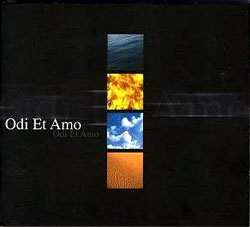
Emotion, history combine in album

If you’re Latvian and grew up in the United States or Canada, perhaps you can remember all the times people thought you said you speak Latin rather than Latvian. After all, everyone’s heard of Latin. It’s Latvian that’s the obscure language, right? It’s for all those times we wish we’d had an album like Odi Et Amo to serve as a comeback to our errant acquaintances. “Here,” you could have said. “Listen to this. It’s a bunch of Latvians singing in Latin. Just to confuse you even more.”

And that’s what Odi Et Amo is: a bunch of Latvians singing in Latin. But this is no ordinary bunch. Its producer, singer and musician Uģis Prauliņš working with the well-known and respected Rīga Dome Boys Choir.

The 13 tracks on this album take the choir, directed by Mārtiņš Klišāns, in a new direction. These aren’t the sweet and thoughtful compositions often performed by the choir. Rather, Prauliņš takes spiritual texts and with his musical arrangements moves the listener through a range of emotions, from reflection to anger, perhaps even to fear.

The album’s title track, “Odi Et Amo” (I Hate and Love), is taken from a short work by the Roman poet Gaius Valerius Catullus, who died about 50 years before the birth of Jesus Christ. The poem speaks of the conflict within one’s soul and sets the tone for the rest of the album:

Odi et amo, Quare id faciam, fortasse requiris.
Nescio, sed fieri sentio et exrucior.
(I hate and love. And if you ask me why,
I have no answer, but I discern, can feel,
my senses rooted in eternal torture.)

Three compositions on the album are based on verses from the Biblia Vulgata, the biblical translation by Eusebius Hieronymus, the Balkan-born linguist, scientist and philosopher who lived from about 340 to 450 and who at one point was headed down a path that could have seen him chosen pope.

It is one of these compositions, “Quare Fremuerunt Gentes,” that is the most surprising. The track begins with men’s voices intoning the title only to suddenly have the boys launch into a rap, accompanied by heavy, driving guitar and bass chords. The piece, based on Psalms 2 and 74, even has the boys screaming, something they probably couldn’t get away with in the Rīga Dome Church. Played loud, this track also is perhaps the most unsettling on the album … as art should be.

It is followed by the almost Enya-sounding homily “O Beata Trinitas,” a proper piece with which to settle one’s nerves.

In addition to the Biblia Vulgata, Prauliņš drew from other historical material, some by well-known literary or religious figures, some not. For example, “Ad Dianam” presents fragments from a work by English poet Thomas Campion (1567-1620), who used the character of Diana to praise Queen Elizabeth. “Pangue Lingua” comes from a hymn by 13th century theologian and philosopher St. Thomas Aquinas. And the “Chorus Novae Ierusalem” is from an Easter hymn, penned by Bishop Fulbert of Chartres, sung during the Crusades.

One favorite on this album is “Qui Creavit Coelum,” a song originating in the Nunnery of St. Mary in Chester about God’s creation of the world. As the choir sings the refrain, “Lully, lully, lu,” you almost have to smile, something that’s otherwise difficult given the seriousness of the rest of this album.

Besides the choir and Prauliņš, who provides narration and vocals as well as performing on keyboards, samplers, the kokle and the fiddle, a number of other musicians and vocalists helped out on this project. They include Armands Alksnis and Arnolds Kārklis on guitars, Arvīds Klišāns on French horn, and Aigars Godiņš, Edgars Janovs, Māra Kalniņa and Mārtiņš Klišāns on vocals. Kalnina, who also performed with the folk group Ilgi, was killed in an automobile accident in late August, just a few months after this album was released.

In conversations we’ve had with people who have listened to this album, it has been suggested that with the proper exposure, Odi Et Amo could raise Latvia’s stock in the music world. Certainly, the fact that it’s in Latin—and not Latvian—opens the album to a wider audience, at least intellectually. We have to agree that it’s worth the effort.

Details

Odi Et Amo

Uģis Prauliņš and Rīga Dome Boys Choir

UPE Recording Co.,  1999

Andris Straumanis is a special correspondent for and a co-founder of Latvians Online. From 2000–2012 he was editor of the website.

Latvia: Land of Pirates?

One of the great challenges of Latvia’s foreign policy makers, its ambassadors, and its cultural activists is to improve the image of the country in the eyes of outsiders. However, within the international music and software businesses Latvia’s image in recent months has become tarnished. Despite several years of anti-piracy promotions and police crackdowns, just three months ago, Latvia was named among the countries where pirating of recorded music is the highest. And in September, claiming that 90 percent of software in use in Latvia is pirated, Microsoft Inc. announced a marketing campaign aimed at encouraging consumers to purchase legal copies of its products.

During the past several years, late August through early September in Latvia has been the time for a big anti-piracy push. Led by LaMPA, the Latvian Music Producers Association, music producers, artists, and media have united in an effort to raise the public’s awareness about music piracy. At times, these efforts have been coupled with well-publicized police raids on vendors in open-air markets in Rīga.

This year was no different. LaMPA organized a slogan contest for signs to be used at a September 1 protest outside the parliament building (the contest promotion included a rather melodramatic warning to consumers, reminding them that by purchasing pirated music they were supporting “murder for hire”). Radio stations played no music for one hour on September 1, while music stores opened later than usual and the three leading TV channels played no music videos. The same day, state revenue agents announced the results of a raid in a market, netting 1,600 compact discs containing pirated music and software.

But Latvia’s piracy rate remains high and, if figures are to be believed, is increasing. According to the International Federation of the Phonographic Industry (IFPI), more that 50 percent of the compact discs and cassettes sold in the Latvian market are pirated. That now puts Latvia in the company of such other pirate havens as Ukraine, Russia, Bulgaria and Estonia.

Worldwide in 1998, pirated music sales represented a third of all sales, or USD 4.5 billion. Although the situation looks bad, one reason for the apparent increase in pirate sales in Latvia is that the acknowledgement and reporting of the problem has increased, says Elita Milgrāve, director of the music publishing company MICREC and head of LaMPA. “The problem has always existed,” she tells SVEIKS.com, “but we have obtained more information about it and have more closely monitored it. Thus, we have been able to clarify the degree of piratism.”

One problem the anti-piracy movement has is the lack of hard data about the illegal business. “Everything is pirated!” complains Milgrāve. Organized distribution brings into Latvia illegal compact discs from Russia, Poland, the Czech Republic and other locations, while pirated cassettes are produced domestically. Provisional data suggest that in one year about 1 million pirated CDs came into Latvia just through the Grenctale border point. In all, authorities figure that Latvia loses about LVL 5 million annually in tax revenue because of pirated recordings, Milgrāve says. Sales of pirated recordings tend not to include the work of Latvian artists, but nonetheless hurt the local music business by robbing music publishers of revenue that could be directed toward Latvian artists’ projects.

Perhaps one reason for the current success of music pirates in Latvia is that they provide an affordable product to consumers who otherwise might not be able to afford to shop for legal recordings in legitimate stores. A pirated CD might cost about LVL 2.50 to 3.00, while legal CDs might cost two to four times more. But Milgrāve argues that’s not a justification. “If I can afford one original pair of jeans,” she says, “I buy those rather than going to the market to buy three pairs of knock-offs. I know that those are illegal, that I’m being cheated. I know they aren’t quality products.” The same principles apply to recorded music, Milgrāve adds, pointing out that there’s also a moral question involving one’s support of a favorite artist.

Milgrāve notes that sellers of pirated recordings usually have disappeared underground when the annual anti-piracy activities pick up. However, in recent weeks the efforts of revenue police and other authorities appear to have been sustained, thanks in part to recent changes in state laws and agreements between the music publishing industry and law enforcement officials. Of course, it’s too early to tell whether the effort will pay off in the long run and will enable Latvia to salvage its image in the music publishing industry.

(Editor’s note: This article orginally appeared on SVEIKS.com.)

Andris Straumanis is a special correspondent for and a co-founder of Latvians Online. From 2000–2012 he was editor of the website.