
Bittersweet memories of Latvian deportees

We Sang Through Tears

As a teenager, reading Alexander Solzhenitsyn’s One Day In the Life of Ivan Denisovich, I was intriqued with the character of Kilgas, the jovial Latvian with whom Ivan Denisovich Shukhov works in the Siberian labor camp to which they both have been sentenced. How did Kilgas get there? Why was he in the camp? And what became of him? Did he ever return to his homeland?

We Sang Through Tears provides a partial answer to these questions. The book is the English translation of a selection of life stories from Via Dolorosa, a series of books published in 1990 by the Latvian Writers’ Association. These memoirs were first-hand accounts of the Soviet deportations of 1941 and 1949 and of the lives of the Latvian deportees in distant Siberian villages and camps. “It was as if a new genre in Latvian literature had been born—first-hand accounts of the victims of Stalinism,” writes Via Dolorosa compiler Anda Līce in the preface to the translation.

Indeed, these 16 excerpts—including a lengthy poem and a selection of annotated drawings—offer the often bittersweet reminiscences of the survivors, those who were yanked from their homes in Latvia, herded into boxcars and transported hundreds of miles east. After years of hard labor, years during which many of their compatriots perished (often to be dumped into mass graves), the survivors returned to Latvia. However, many could not shake the memories or the cloud of suspicion that hung over them.

The title for the book comes from the memoir of Herta Kalniņa, deported in 1941 and again in 1950. She wrote: “It often happened that we would start singing, especially a song in which we expressed our sorrow about having to live in a foreign land and our yearning to return to our homeland, if only to be buried there. We sang through tears. We made a promise to ourselves to survive, come what may, for it couldn’t get any worse.”

Among the selections in this collection are two by Aina Roze, daughter of the famed Latvian publisher Jānis Roze. The Roze family was deported in June 1941, but—as was the custom—the able-bodied men were separated from the rest. In one selection, Aina Roze remarks on drawings she made as a child in Siberia. In the other, she writes to her departed father, thanking him for the life lessons he instilled in her. Jānis Roze died in May 1942 in a labor camp north of Solikamska, Russia, but his legacy lives on in the renewed Jānis Roze bookstore in Rīga, which also published this volume.

Images of hardship and cruelty recur in these stories: The paltry meals of hard bread or flour-and-water gruel. The admonishments of guards, to prisoners marching in single file, that a step to the right or step to the left would be considered an escape attempt. The deep and pervasive cold of the Siberian winter. Lice and midges. Dysentery. Death.

Two fascinating selections come from Jānis Zīle, who spent time in the Vorkuta prison camps. In the poem, “Ballad of Souls in Torment” (written during the winter of 1950-1951), Zīle portrays the cold cruelty endured by the slave labor forced to dig coal to stoke the Soviet paradise:

Dying holds no horror.
Horror belongs to the starving,
Who know there’s one who eats,
Stuffing his mouth with food
Warmed on coals from Vorkuta,
And raising a glass to sing,
—Stalin, the guiding light of our lives.

In the second selection, Zīle recounts a short-lived prison strike in August 1953 (after Stalin’s death) when a quarter million prisoners demanded better working and living conditions. If nothing else, Zīle wrote, the failure of the strike convinced the prisoners that Stalin alone was not to blame for their plight, but in fact the entire corrupt Soviet system.

But the book also holds images of beauty and wonder: The aurora borealis. The scenery of the Siberian wild. The kindness an unfortunate soul could still show another.

For example, Elvīra Sebre’s “Serenity” recalls her childhood in Siberia. Deported with her family in 1949, Sebre manages to survive and gain an education. Her mother dies in 1953 at age 46, leaving Elvīra and her older brother, Jānis, alone. Yet thanks to the kindness of other Latvians in Novikova, where Elvīra attends school, she manages to get by, eventually returning to Latvia where she succeeds academically and is able to live a “happy” life. “I thank all those people in this world who have hated me,” she writes, “because they aroused a tenacity in me and gave me the strength to go on living.”

Not all the stories in We Sang Through Tears end on such an “upbeat” note. In fact, many don’t really end, leaving the reader wondering (as I had with Solzhenitsyn’s Kilgas) what finally happened to the authors. A few stories, such as Zīle’s, are prefaced by a short biography, but most lack closure.

The volume also lacks a fuller context. The introduction by Emīls Dēliņš provides only a brief overview of the deportations of 1941 and 1949. A fuller introduction would have been in order, particularly considering this book is meant for a non-Latvian speaking audience that likely is unfamiliar with the tragedy of the Latvian people. On the plus side, we are grateful for the able translations into English—the lion’s share done by Astrid Sics—that allow the reader to effortlessy follow the stories, rather than stumbling over the odd phrasing frequently encountered in English material emanating from Latvia.

We Sang Through Tears gives us a sampling from a dark period in recent Latvian history. We need to read more of this “genre” to begin to understand what thousands of Latvians experienced.

Details

We Sang Through Tears: Stories of Survival in Siberia

Astrid Sics, comp. and trans.

Rīga:  Jāņa Rozes apgāds,  1999

ISBN 9984-623-72-6
Andris Straumanis is a special correspondent for and a co-founder of Latvians Online. From 2000–2012 he was editor of the website.

Son’s music tribute is good, mixed bag

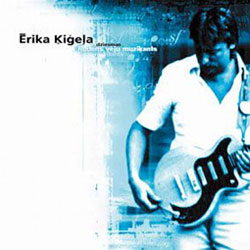
On Rudens vēju muzikants Feliks Ķiģelis, the son of the late Latvian rock composer Ēriks Ķiģelis, brings together an all-star group of Latvian musicians to pay tribute to his father and his music.

Ēriks Ķiģelis was the guiding light behind the famous Latvian rock group Līvi. Up until his untimely death in 1985, he was the main composer for the band. His musical talent is apparent in many well-known Latvian songs including “Zīlīte”, “Saldus saule”, “Aprīļa pilieni” and “Kurzemei – Saules ceļš”—a song that, although he did not live to see it completed, was finished and presented on 1988’s self-titled Līvi album.

Ēriks was a great influence on many Latvian acts. Not only can his spirit still be found in the recent records of Līvi, but, judging by the varied performers found on the Rudens vēju muzikants collection, he has influenced many other rock and pop performers. Famous names such as Igo, Gvīdo Linga, Guntars Račs and past and present members of Līvi have come together to pay tribute to Ēriks and his music. The testimonials from many famous Latvian names contained in the compact disc booklet attest to his great influence. It was a great loss to Latvian rock music when he died.

However, this is not the first tribute record to Ēriks Ķiģelis. The 1997 Līvi album Bailes par ziņģēm was dedicated to his memory and included many re-recordings of Ēriks’ songs. It would seem inevitable that Rudens vēju muzikants would inspire comparisons to Bailes par ziņģem as there are five songs that can be found on each record.

I have heard very little of Ēriks Ķiģelis’ original works. The only song that I have heard the original version of was “Zīlīte,” included on the Mikrofons 1982 collection, so I am unable to compare these versions to the originals (except for the posthumously recorded and released “Kurzemei – Saules ceļš”). Hopefully this record will generate enough interest in Ķiģelis that MICREC can dig into its vaults and re-release all of the old recordings by Ēriks, since as far as I am aware, they are not available anywhere. That’s a shame, because by listening to the songs on Rudens vēju muzikants one can tell that Ēriks was a great musician and songwriter who was taken away too quickly.

As with many of the Latvian compilation and collection CDs, the results are a mixed bag. While there are many strong tracks, there also are tracks that do not live up to expectations. However, there are enough songs on the album to make it a worthwhile purchase to those unfamiliar with Ēriks Ķiģelis and his work.

Rudens vēju muzikants starts off with a rousing instrumental—“Mazais sapnītis”—which teams up Feliks Ķiģelis with current Līvi guitarist Ainars Grodums, who makes many appearances on the album. On “Mazais sapnītis,” as well as every song on the album, Feliks plays guitar.

Gvīdo Linga adds his vocal talents to “Elektriskā zivs,” which is followed by Igo taking over the vocal responsibilities on “Istabā tumsā” (with distorted vocal effects, no less!). “Zušu sziesma,” featuring Māris Žigats on vocals, is one of the weaker entries on the album, as it tries a funkier approach to the song, but the desired effect is not achieved—and the vocals are nothing special.

The strongest track on the album is “Deviņvīru spēks”—which is one of the sections of the previously mentioned Līvi epic “Kurzemei – Saules ceļš.” Aivars Brize, the ex-lead singer for Līvi, as well as the original vocalist for the song, returns to replay the piece in all of its original heavy glory. This time, the song is given an electronic feel, which strengthens it and perhaps makes it superior to the original recording. “Deviņvīru spēks” is one of my favorite Līvi songs, mainly due to the great guitar part, as well as the great riff that opens up the song.

Another Līvi member, current guitarist and lead singer Ainars Virga, returns to sing (well, growl would be the better word!) and play bass guitar on the song “Durvis,” another less memorable track on the collection. “Svētelis,” one of my favorite Ķiģelis songs, is assisted by Inguss Ulmanis on vocals and by Guntars Račs, famous Latvian producer, on drums, who also appears on “Zīlīte,” the next track. “Zīlīte” is the only song on the album that features a female vocalist, Agnese. Her vocals add greatly to the song and make “Zīlīte” another standout track on the album.

Zigfrīds Muktupāvels appears on “Kurzeme,” which, although a good song, does not really differ from the original much. Gunārs Kalniņš appears on the song “Kursas putni,” and Feliks Ķiģelis himself takes over vocal duties on my all-time favorite Ēriks Ķiģelis song, “Saldus saule.” Though Feliks has a great voice, the rather slow tempo he takes with the song gives it a plodding feel.

The verdict? Well, I believe Bailes par ziņģēm is the stronger record and perhaps a better introduction to the works of Ēriks Ķiģelis. However, hearing other artists’ interpretations of Ēriks’ works is worthwhile. It would have been nice to have the song lyrics as well. For those who might have heard and enjoyed Bailes par ziņģēm, I would recommend this record. I would also recommend this record for those who enjoy Latvian rock music, as it is a solid effort, though not very memorable.

Details

Rudens vēju muzikants

Ēriks Ķiģelis

MICREC,  1999

Egils Kaljo is an American-born Latvian from the New York area . Kaljo began listening to Latvian music as soon as he was able to put a record on a record player, and still has old Bellacord 78 rpm records lying around somewhere.

Labvēlīgais Tips offers 17 songs on ‘best of’ album

Tipa labākās dziesmas

It was late one Jāņi (or was it really early?) several years ago. The Latvian-Americans around the bonfire were beginning to dwindle, their steady offering of folk songs interrupted by longer and longer spells of silence. All at once, a group of Latvians from Latvia broke into a sloppy rendition of “Vecpiebalgas cūku māte,” a favorite song from the 1995 Alumīnija cūka album by the pop jokers Labvēlīgais Tips. I’ve always liked that song. It’s among the songs I wish the group had put on Tipa labākās dziesmas, released this past April.

Labvēlīgais Tips has managed to find an audience in Latvia that each year awaits April 1, when—in the spirit of the day—the group has released its new album. I suppose it’s only fitting that in this fifth year the group would offer a “best of” album. Surprisingly, Labvēlīgais Tips isn’t as well known among Latvians in North America. Perhaps it’s because the group has never toured Latvian colonies here. Perhaps it’s because the group is a post-1991 phenomenon, while some Latvians on this side of the Atlantic still only have memories of Jauns Mēness, Jumprava and Pērkons. Perhaps it’s because a certain amount of the group’s material takes a somewhat sardonic view of life in Latvia, often seeming like a “you had to be there” joke.

I suppose the same could be said of Čikāgas piecīši. A Latvian from Latvia might have difficulty understanding the cultural relevance of the piecīši. For us, it just makes sense because we’ve lived it.

And it’s that difference that makes Labvēlīgais Tips so welcome. The group performs songs that, even for someone not well-acquainted with daily life in Latvia, provide a window into the ironies of existence. Songs such as “Pumpa,” about a man’s troubles with a pimple on his rear end, are prima facie funny, but also are a sad commentary on life. The main character in the group’s songs often seems to be the schlemiel, in other words, you or me.

Western listeners might better understand a song such as “Mans brālis Čikāgā,” sung from the perspective of a Latvian in exile who laments not being in the homeland, but questioning whether it’s not all for the best, given conditions in Latvia today. The lyrics make one stop and think—and I wish Labvēlīgais Tips would perform more such songs.

All but three of the 17 songs on Tipa labākās dziesmas were originally heard on the four earlier albums, Alumīnija cūka (1995), Pilots Antons Šmits (1996), Pumpa (1997) and Tā, lūk, man iet (1998). Taken from Alumīnija cūka are “Alumīnija cūka,” “Džins ar toniku”, “Koki,” “Lodziņš” and the popular “Zivis.” From Pilots Antons Šmits we get “Omnibuss” and “Aija” (renamed from the original “Aijai”). From Pumpa come “Atlantīda,” “Mans brālis Čikāgā,” “Pumpa” and “Šī nav tā dziesma.” And from Tā, lūk, man iet there are “Desmitais tramvajs,” “Princese un Cūkuģīmis” and “Tā, lūk, man iet.” Three songs—“Tu saki Jā,” “Kas tā dara” and “Lai”—are new.

Musically, Labvēlīgais Tips seems at home in the pop genre, but floats easily into schlager, rock and a few other musical forms—whatever suits the mood. At the core of the group is Andris Freidenfelds, who also is known as a morning disc jockey on Radio SWH.

If you’re familiar with the originals, you’ll soon appreciate that the “best of” versions are not just lifted from old masters. Instead, these are new recordings, often adding new sounds or twists.

In an interview with the daily newspaper Neatkarīgā Rīta Avīze shortly after the album appeared, Elita Mīlgrāve, director of the MICREC record company, suggested that the popularity of Labvēlīgais Tips comes from the good-natured humor of their songs. She suggests that the songs don’t have a deep subtext, nor are they meant to be. One could argue, however, that Labvēlīgais Tips has struck a chord that resonates in listeners precisely because their songs sometimes don’t need much thought to understand. They are songs to which a listener could easily answer: “Ain’t that the truth!” But perhaps that’s over-analyzing Labvēlīgais Tips.

Details

Tipa labākās dziesmas

Labvēlīgais Tips

MICREC,  1999

MRCD 112

Andris Straumanis is a special correspondent for and a co-founder of Latvians Online. From 2000–2012 he was editor of the website.