Romantic duets showcase Vaice and Mok

Romantic

For their debut recording, Romantic Duets, two gifted and young singers, soprano Sonora Vaice of the Latvian National Opera, and tenor Warren Mok, frequent guest artist of the LNO, have recorded eight duets from six renowned Italian operas: Donizetti’s Lucia di Lammermoor and L’elisir d’amore, Verdi’s Rigoletto and La Traviata, as well as Puccini’s La Boheme and Madame Butterfly.

The tone color of Vaice’s bright yet passionate voice is elegantly matched by Mok’s clear and ardent singing. The excellent sonics have a vibrant quality well-suited to the soloists’ separate and combined vocal textures, which while easily encompassing both dramatic and lyrical operatic styles, in most of the tracks on this disc, tend to emphasize the former. Under the fine direction of maestro Normunds Vaicis, the Latvian National Opera Symphony Orchestra performs with great finesse, creating a pleasing dynamic balance with the timbre of the singers’ voices.

First on the disc are the three Donizetti duets: “Lucia, perdona…Sulla tomba che rinserra,” “Una parola, o Adina…Chiedi all’aura lusinghiera” and “Caro, Elisir, sei mio?…Esulti pur la barbara.” All make a striking impression, with both singers performing their virtuoso parts with dazzling ease and fervor.

My favorite performances on this release were those of the Verdi duets: “Signor ne principe…E il sol dell’ anima,” “Libiamo, libiamo ne’lieti calici” and “Amato Alfredo…Parigi, o cara, noi lasceremo…Ah non piu…a un tempio…,” since in all three the singers’ phrasing has a very natural and appealing flow. It should be noted that in 1992, Vaice made her operatic debut with the LNO as Gilda in Rigoletto. As heard on this disc, the interpretation of Gilda and Duca’s duet is dynamically and emotionally engaging, while Alfredo and Violeta’s duet from Act 1 is especially memorable for its lyricism.

To their performances of Puccini’s supremely masterful duets: “O soave fanciulla” and “Vieni la sera,” Vaice and Mok bring a fresh interpretation that is often technically and emotionally electrifying.

After listening to this recording, it is easy to understand why Christa Ludwig has described Vaice as “a great musician” and why, in writing about one of Warren Mok’s performances, the English Guardian newspaper has written: “His technique is rock solid, with beautiful, even timbre…”

To my knowledge, the particular compilation of duets chosen for this recording has not been reproduced on recent operatic releases, and so provides a welcome complement to the collections of operatic duets currently available. This charming recording, produced by the notable Latvian recording company, UPE, is certain to make a valuable addition to all opera lovers’ libraries.

(Editor’s note: This article originally appeared on SVEIKS.com.)

Details

Romantic Duets

Sonora Vaice and Warren Mok

UPE Recording Co.,  1999

UPE CLASSICS UC001
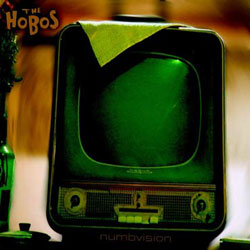
American pop, made in Latvia

Listening to Numbvision by The Hobos, a new Rīga pop-rock foursome, you might not think you’re hearing a Latvian band at all. Here are 12 tracks, all in English, that could well have been the work of a young but solid Middle American band.

That must be the charm and appeal of The Hobos, led by singer and lyricist Rolands Ūdris. Songs like “Christian (I’m Gonna Be)” and “She Sounds Like a Little Child” rose quickly in the Latvian radio charts when the album was released late last year.

But why? Put up against other bands that can be heard on the radio, The Hobos are nothing special. Despite the characterization of Ūdris as a poet, the lyrics on many of these songs are not all that outstanding. The musicianship is fine, but again not out of the ordinary. Then why was this album flying off store shelves at Christmas and why does the band continue to be a favorite for concerts? Perhaps because The Hobos prove that even in Rīga you can get good homemade North American pop.

Much of the credit here must go to Ūdris, who has spent some time on this side of the Atlantic, as you’ll quickly tell from his voice, which lacks the usual Eastern European twists on English pronunciation. But it’s also evident in the lyrics, which frequently feel like they’re written from an American sensibility, rather than from anything Latvian. Even the name of the band, The Hobos, makes allusion to a distinctly American character in a distinctly American era. (And, yes, we did check several dictionaries, all of which say the origins of the word “hobo” are unknown.)

Besides Ūdris, the members of The Hobos include Mārtins Burkevics on bass and background vocals, Egons Kronbergs on guitars and Vilnis Krieviņš on drums.

Of the dozen songs on this album, there are several standouts. “Christian (I’m Gonna Be)”—a song not about being born again—laughs at the facility with which some people change their convictions. “Reminiscence of a Funny Face” has a clown searching for greater meaning in his life. “Lululu,” another of those songs about the simplicity of love, is simply wonderful. And “Surrender,” featuring Alexander Sircov on a speaker-rattling bass, is a great tune even if the lyrics might be lost on some listeners.

In interviews in Latvian media, Ūdris and other band members have talked about the art of their songs. We have to agree that Numbvision is not just about being able to do a solid English-language album. These songs do have their pensive aspects, but we also believe that Ūdris could have applied himself a bit more to the craft of his poetry. The metaphors and similes used—for example, “she sounds like a little child,” the clown in the circus, “feeling like a hobo”—often seem too facile. Perhaps that’s because English is not his native tongue (we weren’t overly thrilled with the license he took in translating some of Renārs Kaupers’ lyrics on the English version of Prāta Vētra’s Starp divām saulēm album).

For a debut album, however, we also have to tell The Hobos, “Cepuri nost!,” for their efforts on this project. Earlier this year, Ūdris told the youth magazine S that artistic achievement is more important to the band than commercial success. These guys have the potential for both.

(Editor’s note: This article originally appeared on the SVEIKS.com site.)

Details

Numbvision

The Hobos

Platforma Records,  1999

PRCD 037

Andris Straumanis is a special correspondent for and a co-founder of Latvians Online. From 2000–2012 he was editor of the website.

A silver lining in the grays of Rīga

That Rīga, our Rīga, might one day be seen as one of the more beautiful cities in Europe, seems perhaps hard to accept. Perhaps it takes an outsider to tell Latvians what they take for granted.

German photographer Rolf Reiner Maria Borchard provides the reader of this book, Riga, with such an outsider’s view. Borchard, who studied architecture and now is a professor at the Muthesius-Hochschule in Kiel, fills this coffee-table book with more than 100 black-and-white images of the Old City, with occasional forays into other districts of the Latvian capital.

The photographs are arranged in a series of somewhat disconnected mini-excursions through Rīga. Following an introduction to Rīga’s architecture written by journalist and architecture critic Manfred Sack (in English and German), the first image is of Āgenskalns Bay. Immediately after come two seemingly obligatory, tourist-like shots of the rooftops of Rīga taken from the tower of St. Peter’s Church.

But what Borchard supplies is not a tourist’s guide, nor is it a collection of "art" photographs. The book, after all, is a presentation of Rīga’s architecture, of its buildings flavored by Baroque, Art Nouveau, Stalinism and other styles.

What Borchard provides, in fact, is difficult to define. The photographs are at once the work of a technician, of an investigator and of a photographer. So many images are static, devoid of people (did he shoot most of these on a Sunday morning?), the better to see the buildings that after all are the subject. While the lack of life in these images is marked, the ability to stare at some of Rīga’s wonders is to be savored.

Borchard is not content just to show us the obvious; he walks into courtyards, ventures behind buildings and explores corners most tourists never see. Most images were taken on the east side of the Daugava River, but Borchard does also show us some of the interesting architecture found in old fishermen’s homes on Ķīpsala.

And he certainly understands the ability of the lens to capture angles and moments pedestrians seldom encounter. In one image, looking down Trokšnu iela in the Old City, the reader feels suspended just above the street. In an another, a Cartier Bresson-like view across the Dom Square toward the Rīga Stock Exchange, we see a young boy running but appearing to leap off a cafe’s fencepost. And in one surprising picture, Borchard wants to make a point about the English neo-Tudor style of the Great Guild and Little Guild buildings. He makes the reader not just look skyward, but crane one’s neck back in a most uncomfortable position.

Did I say black-and-white? I meant gray. Or perhaps silver. The images don’t lack contrast, but about the only snappy whites you’ll find are of the paper on which the plates are printed. The first time I paged through Riga, this bothered me, perhaps because I had just returned from the city and its gray winter. In fact, many of the photographs in the book were taken in winter. On reflection—and perhaps this is the power of gray—the initial drabness of these photographs is soothing, drawing the reader in, forcing one to look at details.

I’ve gotten over the gray, but the final pages of the book remain unsettling. The first pages of Riga present us with almost a matter-of-fact "this is Rīga" introduction, but the last pages show us several of Rīga’s best known cemeteries, focusing particularly on memorial sculptures. Why? One has to read the comments (in English and German) to the photographs to find the answer. The last two images, from the Forest Cemetery (Meža kapi), reveal the power of these sculptures that are not mere headstones. Says the photographer: "A friendly paradox: the living drawing strength from their dead."

Details

Riga

Rolf Reiner Maria Borchard

Stuttgart, Germany:  Edition Axel Menges,  1999

ISBN 3930698617

Where to buy

Purchase Riga from Amazon.com.

Note: Latvians Online receives a commission on purchases.

Andris Straumanis is a special correspondent for and a co-founder of Latvians Online. From 2000–2012 he was editor of the website.