Folk song book gives voice to Medņeva singers

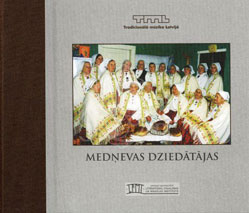
Medņevas dziedātājas

In 1987 a group of women in the Medņeva area of far northeastern Latvia established an ensemble devoted to the singing of local folk songs. The Medņeva Ethnographic Ensemble sang and continues to sing songs that the group’s members learned from their parents and grandparents or remember from work parties and celebrations when they were children.

The group members have also interviewed their neighbors and other locals and learned songs from them. Several researchers recognized the value of documenting this ensemble and its repertoire, which resulted in the recent publication of Medņevas dziedātājas, a book accompanied by a pair of compact discs, by the Institute of Literature, Folklore and Art at the University of Latvia.

Most previous collections of folk songs have been just that: a book full of melodies all transcribed into the same key, each with only a verse or two of text, only the name and birth date and place of the singer, and no further notes on the usage or origin of the song. In this book, however, ethnomusicologist Anda Beitāne has taken a much more holistic approach. The book begins with a general introduction to traditional music and its documentation in the Medņeva area, followed by a fairly technical description of the Medņeva ensemble’s typical repertoire. Next is a section on the history of the Medņeva ensemble, written by the singers themselves. This section gets a bit tedious, as it seems to list practically every performance the ensemble has done in its 20-plus years. From a documentary standpoint, however, would that every folk ensemble had such a biography written about it!

Only then are the actual song transcriptions presented. If earlier song collections tried to squeeze as many melodies as possible onto a page, then this book devotes at least two pages to each song. Each song is transcribed in exactly the key that the singers sing it in—a very precise and correct gesture, but one that will frustrate those who are not so well versed in reading music, because sometimes the key of D flat (five flats) or B (five sharps) just happens to be most suitable for the women’s voices. The transcriptions also laboriously include all of the harmonies and variations that the women sing. Notes, quotes and comments by both Beitāne (in Latvian) and the Medņeva singers themselves (in deep Latgalian dialect) about the origin and history of each song precede the transcriptions.

After the transcriptions are autobiographies and photographs of each singer in the ensemble. These are particularly interesting and make the songs very personal—the more you read and listen, the more you get attached to these ladies. Many of the older singers tell of hard times and childhoods spent working as shepherds for nearby farmers. Others tell of war, kolkhozes (collective farms) and deaths in the family, but also of beauty, dear friends, bread baking and even beekeeping. 

The main focus, though, is the two CDs with recordings of the 35 songs included with the book. Since notation is only an approximation of music, the recordings allow one to hear the manner, tempo and tone in which the songs are meant to be sung. Most of them will not be familiar to casual readers and listeners, which makes the material a wonderful source for learning new songs. All are sung in Latgalian (except for a one brief verse and refrain in Russian) and sound quintessentially “Latgalian.” The majority of the songs are upbeat and cheerful, but these are unfortunately not the CDs to play at your local Latvian social event. Authentic rural singing is, shall we say, an acquired taste.

At first I was going to write that these discs and book are purely for educational and research purposes, because who is going to want to listen to a bunch of septuagenarians singing? And I’ll admit that the first time I listened to the discs, they were playing in the background and—big surprise—I thought they sounded like just a bunch of old ladies. The second time, though, I took a different approach and listened to them in my car, where I had no choice but to pay attention. I now understand why folklorists get so carried away about the Medņeva ensemble and similar singers. It’s not only their particular repertoire of songs, but—to use the current buzz word—the manner in which they sing, which can best be described as “juicy,” as one would say in Latvian.

Many folk ensembles depend on a couple of main singers, with the the rest singing along en masse. But practically every Medņeva singer has a strong, distinctive voice and is able to begin songs and sing the main lines of them. Yes, they are old ladies (to be fair, there are also younger women in the group), but their voices are in surprisingly good shape.

The women sing virtually everything in at least two-part harmony, if not three and four parts. That said, only one song on the two discs (“Man patika mīžu druva”) makes use of a pure drone harmony. Several songs can be classified as talka (collective work in the fields) songs, others are linked to specific seasonal celebrations or weddings. The Medņeva women are also skilled at apdziedāšana (teasing songs), and the discs contain several examples of this. A garmon (a type of button accordion) player accompanies the women on a couple of songs, otherwise everything is sung a capella.

The book is in Latvian and contains many quotes in Latgalian. At the end, though, is a nice 10-page translation in English of the book’s first section. The translation provides a more than adequate context for and description of the Medņeva singers and their repertoire. But, obviously, an understanding of Latvian, and particularly Latgalian, will give the reader a much fuller impact.

Beitāne writes, “This is the first instance in Latvian ethnomusicology where traditional singers have been given the opportunity to offer information about themselves.” Indeed, other than a 1999 book devoted to the singer Veronika Porziņģe from Alsunga, this book differs dramatically from all previous collections of Latvian folk texts and melodies in that it emphasizes the actual people involved in the musical traditions, rather than just the material they produce. I believe it’s a worthy approach, and not just for research purposes. This book is a wonderful monument to the gutsy ladies of Medņeva and their musical legacy, and—for the right person—it will be positively inspiring.

Details

Medņevas dziedātājas

Anda Beitāne, comp.

Rīga:  Latvijas Universitātes Literatūras, folkloras un mākslas institūts,  2008

ISBN 9934803208

On the Web

LU Literatūras, folkloras un mākslas institūts

The Web site for the Institute of Literature, Folklore and Art at the University of Latvia includes information on where to order its publications. LV
Šomase’s solo debut features all-star cast

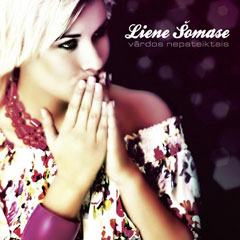
Vārdos nepateiktais

Liene Šomase is a young Latvian singer who is attempting to forge her own path. Also a saxophone player, she first became known in 2006 with her hit song “Ugunskurs.” Not long after that, she joined singer Jānis Moisejs to record the album Pasaule ir skaista, with music by Raimonds Pauls and lyrics by Guntars Račs.

The few songs that I have heard from that album seemed to be simple melodies, as can be expected from Pauls, but generally what one might call bubblegum pop music—sickly sweet flavor to start, but with a taste that quickly disappears. Šomase’s latest compact disc, 2008’s Vardos nepateiktais, takes a different road.

Besides being Šomase’s first solo album, the music on Vardos nepateiktais has more of a hard rock sound to it. Her MySpace page lists artists Faith Hill and Shania Twain as influences—women who have very successfully mixed a country music sound with a harder rock sound. According to the MySpace page, Šomase “sounds like” other female artists Natalie Imbruglia, Avril Lavigne, Pink and, very curiously, Madonna (that one I can’t see at all!).

Highlights of the album include the up-tempo opener, “Jauna diena,” as well as the song “Klauns (dzīve nav rožu lauks).”

The obligatory track in English, “Get Over It,” is a rather harsh break-up song, featuring lyrics like “If you get the urge to call me, you can call me history.” The poor guy must have messed up pretty bad to get this sort of treatment!

Šomase’s first hit, “Ugunskurs,” is also here. The song is certainly more in a šlāger vein than the other tracks, though certainly still catchy.

One needs only to look at the album liner notes to see that the cavalry has been called in to work on this album. Tracks have been penned by a number of heavyweight songwriters, including lyricist Račs, former Līvi guitarist Ainārs Virga, singer-songwriter Mārtiņš Freimanis of Tumsa, as well as singer Lauris Reiniks, former Double Faced Eels bassist Eduards Veinbrants and drummer Mārtiņš Miļevskis of group h2o, among many others. Performers on the album include Tomass Kleins (another former Līvi guitarist), keyboardist Zigfrīds Muktupāvels and guitarist Uģis Tirzītis (both of bet bet). The credits read like a who’s who of Latvian music.

With such a team behind it, one would expect the album to be quite good. And it is! Šomase’s voice works well with this type of music. The rock music gives her strong vocals a more natural and appropriate setting.

The CD comes with a largely forgettable DVD, with a few clips from her performances on the talent show “Dziedi ar zvaigzni.” They include rather ordinary talent show performances of songs like Randy Newman’s “You Can Leave Your Hat On” and Lou Bega’s “Mambo No. 5.” Of interest is the interpretation of the Līvi hard rock hit “Dzelzsgriezējs,” which switches from the hard rock original to a lounge interpretation.

Some may say that there isn’t much original on this CD, and, with the army of songwriters employed to make the record, it would be more of a surprise if the album wasn’t a hit. However, compared to a lot of the dreary and dull pop music that is currently being recorded in Latvia, this is significantly better. Certainly it will be interesting to find out if Šomase can develop her own songwriting talents (she has a partial credit on only one song, “Vai tu zini”). It might also be worthwhile to gather a set backing band. Many of the songs were recorded by completely different lineups.

All things considered, I quite enjoyed listening to this album. The songs are catchy and fun, and far more memorable than the ones on Pasaule ir skaista. The fact that many of the songs feature actual musicians (rather than computer programmers), with some songs even featuring real drums, is a big plus. Šomase has made a recording that stands apart from many of the other recent albums released by young singers and is well worth a listen!

Details

Vārdos nepateiktais

Liene Šomase

MICREC,  2008

MRCD 386

Track listing:

Jauna diena

Pilsēta dejo

Tik dīvaini tuvs

Svešādā dzīve

Klauns

Slēptākās domas

Bet vai tu zini?

Tu esi mana mīlestība

Get Over It

Ugunskurs

Where to buy

Purchase Vārdos nepateiktais from Amazon.com.

Purchase Vārdos nepateiktais from BalticShop.

Note: Latvians Online receives a commission on purchases.

Egils Kaljo is an American-born Latvian from the New York area . Kaljo began listening to Latvian music as soon as he was able to put a record on a record player, and still has old Bellacord 78 rpm records lying around somewhere.

Get on board for magical, albeit dreamy, carpet ride

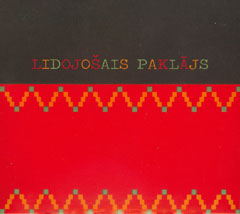
Lidojošais paklājs

Lidojošais paklājs (The Flying Carpet) began a few years ago as an amalgam of Latvian musicians from both the contemporary and folk worlds, who have sometimes collaborated with musicians and singers from other countries as well. The group performs a combination of ethnic music and original compositions, forming a pleasant type of world-inspired contemporary music.

The group’s self-titled debut compact disc, Lidojošais paklājs, is ambitious, musically interesting, and sophisticated. Ieva Akurātere (the public face of the Singing Revolution) brings years of experience in the rock, pop and acoustic genres to the group, while Zane Šmite (formerly of Iļģi) brings an intuitive understanding of Latvian ethnic music and texts. Ilze Grunte melds the two together with her masterful guitar arrangements, and Akurātere’s son, Matīss, completes the sound with the Indian tabla, Brazilian percussion instruments, and the Jew’s harp.

Together they take simple melodies and fly off with them, as if on a magic carpet. Now and again they return to the original tune, only to fly off again on another wonderful trip of variations. The song “Kur tie dzima gudri vīri” is a perfect example of such a musical journey that uses a familiar folk melody as a starting point.

To summarize, this is ethereal contemporary music with a few pieces of folk or world music thrown in for good measure. The CD contains several original works that Ieva Akurātere has either written or composed or both, such as “Uguns dzinējs,” “Atbalss,” “Ja es būtu Tu,” “Okeāns,” “Parastais brīnums,” “Vanags” and “Saules vējš.” The song “Atspulgs” was composed by Imants Kalniņš using a text by Laima Līvena. In “Laumiņas” the musicians blend a Breton folk melody, a Latvian folk melody, tabla and sitar-like sounds. The CD ends with “Kalnu balsis,” an original piece inspired by the natural environment of Norway.

The remaining four songs are contemporary interpretations of Latvian folk songs. “Div’ pļaviņas es nopļāvu” is a fantastic flight using the well-known folk tune as home base. On “Šūpo mani māmuliņa” one hears how nicely Akurātere’s and Šmite’s voices complement each other. “Tur bij’ labi talkā iet” is originally a work song that retains the necessary oomph in this rendition. “Kur tie dzima gudri vīri” sends gentle blessings to a newborn son.

When I first heard Lidojošais paklājs live, it seemed like a musically intricate yet relatively tame world music group. This recording, however, leans more heavily on Akurātere and her original compositions, rather than Šmite and her contributions from the world of ethnic music. That’s good news for fans of Akurātere. But if Akurātere’s vibrato got on your nerves back in the late 1980s, then it still will today. She’s got a great pair of lungs and folk-diva status to match them, but they’re not for everybody.

Although I’ve long been a fan of Ieva Akurātere and always support innovative interpretations of folk music, I find this CD too feminine and dreamy for my taste. A female, Eastern European version of John Denver’s Calypso, anyone? But seriously, I really do have the highest respect for these musicians, and my intellectual and musical mind very much appreciates the care and creativity that has gone into launching Lidojošais paklājs.

Details

Lidojošais paklājs

Lidojošais paklājs

Lauska,  2008

CD25

Track listing:

Uguns dzinējs

Atbalss

Atspulgs

Div pļaviņas es nopļāvu

Kur tie dzima gudrie vīri

Ja es būtu Tu

Laumiņas

Okeāns

Šūpo mani māmuliņa

Tur bij labi talkā iet

Parastais brīnums

Vanags

Saules vējš

Kalnu balsis

On the Web

Lidojošais paklājs

The band’s page on the social network site draugiem.lv. LV

Where to buy

Purchase Lidojošais paklājs from BalticMall.

Purchase Lidojošais paklājs from BalticShop.

Note: Latvians Online receives a commission on purchases.