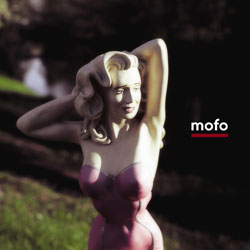
Mofo’s debut has a Latvian take on britrock

The Latvian britrock group Mofo has released its first album, simply entitled Mofo. Apart from what amounts to be a rather silly name for a band, Mofo offers something unique to the listener. One can only be thankful Platforma Records was wise enough to release this alternative music group’s album. It has a lot of good songs, is well produced and packaged.

The album contains 14 songs with an average song duration of about three minutes each, which gives just enough time for the standard intro, verse, chorus-verse, chorus, bridge, chorus and ending type of song. All songs are in Latvian.

The album starts off nicely with a little unfinished 45-second track, “Dienas atklājums” (Discovery of the Day), which ends quite suddenly and goes straight into the next song, “Daudz par daudz” (Too much). It is a real britrock song with straight beat and some interesting chord modulations and slow bridge ending.

Mild guitar rock follows on “Diena neparasta” (Strange Day), a simple little song with a nice guitar riff. But it is back to fast-paced rock with choppy guitar chords on “Kārtējais gals” (The Ever-Recurring Ending).This song has some cool lyrics about the end of the world being just around the corner again. The middle of the song settles down with some smooth, jazzy chords, but then returns to the hectic fast-paced beat. The end comes all too soon, unexpectedly of course.

“Meitene no filmām” is about a girl from a cheap Swedish film. The track has a nice melodic guitar-picking verse and heavier giutar chord chorus. Drummer Pēteris Linde goes all out thrashing his drums and riding the cymbal. The song reminds the listener of earlier work by Ingus Baušenieks. Nice sound effects are heard at the beginning and end of the song. “Es tevi nopirkšu” (I’ll Buy You)—and take you to the city where it’s always raining—has some simple choppy piano accompaniment, “la la la” background vocals and melodic chorus. Things slow down on “Es zinu man sacīs” (I Know I’ll Be Told) where singer Arnis Račinskis shows his entire vocal range. It’s a bit of a boring song and it seems that ballads are not Mofo’s forte.

Changing beats to waltz tempo, “Sākums kad viss ir beidzies” (The Beginng When Everything Has Ended) spins psychedelicly around with strumming acoustic guitar, drums and bass, ending of with echo guitar.

Thump-thump guitars are heard again on “Vienmēr vēlies vairāk” (Always Wanting More) co-wrtten by the group’s former guitarist Mārtiņš Elerts, who recently was replaced by Edgars Rubenis. This is really indy pop, with lots of guitar bar chords and cymbal ride. The group’s first single, “Nekas nav beidzies” (Nothing Has Ended), is next.

Another single follows. “Mans lielais rakstamgalds” (My Big Desk) is composed by Latvian alternative music guru Māris Šverns. This is actually one of the best songs on the album, with a rythmic verse, great melodic chorus and modulating bridge. The intriquing bass line is played byToms Ostrovskis.

“Uz manas ielas” (On My Street) is a slow little song that takes a while to take off, but doesn’t really seem to go anywhere. Between this song and the next, where normally a couple of seconds of silence is embedded, Mofo has chosen to put in a 48-second jazzy intro to its hit song “Tavs radio melo” (Your Radio Lies). Depending on your CD player, in shuffle mode this intro part is treated as a separate song (in my car stereo it counts down the time to the main part of the song). “Tavs radio melo” really rocks. However, the ending is a bit abrupt for my taste. The album is rounded off by another lazy song called “Rīta autobuss” (Morning Bus). The song and the album end with city traffic noises.

I get a feeling that song writer Arnis Račinskis gets a lot of his lyrical inspiration just by walking around the city. He is also the driving force behind the group and this album. He has composed nearly all the songs alone and is producer on the album. Even though the album is recorded in Rīga at Wolk Recording Studios by Sergei Amsterdam, Mofo had the album mastered at Optimum Mastering in England. This may be to guarantee the britrock feel.

Mofo makes music like no other group I’ve heard from Latvia.

Details

Mofo

Mofo

Platforma Records,  2006

PRCD 193
Raitis Freimanis lives in Stockholm, Sweden, and is a founding member of the Latvian-Canadian band Skandāls.

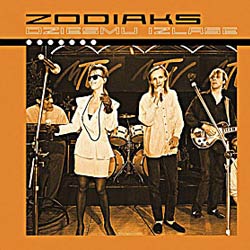
Zodiaks collection recalls period of reawakening

One of the most amazing statistics in the Latvian music world is the Soviet-era success of composer Jānis Lūsēns. The instrumental ensemble Zodiaks, which he formed in the 1970s, sold a staggering 20 million copies of the 1980 album Disco Alliance in the Soviet Union—an unbelievable amount for that time. To put in perspective, this was a hit on the level of Michael Jackson’s Thriller.

However, this review has nothing to do with the Zodiaks of that period, but with a reimagined Zodiaks—this time with vocalists—and its album Mirušais gadsimts, first released in 1995. The purpose of the statistic was to give an idea of how popular Lūsēns was in those times and how, when he turned to vocal music, his magic touch remained. The new Zodiaks, formed in 1987, had its heyday in the time of Latvian reawakening at the end of the 1980s and beginning of the 1990s—the perfect time for the group and its often patriotic lyrics, which were often taken from classic Latvian poets. Lūsens, besides composing all the music for the group, also played the keyboards.

This is a compact disc I have been waiting for a very, very long time. Many of the bright spots of the Mikrofons records of the late 1980s were Zodiaks songs. For example, Mikrofons 88 had the melancholy ballad “Tautas laiks” (lyrics by Imants Ziedonis), featuring perhaps the most impressive vocal performance of singer (and violinist) Zigfrīds Muktupāvels’ career. There was also “Taisnība” (lyrics by Edvarts Treimanis–Zvārgulis) from Mikrofons 89, with the line “Nāc ārā no metāla zārka” (Come out from the metal coffin)—words that rang true then, at the eve of Latvian independence. Years later, I managed to get hold of the long out-of-print 1990 album Mākoņi, which had a number of other great songs on it.

Thankfully, as part of its extensive republishing of classic Latvian albums and songs, MICREC earlier this year released Mirušais gadsmits, a collection of 17 of the best songs from the vocal era of Zodiaks.

Besides Lūsēns and Muktupāvels, the group included Aivars Gudrais and Dzintars Sāgens on guitar, as well as Maija Lūsēna on vocals. As Lūsens was the composer and keyboardist, many of the songs have a strong keyboard and synthesizer base, but not always. Since Muktupāvels was also a violinist, some of the songs featured his violin work. Perhaps the best example—and one of the stranger songs the group performed—was “Mirušais gadsimts” (lyrics by Klāvs Elsbergs), which features Muktupāvels on violin in the introduction.

As mentioned, many of the songs featured lyrics by classic Latvian poets. These included Vilis Plūdonis (“Manas mīļākās puķes” and a personal favorite, “Bohemiešu dziesma”), Kārlis Skalbe (“Staburags un saulesmeitiņa”), and, of course, Rainis, whose poetry was used for the song “Daugava,” yet another one of my favorites on this album.

Sadly, the group as a vocal and instrumental entity was short lived. After a tour of the United States in 1990, the group broke up. Muktupāvels went on to found the group Bet Bet, which Gudrais also joined for a period of time. Lūsēna still sang some of the songs of Zodiaks with Dāmu pops. Lūsēns himself remains busy with composing. Perhaps his best known work is the rock opera “Kaupēns, mans mīļais,” which remains one of the most popular examples of that genre in Latvia. However, the instrumental version of the group still does periodically perform together.

Packaging, as with many of these releases, is minimal. No lyrics, but there is a short biography of the group, as well as some pictures that I’m sure would look much better if they didn’t have a dreadful orange tint to them.

To say that I am overjoyed at having all these songs finally on CD would be an understatement. There are many classics here, many of which still are popular today. As an example, the a cappella group Cosmos covered “Tautas laiks” on its first CD. Mirušais gadsmits is an essential recording, with many timeless songs, and is highly recommended.

Details

Mirušais gadsimts

Zodiaks

MICREC,  2006

MRCD 305

Egils Kaljo is an American-born Latvian from the New York area . Kaljo began listening to Latvian music as soon as he was able to put a record on a record player, and still has old Bellacord 78 rpm records lying around somewhere.

A trip to the Naukšēnu disko is worth it

For those whose Latvian geography doesn’t go beyond the very basics, Naukšēni is a small town not far from Valmiera in the north of Latvia in Vidzeme. So why did Labvēlīgais Tips title its latest album Naukšēnu disko?

Your guess is as good as mine. The only thing I know about Naukšēni is that they make flaxseed oil there. Perhaps it is simply to say that there are people who like to have a good time in every Latvian town, no matter how large or how small. Labvēlīgais tips perform songs about the most varied kinds of topics, searching for humor in the most unlikely places. The group’s style is also hard to categorize, showing many different kinds of musical influences in its songs.

The group released albums on a yearly basis at the start of its career—beginning in 1995 with Alūminija cūka—but has slowed down in recent years. About two and a half years have passed since the group released its last album, Mūzika iereibušiem cilvēkiem. This allows the group to spend more time on crafting an album, and this shows on Naukšēnu disko. I believe this to be one of the group’s best albums, containing many new hits for the group.

Naukšēnu disko was only released April 1, but many of the songs on the album were already recorded and played on the radio and in concerts. Perhaps one of the biggest hits is “Pīrādziņ’ nāc ārā!,” which could be heard just about everywhere in the summer of 2005. Kids on the tram would be singing the chorus, “Pīrādziņ’ nāc āra, bumbu spēlēt, kvasu padzerties!” Though there are multiple interpretations of the meaning of the song (and looking too deeply into any Labvēlīgais Tips song is probably a waste of time), pīrādziņ’ in this case refers to a person, perhaps a bit pudgy, who is being exhorted by his friends to get out of the house and away from an overbearing mother (first verse) and an overbearing wife (second verse). The song also begins with a death metal like chord progression and screaming, but then segues into a more traditional Labvēlīgais Tips sound.

Another hit prior to the release of the record is “Mazās kalnu ielas samurajs,” a song about a samurai who lives on Mazā kalnu street in Rīga. What a samurai is doing in Rīga is not made clear, and what the samurai is doing in one of the more depressed areas of Rīga is also unclear, but again, don’t look too deeply into the group’s lyrics, because it would spoil the fun. This song, unsurprisingly considering its subject matter, features a Japanese sound to it.

There is also “Laptops,” an ode to people who see a laptop as merely a fashion accessory, as well as those who carry around a laptop everywhere they go in the thought that it makes them look important.

In a very unusual departure for the group, it also has a pseudo-opera song called “Trio no operas ‘Cosi vandas tante’” in which three of the groups members (Normunds Jakušonoks, Andris Ābelīte and Kaspars Tīmanis), collectively know as the “Trīs bemoli” (Three Flats), sing an “opera’ trio bemoaning the difficulties in life when one has a dark-haired bride. Though the guys are clearing hamming it up, they are still excellent singers. If a listener didn’t understand Latvian, they wouldn’t realize that this is supposed to be in jest!

Chock full of new hits, Naukšēnu disko is a triumphant addition to the Labvēligais Tips catalogue. Even in the second decade, the group hasn’t lost its step yet. A more refined sound and craftmanship, not to mention great songs, ensure that this compact will often return to my CD player. A trip to the Naukšēnu disko will be a memorable one.

Details

Naukšēnu disko

Labvēlīgais Tips

MICREC,  2006

MRCD 310

Egils Kaljo is an American-born Latvian from the New York area . Kaljo began listening to Latvian music as soon as he was able to put a record on a record player, and still has old Bellacord 78 rpm records lying around somewhere.