Re-release showcases Līvi after death of Ķiģelis

Kurzemei - saules ceļš

Tragically losing an important member might cause a band to break up, or, at the very least, cause the band’s work to decrease in quality. Just look at Queen, which after the death of Freddie Mercury in 1991 went on a nearly 15-year hiatus. On the other hand, there is AC/DC, which after the death of lead singer Bon Scott in 1980 hired a new lead singer and released one of the biggest albums of all time, Back in Black. And of course there are cases like The Doors after the death of Jim Morrison or Lynyrd Skynyrd after the death of a number of its members, both of which pressed on, though never equaling their earlier critical and commercial success.

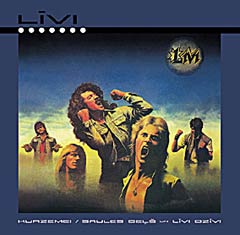
A similar story come from Latvia. Rock band Līvi had just tragically lost Ēriks Ķiģelis—guitarist, vocalist and songwriter—after recording its album Iedomu pilsēta. Other groups might have called it a day, but Līvi made a few significant lineup changes and, partly as a tribute to Ķiģelis, recorded his final major composition and released the self-titled album Līvi in 1988.  At the end of 2006, MICREC, as part of its “Latviešu populārās mūzikas klasika” series, re-released this album as well selections from the 1994 live album Līvi dzīvi, titling it Kurzemei – saules cēļš un Līvi dzīvi. Having this great album on compact disc is a joy as it contains some of the greatest Latvian rock music ever recorded.

After Ķiģelis’ death, the lineup of the band changed to include Guntars Mucenieks (keyboards, vocals), Jānis Grodums (vocals, bass), Aivars Brīze (vocals), Ainars Virga (guitars, vocals) and Dainis Virga (drums, vocals). Though they lost Ķiģelis, a talented guitarist, his replacement Ainars Virga was a young guitar prodigy. These lineup changes also led to a dramatic change in the sound of the band. Though always a rock band, Līvi now brought the guitar to the forefront of the music, to the point where one might call this the first Latvian heavy metal album.

The highlight of the album is the suite of five songs called “Kurzemei – saules ceļš,” with lyrics by O. Gūtmanis. I cannot imagine a better epitaph for Ķiģelis than this work. Starting with the driving “Pavasara iestāšanās” and finishing with the triumphant “Saules ceļš,” it is a monument of Latvian rock. It even leads one to wonder what other great work Ķiģelis might have composed had he lived. “Saules ceļš” ends with what may be just about the most epic guitar solo in Latvian rock music, performed by Ainars Virga.

This album also features not just one but two of the most memorable guitar riffs in Latvian rock, from “Deviņvīru spēks” (part of the “Kurzemei” suite) as well as from “Dzelzgriezējs” (music by Ainars Virga, words by V. Grēviņš), one of the most recognizable songs in the Līvi repertoire and still a major part of the band’s concert repertoire.

Another reason I like this album is that keyboards and synthesizers (as played by Mucenieks) are an integral part of many of the songs, as opposed to being little more than background music. A Mucenieks composition, “Zvani” (lyrics by Gūtmanis) closes out the album.

In 1987 and 1989, Līvi performed at the yearly festival “Liepājas dzintars.” Parts of the performances were released on the cassette Līvi dzīvi in 1994. At this point, the group was augmented by second guitarist Tomass Kleins (though the cassette release does not list him as a member, the CD does) and second drummer Valdis Štarks.

The CD contains most of the songs found on the original cassette, but for those few who might have the cassette, it should be noted that due to time contraints the CD leaves out the live versions of “Dzejnieks,” “Straume,” “Dzelzsgriezējs,” “Melu mēle” and “Zvani.”

The sound recording is a bit rough and unpolished, and perhaps for a rock band like Līvi it is best to have the sound as raw as possible.

The album does skip over a number of Līvi hits that one might have expected to be here—no “Dzimtā valoda,” “Zīlīte” or “Bailes par ziņģi,” for example. However, it is nice to have some lesser-known Līvi tracks, including a few that to my knowledge have not been released in studio format, such as “Pārāk maz,” “Metāla sirds,” “Man vienalga,” and “Sabrukusi pils.”

To be honest, I rarely listened to Līvi dzīvi, perhaps mainly due to its rough nature and lesser-known songs, but it does make a nice bonus to the Kurzemei album.

Once again, no lyrics are included in liner notes, but included are the original text from the 1988 album (written by Klāss Vāvere) and a few pictures from the original releases of Kurzemei – saules ceļš and Līvi dzīvi.

To have the Kurzemei album on CD for the first time itself makes this an essential disc to own. The album still resonates today. Cello group Melo M even recorded an instrumental version of the song “Dzejnieks” for its 2005 album. Featuring the last great work by Ķiģelis, as well as a number of other standout tracks, makes Kurzemei – saules ceļš un Līvi dzīvi a highly recommended purchase.

Details

Kurzemei – saules ceļš un Līvi dzīvi

Līvi

MICREC,  2006

MRCD 331

Where to buy

Purchase Kurzemei – saules ceļš un Līvi dzīvi from BalticShop.

Note: Latvians Online receives a commission on purchases.

Egils Kaljo is an American-born Latvian from the New York area . Kaljo began listening to Latvian music as soon as he was able to put a record on a record player, and still has old Bellacord 78 rpm records lying around somewhere.

Tribes of the City album polished to perfection

For the Sleepy People

Tribes of the City’s recently released new album, For the Sleepy People, is actually the band’s second album. The first album, Running to the Sun, was released in 2004 under the former band name, The Movies.

This new album isn’t just a collection of humming-along songs. It actually takes a few times of concentrated listening to get into it. The liner notes say: “Recommendations for better listening: finish all your important business first, make yourself a cup of something nice and warm, put your body in the most comfortable postion, relax and push the PLAY button.”

The album kicks off with a real in-your-face song called “Road,” a rather lengthy track at 7.5 minutes, but this ain’t no Top 30 song. The drums pound away, alongside dazzling guitars and the mesmerizing vocals of 20-year-old Ksenija Sundejeva. A wall of sound is offset by a light middle bridge section, before a return to a barrage of guitars and drums to finish off the song.

“A Day in the City” is the name of the first single from the album. It is a happy-sounding song that has a great video featuring Sundejeva, who traps a group of girl guides, a hunter, a couple of mushroom pickers and an orienteer as reluctant dinner guests in the middle of the forest. To their surprise, she serves up the rest of the band members—live in miniature—on a silver platter.

However, The Tribes lose me on the next song, “Love Forever,” a raunchy and heavy mess of sound, which actually has some Black Sabbath-sounding guitar riffs. The lyrcs are kind of negative, but I suppose they complement the music.

“You’ll Never Come” is a slow, enchanting and mistifying song that really showcases Sundejeva’s singing abilities.

“A Dream,” the fifth song on the album, is a nice steady-tempo song, with tight drums by Ints Barkāns and bass by Juris Justs working well together.

“A House Where We Live,” an acoustic track with a hints of Heart’s “Mistral Wind.” I wonder if Tribes of the City has listened to Heart? “Chaos” is next and you can really hear the Cocteau Twins influences on this song. It’s a really sleepy, free-flowing tune with lots of sound effects. It slowly picks up in a 6/8 tempo. The song is not so chaotic after all.

“I Don’t Know,” the latest single from the album, is my personal favourite. The song rocks and get full points—perfect score! The song has nice guitar riffs played by Sergejs Jaramišjans and Andrejs Vasiljevs, with great keyboard work by Mihails Sergejevs.

“Waves” has a nice split vocal-whisper lead and some hip lyrics: “When there’s only three seconds left… and our thoughts are just radio waves.” Wow, that’s something to think about. Actually the lyrics on the album are quite imagenary and you have to read between the lines to try to get a grasp of them. The album is rounded off by “Walking Blind”, which is an apropriate finale song. The guitars and drums make me think of The Cranberries. Come to think of it, Sundejeva does resemble Cranberries singer Dolores O’Riordon.

The album was produced by Greg Haver who has worked with music giants Manic Street Preachers. He also engineered and mixed the album at Sound Division Studios in Rīga. Haver has done a great job producing this album, using a vast array of sound effects and special microphone techniques. He has certainly has suceeded in tapping the band’s full potential. Mastering was done by Shon Joseph at Optimum Mastering in Bristol, England. All and all, this is a fresh and powerful album that has been polished to perfection.

This album is certainly a real step forward for the evolution of the Latvian music scene. Now there’s an album that can compare with any other album written and recorded in Europe. I feel that Tribes of the City just may have what it takes to break into the larger alternative music scene. In the meantime, let’s have something nice amd warm or cold to drink.

Details

For the Sleepy People

Tribes of the City

Platforma Records,  2006

PRCD 182

Raitis Freimanis lives in Stockholm, Sweden, and is a founding member of the Latvian-Canadian band Skandāls.

Jēgers hits a high note on first recording

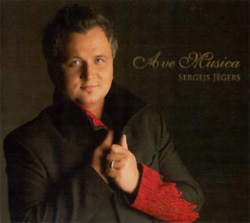
The more I learn about music, the less I realize I know. I used to think that the male voice was generally divided into three groups: tenor, baritone and bass. It turns out I missed an important one—the countertenor, such as Sergejs Jēgers, whose first compact disc Ave Musica was released earlier this year.

The countertenor sings in a register higher than a tenor. I am an average tenor and struggle to hit a high G in my natural voice, but a countertenor easily reaches it, as well as many notes above.

Countertenors are rare. Apart from being popular during the Baroque period of classical music, they haven’t had much opportunity to shine. However, countertenors have recently returned to the spotlight, and one of the leaders of the renaissance is Latvia’s own Jēgers.

I first heard Jēgers sing at a concert in the Small Guild Hall in Rīga. At that point, I had no idea what a countertenor was, or even who Jēgers was. I was rather surprised at the way he sang, in an upper range that far surpassed anything I had heard. To be honest, had I only heard and not seen him, I would have automatically assumed that it was a woman who was singing, such was the upper range. That took a bit of getting used to, but when I did I had a much greater appreciation for the work of Jēgers and countertenors in general, and a greater respect for what he has accomplished in the Latvian classical music scene.

On Ave Musica, Jēgers sings many classic songs from the Baroque period, selected not just because most works for countertenor are from that period of time, but also because the era is especially dear to Jēgers. The songs were recorded in the Rīga Anglican Church. Jēgers is accompanied by the Baroque Orchestra of Latvia, conducted by Andris Veismanis.

Because almost all the works are from the Baroque era, the themes of many of the songs are of a religious nature, including two arias from George Frideric Handel’s “Messiah”:  “But Who May Abide” and “He Was Despised.” Though Baroque music can be considered “simpler” than later music, it is no easy feat to sing it well. The singer also needs to convey the gravity of the text, as these are works of sacred music, and Jēgers is certainly up to the challenge, conveying the somber weight of these Biblical passages.

A great number of arias by Handel are included on this disc. Besides the arias from the “Messiah”, the disc also has arias from the operas “Xerxes,” “Rinaldo” and “Alcina.” The Classical era also is represented, with an early W.A. Mozart piece, Pharnace’s aria “Venga” from the opera “Mitridate.” Also, on the disc you will find two arias from Christoph Gluck’s opera “Orpheus and Euridice.”

The disc closes with one of the most beautiful melodies of the late Renaissance and early Baroque period, Giulio Caccini’s “Ave Maria.” This melody has been performed by many famous singers, including Latvia’s Inese Galante and the internationally renowned Andrea Bocelli. Jēgers joins this elite group with his performance of this sacred song, a fitting entry into the select group who can truly perform this work with the beauty that it requires.

The packaging of the disc is excellent. The liner notes by Orests Silabriedis, which also are translated into English, explain the countertenor (noting that some countertenors sing in falsetto, some in their natural voice, but not actually saying to which group Jēgers belongs!). The notes also contain Jēgers’ biography, as well as song texts for all the arias, and a brief description of each opera or oratorio from which the song is taken. The information is very helpful, and leads to a better understanding of the works and greater enjoyment of Jēgers talents.

It is clear from the recording the immense respect Jēgers has for the music of the Baroque period. It is precise, earnest and spiritual. Certainly, the sound of a countertenor is unusual, but once the listener gets used to it, the realization becomes clearer that Jēgers truly has a unique talent and is an excellent singer. I would recommend Ave Musica for all fans of Baroque music. Even though many of the arias approach 300 years of age, they are still timeless and able to captivate the listener. Jēgers seems poised for bigger and better things, perhaps even on the world stage, and this CD is a great introduction to one of Latvia’s brightest young stars.

Details

Ave Musica

Sergejs Jēgers

Upe tuviem un tāliem,  2006

Egils Kaljo is an American-born Latvian from the New York area . Kaljo began listening to Latvian music as soon as he was able to put a record on a record player, and still has old Bellacord 78 rpm records lying around somewhere.