26 die as fire destroys Alsunga elderly home

Twenty-six people are believed to have died early Feb. 23 as fire swept through a retirement home in the small town of Alsunga in western Latvia, authorities and media reported. Faulty wiring and incorrect use of electrical heating devices are being blamed for the tragedy.

Firefighters saved 66 people from the blaze, the news agency LETA reported. Firefighters were still at the scene by midday Feb. 23 and still had not located all the bodies, Latvian State Radio reported.

The fire was reported at about 1:30 a.m. at the Specialized State Social Care Home “Reģi.” The home is on territory once belonging to the local manor and its main building was constructed in 1890. The facility had room for 84 mentally ill elderly residents, according to an overview of its 2005 activities.

President Vaira Vīķe-Freiberga expressed her condolences to the families of the victims.

“This has been a night of misfortune and tragedy in Latvia,” she wrote in a letter to the families. The families are not alone in their pain, Vīķe-Freiberga added, calling the event a national tragedy.

The loss of life is the greatest in a fire in recent Latvian history, news media reported, citing the State Fire and Rescue Service.

Alsunga is about 20 kilometers west of Kuldīga and about halfway between the port cities of Ventspils and Liepāja.

Andris Straumanis is a special correspondent for and a co-founder of Latvians Online. From 2000–2012 he was editor of the website.

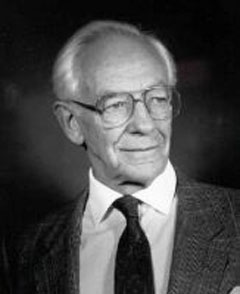
Gunārs Meierovics dies in Rīga at age 86

Gunārs Meierovics, son of Latvia’s first foreign minister, Zigfrīds Anna Meierovics, and a tireless worker for Latvian independence during his years of exile, died Feb. 11 in Rīga, according to the World Federation of Free Latvians (Pasaules brīvo latviešu apvienība, or PBLA). He was 86.

Born May 12, 1920, in Rīga, Meierovics studied at the University of Latvia and the Baltic University in Germany, where he was a war refugee. He emigrated to the United States, where he worked in the U.S. Department of Defense.

He spent many years involved with the American Latvian Association and the PBLA. From 1990-1993, Meierovics was chairman of the PBLA. He also led the Latvian Freedom Fund (Latvijas brīvības fonds).

He was elected to Latvia’s first postwar parliament, the 5th Saeima, as a member of the Latvijas ceļš (Latvia’s Way) party. Meierovics was then named state minister of Baltic and Nordic Affairs in the government led by Prime Minister Valdis Birkavs. He failed in 1993 in his bid to be elected president of Latvia.

From 1997-1999, Meierovics was president of Eiropas kustība Latvijā (European Movement – Latvia), a nonprofit organization that works to educate Latvian residents about the European Union. He remained its honorary president up until his death.

In 2001, Meierovics received the PBLA’s top honor.

Meierovics died after a prolonged illness, according to Latvian media reports.

Foreign Minister Artis Pabriks is among those who have expressed condolences to Meierovics’ family, including his widow, Ingrīda.

“Latvia,” said President Vaira Vīķe-Freiberga, “bids farewell to a son who truly loved his fatherland, who lived a long and rich life, who traveled the difficult road of the refugee, but always with thoughts and concerns for his country and his people, with love for his Latvia and the Baltics.”

Funeral details have yet to be announced, but services are to be in the Dome Cathedral and Meierovics is to buried in the family plot in Meža kapi.

Gunārs Meierovics

Gunārs Meierovics, 1920-2007.

Andris Straumanis is a special correspondent for and a co-founder of Latvians Online. From 2000–2012 he was editor of the website.

PBLA urges Saeima not to hurry border treaty

As the Latvian parliament prepares to debate a border treaty with Russia, the World Federation of Free Latvians is asking lawmakers not to rush their deliberations and to ask for international experts to evaluate the document.

The Saeima is prepared to begin discussion Feb. 1 on the Latvia-Russia Border Treaty, which was initialed by both sides in 1997.

A bill prepared by Prime Minister Aigars Kalvītis and introduced by the Foreign Affairs Commission pushes for quick approval of the treaty without any additional declarations or demands on Russia.

Among reasons for finalizing the treaty, according to the bill, are Latvian officials’ promises to both the European Union and the NATO defense alliance to clear up questions over the country’s eastern border.

“The WFFL does not see any new conditions why right now, 10 years after the 1997 initialing of the Republic of Latvia’s and the Russian Federation’s border treaty, there is such haste to accept the border treaty with Russia without any attached declarations or objections,” the World Federation of Free Latvians (Pasaules brīvo latviešu apvienība, or PBLA) said in a Jan. 31 press release.

In previous negotiations, the two countries have not been able to come to final terms, particularly over the issue of compensation for loss of territory and the 50-year Soviet occupation of Latvia.

The two countries were scheduled to finalize the treaty in 2005, but then Latvia added a declaration that demanded Russia acknowledge the “legal continuity” of Latvia from the time of its original independence in 1918.

At the time, Russian President Vladimir Putin had strong words for Latvia, saying his country would never give into the demands of its neighbor.

Particularly troublesome has been Latvia’s demand for compensation over the loss of the Abrene region.

Latvia declared independence from Russia in 1918. The two countries signed a peace treaty in 1920 that also fixed Latvia’s border with Russia. At the time, that meant the eastern territory known as Abrene was part of Latvia. The area is known as Pytalovo District to Russia. It was annexed by the Soviet Union in 1944 and made part of Russia.

When Latvia regained its independence, it legally renewed the 1918 republic, which at least in theory included Abrene.

The World Federation of Free Latvians said that if the border treaty is approved without any additional declaration about Latvia’s legal continuity, then the country will have a priori given in to Russia’s wishes and interests.

The border treaty has led to sharp words between Latvian politicians.

Tēvzemei un Brīvibai/LNNK (For Fatherland and Freedom/LNNK), a member of the ruling coalition, has announced it will oppose the treaty. Among other objections, the party says the proposed approval of the border treaty would amount to partial legalization of the Soviet occupation and could lead to further Russian demands on Latvia.

Some suggestion has been made that if the treaty is approved, the party might quit the government.

Sandra Kalniete, a member of the opposition party Jaunais laiks (New Era), has said she could not vote for a treaty that would violate Latvia’s constitution. Instead, she said in a Jan. 25 speech, the treaty should be offered to Latvian citizens to consider in a national referendum.

Māris Kučinskis, a member of Tautas partija (one of the members of the ruling coalition), said the question of the border agreement is important to Latvia and the European Union, and that he would like to see it resolved within in the next month.

Andris Straumanis is a special correspondent for and a co-founder of Latvians Online. From 2000–2012 he was editor of the website.