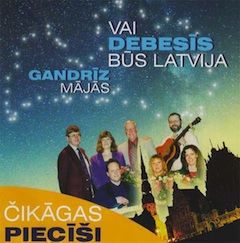
The venerable American Latvian ensemble Čikāgas piecīši, now in their sixth decade of activity, have re-released their final (to date) studio albums – Gandrīz mājās (1991) and Vai Debesīs būs Latvija (1995), released in 2011 as one CD.
Though continuing to tour well into the future (their farewell tour of Latvia was in 2011), these records are the last of their new output. With the release of these albums, all of their albums – from their 1960s records onwards – are now available on CD, and these re-releases continue to confirm what a truly remarkable, and varied, career this group has had.
As always, the Piecīši foundation has been Alberts Legzdiņš, who has guided the band and provided the bulk of songs since the group’s founding in 1961. Joining Legzdiņš are long time Piecīši members and collaborators such as Armands Birkens, Janīna Ankipāne, Uldis Ievāns, Uldis Streips, Lorija Vuda (Laurie Wood) and Alnis Cers, as well as a whole host of session and studio musicians.
The 1990s, with the reestablishment of Latvia’s independence, sees the Piecīši continuing to move away from the often biting satire of their earlier years, though by no means missing the humor that has always been a part of their appeal. The songs have become more sentimental, more reflective, and, particularly on Vai Debesīs būs Latvija reacting to the difficult times that followed the euphoria of Latvian independence, as many became disenchanted with the severe corruption and the direction Latvia was heading in those years, making these records somewhat more serious and weightier than those in the past.
It is telling that few of the songs on these records achieved the near-legendary status of earlier songs such as “Pazudušais dēls”, “Par mani, draudziņ’, nebēdā”, “Mūsu mīlestība” or even “Man garšo alus”. Particularly in Latvia, where Piecīši recordings had to be snuck in during Soviet times, the songs of the 60s to 80s resonated in Latvian society and helped keep alive the dream of Latvian independence. However, these final recordings do contain a number of gems and, if these truly are the last new recordings that the Piecīši will make (looking more and more likely with each year), then it is a fitting close to their studio career.
To be honest, this was my first encounter with the album Gandrīz mājās. The song “To skaidro ūden’ nejauciet” was familiar: a song from their 1989 Mežaparks concert performance, calling for the cleanup and rejuvenation of Latvia’s nature. The studio version of the song is still as topical today, with the excessive deforestation still occurring in Latvia today.
Also a treat on Gandrīz mājās are two more songs with lyrics by poet Valdis Krāslavietis – the lovely “Krāslava” and “Dziesma vasarai”. The group’s renowned humor can also be found in “Mister, Kurzemniek!”, a tropical song about the Kurland colony in Tobago, as well as “Latvietis latvietim”, a song about Latvians, who, though very small in number, continue to be at each other’s throats most of the time.
Though some may enjoy the involvement of children in both the concerts and the recordings of the Piecīši, as it may have some amount of charm, the results are not always successful. Case in point – “Mazais letiņš” – where the kids involved unfortunately sing off-key for most of the song.
Vai Debesīs būs Latvija – their final studio album – sees the songs become more reflective and sentimental (on this album, all songs and texts are by Legzdiņš). The hardships in Latvia during the mid 1990s are reflected in songs like “1989. gads”, where the positive energy generated by their first Latvian tour in 1989 has dissipated slightly, and the realities brought about by restored independence lead to questions such as “vai jāmaksā par brīvību tik daudz?” (must we pay so much for freedom?)
The plight of the Latvian nation and its low birthrate, a topic for songs throughout their career – such as “Tautas skaitīšana” and even “Sekss ir labs” continues to inspire songs like “Nāc, laimīte”. Particularly poignant is “Brālis un māsa”, a lengthy song about a Latvian family whose son’s and daughter’s lives head in dramatic directions, and their parents’ reactions. Memorable also is the tender gem “No Gaujas tilta”, featuring Armands Birkens’ renowned tender tenor voice.
On this one CD you get an impressive 26 songs, though, with the Piecīši staying mostly in their familiar three or four chord progressions, some of the songs do start to blend in with each other. However, simplicity has always been a key to the success of the group, so one cannot fault them for sticking with what they know. Other listeners may miss the sharper wit that their earlier recordings displayed.
As with the other Piecīši releases by Balss, the packaging remains pretty meager. No lyrics or any kinds of notes from the band, though there are a number of black and white photographs.
These final recordings provide a fitting epilogue to the studio recording career of the Čikāgas piecīši. Though perhaps these records have been unfairly underrated, compared to the “hits” of their previous decades, a number of songs still touch the heart and make the listener smile, and rare is the band that keeps that kind of listener interest over multiple decades. Though we are likely not to hear any new music from the band (though, granted, Legzdiņš himself remains an active songwriter – particularly notable is the 2004 musical “Eslingena”) these are worthy entries in the band’s discography.
Details
Vai debesīs būs Latvija/Gandrīz mājās
Čikāgas piecīši
Balsis, 2011
Track listing:
Gandrīz mājās
1. Kad pienāks latviešiem tie labie laiki?
2. Kaņepāju striķis
3. Krāslava
4. Dziesma vasarai
5. Tautai dziesma
6. Ukrainas vējš
7. Pēdējā deja
8. Mister, Kurzemniek!
9. Latvietis latvietim
10. To skaidro ūden nejauciet
11. Pie tevis turēšos
12. Mazais letiņš
13. Brīnumzāģis
Vai debesīs būs Latvija
14. Sprīdītis Rīgā
15. Saimnieciskā neatkarība
16. Personīgā Mis
17. Grēksūdze
18. Trīs mīlestības
19. Brālis un māsa
20. Nāc, laimīte
21. Vai debesīs būs Latvija
22. Daudz jau nevajag
23. Vai tā bij mīlestība?
24. No Gaujas tilta
25. Ģimenes albums
26. 1989. gads
Where to buy
Purchase Vai debesīs būs Latvija/Gandrīz mājās from BalticShop.
Note: Latvians Online receives a commission on purchases.
Egils Kaljo is an American-born Latvian from the New York area . Kaljo began listening to Latvian music as soon as he was able to put a record on a record player, and still has old Bellacord 78 rpm records lying around somewhere.