Album memorializes Līvi vocalist Grodums

An album in memory of Jānis Grodums, one of the founding members of the legendary Latvian guitar rock band Līvi, has been released just weeks after his death. Grodums, 52, died June 15.

The album, Nezāles neiznīkst, features 19 tracks of studio and live performances by Līvi in which Grodums sings the vocal solo, recording company MICREC announced in a July 27 press release. Grodums was known for his dzelzs rīkle, or iron throat.

The idea for the album came from Grodums’ mother, Ausma, who saw it as a way to memorialize someone who had inspired an entire generation, according to MICREC.

The Liepāja-based Līvi was formed in 1976, although the band’s ancestry can be traced to 1972, according to its website www.livi.lv. Original members of Līvi included Grodums (bass and vocals), Juris Pavītols (guitar and vocals), Ēriks Ķiģelis (guitar and vocals), Ingrīda Pavītola (voice) and Andris Krūziņš (percussion).

Grodums, suffering from hepatitis, died two days before a concert in downtown Rīga that was meant to raise funds for his treatment. Instead, the concert turned into a memorial event featuring a number of well-known Latvian performers and an audience numbering in the thousands. A memorial also was held in Liepāja.

The songs on the album include:

  • Bailes par ziņģi (1997)
  • Ziņģe par bailēm (1997)
  • Sesku dāle (1997)
  • Līviskā ziņģe (1986)
  • Rožu laukums (1986)
  • Dzejnieks (1988)
  • Piedod man (1997)
  • Zvani (1988)
  • Nekad (1998)
  • Kad saule riet (Saules ceļš) (1988)
  • Dieva dēls (2000)
  • Mana vienīgā ziņģe (1997)
  • Ej, vecais, ej (2004)
  • Zelta sirds (1996)
  • Ozolam (1987)
  • Ja man miljons būtu (1979)
  • Lakstu gailis (live) (1994)
  • Pārāk maz (live) (1988)
  • Dzimtā valoda (1986)

Most of the songs on the album were penned by Grodums. Others were composed by Ķiģelis, Ainars Virga, Guntars Mucenieks, Mārtiņš Brauns and Juris Kulakovs.
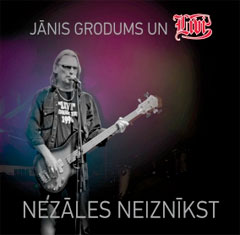
Nezāles neiznīkst

The album Nezāles neiznīkst includes 19 tracks in which the late Jānis Grodums sang the vocal solo.

Andris Straumanis is a special correspondent for and a co-founder of Latvians Online. From 2000–2012 he was editor of the website.

Drawing determines order of candidate lists

The 13 political parties and coalitions competing in the Oct. 2 parliamentary election in Latvia now know the number of their candidate list.

The numbers were chosen in an Aug. 6 drawing organized in the Saeima building in Rīga, the Central Election Commission announced. No. 1 is the leftist party Par cilvēka tiesībām vienotā Latvijā, while No. 13 is the Christian democratic Kristīgi demokrātiskā savienība.

The numbers will be used by the parties to popularize their candidates. On election day, each voter will get a packet of 13 candidate lists, ordered numerically, from which they will need to choose one.

The candidate list numbers are:

  • No. 1, Par cilvēka tiesībām vienotā Latvijā.
  • No. 2, Vienotība.
  • No. 3, Ražots Latvijā.
  • No. 4, Saskaņas Centrs.
  • No. 5, Tautas kontrole.
  • No. 6, Zaļo un Zemnieku savienība.
  • No. 7, Par prezidentālu republiku.
  • No. 8, Par Labu Latviju.
  • No 9, Atbildība.
  • No. 10, Daugava – Latvijai.
  • No. 11, Pēdējā partija.
  • No. 12, Visu Latvijai!
  • No. 13, Kristīgi demokrātiskā savienība.

In all, the parties are fielding 1,239 candidates for the 100-seat Saeima.

Andris Straumanis is a special correspondent for and a co-founder of Latvians Online. From 2000–2012 he was editor of the website.

Population decline continues in Latvia, while marriages see significant drop

Demographic data for the first half of 2010 show a continued decline in Latvia’s population, the Central Statistical Bureau (CSB) in Rīga reports, while marriages dropped significantly compared to the same period last year.

The country’s population as of July 1 stood at 2.238 million, a decrease of 10,500 residents since the beginning of the year. The pace of population decline had slowed in the past several years, according to an Aug. 5 press release, but began increasing again last year. The capital city of Rīga had about 702,700 residents on July 1, a half-percent drop since the beginning of the year.

According to the statistical bureau, the population decline in Latvia is due in part to 5,600 more deaths than births being recorded. However, a total of 4,900 people also emigrated from the country in the first half of the year.

A 20 percent drop in marriages was recorded in the first half of this year compared to the first six months of 2009. The decrease continues a trend that began in 2009, according to the CSB. Since 2002, the number of marriages had been on the upswing. In the first half of this year a total of 2,876 marriages were recorded, compared to 3,592 during the same period last year.

Data for the first half of 2010 also show a decline in births. Two years ago, according to the CSB, Latvia saw the greatest number of births since 1994, but in 2009 the number of newborns began to slip. In the first half of this year a total of 9,630 births were recorded, a 13.4 percent drop from the same period last year.

At least residents of Latvia are not dying off as quickly. The death rate, according to the CSB, has not changed much in the past several years. In the first half of 2010, a total of 15,250 deaths were recorded in the country, compared to 15,394 in the first six months of 2009.

Andris Straumanis is a special correspondent for and a co-founder of Latvians Online. From 2000–2012 he was editor of the website.