Referendum to allow Saeima’s recall set Aug. 2

A national referendum on amending the constitution to allow for the popular recall of Latvia’s parliament is scheduled Aug. 2, the Central Election Commission has announced in Rīga.

The June 6 announcement came after the parliament rejected proposed amendments submitted following a successful citizen initiative.

Led by the Free Trade Union Confederation of Latvia (Latvijas Brīvo arodbiedrību savienība), more than 217,000 voters from March 12 to April 10 signed on to the initiative calling for the constitution amendments. Strong support for the initiative stemmed from months of popular dissatisfaction with the government and parliament.

Under Latvia’s law on initiative and referendum, the Saeima can either accept or reject the proposed legislation. If parliament rejects the legislation, a referendum must be held.

Bill 695, which called for the constitutional amendments, was submitted April 28 by President Valdis Zatlers. The parliament’s Legal Affairs Committee on May 28 rejected the proposal, and the full Saeima followed on June 5, forcing the referendum.

The bill sought to amend Articles 78 and 79 of the constitution to allow voters to submit a draft resolution calling for the dismissal of parliament. Under the current language of the constitution, only the president can call for dissolving parliament. That leads to a national referendum. If the referendum succeeds, the Saeima is dissolved and new elections are held. But if the referendum fails, the president is forced to resign and a new one elected by parliament.

In announcing the Aug. 2 referendum date, the Central Elections Commission took into account that it might be difficult to form local election commissions while people are on summer vacation, spokeswoman Kristīne Bērziņa said in a press release. The August date also should allow voters abroad time to request mail ballots.

Polls will be open from 7 a.m. to 10 p.m. local time in Latvia and at polling stations that will be established abroad.

At least 50 percent of eligible voters must participate in the referendum, and at least half have to support it for the proposal to become law. Last year’s national referendum on striking amendments to Latvia’s security laws failed because not enough voters participated, even though those who did were overwhelmingly in favor.

While the Central Election Commission prepares for the referendum, another bill resulting from citizen initiative has just started its way through the Saeima. Bill 751, calling for higher state pensions, was submitted June 6 by Zatlers and was to be reviewed June 9 by the parliament’s presidium.

Signatures in support of the initiative were gathered in April and May. The initiative, supported by the Pensioners and Seniors Party (Pensionaru un senioru partija) and by the Association for a Different Politics and a Judicial State (Sabiedriba citai politikai un tiesiskai valstij), seeks to raise the minimum monthly state pension to no less than three times the state welfare payment.
Andris Straumanis is a special correspondent for and a co-founder of Latvians Online. From 2000–2012 he was editor of the website.

Guard charged with defacing painting by Celmiņš

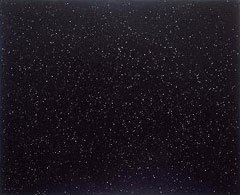
A security guard at the Carnegie Museum of Art in Pennsylvania has been charged with vandalizing a painting by Latvian-American artist Vija Celmiņš. The USD 1.2 million painting, Night Sky #12, is said to be beyond repair.

Timur Serebrykov, 27, of Greenfield, Pa., was charged with institutional vandalism, Pittsburgh police announced June 5. The vandalism occurred May 16 and Serebrykov was arrested May 20. He allegedly used a key to rip the painting, according to the Pittsburgh Post-Gazette and other local media reports.

The oil on canvas painting is part of Celmiņš’ “Night Sky” series. The painting was one of several that earned the Latvia-born and New York-based artist the prestigious Carnegie Prize worth USD 10,000. The painting was on display as part of the 55th Carnegie International.

Serebrykov, according to a police affidavit cited by media reports, is said to have admitted to damaging the painting with a key. He told police he did not like the painting.

Serebrykov, an immigrant from Azerbaidjan, is said to have had no political motive behind the vandalism, according to media reports.

Serebrykov is due to be arraigned July 29 in Allegheny County Court of Common Pleas.

Night Sky #12

The painting Night Sky #12 by Latvian-American artist Vija Celmiņš was valued at USD 1.2 million.

Andris Straumanis is a special correspondent for and a co-founder of Latvians Online. From 2000–2012 he was editor of the website.

Latvia improves in global peace ranking

Latvia is the 39th most peaceful nation in the world, and is ranked higher than last year, according to the Global Peace Index compiled by the Australia-based Institute for Economics and Peace.

The index, announced in May, ranks 140 nations.

“The index is composed of 24 qualitative and quantitative indicators from highly respected sources, which combine internal and external factors ranging from a nation’s level of military expenditure to its relations with neighbouring countries and the level of respect for human rights,” according to the organization’s Web site.

The organization admits that peace is “notoriously difficult to define.”

The index gives each nation an overall score from 1, indicating most peaceful, to 5, meaning least peaceful.

No. 1 on the list is Iceland with an overall score of 1.176. Latvia’s score is 1.723. Estonia, with a score of 1.702, ranked 35th. Lithuania, like Latvia with a score of 1.723, ranked 41st.

While Latvia scored high on some indicators, such as the level of political instability and respect for human rights, the country received fair to poor marks in other areas. For example, Latvia scored in the middle in terms of the level of residents’ mistrust of other citizens. On a 10-point scale showing the level of separation of church and state, with 10 being the highest, Latvia scored just 5.6.

Latvia’s ranking for 2008 is up from 2007, when it was put at 47th. Estonia, however, fell from 28th place in 2007. Lithuania improved slightly from its 2007 ranking of 43rd.

Russia ranked 131st, a finding criticized by some officials in Moscow as a result of bias toward the country. Scoring lowest were Israel, Afghanistan, Sudan, Somalia and—in 140th place—Iraq.

Further information on the Global Peace Index is available by visiting www.visionofhumanity.org.

Andris Straumanis is a special correspondent for and a co-founder of Latvians Online. From 2000–2012 he was editor of the website.