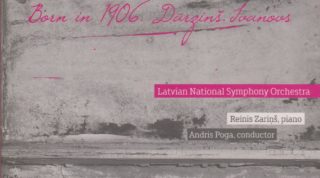
Dārziņš’ and Ivanovs’ works – performed by Reinis Zariņš and LNSO

The year 1906 was a very significant year for Latvian music, as that was the year of the birth of two important composers – Volfgangs Dārziņš and Jānis Ivanovs. Each would, in his own way, have a major impact on Latvian classical music. Though there are many parallels in their lives, there are also quite a few dramatic differences, and these two composers, though born in the same year, would each make their unique mark on Latvian music with their compositions.

Recognising the contribution of these two composers, particularly their symphonic works, the Latvian national record company Skani, along with the Latvian National Symphony Orchestra and conductor Andris Poga, recorded one major work from each composer and released the album Born in 1906. Dārziņš. Ivanovs.

Besides both being born in 1906, Volfgangs Dārziņš (the son of composer Emīls Dārziņš) and Jānis Ivanovs both enrolled in the Latvian Conservatory in 1924, and both studied composition with renowned Latvian composer Jāzeps Vītols. At that point, the compositional styles (and fate) of both composers diverged rather dramatically. Dārziņš became known for the Latvian elements in his major works, and Ivanovs went on to focus on symphonic works, completing twenty symphonies in his lifetime. Additionally, Dārziņš went into exile after World War II, while Ivanovs remained in Latvia. To accentuate the differences even further, Dārziņš’ work on this CD – his Piano Concerto No. 2 – was composed relatively early in the composer’s career – in 1938, while the work by Ivanovs – his Symphony No. 20 – was composed very late in his career – in 1981.

Pianist Reinis Zariņš takes piano duties for the Dārziņš Piano Concerto, and he proves to be more than up to the challenge. The piano concerto opens with an almost jazzy, Ravel-like introduction from the woodwinds, then joined by the strings, and then Zariņš enters, with his lyrical performance of romantic piano music. Even in the first movement, there are rather dramatic changes in tempo and mood, and Zariņš deftly handles these contrasts with an artistic flair. Zariņš performs solo for much of the introduction of the second movement, while the LNSO provide both a backdrop and a balance for the pianist’s performance. The lively third and final movement provides Zariņš and the orchestra to display their skills, as the piano is almost constantly playing and driving the performance. Zariņš brings forth the vitality and energy of this work, and maintains this vivacity and drive until the concluding moments, that dramatically and joyously bring this sweeping performance to a close.

After Dārziņš Piano Concerto, Ivanovs’ 20th Symphony is an almost jarring contrast. Written very late in his career, Ivanovs was now contemplating mortality, and these themes form the basis of this somber work. The slow, deliberate descending melody in the first measures of the first movement, makes it clear that this will be a bleak and mournful composition, full of foreboding and dread. Besides thoughts of his own mortality, perhaps the composer was also representing the era – as the early 1980s in Soviet occupied Latvia were a time of particular stagnation and hopelessness. As evidenced from the tolling bells in the first movement, Ivanovs considered this work his requiem (something he disclosed to his wife as well). The bleakness and tension is briefly balanced by the slightly lighter but very brief third movement, as perhaps a somewhat sentimental view of youth (indicated by the title ‘Reminiscenca’). The darkness returns in the fourth movement, there is little respite, until the work concludes again with the bells, quietly fading out.

The CD booklet has extensive notes on the composers, the compositions, the LNSO and Reinis Zariņš by noted Latvian musicologist Orests Silabriedis (along with English translations). Particularly fascinating are historical notes on the compositions for a bit of context, such as notes about a scarlet fever breakout in Jelgava during the time that Dārziņš was premiering the Piano Concerto, or about how, during the time of the composition of Ivanovs’ symphony, Latvian dissident Gunārs Astra, after retelling the plot of George Orwell’s 1984, was imprisoned for possession and distribution of anti-Soviet literature.

Born in 1906. Dārziņš. Ivanovs., with its two radically different compositions, shows the divergent paths and styles of these two great Latvian composers – Volfgangs Dārziņš and Jānis Ivanovs. Though born in the same year, and shared many similarities early on, each put their own individual stamp on Latvian music. The Latvian National Symphony Orchestra and conductor Andris Poga display their versatility by performing these two contrasting works, the lively Piano Concerto No. 2 with the stellar talents of pianist Reinis Zariņš, and the somber Symphony No. 20. This is yet another great release from Skani, as the label brings to light these significant works that perhaps might not be as familiar to the general listening public. Born in 1906 is a valuable and excellent addition to the collection of recorded Latvian symphonic music.

For further information, please visit the Skani website.


Egils Kaljo is an American-born Latvian from the New York area . Kaljo began listening to Latvian music as soon as he was able to put a record on a record player, and still has old Bellacord 78 rpm records lying around somewhere.

Latvian Radio Choir and Ensemble Sarband collaboration a meditative journey

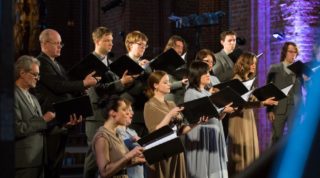
The Latvian Radio Choir, led by conductors Kaspars Putniņš and Sigvards Kļava, has long been known worldwide as one of the premiere interpreters of modern choir music. They perform not only works by composers from many different countries, but are also innovators in the performance of experimental music of varied genres, and have collaborated with many different groups and ensembles.

One recent collaboration was with the Ensemble Sarband. Sarband, based out of Germany, is a group of musicians led by Bulgarian Vladimir Ivanoff, who also have a large diversity in their programs. According to their website, Sarband’s repertoire covers “from early Chinese music to Sami joiks, from Early Oriental Christian chant to the music of Gurdjieff” and often select works of a spiritual and sacred nature, and Ivanoff “illuminates the connecting threads between Orient and Occident, Judaism, Christianity and Islam”.

Together, the Latvian Radio Choir and Sarband recorded the album Canticum Canticorum, a collection of choir and vocal compositions that feature elements of Middle Eastern and Western music as well as traditional instruments. Many of the works include fragments from the Biblical text “Song of Solomon” or the “Song of Songs”.

On this recording, the Ensemble Sarband is made up of Ivanoff on percussion, Mustafa Dogan Dikmen (Turkey) on vocals, Efstratios Psaradellis (Greece) on the kemence, and Salah Eddin Maraqa (Jordan) on the qanun.

Vladimir Ivanoff, besides being the artistic director of Sarband and a percussionist, is also a composer, and three of his works are included on this collection. These are the “Sufi Readings No. 1 – Of Love and Union”, “No. 3 Suffering” and “No. 5 The Fragrance of Your Name”. All three are comparatively brief solo performances by the ensemble. The calm and peaceful instrumental “Of Love and Union” has plaintive melodies built upon a heartbeat-like effect on a drum, while “Suffering” features an almost wordless vocalize and is one of the albums few moments of turbulence, perhaps befitting its title. The wistful and perhaps even slightly sentimental “The Fragrance of Your Name” is perhaps the most mystical of the three works, and Sarband succeed in conjuring a an appropriate sonic interpretation of the text “your name is like perfume poured out.”

The collection also includes two works by Latvian composers. The first is Mārtiņš Viļums’ “Simeni khakhotam al-libekha” (Place me like a Seal over your Heart). The work features texts sung in Ancient Hebrew and Greek. The work is a treatise on love and sadness, ending on the note “et sheahavah nafshi reitem” (so I looked for him but did not find him). The Latvian Radio Choir tinges this composition with a broad array of emotions, from happiness to despair, and develops a very detailed performance, full of nuance and contrasts.

The second work is “Nada el layli” (Arabic for “Dewdrops at Night”) by Santa Ratniece. The comparatively lengthy work (thirteen and a half minutes), has the choir create a place and space for one to feel safe, as explained in the liner notes. Much like the work by Viļums, this is tinged with sadness, with the choir singing in a kind of soft moan for most of the song. Both the work by Ratniece, as well as the composition by Viļums, show the versatility and creativity of both composers, creating these distinctive works incorporating both the talents of the Latvian Radio Choir and Sarband.

As a whole, the album is very meditative and quiet, but due to its restrained nature may be difficult listening for some listeners, as the works are often very similar and flow into one another, making it at times difficult to determine when one work has ended and the next begun. Perhaps this was the goal – to have a cohesive meditative experience when listening to the album. One may have hoped for some more active, energetic sections, but those might have potentially disturbed the flow of this set of recordings. As the compositions are of a modern and experimental nature, there are periods of discordance with some harsh sounds, which may make the music sound formless to some listeners, so appreciating and enjoying this album will require attentive listening.

The ensemble Sarband and the Latvian Radio Choir, conducted by Kaspars Putniņš have created a rich tapestry of sounds for the meditative journey contained on Canticum Cantorum. With its blend of the spiritual and sacred, the modern and the ancient, Eastern and Western, and the harmonious and discordant, the collection of works included on the record create a very intimate and spiritual journey. The Latvian Radio Choir show again that they are adept interpreters of all kinds of music, and seamlessly blend together with Saraband in these spiritual works, with texts in many different languages, both ancient and modern. As a result, Canticum Cantorum is an engrossing musical meditation.

For further information, please visit the Latvian Radio Choir website and the Saraband website.

Canticum Canticorum

Latvian Radio Choir / Ensemble Sarband
Latvijas koncerti, LK-024, 20166

Track listing:

      1. A Sufi Reading Nr. 1 – Of Love and of Union – Vladimir Ivanoff
      2. Ah, ne guzelsin! – Toivo Tulev
      3. Lisaniki – Bushra El-Turk
      4. A Sufi Reading Nr. 3 – Suffering – Vladimir Ivanoff
      5. Simeni khakhotam al-libekha – Mārtiņš Viļums
      6. Nada el layli – Santa Ratniece
      7. TA Sufi Reading Nr. 5 – The Fragrance of Your Name – Vladimir Ivanoff
      8. Moces Salomonis – Lasse Thoresen

Egils Kaljo is an American-born Latvian from the New York area . Kaljo began listening to Latvian music as soon as he was able to put a record on a record player, and still has old Bellacord 78 rpm records lying around somewhere.

Latest Sviests 7 folk music anthology released

The latest entry in the bi-yearly Latvian folk music anthology from the record label Lauska – Sviests 7 (LAUSKA CD071) – has been released. As with previous releases, this collects new recordings by many different Latvian folk groups, as well as performances that incorporate or have been inspired by Latvian folk music.

Joining familiar faces such as Laima Jansone, Rūta and Valdis Muktupāvels are newer groups like the dark folk ensemble Rāva, the synthesis of traditional singing with modern elements of Tautumeitas, and the Latvian rap and hip-hop folk artist Misters.

The CD booklet includes brief notes on the songs and ensembles in both English and Latvian.

For further information, please visit the Lauska web site.


Track listing:

  1. Pelīte – Tautumeitas
  2. Skan balsīnis rītā agri – Brāļi un māsas
  3. Vilciņš – RTU vīru koris Gaudeamus
  4. Īdona īzona – Elza Rozentāle un Bur Mani feat. DJ Monsta
  5. Pēdējais lībietis – Vārna
  6. Sniegi sniga – Rāva
  7. Kungi mani karā sūta – Laima Jansone un Pēteris Draguns
  8. Žū bērniņ, žū – LEILALI un Rihards Lībietis
  9. Koklītes koklēja – Rūta un Valdis Muktupāvels
  10. Sajāja bramaņi – Stiprās sievas un Raimonds Tiguls
  11. Zīmeņa – Ceidari un Kārlis Kazāks
  12. Sīvi sīvi – Trejasmens
  13. Cipu capu vāverīte – Artemisia Absinthium
  14. Ormans – Jauno Jāņu orķestris
  15. Nospiedumi – Misters
  16. Bebru regejs – Bezgalībieši
  17. Lācīts kāpa ozolā – Teikas muzikanti
  18. Smuks puisits – Skandi
  19. Saimniekdēls – Rahu the Fool
  20. Balāde par pulkvedi – Oskars Jansons
  21. Veļu laiks – Edgars Lipors

Daina Gross is editor of Latvians Online. An Australian-Latvian she is also a migration researcher at the University of Latvia, PhD from the University of Sussex, formerly a member of the board of the World Federation of Free Latvians, author and translator/ editor/ proofreader from Latvian into English of an eclectic mix of publications of different genres.