No easy answers for fears

One of the flight paths from Minneapolis-St. Paul International Airport goes over my neighborhood. Several times this year, as I’ve watched the jetliners stream north-northeast across the Minnesota sky, I’ve wondered where they are headed. Several times this year, I have been on one of those jets, heading to Amsterdam, to Phoenix, to Washington, to Reykjavik (but not, unfortunately, to Rīga).

Perhaps no more than this year, the jet and its vapor trail have for me symbolized the freedom of travel, the opportunity to experience something new, something wonderful.

But no more. Since the Sept. 11 terrorist attacks in New York and Washington, the sound of the jetliners over my neighborhood—now that they’ve been allowed to take to the skies again—makes me nervous. I’ve caught myself thinking: "Please, don’t let it happen again."

And that’s just one of my fears.

The morning the hijacked planes slammed into the World Trade Center and the Pentagon, I was on my daily commute to the university where I teach journalism. Shortly after a radio news report announced that the Federal Aviation Administration had grounded all commercial air traffic, I peeked out my car window and watched as a jetliner made a graceful U-turn back to the Twin Cities airport. As more details emerged of what had happened, my initial reaction was clinical, journalistic. By the time I arrived in the parking lot outside my office, I had amassed several pages of hastily scrawled notes. The events of that morning were all we talked about that day in class.

It was only the following evening, channel-surfing through various television news shows, that a rare emotion came over me: Fear. Here in Middle America, there’s not much to fear. But as I watched stories of victims and their families, of confusion about who was being arrested and why, of the growing rhetoric of war, I was afraid. The last time I had this feeling was years ago when my young daughter convinced me to accompany her and a friend on "The Wave," a ride at an amusement park near the Twin Cities. I wasn’t afraid as the craft into which we were strapped slowly rose up an incline, turned and rose again. But as the craft was tipped over the apex, to be sent speeding downward and splashing into a manmade pond, I felt for a brief moment that I had absolutely no control over my destiny.

That’s the fear that came over me as I watched the TV news.

I fear that America—and many of the other nations that have offered political support—is girding its citizens for a war that may well be unlike anything many of us have only seen in the movies or read about in history books. I fear that talk of a coming "clash of civilizations" is just another way of saying "race war"—and that there are those who would use that talk as an excuse to harm their fellow citizens. I fear that, even while we focus on bringing those responsible for the attacks to justice, we will let one more opportunity slip through our fingers to address the injustices of which all nations are guilty. And I fear that I can’t do anything about it.

The morning after the attacks in New York and Washington, I received an e-mail from a relative in Rīga who was concerned about our family’s whereabouts and well-being. When she heard about what had happened in the United States, she wrote, her first impulse was to think that we should join them in Latvia.

Tempting though it is, I fear that’s too easy an answer. Better yet, I’ll spit three times and get back to work. There’s plenty to do.

Andris Straumanis is a special correspondent for and a co-founder of Latvians Online. From 2000–2012 he was editor of the website.

Tas nevar būt, tas nav pa īstam

Dodoties uz darbu saulainā Vašingtonas septembra otrdienas rītā, man nebija ne jausmas, kādu nelaimi un šausmas šī diena nesīs. Pirmie vārdi, ar kuriem mani sagaidīja kolēģis no britu laikraksta The Independent biroja Vašingtonā bija: "Divas lidmašīnas ietriekušās Pasaules tirdzniecības centra torņos.”

Lūkojoties telekompānijas CNN pārraidītajos attēlos, likās, tas ir kads pārpratums, varbūt nelaimes gadījums, tikai ne plānots uzbrukums. Bet tad torņi sabruka viens pēc otra, trešā lidmašīna ietriecās Pentagonā, un ceturtā avarēja netālu no Pitsburgas. Nekas vairs nespēja apturēt notikumus, kas attīstījās sev vien zināmā kārtībā ar briesmīgu precizitāti. Pamazām sapratu, ka esmu lieciniece vienam no briesmīgākajiem terora aktiem Amerikas vai pat pasaules vēsturē.

Jau vēlāk, izejot pilsētas ielās, redzot cilvēku drūzmu pie evakuētajām biroju ēkām, dzirdot sirēnu skaņas un atduroties pie ar dzeltenām lentām, mašīnām un dzelzs nožogojumiem norobežotās teritorijas ap Balto namu, galvā riņķoja viena vienīga doma—tas nevar būt, tas nav pa īstam. Atceros, kad kāds uz ielas uzrunātajiem biroja darbiniekiem man sacīja, ka šāds teroristu uzbrukums nozīmē karu pret Ameriku, viņa secinājums likās pāragrs, pārāk attālināts un neiedomājams. Pēcpusdienā un vakarā visu mediju virsraksti jau vēstīja "Karš!", "Uzbrukums Amerikai!". CNN simtiem reižu atkārtotais kadrs, kurā lidmašīna, izdarot nelielu pagriezienu, ietriecas vienā no Pasaules tirdzniecības centra torņiem, joprojam atgādināja epizodi no kādas kompjūterspēles.

Nākošajā dienā traģēdija pamazām nogulsnējās cilvēku apziņā, atnesdama daudzus neatbildamus un uztraucošus jautājumus—kāpēc bija vajadzīgi tik daudzi nevainīgu cilvēku upuri, kā bija iespējams nolaupīt četras pasažieru lidmašīnas un kas īsti ir šo teroraktu galvenie plānotāji?

Šobrīd, trešajā notikumu dienā, precīzi noskaidrotas jau divu lidmašīnas nolaupītāju personas. Lai arī ASV valdība pagaidām izvairās izteikt oficiālus apgalvojumus, ka teroraktos vainojams no Sauda Arābijas trimdā aizgājis ekstrēmists Osama bin Ladens, valsts drošībsargājošās iestādes jau identificējušas vairākas Amerikā darbojošās teroristu šūņinas, kas ir saistītas ar bin Ladenu un, kā liecina līdzšinējā izmeklēšana, esot palīdzējušas teroraktu sagatavošanā.

Mēģinot atgūties no ciešanām par neskaitāmajiem upuriem, ASV pieteikusi karu terorismam un gatavojas sodīt teroraktu vaininiekus. Amerikas valdība jau saņēmusi spēcīgu politisko atbalstu no Eiropas, kā arī Tuvo Austrumu un Āzijas valstīm, nemaz nerunājot par bezprecendenta militārā atbalsta solījumu no NATO. Alianse trešdien deklarēja, ka, saskaņā ar NATO kolektīvās aizsardzības pantu, uzbrukums ASV tiek uzskatīts par uzbrukumu visām deviņpadsmit NATO dalībvalstīm. ASV Kongress ir izteicis gatavību piešķirt 20 miljardus dolaru prettrieciena izdarīšanai, un militārās amatpersonas jau apsver iespējamos atmaksas uzbrukuma variantus. Runa ir par vairākām prettrieciena metodēm, kas tiktu vērstas pret teroristiem un viņu atbalstītājiem. Tomēr daudzi komentētāji un speciālisti atgādina par Klintona administrācijas neveiksmīgajiem uzbrukumiem Afganistānai un Sudānai pēc teroraktiem ASV vēstniecībās Kenijā un Tanzānijā 1998. gadā un aicina nevis spert pārsteidzīgus soļus, bet gan veikt pārdomātas starptautiskās operācijas, lai aizturētu un sodītu patiesi vainīgos.

Pēkšņā atskarsme, ka Amerika, līdz šim tik neuzvaramā pasaules lielvara, patiesībā ir viegli ievainojama un pat daļēji bezspēcīga pret pāri jebkurām robežām ejošu terorismu, neapšaubāmi ir konsolidējusi Rietumu pasauli un mazinājusi anti-amerikānisko noskaņojumu Eiropā un citās valstīs.

Tomēr miljoniem Amerikas iedzīvotāju un tiem līdzi jūtošie cilvēki visā pasaulē nedomā tik daudz par teroraktu stratēģiski politiskajām sekām, bet gan joprojam pārdzīvo un šausminās par tuvu pie 5000 bez jebkāda attaisnojuma dzēstajām nevainīgu cilvēku dzīvībām.

Tāpat Amerikas pilsoņi un tās neskaitamie ārzemju viesi, studenti, pastāvīgie rezidenti un imigranti prāto par izmaiņām, ko tikko piedzīvotā traģēdija ienesīs viņu ikdienišķajā dzīvē. Skaidrs, ka visiem būs jāsamierinās ar stingrāku kontroli, izmantojot transporta pakalpojumus un šķērsojot robežas. Bet negribētos, lai amerikāņu brīvība un tiesības tiktu aizstāvētas ierobežojot citu tautību, rasu vai reliģiskās pārliecības un īpaši jau arābu izcelsmes cilvēku brīvību, tiem pienākošos taisnīgu attieksmi un nevainības prezumpcijas iespējas. Jo tad terorisms patiesi bus uzvarējis.

San Francisco Examiner

Laikraksts San Francisco Examiner bija starp tiem daudziem, kas piedāvāja speciālus teroraktu notikumu dienai veltītus izdevumus.

Iļģi not sure what to expect in America

Iļģi, Latvia’s leading folk music group, mark their 20th anniversary this year with a series of concerts abroad. Fresh from a trip to China, six members of the collective head this month to the United States for a two-week tour of Eastern and Midwestern venues. And, a week after they return to Rīga in early October, the band heads off to Norway, said Gatis Gaujenieks, the group’s bass player.

The U.S. tour will give non-Latvian audiences a chance to hear what “world music” sounds like from the Latvian perspective. Iļģi, who emerged from the early 1980s folk revival movement, have moved far from their roots. While other folk groups have joined Iļģi in seeking out unromanticized versions of Latvian folk songs, it is Iļģi who have pushed furthest into weaving into their repertoire other cultures’ folk influences, along with the sounds of modern rock music.

Founded in 1981 by Ilga Reizniece, Iļģi has seen band members come and go. The group’s early years were focused on retrieving traditional music styles that had been suppressed for many years. The group’s efforts at times were viewed suspiciously by Soviet authorities, who considered the period’s folk revival as unwelcome nationalism.

By the mid-1990s, Iļģi were experimenting with broader musical influences and moving into their “post-folk” period. While Reizniece’s voice and fiddle-playing and Māris Muktupāvels’ handling of the kokle remain integral to the band’s signature, bass, guitar and drums now round out the sound. Group members and the Iļģi sound also at times spilled over into the rock group Jauns Mēness, fronted by Ainars Mielavs, whose UPE record label has released the last two Iļģi albums.

Latvian audiences familiar with the band’s discography should expect to hear material from the last two albums, Saules meita (1998) and Sēju vēju (2000). Some new material also might be heard in the concerts, possibly including something from “Spēlēju, dancoju,” a rock opera based on the work of Latvian poet and writer Jānis Rainis, Gaujenieks said. The rock opera—a collaboration between Lithuania’s Miraklis “visual theatre” group and Latvia’s Jaunā teātra institūts—is scheduled to be performed Sept. 14 at the Daugavgrīva fortress on the outskirts of Rīga as part of the Homo Novus theatre festival. A live Webcast of the performance also is planned.

The band doesn’t know how audiences in the United States will react to the music, Gaujenieks said. In China, he said, Iļģi were generally received positively, except in one concert where the audience seemed apathetic.

Older members of Latvian audiences, Gaujenieks admitted in a telephone interview from Rīga, may not quite like what they hear. He recalled that the last time the band was in North America, playing a concert in Toronto, the reaction of some listeners was cool.

“Yes, we have heavy pieces, but we also have many light pieces,” Gaujenieks said. “But it’s 2001, and if we have a hope of Latvian folk music becoming popular in the world, we have to keep up with what’s happening.”

Among younger listeners in Latvia, Iļģi are the most popular folk artists. It’s important, he noted, that Latvian music maintain a foothold in a time when many radio stations are more focused on broadcasting the European version of the Billboard Top 100.

It’s still too early to tell whether Iļģi will please the ear of a North American producer who might give the band a record deal, but Gaujenieks said the tour will offer the band the rare opportunity to play at a number of folk festivals including Chicago’s World Music Festival, the Detroit Festival of Arts and Lotus Fest in Bloomington, Ind. In Minneapolis, the band will be the warm-up act for a Tuvan throat-singing group performing in the city’s leading world music venue, the Cedar Cultural Centre.

The band also is scheduled to play a number of Latvian community venues, where the full concert program is expected to give way to a more participatory atmosphere, with Iļģi teaching audience members Latvian folk dances and rotaļas (games).

For Gaujenieks, the U.S. tour will be a homecoming of sorts. The bass player was a member of Akacis, a popular early 1980s Latvian-American trimda rock band. Besides playing with Iļģi, he now runs the GEM recording studio in Rīga. Also on the U.S. tour will be fellow ex-Akacis member Jānis Abens who now lives in Sweden and is one of four guitarists who play with Iļģi.

Besides Reizniece (voice and fiddle), Muktupāvels (voice, kokle, bagpipes and accordeon), Gaujenieks (voice, bass and ģīga) and Abens (guitar), the other two band members on this American tour are Mikus Čavarts (percussion) and Vilijs Strods (drums).

The tour begins Sept. 13 with a concert in the Latvian Lutheran church near Washington, D.C., and continues on to New York City; Summit, N.J.; Detroit; Grand Rapids, Mich.; Cleveland; Indianapolis; Bloomington, Ind.; Chicago; Milwaukee; Minneapolis; back to Chicago, ending Sept. 30 in Kalamazoo, Mich.

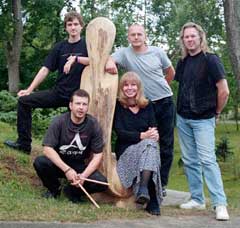
Iļģi

Current band members include (seated in front) Vilijs Strods and Ilga Reizniece, and (standing, from left) Mikus Čavarts, Māris Muktupāvels and Gatis Gaujenieks. The wood sculpture symbolizes any of the four guitarists who regularly perform with Iļģi, said Gaujenieks. On this tour, it’s Jānis Abens from Sweden. (Photo courtesy of Iļģi)

Andris Straumanis is a special correspondent for and a co-founder of Latvians Online. From 2000–2012 he was editor of the website.