Murder mystery reveals dark side of Rīga

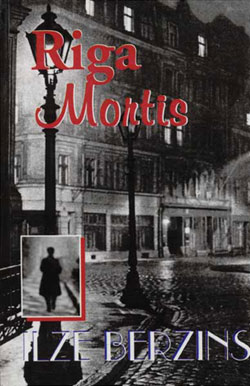
Riga Mortis

A hundred pages into Ilze Berzins’ latest mystery novel, Riga Mortis, the plot not only thickens, but takes us a layer further down into a post-Soviet Latvia that we don’t really want to know about. Government corruption, a pedophilia scandal and the trade in sex slaves—all issues still with us—frame the story that unfolds for the book’s protagonists.

Even though an unidentified body shows up in Chapter 2, don’t expect Riga Mortis to be a traditional whodunit. This is more a sociopolitical thriller than a murder mystery.

At this point, Berzins probably has entered that category of writer known as “prolific.” This is her fourth book in as many years, all of them mysteries. But she first became known to Latvian readers with Happy Girl, the 1997 autobiographical tale of her attempted “return” to her ancestral homeland. Berzins clearly draws on that experience for much of the rich detail in Riga Mortis.

To read Riga Mortis is to enter a time warp. The story takes place about 1996. Anyone who lived in or visited Latvia—or even kept up on current events—during this time should recognize some of the social problems and settings described by Berzins. (The novel is a bit anachronistic. The real pedophile scandal that rattled the government and the elite class of Rīga began in late 1999, not in the mid-1990s.)

The main characters in the story are two Latvian expatriates—“expats”—from Ottawa, Canada. Arnie Dambergs, a former copy editor for a Canadian daily newspaper, has returned to his parents’ homeland to start a new career as the editor and publisher of a scandal sheet covering the expat community. Vizma Gross, a divorcee and former legal secretary, has come back to start anew and now teaches English at the Art Academy.

The story begins as Arnie is putting the finishing touches on the latest issue of his scandal sheet, only to have the electricity go out in his apartment. In the garage of his apartment building, he finds that the breaker switch to his flat has been thrown. Resetting it, he discovers a bloody body next to an orange Lada (a popular car model during and immediately after the Soviet occupation).

Soon enough, the cast of characters—which, oddly enough, includes the orange Lada—grows. Among them are Don Fischer, the commercial attache to the American embassy who is trying to put behind him the suspicious death of his first wife back in Chicago; Maija Fischer, a Latvian expat from Milwaukee who has become the diplomat’s second wife; Mike, a photographer and petty thief who works for Arnie; and Mike’s girlfriend, Anda, who soon finds herself embroiled in the mystery after the disappearance of her niece, Daina, and the death of her sister, Silvia. Berzins adds other characters as well, so many that we almost need a guidebook to keep them straight. But that does make Riga Mortis a fun book—although I hesitate to use “fun” to describe the story, given its dark undertones.

Distrust of the police is a key element in the unfolding of Riga Mortis. Arnie is advised against going to the police to tell what he saw in the garage, and when he does encounters a Russian-speaking cop who dismisses him. Vizma thinks about going to the cops to save her from the “Goth” who follows her around Rīga, but then thinks better. And when Silvia’s daugher, Daina, disappears, Silvia goes to her sister for help, not the police. If the story were set in Canada, we might expect these characters to immediately turn to the cops for help, with reasonable assurance that a resolution might be reached. But then there might not be a story. Still, I kept wanting to know more about why the Latvians—expats and locals alike—would rather not deal with the police. The root of that distrust, I thought as I read, needed to be drawn out more.

Berzins uses detail well to paint the Rīga of the mid-1990s, particularly the lives of expats. The Rīga she describes is the one many of us know well: the architectural beauty and nostalgic feel of the Old City contrasted with the grayness and squalor of living conditions for many in the outlying districts.

But there are points when the detail misses and—depending on how picky the reader—can make one stop in their tracks. For example, on page 29 Berzins notes that the expats enjoy going to a certain bar and restaurant because, among other things, they can read the New York Herald Tribune. What Berzins means is the International Herald Tribune. (The IHT used to be the Paris edition of the New York Herald Tribune, but the latter folded in 1966.)

And non-Canadians may be sent to the Internet to learn what exactly an RRSP is. It’s a registered retirement savings plan, which Arnie uses to finance his new life in Latvia.

In Riga Mortis, Berzins digs deeper not only in terms of plot, but also in developing her characters and getting into their minds. Arnie’s troubling dreams, for instance, reveal his anxieties as he struggles with doubts about his short- and long-term future.

And despite the unsavory nature of the story, Berzins continues practicing her wit in Riga Mortis, particularly when detailing how expats used to the comforts of North America encounter the nascent consumer culture of Latvia. “She was having another of her bad expat moments,” Berzins writes of Vizma in an early chapter. “Her mascara stick would soon dry out and God knows where she’d be able to replace it.”

Riga Mortis is a bit of a slow starter. I’ll confess to being a tad distracted through the first third, but as the plot developed so did my interest. By the time the story reached its resolution, I was satisfied that Berzins has managed to craft a believable Latvian thriller.

Details

Riga Mortis

Ilze Berzins

Ottawa:  Albert Street Press,  2002

ISBN 0968650244

Where to buy

Purchase Riga Mortis from Amazon.com.

Note: Latvians Online receives a commission on purchases.

Andris Straumanis is a special correspondent for and a co-founder of Latvians Online. From 2000–2012 he was editor of the website.

In Dimiters’ Latvia, not every day is Jāņi

Ai, Latviya

Among the many things that Kaspars Dimiters can list on his resume—besides singer, songwriter, guitarist, drummer, arranger and producer—is “social commentator.”

Ten years after, now that the euphoria of independance has given way to the reality of life, Latvia has its share of problems and difficulties. Of course, many of us who live outside of Latvia, and who at best spend only a few weeks a year there, still have the perception that Latvia can be a bit of a fantasy place: full of people singing folk songs, drinking Latvian beer, dancing folk dances, and generally having a pretty good time.

Much of the new music in Latvia adds to that impression, especially the abundance of schlager, simple songs that almost always are about love, but sometimes about beer.

Taking his cue from this, Dimiters in October 2001 released his 11th album, Ai, Latviya (note that the “ja” in Latvija is replaced by the Russian “ya” letter—the backwards “R”). Although the album’s melodies do seem to have a sound schlager foundation, the lyrics are full of biting commentatry about the state of affairs in Latvia today.

Probably the only trait that this album shares with the satirical pop group Labvēlīgais tips is the fact that these lyrics were written for and likely only understood by Latvians living in Latvia. They refer specifically to certain people and events, and the lyrics themselves are loaded with Latvian jargon that few outside of Latvia will understand. However it is not all impenetrable, as the album, though not painting a particularly flattering picture of Latvia, provides for some good listening. Dimiters pulls no punches, and it is clear that he is speaking his mind and not caring if the listener likes it or not. Such honesty is refreshing.

It is more than likely that I have misinterpreted some of the lyrics along the way. Even with the help of Latvian-born friends, some of these songs are still a mystery to me! Due to my own foreign-born Latvian status, I am likely not the best person to review, or even appreciate this album, but I find myself listening to this record quite often, if only because of its simple melodies, honest lryics and matter-of-fact delivery.

The album opens up with “Latvju mežcirša dziesma jeb Zelma,” a song about a Latvian lumberjack whose beloved Zelma has gone off to Amsterdam. The woodcutter calls Zelma, only for her to tell him, “Mīļais esmu prostitūta, ne vairs jasmīns koši balts” (My love, I am a prostitute, And no longer a bright, white jasmine). The melody makes the song almost dancable, though its subject matter is less encouraging.

A major problem in Latvia is alcohol abuse, and alcohol makes an appearance in many of the songs on the album. The song “Kosmonauts” in particular, is about use and overuse of alcohol, describing how many people drink to become a “cosmonaut,” sailing among the stars in their drunkenness. “Iedzēris varu kā kosmonauts ar zvaigznēm un Venēru parunat” (When drunk I can talk with the stars and Venus like a cosmonaut). This song strangely reminds me of the Čikāgas Piecīši song “Man garšo alus,” a song about the same subject matter. But Dimiters takes a far more critical view of it.

The title track, “Ai Latviya,” comes across as Dimiters’ ode to the Latvia of today, how so much has been experienced, so much has been suffered, and there still is a long way to go before things get better. It is clear from this song that Dimiters does care very much about Latvia, even though it appears hopeless at times. He even compares Latvian progress to a bat’s progress: “Kā akli sikspārņi mēs tumsā redzam ceļu” (Like blind bats we see our road in the dark). Hopefully some progress will be made, even if slowly.

Dimiters has no love for the government of Latvia, and he unleashes some of his most scathing lyrics in the song “Intervija ar ministru” (Interview With a Minister). Taking the government to task for lies and corruption, Dimiters frequently and cynically uses the words “godīgi sakot” (speaking honestly), when it is clear the minister is doing anything but. Even more sarcastically Dimiters sings, “Cik labi mūsu ministram būt neaizskaramam” (How nice it is that our minister is untouchable).

The closes with a “country” version of “Ai, Latvija.” This is likely a dig at American country music, and general foreign influences (of which Dimiters is not particularly fond of). Not just limiting his criticisms to his lyrics, the art (created by his sister, Kristiāna Dimitere) on the compact disc itself has the word “Latviya” in the same typeface as used by the Laima chocolate company—perhaps a slight jab at the commercialization of much of Latvia.

Again, there’s a good chance I have missed the point of much of what he is saying. But that is one of the things that is great about Dimiters—the lyrics are extremely important, befitting his position as social commentator. It does make the listener stop and think. Though sometimes the blunt speaking takes you aback, the honesty of the lyrics is refreshing, in that someone is not afraid to speak their minds about the problems today.

Not every day is Jāņi in Latvia, and life is not as cheery and simple as schlager music sometimes suggests. Ai, Latviya is an honest, warts-and-all picture of Latvia. The situation is not completely hopeless, but there is a lot of work that needs to be done. Such a record would not have been possible 20 years ago, but now that the Iron Curtain has fallen, and Dimiters has been freed of any kind of restrictions, he is able to record and say anything he wants. Music listeners are better off for it.

Details

Ai, Latviya

Kaspars Dimiters

Baltic Records Group,  2001

BRG CD 110

Egils Kaljo is an American-born Latvian from the New York area . Kaljo began listening to Latvian music as soon as he was able to put a record on a record player, and still has old Bellacord 78 rpm records lying around somewhere.

WAP-py New Year! Latvia in the palm of my hand

New Year’s Eve brought an unusual self-induced bit of boredom. I had nowhere to go, and no desire, either. But instead of moping, I used the quiet around the house to uncover the simple fun of the WAP feature on my mobile phone—and the ability to connect with Latvia while away from a computer.

For those who don’t know, WAP stands for Wireless Application Protocol. It’s a telecommunications standard that allows properly equipped mobile phones to connect to the Internet. Just like Web sites, WAP sites provide news, information, entertainment and e-commerce. But unlike Web sites, what the user usually sees on the small screen of the mobile phone is short bursts of text and few, if any, graphics.

For some readers, particularly those in Europe, the use of WAP is nothing new. In fact, some mobile telecommunications providers have already moved beyond the simple text-based information provided by basic WAP. Eurotel Bratislava, a mobile communications provider in the Slovak Republic, recently unveiled what it says is the first live video feed to a cell phone, using Multimedia Messaging Service (MMS) to send a television news show to its customers.

But that’s way ahead of my phone’s capabilities.

I’d known that my Ericsson R520m could utilize WAP, but I had never tried. In fact, I wasn’t even sure that I could. However, my provider (T-Mobile) clarified that my calling plan includes up to 1 megabyte of data transmissions per month. In the world of WAP, that’s plenty for infrequent use.

After spending half an hour on the Web tracking down information about how to configure my phone to use my provider’s WAP “gateway,” I was set. Within minutes, I was surfing T-Mobile’s site, retrieving generally useless information such as my horoscope and the winning lottery numbers.

Not satisfied with things I can’t control anyway, I began to wonder whether there are any WAP sites in Latvia and whether I might be able to view them on my phone. And, yes, there are some sites in Latvia, and yes, some I could get to through my phone.

My first visit was to Diena, the largest daily newspaper in Latvia. I was pleased to see that my phone readily gained access to the site, even displaying the newspaper’s logotype. The home page of the site allowed two basic choices: today’s and yesterday’s top stories and sports results. Scrolling and “clicking” (by pressing the “Yes” button), I was able to read headlines and the stories behind them.

Cool! This means I can be away from my computer and still read Latvian news on the Internet.

But why stop there? My next visit was to Latvijas Mobīlais telefons (LMT), the larger of the two wireless providers in Latvia. LMT’s WAP portal offers a number of links, but many of them are not Latvian and several didn’t work. However, a fun feature allows a mobile phone user to find out what movies are playing in cinemas around Riga and the rest of the country. The database also provides summaries of the cast and plot. Doubly cool!

My wireless provider when I’m in Latvia, Tele2, also has a WAP site, but its offerings are not as broad as LMT’s—although they are provided in Latvian, English and Russian.

Another stop on my WAP trip to Latvia was at 118, the information service provided by Lattelekom. The horoscope section didn’t work, but at least I could find out the phone numbers for special services in cities around Latvia—in case I need to call the fire department in Saldus, for example. The site also provides a name’s day service for today, tomorrow, the day after tomorrow, and the day after the day after tomorrow (why isn’t there a good word in English like aizparīt?).

These aren’t the only WAP sites in Latvia, but I was surprised that more aren’t available, especially useful ones. The Estonian business newspaper Aripaev, a cousin of Rīga’s Dienas bizness, has a WAP site, but Db doesn’t. Plus I found an interesting English-Estonian WAP dictionary, but nothing like that for Latvian.

The future of WAP is unclear. Two years ago, it was deemed a technology that would slowly catch on, but it seems that it still hasn’t. Surfing the Internet on a screen barely larger than your thumb is one barrier.

But at least it gave me something to do New Year’s Eve.

Andris Straumanis is a special correspondent for and a co-founder of Latvians Online. From 2000–2012 he was editor of the website.