Photos tell story of 1991 resistance

One of the gems of the 52nd congress of the American Latvian Association, held May 2-4 in St. Paul, Minn., is the exhibition of 40 photographs by Pēteris Jaunzems.

The exhibit, titled “Gaisma pret tumsu” (Light Against the Darkness) and consisting of black-and-white images from the days of the January 1991 “barricades” in Latvia, was first put on display two years ago to commemorate the 10th anniversary of Latvia’s civil disobedience against the Soviet regime. Although the symbolism of the exhibit has worn off a bit since the anniversary, Jaunzems’ work still communicates the passion of those who stood up to tyranny.

Jaunzems, according to the brochure that describes the exhibit, was born in 1938 and has had success both as a fine art photographer and photojournalist. His pictures have been exhibited widely and have earned him more than 200 awards. Jaunzems is on the staff of Kurzemes Vārds, a regional daily newspaper in Liepāja.

The pictures in the exhibit often are grainy and contrasty, thus showcasing their journalistic quality and accentuating the theme of the exhibit. They are photographs taken from a Latvian viewpoint and reveal the strength of both individuals and the masses.

I was particularly taken by two images. One reminded me of a portrait of the American writer Ernest Hemingway. It turned out to be a portrait of the Latvian poet Olāfs Gūtmanis, titled, in Latvian, “Dzejnieks un Tautas frontes Liepājas nodaļas līderis Olāfs Gutmanis,” but in English simply “The Poet.” Gūtmanis appears to be looking into the wind, as if hoping for new times to sweep over Latvia.

In contrast to the singular poet was a picture titled “Daugavmalā” (On the Bank of the Daugava). Unfortunately, the title only describes where the image was taken. The Daugava River splits the frame. In the distance is the suspension bridge—Vanšu tilts—that carries traffic from Rīga’s Old City across to the Pārdaugava district. But in the foreground is a river of protestors carrying Latvian flags. It’s a powerful picture, showing both the unity of the Latvians in 1991, as well as a nod to how the nation has often turned to the Daugava for strength.

A closer look at some of the photographs reveals a subtle humor. “Protesta balss” (Protestor) shows a man in a dark hat and coat. Around his next he carries a selfmade sign with the word “Latvian” written not in Latvian, but in Russian, the language of the oppressors. That this was a snub of the Soviet regime’s attempts at Russification cannot be missed.

In another picture, Jaunzems turned his camera’s lens skyward to capture one of the Soviet helicopters that flew low over Rīga during the protests of January 1991. The picture is titled “Maskava! Nesūti mums slepkavas!” (Moscow! Don’t Send Us Murderers!, but unfortunately translated in the brochure to a watered-down Moscow! Keep Out!), which is taken from a Russian-language protest sign that appears in the foreground. The image made me smile when I noticed the straw Christmas decorations hanging from wires. The lines made by the straw mimic the lines made by the blades of the helicopter, both seemingly fragile objects that could be easily crushed.

The exhibit, unfortunately, appeared well-traveled. Photographs were bent and boards on which they were mounted were bruised. Yet, I have to admit, that added to the character and emotion of the pictures.

If the exhibit comes to your community, go take a look. The pictures tell a story of which we need to be reminded.

Andris Straumanis is a special correspondent for and a co-founder of Latvians Online. From 2000–2012 he was editor of the website.

Double album reveals range of Latvian kokle

Kokles

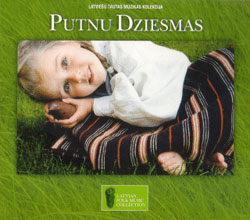
What could be more Latvian than the kokle? Now there’s a whole double compact disc devoted to this traditional string instrument, recorded by kokle expert and virtuoso of our times, Valdis Muktupāvels.

Don’t dismiss this collection of music because it focuses on just one instrument—an instrument that, while very pleasing to the ear, can quickly grow monotonous. In fact, Muktupāvels has compiled quite a diverse collection of music. The first CD consists of Muktupāvels’ own compositions and is therefore more “modern.” The second CD contains only traditional folk tunes. You can conveniently choose music according to your mood: modern or traditional.

The first CD, named Muktukokles, is the more varied of the two. On it one hears not only the kokle, but various other instruments, as well as some singing by Muktupāvels’ wife, Rūta. Except for two arrangements of traditional songs, Muktukokles is all modern compositions. For the most part, though, they appeal to a “traditional ear.” They also appeal to connoiseurs of Indian-influenced music. The 11-minute “Dzeltenās lapas tumšajā straumē” and the 14-minute “Austrumu blūzs” feature the Indian sarod, tambura lute, and tabla drum, as well as the guitar.

A song that drew my attention was the beautiful “Prūšu vedību dziesma,” which is presumably sung in Old Prussian, a Baltic language that died out a couple hundred years ago. The Old Prussian language has long been a particular interest to Muktupāvels. Another interest of his is overtone singing, like that done by the throat singers of Central Asia, who can sing two and three tones at a time (listen for the low drone plus the high whistling sound). This is heard in the compostion “Skaņā,” the sometimes strange-sounding “Briežu balss” and the tender “Rasas šūpļadziesma.”

Towards the end of Muktukokles is the absolutely superb “Sēju rūtu,” a song about the fleeting nature of youth. “Austrumu blūzs” follows it: nice, calm music, but not too Latvian-sounding. The last song, “Ilgas,” is again heavier on the kokle and repeats motifs from the first song, “Rati” (Wheels), named for the around-and-around meditative quality of kokle music.

The second CD, Tradicionālās kokles, has more than twice as many songs as the first disc. Considering that all of the tunes are played only on the kokle, with no other accompaniment, there’s still quite a bit of variation. Many of the tunes are lively dances from Kurzeme and Latgale, and Muktupāvels plays so nimbly, intricately and lightly, that, according to the old clichˇ, they truly make one want to get up and dance. Some of the better known tunes include: “Mugurdancis,” “Koklītes koklēja,” “Malni muni kumeleni,” “Bērīts manis kumeliņš,” “Kūkleites skanēja,” “Pīci bēri kumeleni” and “Tumsa, tumsa, kas par tumsu.” Even if you’re not into the kokle, tabla beats and overtone singing as highlighted on the first CD, Muktupāvels’ recording is worth getting just for this second CD of folk tunes.

Definitely give this recording a chance. It sounds like much more than just 11 kokle strings!

Details

Kokles

Valdis Muktupāvels

UPE Recording Co.,  2002

UPE CD 043

Bands in U.S., Canada grow Latvian fan base

For Adam Zahl, the past half year has been busy. Warming up the crowd one humid July night, the mostly Chicago-based band took the stage in the Metro club to open for Latvia’s Prāta Vētra. Next, the band released two albums. And, just last month, it zipped to Latvia for a quick tour with The Hobos. Not bad for a group of guys with day jobs in different cities. But that’s what life can be like for a Latvian band in North America—and Adam Zahl is just one of several with a small but ethnically loyal fan base.

During the half century that Latvian exile culture has flourished in North America, performers of popular music have been a small but strong part of a musical world dominated by folk ensembles and church choirs.

Earlier generations listened to Čikāgas Piecīši, Trīs no Pārdaugavas and other artists, and the latest crop of performers—like Adam Zahl—continue a pattern of adapting contemporary popular music genres to the Latvian language. Folk rock, punk and other styles can be heard in the live performances and recordings of today’s artists.

Here’s a look at several of the bands active in the United States and Canada.

Adam Zahl

Formed last year, Adam Zahl is five guys who share an interest in music and a connection to the Gaŗezers center in south central Michigan. In fact, the name of the group is a play on words, taken from the Latvian ēdamzāle, specifically the food hall at Gaŗezers.

Band members include Kārlis Briedis (guitar), Ēriks Kīns (guitar), Rūdis Pavlovičs (drums), Mārtiņš Šimanis (bass) and Ēriks Kore (saxophone and flute). They had known each other for years, but had played in different groups, such as Yes-I (a reggae band in Latvia), Skandāls, Morālais bankrots, The Minnow Buckets and Bob & The Latvians. Why form a new band? “We’ve known each other for a long time, the time was right, blame it on cosmic convergence,” said Kīns.

“Fundamentally,” he added, “our sound is rock-based with country, reggae, punk, polka and folk influences drawn from the diverse backgrounds of each member.”

Among the band’s recent accomplishments was spending two weekends recording two albums, Lone Tree Road and Pirmā plate. (The former takes its name from the road that runs past Gaŗezers.) As the album titles suggests, Adam Zahl performs in both Latvian and English.

Lusts

Unlike Adam Zahl, the Toronto-area “folk rock” band Lusts performs mostly in English, said Viktors Kūlnieks, one of four members of the group.

The band traces its beginnings back to 1995, when several Latvians in the Toronto area got together to play music. Until 2000, they called themselves Neil on Yonge Street. Today band members include Andrejs Kūlnieks (bass and vocals), Viktors Kūlnieks (guitar and vocals), Mike Rundāns (keyboards) and Aldis Sukse (drums, bass and guitar).

Lusts’ musical influences are broad and include artists such as Neil Young, Black Sabbath, the Grateful Dead, Jauns mēness and others, according to Kūlnieks.

The band has performed about 40 concerts and has released two albums. The more recent one, Vista, was released in December and Kūlnieks described it as “not polished at all.”

“We’re often living on different continents, or at least in different cities,” Kūlnieks told Latvians Online, “so we figured if we didn’t put out the stuff in whatever state we could get it to with us in the same place, we’d never get anything out.”

Although Lusts has not appeared together in Latvia, some band members have performed there, Kūlnieks added.

Mācītājs on Acid

Mācītājs on Acid is known as much for its music as for its outrageous stage presence and offbeat name (which, translated, means Priest on Acid).

Formed in 1992, the “Latvian love punk” band began as a duo: brothers Kristaps (guitar and vocals) and Laris (drums and vocals) Krēsliņš. A bass player by the name of Treiops Treyfid occasionally joined the brothers.

But three years ago, with the addition of cousin Gustavs Mergins (bass), MOA became a trio.

Based in Washington, D.C. (where Kristaps Krēsliņš owns the Pharmacy Bar), MOA kept busy through the 1990s touring Latvia three times and completing three recordings, including Rock Bridge, the band’s first compact disc released as a joint effort with the Ukrainian-American band Kavune.

The group remains active, focusing on live performances rather than recordings.

“MOA’s music is hard to explain,” said Mergins. “It must be experienced. That also explains the paucity of MOA recordings. Every concert is an event and every concert is different.”

The band also is intent on performing in Latvian, although in concerts it projects translated lyrics onto a screen so non-Latvians can understand.

“MOA sings in Latvian because rock songs in German sound completely stupid,” Mergins said, “and none of us knows Spanish.” Latvian, he said, is a natural language for rock music. “Besides, there are enough groups that sing in English.”

The band returned to Latvia in 2001 and, Kristaps Krēsliņš said, plans to “conquer” it again this summer “with our weapons of love.” By that time, a new album could be ready as well.

Agrais Pīrāgs

Hailing from Chicago and Ontario, Agrais Pīrāgs is among the younger of the current Latvian bands. The group includes Jānis Kļaviņš (guitar and vocals), Rob Ozoliņš (drums), Yuri Eliashevsky (bass), Kārlis Kanderovskis (guitar and vocals) and Austris Siliņš (guitar and voice).

The band describes its music as Latvian punk. “We took the traditional latvian songs that everyone knows, made them faster, louder, added a ‘punk’ flavor, more vocal harmonies, and just a ‘wall of sound’ feel,” said Kļaviņš. “It adds a lot more energy, and it gets the crowd really excited and wanting to sing along.”

Kļaviņš said Agrais Pīrāgs has drawn its influences from American punk music as well as from Latvian-American bands like Akacis and Skandāls.

Like other bands, Agrais Pīrāgs has been making the round of youth events, such as November’s congress of the American Latvian Youth Association in Chicago and the young artists’ exhibition, Šī māksla ir jauna, in Toronto last month.

The band began forming in the summer of 2000 while a number of the original members were working at the Gaŗezers center or attending the summer high school there. In November of last year, Agrais Pīrāgs (a Latvian expression meaning “jumping the gun”) released its first album, Tic vai ne Tic. A second album is expected this year.

While the band hasn’t played in Latvia yet, it is planning to tour there this summer, Kļaviņš said.

Skandāls

In another year, Skandāls will be able to celebrate its 20th anniversary. The Toronto-based band was founded in 1984 before that year’s song festival in Canada because, explains band member Alberts Vītols, no other band wanted to be the first to perform during the festival’s “rock night.”

During those two decades, the band has had a number of members, but its current lineup includes Vītols (guitar and vocals), Maria Thorburn (vocals), Mike Morrow (drums), Andris Daugavietis (bass) and Andris Krūmiņš (guitar).

Highlights of the band’s career have included performing before an estimated 50,000 people during the Rīga 800 celebrations two years ago. Calls to perform have taken the band across North America and Europe, Vītols said.

But, so far, the band has put out only one album. Vajag’ smērēt was released on cassette in 1986 and re-released on CD three years ago. Skandāls in 2001 also recorded four songs in the UPE Recording Co.‘s studio in Sigulda, Latvia.

“There are a few songs that we have performed that might be considered ‘hits’ in one way or another,” Vītols said. “Some of these songs are ‘Tevi vien,’ ‘Domas par mājām,’ ‘Jā gan!,’ ‘Paga, paga’ and ‘Vajag’ smērēt.’”

Other artists

Adam Zahl, Lusts, Mācītājs on Acid, Agrais Pīrāgs and Skandāls are not the only rock music artists who have become known to at least some segments of the Latvian community in North America.

For example, Linda Maruta in 2000 released her first recording, the straightforward rock album Buttercup, and has garnered some success in Toronto and in Rīga. She’s now looking at releasing a second album this year, according to her Web site.

These and other Latvian artists have at least one thing in common with earlier generations that have had to pursue their musical careers outside the homeland. They have managed, despite the demands on their lives and the distances that often separate them, to create music and a develop a base of fans. At least these days it’s a bit easier to make the leap back to Latvia.

(Editor’s note: An earlier version of this article appeared in the Latvian music magazine, Mūzikas Saule.)

Mācītājs on Acid

Stage performances by Mācītājs on Acid feature unusual costumes. (Photo courtesy of Mācītājs on Acid)

Agrais Pīrāgs

Four of the five members of Agrais Pīrāgs relax in a park. (Photo courtesy of Agrais Pīrāgs)

Andris Straumanis is a special correspondent for and a co-founder of Latvians Online. From 2000–2012 he was editor of the website.