Bank of Latvia plans euro design contest

The design for Latvia’s version of the euro will be determined in a competition announced Jan. 21 by the Bank of Latvia, the country’s central bank.

Latvia is set to join the European Union this May. Eventually, the national currency, the lats, will be replaced by the EU’s euro.

While all EU countries use the same banknotes, the eight euro coins differ from country to country, with one common EU side and one national side (the reverse). One euro has 100 cents, with coins available in 1-, 2-, 5-, 10-, 20- and 50-cent, as well as 1- and 2-euro denominations.

The Bank of Latvia’s competition will determine not only the look of Latvia’s euro coins, but also how many different designs will be displayed on the coins. Countries may choose to have one common national design, or up to eight different designs.

Entries are due April 1. A jury will announce the winner by May 21, the bank said in a press release.

Top prize in the competition is LVL 1,000.

Further details about the competition are available from the Bank of Latvia’s Web site.

Andris Straumanis is a special correspondent for and a co-founder of Latvians Online. From 2000–2012 he was editor of the website.

Latvian Television struggles with its leadership

The final weeks of 2003 and the first few of this year have proven to be rough time for the state-funded Latvijas Televīzija (LTV). Uldis Grava, who left behind a career at Radio Free Europe to repatriate and take over running the public television broadcaster, has left LTV to work with Jaunais laiks, the party of Prime Minister Einars Repše. Grava’s last day in LTV’s towering headquarters on Zaķusala was Jan. 16.

Grava took over the reins at LTV in 2002. Although he might have had high hopes of getting the broadcaster in financial and professional shape, he met a lot of resistance from within and without LTV, in part because of misguided scoffing at him being a “foreigner.” It’s no wonder, then, that he decided to get out.

Unfortunately, even his last days were not to be quiet. Grava suggested that his replacement should be one Edgars Kots. LTV staff and media experts cried foul, urging the National Radio and Television Council to require that a search be done for suitable candidates, rather than merely appointing Grava’s heir apparent.

Why the concern? Because Kots has been director of the Rīga-based advertising firm Labvakar, which in turn tied him to Edvīns Inkēns, a former member of parliament and controversial journalist who now is chairman of the board for Latvian Independent Television (LNT). LNT is LTV’s chief rival in Latvia’s tiny broadcast market. Plus, critics pointed out, Kots doesn’t have a university degree, a requirement for the LTV general director’s job.

And, critics also noted, there’s the political subtext. Why should Grava, who is leaving a supposedly apolitical broadcaster to work for the prime minister’s political party, get to choose his successor? Doesn’t that suggest that his successor would be someone who is looked upon favorably by the political powers that be?

Although the radio and TV council decided Jan. 8 that it will conduct a search for Grava’s replacement, it nonetheless on Jan. 15 approved Kots, rather than LTV News Director Gundars Rēders, as acting general director. The council’s tie vote was broken by Chairman Imants Rākins, who, critics again noted, was appointed to the council by Jaunais laiks. (To be fair, Rākins is not without qualifications, having himself served from 1992-1995 as LTV’s general director.)

Clearly, some in LTV’s newsroom didn’t like that and, during the Jan. 15 evening news show “Panorāma,” let their opinion be known, likening what happened to how power is passed down in a monarchy. Rākins responded, calling the airing of the newsroom’s opinion unobjective and unethical, according to Baltic News Service. A case of the pot calling the kettle black? Perhaps.

What’s sad about the debate over LTV is that it isn’t serving to make the broadcaster any better. Latvia, in my opinion, needs a strong public broadcaster, one that can be sheltered from Jaunais laiks or whichever party is in power. Whoever becomes the next general director, whether it’s Kots or someone else, will still face the unenviable challenge of trying the steer an invaluable but troubled institution.

S magazine folds

Among the chores with the beginning of the new year was renewal of a number of subscriptions to Latvian magazines. One of them was S, a young women’s magazine my daughter has been reading for a couple of years.

But we were surprised to learn, in an e-mail from the Santa publishing house (publisher of a number of titles, including the popular women’s magazine Santa and the gossipy Privātā Dzīve), that S will cease publication after its March issue. The publishing house’s board last week decided to drop the title.

Even more surprising was the reason: competition from one of the best-known women’s magazines in the world, Cosmopolitan, published by New York-based Hearst Magazines International. If you haven’t looked at a Latvian newsstand recently, you too might be surprised to see that there’s now a Latvian edition of Cosmo. In fact, it’s been there since March 2002, put out in association with I&L Publishing Limited of Rīga.

S, with its combination of fashion, culture, sex and relationship advice, will be sorely missed by at least one young reader. Or maybe she’ll just start reading Latvian Cosmo.

Andris Straumanis is a special correspondent for and a co-founder of Latvians Online. From 2000–2012 he was editor of the website.

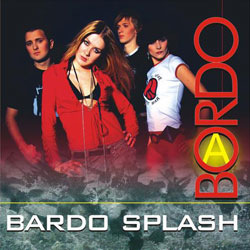
Influences of others show on Bardo Splash debut

Bordo

When I first heard Bordo, Bardo Splash’s debut album, I was at different points reminded of another Latvian group. But I couldn’t quite place it. Prāta Vētra? Jumprava? RamaDance? A bit of research revealed that at least the latter two are related.

Bordo, released late last year, was produced by Aigars Grāvers, one of the four members of the long-standing Jumprava and leader of the exciting Rama Dance project. And, it turns out, Bardo Splash’s lead singer, 21-year-old Rudīte Būmane, performed on Rama Dance’s second album, Extravagance.

Bardo Splash is relatively new to Latvia’s music scene, growing out of the now-defunct group Zupski Rubin. Bardo Splash has performed since 2001 in a variety of venues, including the noted Liepājas Dzintars and Sinepes un Medus festivals, as well as traveling around Latvia with the 2001 Priekšnams tour organized by Radio SWH. Attempts by media to pigeon-hole the group into a particular genre have mentioned modern rock, atmospheric rock, pop and other labels. On Bordo the group crosses and melds genres as needed. One track, “Māras avots,” in the liner notes is even described as postfeiklora, which, I suppose, can in turn be described as contemporary songs that sound like traditional Latvian folk songs but aren’t.

At the time the album was recorded, the group’s members numbered five: Rudīte Būmane on lead vocals and synthesizer; her brother, Renars Būmanis, on drums, programming and synthesizer; Aleksandrs Ruģēns (a.k.a. Sniegs) on vocals, acoustic guitar, Jew’s harp and programming; Edgars Dambis on electric and acoustic guitars, and Ieva Rudzīte on bass and acoustic guitar. Ruģēns was largely responsible for all music and lyrics on the album.

Since last summer, Dambis and Rudzīte no longer are with Bardo Splash, according to Baltic Records Group. A new guitarist and a new bassist are now working with the group in preparation for concerts. Ruģēns, meanwhile, is reported to be abroad, earning money to support his family.

I hope the departures, permanent or temporary, don’t hurt the group, because this is one band I’d like to see hang together for a while. How many rock or pop bands are there in Latvia today with a female lead singer? For Būmane’s potential as a role model alone, the band should survive.

Bordo also is just a good debut album, with an interesting mix of sounds and thoughtful lyrics. Anyone who has heard RamaDance’s Sāga or Extravagance will recognize similar electronica and folkloric elements in some of Bardo Splash’s work, especially on tunes such as “Māras avots” and “Spoku kamanas” (although for the latter the band cites influence from “post-folkore” group Iļģi).

But don’t expect that to be a constant on this album. The lead track, “Kad sajūtas mānās,” for example, is clearly a pop song, although the lyrics describe emotions encountered during a strange tusiņš.

The sweetest song on the album also is the shortest. At one minute and 12 seconds, “Kad straume projam iet” describes a simple philosophy about humankind’s relationship to the recurring forces of nature. Eight layers of Būmane’s vocals are accompanied just by an acoustic guitar. According to the liner notes, an earlier version of the song almost became the title track for the album.

Five of the album’s 14 tracks are in English, including one of the band’s better-known tunes, “Force majeure.” As with many other Latvian groups, Bardo Splash’s Latvian songs generally are better than their English material, although Būmane’s vocals and Ruģēns lyrics make for a nice combination. And, just as other groups lately have done, Bardo Splash offers Latvian and English versions of the some songs: “Glory Nights” is at least musically the same as “Kad sajūtas mānās,” “Four Fingers” is a relative of “Četri,” and “Initiation” is the anglicized “Māras avots.”

As we often lament in our reviews, the liner notes here are spartan. Lyrics are not provided. They would especially be helpful for the English-language tracks, where meaning sometimes is obscured by unpolished pronunciation.

Flaws aside, if you’re looking for something new from Latvia’s popular music scene, Bordo is worth seeking out.

Details

Bordo

Bardo Splash

Baltic Records Group,  2003

BRG CD 178

Andris Straumanis is a special correspondent for and a co-founder of Latvians Online. From 2000–2012 he was editor of the website.