Flutist pays homage to diaspora composers

Ilona Kudiņa

An oft-overlooked aspect of Latvian classical music is that produced by composers in the diaspora. The recent major recordings of Latvian classical music cover the most well-known composers such as Pēteris Vasks and Imants Kalniņš, however, almost always the composers represented spent most of their lives in Latvia.  So it is quite a pleasant surprise to find out about flutist Ilona Kudiņa’s On the Bridge (Uz tilta), a two-compact disc collection of chamber music by diaspora Latvian composers.

Due to the upheavals of the mid 20th century, many Latvian composers found themselves outside of Latvia, and remain there to this day. Many have achieved success and have composed many great works, but are rarely included in recent Latvian classical CD releases.

All the works on On the Bridge feature the flute because this project was organized and realized by Kudiņa. Kudiņa was born in Latvia, but after completing her studies at the Berklee College of Music in 2003 remained in the Boston area, teaching and performing. Since her broad repertoire includes works by diaspora Latvian composers, she had the idea of collecting many of these works and releasing a CD.

It is fortunate someone took the initiative to compile a collection like this. Besides the fact that many of these works are rarely heard and many of these works (and composers) are rarely represented on CDs, this is an excellent collection of compositions and performances. These days, when CDs featuring Latvian composers and performers are becoming more and more plentiful, this is one collection Latvian music fans as well as classical music fans should not pass up.

The collection begins with “Rhapsody for Flute and Piano” by Jānis Mediņš, who resided in Sweden after leaving Latvia. As if to announce that this collection is work of Latvian composers, the track contains allusions to Latvian folksongs, such as “Pūt, vējiņi!” and “Skaisti dziedi lakstīgala.” Piano on this work is performed by Ventis Zilberts.

As is to be expected, Latvian composers are often influenced by their environments, and often may compose works based on decidedly un-Latvian themes and ideas . For example, Latvian-Canadian composer Tālivaldis Ķeniņš’ “Fantasy – Variations on an Eskimo Lullaby Theme,” is a work for flute and viola (performed here by Arigo Strals). Another example would be Latvian-Australian Edgars Kariks’ “Suite of Three Works for Flute,” particularly the second work, “Vocalise of the Blessed Spirit,” which was influenced by the composer’s birthplace of New Guinea.

Of course, there are works that are influenced by Latvia, as well as vocal works in Latvian. For example Latvian-American Dace Aperāns’ “Pienenei, kas uzziedējusi novembrī” (“For a Dandelion Blooming in November”), which is based on lyrics by poet Knuts Skujenieks. This work, for flute, piano (Zilberts) and voice (Antra Bigača), was written in 1968 when Skujenieks had been sentenced to a prison camp for his “anti-Soviet activity,” the dandelion being a symbol of the desire for freedom.

Other composers featured in the collection include Arnolds Šturms (United States), Albert Jērums (Great Britain), Andris Vītoliņš (Sweden, currently in Latvia), Helmer Pavasars (Great Britain), Pēteris Aldiņš (United States), Mārtiņš Aldiņš (United States) and Imants Mežaraups (United States, currently in Latvia)—giving the listener a broad panorama of diaspora Latvian composers, both past and present.

The two CD collection comes with a very informative booklet, including short biographies of all the composers represented, as well as descriptions of all the works included. Oddly, there is no biographical information of the principal artist, Kudiņa herself.

This is a vital collection of works by composers, who, though being part of the Latvian diaspora, are no less important than the composers who remained in Latvia. Admirable in her goals, compelling in her performances, as well as establishing herself as one of the premiere Latvian flautists, Kudiņa has put together a collection that will resonate with not just Latvian classical music fans, but all fans of the chamber music genre. From Australia to Europe to North America, Latvian composers have been making their mark in the world of classical music, combining local and Latvian influences to weave a tapestry of color and sound, and this collection is proof positive of the success of their endeavors and should not be missed.

Details

On the Bridge (Uz tilta)

Ilona Kudiņa

Ilona Kudiņa,  2006

On the Web

Ilona Kudiņa

The artist’s Web site provides her biography and examples of her performances. EN
Egils Kaljo is an American-born Latvian from the New York area . Kaljo began listening to Latvian music as soon as he was able to put a record on a record player, and still has old Bellacord 78 rpm records lying around somewhere.

Five days that shook Latvia

The extraordinary events of March 10-14 have thrown the Latvian political system into unprecedented turmoil. It has turned on its head almost all previously held suppositions about the political situation: a seemingly strong and unshakeable coalition – the first government ever returned after a Latvian election – now looks vulnerable and amazingly immature in its response to the crisis. Meanwhile, a president who some took to be simply biding her time to the end of her period of office with one stroke has seemingly swung the balance of power away from an increasingly panicky government. And the first of Latvia’s oft-accused oligarchs, Ventspils mayor Aivars Lembergs, has been arrested on serious charges of corruption—for many the cherry on the cake

On March 10, President Vaira Vīķe-Freiberga used her constitutional power to delay the proclamation of amendments to Latvia’s security laws, amendments passed twice by the Saeima. She had already sent them back the first time but they was passed unchanged by the Saeima again. According to Latvia’s constitution, a president in such circumstances can delay proclamation for two months, but then a chain of events is automatically triggered leading to a possible referendum: the Central Elections Commission begins the task of collecting signatures from citizens who want a referendum to decide on the legislation’s fate. If 10 percent of the number of voters who voted in the previous Saeima elections sign for a referendum, it must be held. This will require around 150,000 signatures. This is the first time this specific mechanism has been put into effect since the regaining of independence.

That is the constitutional side. The surrounding politics are intense.

Concerns over the security legislation relate to both its content and the process by which it was pushed through. The legislation increases parliamentary supervison of the various security services including military intelligence services, and increases the number of people—parliamentarians but also their aides and people designated by them—who can have access to operative information of the security services. Such concerns came even from the NATO defense alliance.

Concerns over the content were heightened by the way the legislation was pushed through. It was first adopted by the government during a Saeima recess, on the basis of another rarely used power in the constitution in Article 81: the power a government has to adopt important legislation when the Saeima is in recess, but then has to have this approved by the Saeima on its return—a provision common to many democracies but used sparingly and largely only for emergencies. Despite protests, the goverment also gagged debate when it pushed the amendments through the Saeima, citing the most serious national security urgency for doing so.

The goverment melts

Latvia has had referendums before, most notably in 1998 when the then government won a bitterly contested referendum on changes to the citizenship law, but on this occasion the response saw the government in disoriented damage control. Prime Minister Aigars Kalvītis immediately offered to drop the contentious legislation—so much for national urgency—and various coalition leaders also offered to repeal Article 81. No one in the government stood up to defend the legislation, which had been pushed through with such insistence on its importance. Amazingly, talk swiftly turned to whether the govenment should stand down or whether it will fall, despite its comfortable majority in the Saeima, and many urged the president to dissolve the Saeima. It is a pregorative in the constitution but has never been used.

So cravenly apologetic has the government been, and so unable to defend its actions, that speculation increased on why it had tried so hard to push its legislation through. The government had been accused of using the legislation to corruptly help its mates in business forestall various corruption and shady deal investigations. Others have pointed to the sheer arrogance of a government that beleived it could do anything with its majority. Its abrupt abandonment of its legislation (it clearly fears it has no chance of winning the referendum) and complete turnaround on a number of related issues has given the appearance of a political rabble, with veteran commentator Aivars Ozoliņš characterising the government’s response roughly as “Anthing, anything, just don’t spank us!”

The arrest of Lembergs just four days later turned an already peculiar crisis into more of a circus.

Oligarchs

No more common term of abuse in Eastern Europe exists than “oligarch.” President Vladimir Putin justified his undemocratic grab of all significant power in Russia as a defence of the nation against oligarchs reaping fortunes off Russian resources and sucking the country dry. Latvia’s far less ostentatious oligarchs have in turn not escaped investigation, as in last year’s “Jūrmalgate,” where the buying of votes in the mayoral election involved Tautas partija (People’s Party) ex-leader Andris Šķēle and Latvijas Pirmā Partija (First Party of Latvia) leader and chief nasty Ainārs Šlesers, who was dumped from the Transportation Ministry for his involvement but now is back in office. The concluded Jūrmalgate trial admirably sentenced the smaller front figures to gaol terms, but the shadow remains over Šķēle and Šlesers. All along such figures have claimed the criticism of them is politically motivated, seeking to discredit hard-working leaders and economy-enhancing businessmen.

Lembergs is seen as the most significant of the oligarchs, and until now the most unreachable, ensconced in his Ventspils mayoral seat with its glittering civic environment. He did however wander into the political field when the aļo un Zemnieku Savienība (Union of Greens and Farmers) proposed him as a presidential candidate—a proposal from which it is now also hastily retreating.

Significantly, the president herself had briefly touched on her concerns that the security legislation could be used to favour oligarchs—she used that word—when delaying the legislation. And when Lembergs was arrested on the morning of March 14, the conspiracy theories were given full rein. Was there a connection between the presiden’s actions and the impending arrest of Lembergs? Did the president know? Can this be coincidence?

Lembergs was arrested for a series of alleged corrupt deals largely dating from the mid-1990s involving undeclared offshore arrangements and a conflict of interest with his mayoral position. He was denied bail as it was feared he could attempt to obstruct justice. His lawyers and the newspaper he owns, Neatkarīgā Rīta Avīze, are working overtime to argue the conspiracy. But in more poor news for the government, other figures such as a controversial coalition candidate for the Constitutional Court has been linked to poor court decisions made in favour of Lembergs.

Opposition paper Diena is somewhat glowing that its own theories of the danger of oligarchy, which it has argued repeatedly and somewhat repetitively, seem to be justified.

And what a time for a great opposition political party to reassert itself and take full advantage of the situation to demand a change to a disorganised and defensive government. But it is not to be, as the main opposition party, Jaunais laiks (New Era) is embroiled in inter-party disputes, and its increasingly criticised leader Einars Repše has said little, mouthed a few populist slogans, and remarkably has been rather distancing himself from the fray.

This completely unanticipated presidential initiative has revealed a worrying weakness in government and the formerly invincible coalition parties. While much still remains to work itself out, it has seriously steered Latvian politics away from “business as usual.”

Laimas muzykanti turns up the volume

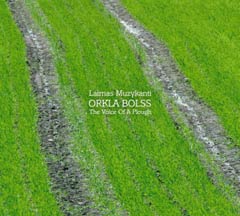
Orkla bolss

Laimas muzykanti began as a group of musicians to accompany the Daugavpils folk dance group Laima. Its long-standing director, Artūrs Uškāns, has guided the group through its 10-plus-year evolution to what is now essentially two groups in one: the “small” group that plays traditional instruments and performs at folklore festivals and for folk dance groups, and the “large” group that plugs itself in and plays ethno-rock. Laimas muzykanti’s new compact disc, Orkla bolss, offers some of both, although the lasting impression is of the heavier side.

Orkla bolss, which translates as “the voice of the plow,” begins with a catchy and mildly Cajun-inspired beer song, “Oi dīveņi.” The next song, “Jauna meita,” is heavier and even includes a guitar solo. “Laiviņīka mosa” begins quietly, but eventually picks up the pace, while the following song is a stunningly simple, yet beautiful, a capella rendition of a mythological text. By the fifth track the musicians are back to ethno-rock, this time with the well-known tune “Auga, auga rūžeņa.” Even though the song’s melodramatic ending borders on overdone, the lively chord changes and transitions are very fun. The songs seem to keep getting better and better!

Orkla bolss loses its originality and edge, though, with “Sieļejis daņcs,” a beer-swilling, Pippi-Longstocking-braids-and-freckles caricature of folklore. The three tracks that follow are somewhat better, but all continue with the same oom-pa-pa beat. Have a listen for yourself, though, to decide whether the criticism is justified.

By track nine (“Ceiruļs”), and definitely by track 10 (”Čigons”), the musicians are thankfully back to ethno-rock. The CD ends with the quiet, but very well done, “Pīzacieļu reitā agri.”

Laimas muzykanti has all of the standard rock instrumentation—drums, electric guitar and bass—and knows how to use it. But the accordion, kokle and flutes lend a definite ethnic sound, as does, of course, the fact that they sing traditional texts in Latgalian. Most of the melodies sound traditional as well. Laimas muzykanti brings to mind a Latvian version of the Oyster Band or Steeleye Span, folk-rock bands from England.

Despite the couple of songs in the middle of the CD, Orkla bolss is a fresh sound among recent Latvian recordings. (At the very least, it’s a pleasure to listen to the young women’s voices.) May Laimas muzykanti continue what it is doing!

(Editor’s note: A version of this review appeared in Jauno Laiks, a bimonthly supplement to the Latvian-American newspaper Laiks.)

Details

Orkla bolss

Laimas muzykanti

UPE Recording Co.,  2007

UPEAMCD 005

On the Web

Laimas muzykanti

The Daugavpils-based Laimas muzykanti offers background on the band, news, lyrics and other resources on its Web site. LV

Where to buy

Purchase Orkla bolss from BalticMall.

Note: Latvians Online receives a commission on purchases.