President to address PBLA meeting, conference

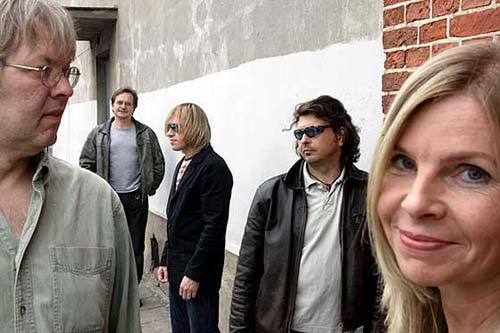
President Valdis Zatlers will open the annual board meeting of the World Federation of Free Latvians (Pasaules brīvo latviešu apvienība, or PBLA), the president’s press office announced after a July 30 meeting with federation chairperson Jānis Kukainis.

The half-hour meeting between Zatlers and Kukainis also resulted in the president accepting an invitation to speak during a PBLA-sponsored conference on media and democracy in Latvia. Both events are scheduled for early September in Rīga.

Zatlers thanked the federation for its work so far and stressed the PBLA’s continuing importance in strengthening Latvian identity abroad, the press office said.

Andris Straumanis is a special correspondent for and a co-founder of Latvians Online. From 2000–2012 he was editor of the website.

Survey raises hope for dual citizenship

The recent survey about dual citizenship sent out by Latvia’s integration secretariat has raised in me a glimmer of hope that perhaps I could have another chance. Back before 1995, when it was possible for exile Latvians and their children to regain citizenship in the homeland, I balked. My application was all filled out and I was ready to send it to the embassy in Washington, D.C. But a question nagged at me: Why?

I was just a postage stamp away from becoming a dual citizen, in one hand a U.S. passport and in the other a Latvian passport. Acquaintances argued that to have Latvian citizenship would allow me to vote in the homeland’s parliamentary elections. I wondered why I should be voting for people whom I did not know and who would be making decisions that would affect people living in Latvia, but not me.

What clinched the decision to not apply for dual citizenship was a conversation with a woman who had already sent in her application. I posed to her a hypothetical question: You’re in Latvia, with your U.S. passport in one hand and your Latvian passport in the other, and the Russians invade. What do you do? Her answer was a disappointment: She would take her U.S. passport and head home. So much for the responsibility that citizenship brings.

Now, more than a dozen years later, I am ready for both the responsibility and the privilege of Latvian citizenship. I expect to move to Latvia at some point and having dual citizenship would help the process. And having worked in Latvia, I have experienced what a hassle it is for non-citizens to get paid.

Whispers about the possibility of Latvia reintroducing some aspects of dual citizenship have been heard for about a year. As it stands now, the law forbids most Latvians from holding dual citizenship. So it was a pleasant surprise to receive news last week from the Secretariat of the Special Assignments Minister for Social Integration of a survey about dual citizenship.

The survey addresses a specific issue, that of granting dual citizenship to children born abroad of Latvian citizens. One proposal from a task force set up by the integration secretariat suggests this might be a way to foster return migration from some of the tens of thousands of Latvians who during the past several years have moved to Ireland and elsewhere.

I hope it’s a way to start an even broader discussion about extending dual citizenship to an even broader constituency—including those from the trimda who let the 1995 deadline slip by.

The secretariat’s survey asks five questions. Here are my answers:

1. Kurā valstī Jūs šobrīd dzīvojat/strādājat? In which country are you currently living or working?

I live and work in the United States, but I would rather be living and working in Latvia. To avoid a heated political argument at this point, let me just remind readers that none of us chooses where we are born.

2. Vai Jūs esat informēts par Sekretariāta darba grupas izstrādātājiem priekšlikumiem kā atgriezt aizbraukušos Latvijas iedzīvotājus dzimtenē? Are you informed about the secretariat’s task force’s proposals for how to get Latvian emigrants back to the homeland?

Yes, but I am a journalist who keeps tabs on things Latvian. I would not be surprised if many of the surveys returned from locations outside of Europe will show a lack of knowledge or interest about these proposals. After all, the proposals are geared to entice back to Latvia those thousands who have left in recent years to seek their fortunes in countries such as Ireland and the United Kingdom, not the children and grandchildren of the exile.

3. Vai atzīstat, ka Sekretariāta ierosinājums – ieviest dubultpilsonību ārvalstīs dzīvojošo Latvijas iedzīvotāju dzimušajiem bērniem – ir nepieciešams? Do you agree with the necessity of the secretariat’s suggestion that dual citizenship be introduced for children born to Latvian citizens abroad?

Yes, if it clarifies the citizenship law. The law already states that a child born to Latvian citizens abroad gets Latvian citizenship. But there is some confusion, because the law also states that someone who becomes a Latvian citizen (for example, through naturalization) cannot be a dual citizen. I say fix the citizenship law, make it possible for people to hold dual citizenship, and expand the list of who can get dual citizenship.

4. Vai minētā dubultpilsonības ieviešana, Jūsuprāt, stimulētu Latvijas iedzīvotāju iesaistīšanos Latvijas demokrātiskajos procesos (vēlēšanās, referendumos u.c.)? Would introduction of the aforementioned dual citizenship, in your opinion, stimulate Latvian citizens to engage in Latvia’s democratic processes (elections, referendums, etc.)?

You’re kidding, right? Citizenship in and of itself is no guarantee of participation in a democratic process, especially if one has little hope or trust in that process. Many people are disenchanted with politics in Latvia. So why don’t they vote for change? Because they have been disappointed so many times before. And the farther away they are from Latvia, the less interested they seem to be. In last year’s parliamentary election, just 542 citizens voted in Ireland—out of tens of thousands who live there. In the United States, where 12,473 Latvians got dual citizenship before the 1995 deadline, the number of voters has decreased with each election. Last year just 1,479 cast ballots, less than half the number back in 1998. A lot more than extending dual citizenship to children will be needed to get folks involved in the political process, perhaps starting with reform of the electoral process.

5. Vai minētā dubultpilsonības ieviešana, Jūsuprāt, kaut kādā veidā stimulētu Latvijas iedzīvotāju atgriešanos Latvijā? In your opinion would the aforementioned introduction of dual citizenship in some way stimulate the return of Latvian residents to Latvia?

I would have to go with the third choice offered by the survey: only together with other efforts to address issues of well-being. Thousands of Latvian citizens have not moved to Ireland in recent years in search of dual citizenship. They have moved there because they are fed up with low wages and the lack of hope in Latvia. Introduction of dual citizenship would work with me and others who want to move to Latvia, but not on those who have willingly moved away. What they need is convincing evidence that life in Latvia would hold as much promise as life in Ireland or elsewhere.

But opening up dual citizenship in a broad way, to the children of Latvians in Ireland and to the children and grandchildren of the exiles, would nonetheless be a step in the right direction. I have to agree with reader Ivars Graudiņš, who wrote in our forums, “Latvians can be supporters of Latvia and things Latvian even when they do not have Latvian citizenship. However, eat your heart out, without citizenship one is marginalized to act for or in behalf of Latvia. Citizenship is a form of empowerment and raises the sense of belonging and responsibility.”

Andris Straumanis is a special correspondent for and a co-founder of Latvians Online. From 2000–2012 he was editor of the website.

A whole year’s worth of folk songs

Dievsēta ļaudis

The number of Latvian folk music recordings seems to be growing almost as quickly as wild mushrooms after a rainy summer. Some recordings have specific themes, such as war songs or lullabies, while others cover songs from a certain holiday such as Jāņi or the winter solstice. Until now, I have not been aware of a single recording that attempts to incorporate music of the entire Latvian calendar with all of its holidays. A group of Latvian-Americans has filled exactly this shortcoming. An informative new compact disc, Gadskārtu dziesmas, has recently been released by Dievsētas ļaudis (the folks of Dievsēta).

For 30 years a group of Latvians with a keen interest in folk traditions has been gathering at Dievsēta, a property owned by the Latvju dievturu sadraudze in central Wisconsin, to celebrate holidays—not just the popular Jāņi, but also lesser known ones such as Mārtiņi and Meteņi.

The booklet that accompanies the CD is a treasure trove of information. Its 64 pages include English and Latvian language descriptions of the seven holidays represented by songs on the CD, lyrics and notes for all 43 songs, as well as a number of beautiful photographs from Dievsēta. Each song is also described in one or two succinct sentences in English. The following holidays are represented on the recording: Meteņi (5 songs), Lieldienas (5 songs), Ūsiņi (2 songs), Jāņi (7 songs), Apjumības and Miķeļi (7 songs), Mārtiņi (7 songs) and Ziemassvētki (10 songs).

Glancing at the list of individuals who participated in the CD recording, I noticed names of people who have sung or currently sing with folk ensembles based both in the United States and Latvia. Thus, the quality of the music on the recording is actually quite good. The CD contains a variety of a cappella songs by just one person or a group, as well as songs accompanied by a number of different instruments.

One of the things that I love most about some Latvian songs is the imagery. This is most evident in songs about the sun. The fifth track is a Meteņi song called “Saule savus kumeliņus.” As beautifully summarized by the liner notes, “At sunset the sun takes her horses to the sea to swim, while she herself sits at the top of the hill with the golden reins in her hand.” This song has a simple yet lovely melody. On the CD the song is sung a cappella by just one female, which unfortunately makes it sound a bit too plain. But, with more than three dozen songs on the recording, I did find quite a few songs that I greatly enjoyed.

Many listeners might find track 11, “Tumša nakte, zaļa zāle,” of interest. Listeners might assume this song to be a familiar one, as it is the title of a popular folk song that many children learn in school. Yet, one needs to remember the great diversity in Latvian folk music and thus not be surprised that the melody and—indeed—most of the lyrics of this song are different than the one many people will know.

The seven Jāņi songs have a nice variety of melodies. Anyone who ever tries to sing songs at Jāņi could learn something from these. It seems that most Latvians know only one overused, tired melody for līgo songs. One of the Jāņi songs is sung by children, reminding the listener of the importance of passing traditions down to the younger generations.

Two other songs I greatly enjoyed were “Rudzu druva lielījās” (track 20), a song about work sung at Apjumības, and “Laid iekšā, saimeniece” (track 34), a Ziemassvētki song with a great, party-like tempo and sound.

Many Latvians have never celebrated a holiday such as Miķeli, therefore most songs on the recording will be new to listeners. Even as someone who sings with a Latvian folk ensemble and has participated in a number of folklore activities at 3×3 camps, the majority of songs on this CD were unfamiliar to me. This might be a turnoff for some people, as many individuals seem to prefer the familiar to the unfamiliar. Precisely that is the frustrating thing about Latvian folk music: it is ironic that so many Latvians are familiar with only a couple dozen tunes when the wealth of Latvian folklore is in its folk songs, most of which unfortunately go unsung and unheard.

Because these songs have such specific purposes, this is also probably not the type of CD one would listen to over and over again. However, if one has an interest in Latvian folklore and its traditional holidays and in the diversity of Latvian folk music, and has always wondered how a holiday such as Mārtiņi is celebrated, then Gadskārtu dziesmas will be a wonderful addition to one’s music collection.

Details

Gadskārtu dziesmas

Dievsēta ļaudis

Lauska,  2007

ISBN 978-9984-39-187-8

Where to buy

Purchase Gadskārtu dziesmas from BalticShop.

Note: Latvians Online receives a commission on purchases.