When Latvians go visit someone, they bring a ciemakukulis, a standard present for the host. It’s not generally necessary to overthink what to bring: you more or less know what to get your relatives and you know what your friends like. But what are you supposed to bring a capella group Cosmos?
Apparently, a pineapple will do just fine.
In the minutes before a recent interview in Rīga with the group’s three “Jankas”—Jānis Ozols (tenor), Jānis Strazdiņš (bass) and Jānis Šipkēvics (countertenor)—the pineapple provided a decent amount of entertainment. Šipkēvics and Strazdiņš evaluated its quality, while Ozols called dibs on one of the bags it was wrapped in, explaining it would be for his cat.
Cosmos also includes Juris Lisenko (tenor), Andris Sējāns (countertenor) and Reinis Sējāns (rhythm).
In less than a week, the group will be crossing the globe to spend some time with audiences in Canada. Šipkēvics, Strazdiņš and Ozols not only cleared away more than three-fourths of the pineapple, but, through light-hearted cynicism, humor and a certain degree of ever-present self-awe, they also provided insight into where Cosmos has been, where the group is now and where it is going.
Starting something new
Cosmos has been together now for more than five years, but the members have known each other much longer than that (plus, the two Sējāns are cousins). Though they were in different grades, the members “took notice” of each other while at the Riga Dome Choir School and were able to find a common idea for what to do after they were finished. Because their musical backgrounds are connected with choirs—specifically boys’ choirs—an idea formed to scale the act down and create a more concentrated collective where they could accomplish things faster, with more intensity and in a way they themselves chose. And so they started something new.
At the time, they were unable to foresee that what they started would hold together for so long or that this initial idea of theirs would be so viable.
“But apparently the combination was the right one,” Šipkēvics said, “and our ideas ended up being needed—not just by us, but be others, as well. And that, of course, makes us really happy.” Even though all six Cosmos members are very different people, this common idea, music and friendship is what brings them together.
The global a capella market isn’t that big, being dominated by five or six groups, and the genre doesn’t exactly enjoy widespread popularity. The guys themselves joked that one definition of a capella is, “Sounds just like the original, only worse and a little quieter. And without drums.” For those who have listened to any of Cosmos’ albums, it is clear the guys have immaculate talent and that if they wanted to they could each be the front man of a separate band. So why a capella, of all choices?
“Because it was one of the most logical options,” Strazdiņš explained. After years of youth choirs, a smaller group seemed a natural decision; it was an area in which they felt comfortable and something of which they knew what to expect. “We wanted to sing—and that was that.”
At the beginning of the group’s career the members were in awe of the other musicians around them.
“It was like, ‘Whoa, that other group sounds like that and we don’t.’ But then you see that you sound different and that’s your value, your identity,” Šipkēvics said. “And the sound Cosmos has… No other group in the world has it. And once you realize that, you feel much better.”
Their initial set-up was very academic, but with each new album and each new year came additional experience and the chance to participate in workshops and summits with other similar, more established groups to learn how they operated. Thus, Cosmos always had something new coming into the mix, aiding the group in its constant evolution. And though the guys still look up to the many groups they have worked with, they began to understand that they needed to go down their own road. They are who they are, and that’s the best thing.
Good-natured smirking aside, the three agree that their first album, Cosmos (2003), and the recently released Turbulence are very different.
“If you have the chance to get online and listen… to our first and then our most recent album… there are some pretty fundamental differences,” Šipkēvics said with a laugh. From then to now, one could say that there exist two very different groups. The change is that big.
But evolution works wonders. In the past five years the group has had its share of “burns” and has found itself in favorable and not-so-favorable situations. They’ve come out on the other side, understanding themselves as a collective and having found their place in the music world.
A new direction
Cosmos has taken what Šipkēvics, Strazdiņš and Ozols readily admit is a risk by putting together the group’s first all-original material album (minus the bonus track), but they are excited to finally get to their music. But why has it taken so long for this to happen? They’re not newbies and it’s been almost three years since the last album came out.
The external reason: People like a capella groups because of the cover versions they sing. Audiences enjoy hearing songs they already know being performed in a different style. The internal reason: The members of Cosmos hadn’t studied or trained to be composers and were therefore hesitant about entering an area in which they had no real professional knowledge. Although now music schools tend to offer a more comprehensive program (instruments included), academic schooling at the time was “interpretation vs. composition” (a capella based on the former). The two just weren’t mixed.
What they found they needed to do was to first free their minds of the theory and materials they had learned while in school. Only then were they able to reach a balance in which they were able to not only come up with their own ideas, but were able to technically realize them. In short, they discovered that they had what it took to do their own thing.
Putting together an album like Turbulence is a step the guys have dreamed of taking for some time and it’s given them a sense of freedom on stage they say would not have been otherwise possible. Their analogy was of Cosmos growing like a kid grows out of clothes. Once the clothes are worn and outgrown, it’s impossible to fit back into them. The group’s evolution has been and is a logical process that cannot be undone. There’s no sense in taking time to look back and criticize themselves on where and how they started because in getting “here”—to their own music—they’ve established their professional status, as well a solid fan base in Latvia and abroad. Based on the reviews, it seems as if the public more than accepts the change.
Turbulence was never the group’s original goal. At the beginning they were just six guys excited to be something. In the first years as a group, it was all about coordination, orientation and just trying to find out who and where they were, as well as where they could go, shouldn’t go and where they felt most comfortable. Turbulence came about because the group was heading toward writing and composing its own music, whatever that might be. Some material had been previously collected and it made them understand they needed to go down this new path. What Cosmos wanted from Cosmos, Ozols put simply, was “more self-insight.”
“We said, ‘Let’s go find ourselves,’ and we found something,” added Šipkēvics. “And I think that this direction truly is the right one.”
Turbulence is a collection of songs that is meant to create, well, a turbulence and agitation that will remove listeners from what they consider familiar. The guys admit to the lack of stylistic consistency, but also confidently explain that this was done on purpose.
“The (only) consistency is that there is no consistency,” Strazdiņš said.
“That’s why the album title is Turbulence,” Ozols added.
“The consistency is that it’s ours,” Šipkēvics said.
The album’s “bumpy ride” is made up of several subgenres (that’s what you get when six different personalities go musical soul-searching), including pop, something between heavy metal and Gregorian chant, folk, rock and easy listening. The subject matter of the songs covers relationships, life questions, ridiculousness, social issues and even gibberish.
Yes, gibberish. This has to do with the world music-sounding song “Vindo.” There have been discussions in online forums regarding the language of the song, with the most common guess being something close to Finnish. It turns out the lyrics are completely made up.
“I’m surprised no one has asked about the meaning behind the title, ‘Vindo’,” mused Ozols. When asked to provide the meaning, he grinned and said with mock secretiveness, “There isn’t one.”
So, are they satisfied with their choice to step outside of the a capella box? Or do they want to run back to the safety of cover versions? The answers were, respectively, a unanimous “very” and “absolutely not.”
Strazdiņš put in that this doesn’t mean the group will never sing another cover version, just that the songs they choose will go more hand-in-hand with their own compositions.
“They’ll have to really relate to the things we understand,” he said. Šipkēvics added that there will be more reason behind the specific covers. The group’s earlier choices of covers were songs Cosmos liked, but they were mostly a good point from which to start.
For example, the bonus track on Turbulence is a cover of Muse’s “Unintended.” The song has been in the Cosmos repertoire since last fall, but almost didn’t make it onto the album because it was someone else’s song. However, the group found that the track felt less like a cover version and more like a part of themselves. “Unintended” seemed like a natural addition.
As an alternative band, Muse’s songs are a bit different from the others Cosmos has previously covered. Šipkēvics, Strazdiņš and Ozols explained this by saying that they haven’t tried to stick to pop music covers all of the time (though it seems to have happened anyway) and that their thinking has changed drastically over the years, maybe even beginning to veer a bit more toward the alternative or indie scene. They’ve understood that they don’t want or necessarily need to be liked by everyone, just by those people who want to like them. It’s one of the greatest achievements for a band to be able to say that.
Cosmos obviously is open to trying new techniques. Turbulence testifies to that 100 percent. But the group does not necessarily aim for louder, higher or richer. The six members of Cosmos are past the stage of crazy “youthful maxims” or “mass mania” and trying to outdo or show off to each other.
“Aw, we’re just old,” Strazdiņš joked.
Having more or less 10 different types of music, Turbulence gives the group plenty to work from. The group is probably more curious than its fans to see what will happen on the next album. There is no clarity yet amongst them as to which direction they want to go. They remain, however, wholly unconcerned.
“If a moment comes when we understand, ‘Yes, this is it, it’s “us,” and we’re going to stick to this and this alone’… It would, in fact, be a bad thing,” Ozols said.
They aren’t trying to find an exact “something” that they’ll do for the rest of their lives. For the time being they are content with experimenting. True to this was the admission that the members of Cosmos have a characteristic inability to sit still for too long. If they run around with one style or form for an extended period of time, they get bored with it and need to start something else. Call it occupational Attention Deficit Disorder. The new material they’ve created gives their busy brains the options they need to see and explore where they can go next.
Ozols went on to stress how great it was that, after being in the group with the others for five years, the flow of ideas never fades or gets old. They have seen their moments of crises, but never anything long-term.
“We’ve never had to sit down… and say, ‘Guys, we have absolutely no ideas left. We’ve got nothing more to give. What now?’ There has always been something in the works, someone has always had something brewing,” he said.
For Cosmos, anything in daily life can become inspiration, anything can become a capella—from stomach aches to pineapples.
Where their music is concerned, the guys aren’t scarily intense on making sure everyone knows who they are. But why shouldn’t every household across the world absolutely have one of their albums?
“It wouldn’t really make sense..” Strazdiņš said with a shake of his head, but was cut off by Šipkēvics joking, “It would too make sense. Financially, at least.”
“But really,” Strazdiņš continued, “we want albums to be in the homes of people who want to listen to them. Not just on principle.”
Mass popularity has never been what the group has wanted.
The world isn’t looking for another Michael Jackson or Madonna-type mega-talent, they agreed. They’ve never wanted to simply be famous or to be the best-selling group in the world.
“It’s an entirely undesirable goal,” Šipkēvics said, adding that what they do desire is to find the “real” listeners, “someone who has an affinity for your ideas, your views of the world and what you do on stage. It’s great when your music finds the people who are waiting for the kind of music you make.”
Popularity is not something they think about on a daily basis. They want to feel good on stage and feel in sync with the music they present to the audience.
“We couldn’t do it any other way,” Šipkēvics said.
Cosmos in Canada
Cosmos has reached a good place. Concerts are now a time where they can feel free and relax, trust the other group members and know that everything will work out, Šipkēvics, Strazdiņš and Ozols agreed. This confidence will come in handy when the group travels to Canada, first to perform June 19 in the Latvian Canadian Cultural Centre in Toronto, and then June 21 during the 2008 Ottawa Jazz Festival.
The last time they were in North America as a group was in 2006, when Cosmos performed for the opening of the new Latvian embassy in Washington D.C. Apparently Šipkēvics, Strazdiņš and Ozols don’t consider the experience as much of a concert and had considerably little to say about how it went.
“It’s hard to say…” began Šipkēvics, “but since then we haven’t been back.”
“Maybe that’s a hint,” Strazdiņš said with a smirk.
“Or,” Šipkēvics continued, “we did something right and just need to travel over there more often.”
They are aware Cosmos probably isn’t the most popular group among Latvians in North America, but they only look on the bright side. If this is the case, they are prepared to face an audience to whom, for the most part, Cosmos will be an entirely new act. They can take a breath and not worry about people expecting the “good, old hits,” as anything they present will end up being new.
“It’s always interesting to sing for audiences in places that are far from where you yourself are from because it’s interesting to see their reactions to what you do,” Šipkēvics said.
Manager Kristaps Šoriņš, the group’s “representative on planet Earth,” later commented that listening to the group’s albums is one thing, but seeing what it can do on stage is a completely different and unforgettable experience. Cosmos isn’t like other groups. There are essentially six lead singers and zero musical instruments. This ups the ante, as it’s not enough to just stand in one place, sound good, and be six more pretty faces on a platform. Each member of the group has to work to form a connection with the audience, making the experience a pleasure for all involved.
Toronto will be the group’s real first concert before a Latvian audience abroad, Ozols said. A quiet moment of quasi-stunned realization followed, finally broken by a tentative “Yes…” from Šipkēvics.
“That’s something we haven’t done before,” Ozols continued. “Because the majority will probably be people with Latvian ties or who are actually Latvians living in the United States or Canada—and that reaction… that’s a completely different group of people.”
“Right. So it will be interesting,” Šipkēvics added after another short pause.
“It’ll be interesting no matter what,” Strazdiņš said.
The group, Šipkēvics said, believes that if musicians are “real” on stage, then there should no issues of miscommunication or problems connecting with the audience.
“Anything could happen,” Strazdiņš said. “We’ll find out when we get there.” Minutes later he added, “Let’s hope it’s not tomato season in Canada.”
The plan for Toronto is to follow a similar set list as used in concerts in Latvia, singing the songs included on Turbulence. As of now, the group is not ruling out the possibility of singing something from its older repertoire, which may be good news for those fans attending the concert to hear some Cosmos classics.
“We hope we’ll be heard,” Šipkēvics said, adding with a smile, “and then really liked.”
But what is an a capella group going to bring to a jazz festival like the one in Ottawa? Athough jazz music usually means smooth grooves and brass or reed instruments (and an egg shaker if you’re lucky), a jazz festival usually means any type of music that’s not mainstream. The Ottawa Jazz Festival will feature all kinds of acts, such as actual jazz musicians, folk or world musicians, and, of course, a capella musicians.
“We would be very happy to have people attend the concert,” Ozols said. “And I hope that those people who show up…”
“…will stay to the end,” Strazdiņš interjected.
“Well, I’m certain,” Ozols went on. “I know everything will work out and there’s no reason to be dramatic; everyone will be happy.” Then he broke into a grin. “When it comes down to it, I just really want to visit Canada (again) and will be all smiles on stage.”
“Even if there will be only two people in the audience,” Strazdiņš added, “and one of them is Andris’ (Sējāns) wife.”
Ozols continued by extending a welcome for everyone to attend the concerts, including the families they stayed with back in the day when they were travelling through North America as members of the Rīga Dome Boys’ Choir.
Then Šipkēvics, leaning in toward the microphone in a very official manner, said, “And to those listening, who remember us from that time… as little kids, and hosted us, we’d like to say we hope we didn’t cause any trouble and to let you know that we’re still around…”
“…and still play Gameboy,” Ozols added.
“…and are still in excellent condition,” Šipkēvics continued. “We are Cosmos… and are ready to give you the best we’re capable of.”
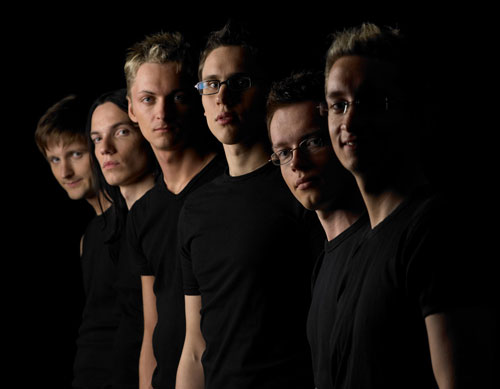
The a capella group Cosmos includes, from left to right, Andris Sējans, Reinis Sējāns, Juris Lisenko, Jānis Šipkēvics, Jānis Strazdiņš and Jānis Ozols. (Publicity photo)
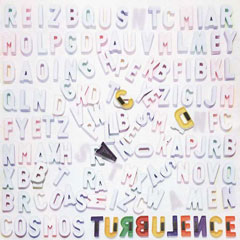
The most recent album by Cosmos is Turbulence, released in April on the MICREC label.