Armands Ābols, a Latvian-born pianist who studied under Ilze Graubiņa and now lives in Chile, is returning to the United States for a six-city tour that includes a performance during the annual U.S.-Baltic Gala in Washington, D.C.
Ābols, born in 1973, is noted in part because in 1992 he became the youngest participant to win the Grand Prix Gold Medal at the Maria Canals International Piano Competition in Barcelona, Spain, according to the Latvian Cultural Association TILTS, which is organizing the concert tour. (Another Latvian, Vestards Šimkus, won the competition this year.)
Ābols studied at the Emīls Dārziņš Music School and the Latvian Academy of Music in Rīga, where he worked with Graubiņa. He also has studied at the Cleveland Institute of Music in the United States.
He also has been awarded in piano competitions in Chile, the United States and Andorra. Ābols has performed with the Royal Philharmonic Orchestra, the Gulbenkian Chamber Orchestra, the Latvian National Symphony Orchestra, the Bogota Symphony Orchestra, the Chile Symphony Orchestra, the Providencia Symphony Orchestra, the Concepcion Symphony Orchestra and the Camarata de los Andes.
Ābols now lives in Valdivia, Chile, where he is a professor in the music conservatory of the Universidad Austral de Chile.
Ābols has recorded several compact discs. In 2004 and 2005, Ābols released the two-volume CD set Bicentenario del piano chileno (Bicentenary of Chilean Piano Music), an homage to Chilean composers recorded to honor the country’s bicentennial.
During the U.S. tour, Ābols is scheduled to perform in:
- Michigan at 4 p.m. May 3 in the Union Cabaret, 125 S. Kalamazoo Mall, Kalamazoo. Adult tickets are USD 30 if reserved before the concert or USD 35 at the door. Tickets for senior citizens and students are USD 25. The concert is presented by the Kalamazoo Music Association. For further information, telephone +1 (269) 383-2474.
- Ohio at 7:30 p.m. May 8 at the United Latvian Ev. Lutheran Church of Cleveland, 1385 Andrews Ave., Lakewood. Admission is by a suggested donation of USD 25. The concert is presented by the Cleveland Latvian Concert Association. For information, call +1 (216) 651-0486.
- Minnesota at 4 p.m. May 10 in the First Presbyterian Church, 512 Third St. S.W., Rochester. Admission is be freewill offering. The concert is presented by Festival of Music. For information, telephone +1 (507) 282-1618.
- Again in Minnesota at 7 p.m. May 12 in the Latvian Ev. Lutheran Church of Minneapolis and St. Paul, 3152 17th Ave. S., Minneapolis. Admission is by suggested donation of USD 20. The concert is presented by the Minnesota Latvian Concert Association. For information, call +1 (651) 905-0950.
- The District of Columbia on May 16 during the U.S.-Baltic Gala at the Renaissance Mayflower Hotel, 1127 Connecticut Ave. N.W., Washington. The concert is presented by the U.S.-Baltic Foundation and the Embassy of Latvia. For further information, visit www.usbaltic.org.
- Illinois at 3 p.m. May 17 in the Latvian Community Center, 4146 N. Elston Ave., Chicago. Admission is USD 30, but for members of the Chicago Latvian Association, senior citizens and students, tickets are USD 15. For information, telephone +1 (847) 475-8152.
The late Canadian-Latvian composer Tālivaldis Ķeniņš once said, “Armands Ābols performed my ‘Diversities’ better than anyone I have heard. I admired his dedication, hard working qualities and musicianship.”
From his U.S. tour, Ābols is to head to Latvia for a May 23 concert in Sigulda’s Baltais Flīģelis concert hall.
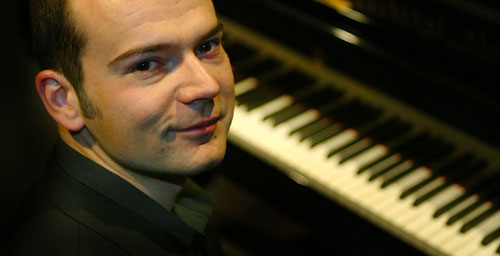
Pianist Armands Ābols, who now teaches in Chile, returns in May to the United States for a six-city tour. (Publicity photo)
Andris Straumanis is a special correspondent for and a co-founder of Latvians Online. From 2000–2012 he was editor of the website.


