Catalogue covers more than 100 years of symphonic music

A new catalogue covering nearly the entire history of Latvian symphonic music has been published by the Latvian Music Information Centre.

Titled Latvian Symphonic Music, the catalogue begins in 1880 with Andrejs Jurjāns’ “Symphonic Allegro,” which is considered the first Latvian symphonic work, and ends in 2008.

Compiled by composer Mārīte Dombrovska, and produced by the Latvian Music Information Centre in cooperation with the Latvian Academy of Music and the National Library of Latvia, the book lists more than 1,700 symphonic works of 144 Latvian composers, from Ādolfs Ābele to Arvīds Žilinskis.

The text of the catalogue is in Latvian and in English, with English translations for all of the works, as well as notes about instrumentation, time of the work, and, if applicable, the publisher of the score and if a recording is commercially available.

The catalogue also includes a reference list for all abbreviations used in the catalogue, and is divided into two sections—symphonic music and vocal symphonic music.

One can find all the symphonic works composed by well known Latvian composers such as Pēteris Vasks, Jānis Ivanovs and Artūrs Maskats, as well as diaspora Latvian composers such as Pēteris Aldiņš, Dace Aperāne and Andrejs Jansons.

For further information, visit the Web site of the Latvian Music Information Centre, www.lmic.lv.
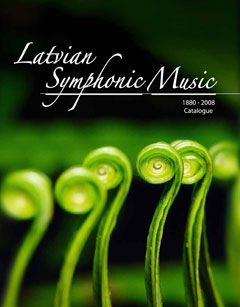
Latvian Symphonic Music

The catalogue Latvian Symphonic Music covers the period 1880-2008.

Egils Kaljo is an American-born Latvian from the New York area . Kaljo began listening to Latvian music as soon as he was able to put a record on a record player, and still has old Bellacord 78 rpm records lying around somewhere.

Latvia’s jobless rate is EU’s highest

Unemployment in Latvia, where one in five workers is without a job, is the highest in the European Union, according to a new report from Eurostat.

The Luxembourg-based statistics agency reported Dec. 1 that seasonally adjusted unemployment in Latvia reached 20.9 percent in October, topping even Spain, where the rate was 19.3 percent. A year earlier, Latvia’s unemployment stood at 9.1 percent.

Average unemployment across the 27 countries that are members of the European Union reached 9.3 percent in October 2009, up from 7.3 percent in October 2008. The lowest unemployment rates, according to Eurostat, were recorded in the Netherlands (3.7 percent) and Austria (4.7 percent).

The average jobless rate for youth—persons younger than 25—reached 20.7 percent in October across the EU, according to Eurostat. Spain recorded the highest youth unemployment, 42.9 percent, followed by Latvia, 33.6 percent. The lowest youth unemployment was in the Netherlands, 7.2 percent.

Regional data reported by Latvia’s State Employment Agency (Nodarbinātības valsts aģentūra, or NVA) show that the Rēzekne area remains the worst in terms of joblessness. The unemployment rate there reached 30.4 percent in October, NVA officials told a Saeima commission on Nov 17. The lowest unemployment rates were found in the Tukums region (10 percent) and the Ventspils region (10.8 percent).

However, Director Baiba Paševica also noted that unemployment in Kurzeme has grown markedly, a trend usually characteristic of Latgale, according to a NVA press release. The Kuldīga region, for example, recorded unemployment of 21.2 percent in October. By contrast, Latgale’s largest city, Daugavpils, had one of the lowest unemployment rates, 11.7 percent.

NVA officials also noted that the ranks of the unemployed include more women (52 percent) than men (48 percent). That is explained in part by the fact that layoffs have been most prevalent in sectors that traditionally employ more women, such as government, education, medicine and social work.

Andris Straumanis is a special correspondent for and a co-founder of Latvians Online. From 2000–2012 he was editor of the website.

Piedalieties eseju konkursā ‘Veltījums Oskaram Kalpakam’

Oskars Kalpaks ar saviem vīriem, kuru skaits sākotnēji bija tikai nedaudz vairāk kā divi simti, devās cīnīties par neatkarīgu Latviju, par savu valsti. Kalpaka bataljona sastāvs nebija liels, bet tie, kas tajā sapulcējās, bija uzticīgi brīvas Latvijas ideāliem līdz galam. Jau senie karotāji skandējuši : “Uz ežiņas galvu liku, sargāj’ savu tēvu zemi; labāk manu galvu ņēma, nekā manu tēvu zemi”. Šodienas Latvijā, kad neatkarība bijusi jau 20 gadu, Kalpaka gars daudzviet zudis. Ko, Tavuprāt, šobrīd darītu Oskars Kalpaks, ko pulcinātu savā bataljonā, kur ietu, kur vestu mūs un mūsu Latviju?

Eseju konkursā par Oskaru Kalpaku aicināti piedalīties jebkurš Latvijas skolēns, kā arī ārpus Latvijas dzīvojoši latviski runājoši skolēni. Konkurss notiek no 2009. gada 18. novembra līdz 2009. gada 24. decembrim, un tajā ir aicināti piedalīties 8.-12. klašu skolēni. Konkursu organizē Demokrātiski patriotiskā biedrība ar politiskās partijas Pilsoniskā Savienība atbalstu. Žūrijas priekšsēdētājs būs Ģirts Valdis Kristovskis, Pilsonīgās savienības priekšsēdētājs.

Darbi iesūtāmi gan pa pastu “Eseju konkursam” Aspazijas bulvāris 24, Rīga, LV – 1050, gan uz e-pastu esejakalpaks@inbox.lv. Darba apjoms ir 3-4 lpp., datorrakstā (burtu lielums 12, rindu atstarpe 1,5). Titullapā jānorāda vārds, uzvārds, skola, klase; pielikumā: mājas adrese, e-pasts, telefons, ka arī precīza skolas adrese.

Eseju vērtēšana būs kategorijās: darba orģinalitāte, emocionālais vēstījums un literārais sniegums. No katras mācību iestādes lūgums iesūtīt ne vairāk kā 6 darbus. Konkursa rezultāti tiks izziņoti 2010. gada 6. janvārī mājas lapā www.kalpaks.lv. Galvenās vietas ieguvēji balvā iegūs apmaksātu ceļojumu uz Eiropas Parlamentu Briselē, ko dāvā Eiropas Parlamenta deputātes Inese Vaidere un Sandra Kalniete.

Papildinformācija par konkursu pa tālruni +371 29817107 un mājas lapā www.kalpaks.lv.