Latviešu studenti Lielbritānijā

image

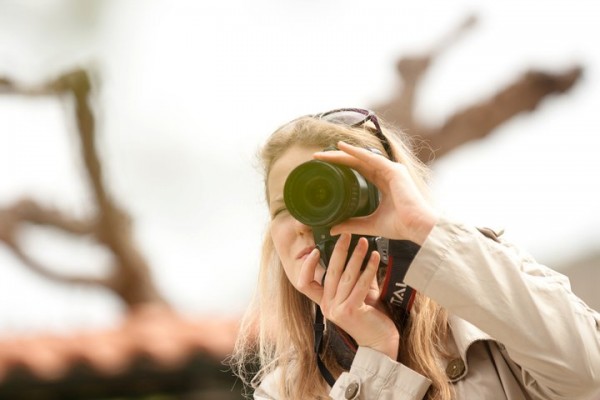
Līva studē arhitektūru University of Westminster. Foto: Boaz Manger.

Apvienotā karaliste vienmēr ir bijis iecienīts galamērķis augstākās izglītības ieguvējiem visā pasaulē. Ik gadu arī arvien vairāk latviešu studentu pēc vidējās izglītības iegūšanas dodas uz kādu no Lielbritānijas universitātēm, bet kas tieši ir iemesli, lai nestudētu Latvijā un cik viegli šeit ir integrēties latviešu studentiem?

Uz sarunu aicināju četrus jauniešus kas šobrīd studē bakalaura programmās Lielbritānijā – Signi Rudoviču (studē angļu literatūru Edinburgh Napier University), Artūru Analtu (produktu dizains Central Saint Martins univeristē, Londonā), Līvu Kreisleri (arhitektūra University of Westminster) un Aivaru Āķi (filmu studijas Middlesex universitātē, Londonā).

Visi sarunbiedri par labu izglītības iegūšanai Lielbritānijā min mācību kvalitāti un valodu. Ne tikai mācību process, bet arī pieejamās tehnoloģijas un resursi nereti spēlē nozīmīgu lomu universitātes izvēlē. “Oksfordā ir filmu kurss, taču tas ir ļoti akadēmisks, ideāls topošajiem filmu kritiķiem. Mācoties režiju, ir nepieciešami cilvēki, kas strādā industrijā, tāpēc izvēlējos savu universitāti, kur mani māca nozares eksperti un pagājušajā gadā skola atvēra jaunu ēku, kur tehnoloģiski viss ir radīts tieši filmu studijām,” stāsta Aivars.

Bet cik ievērojami atšķiras izglītība, ko var iegūt Latvijā un ārzemēs? Viennozīmīgas atbildes nav, jo studenti uzskata, ka tas ir atkarīgs no izvēlētās studiju programmas. Kamēr Artūrs stāsta par to, kā Rīgas Dizaina un Mākslas vidusskola, kuru viņš absolvējis, iespējams, izglītības līmeņa ziņā var pielīdzināt pasaulslavenajai Central Saint Martins, Aivars uzskata, ka nav it neviena argumenta par labu filmu studijām Latvijā tieši tehnoloģiju trūkuma un novecojušās mācību programmas dēļ. Līva piemin pasniedzēju atdevi: “Mani skolotāji ir ļoti iedegušies par to, ko dara, ir aizrautīgi. Latvijā bieži pasniedzējiem pat varētu teikt, ka riebjas savs darbs, bet šeit tā degsme ir lielās konkurences dēļ, kad tikai paši labākie tiek pie mācīšanas.

Arī fakts, ka izglītību Skotijā ir iespējams iegūt par brīvu, spēlēja nozīmīgu lomu Signes izvēlē studēt Edinburgā. Neskatoties uz mācību maksu, ko visiem studentiem sedz Student Finance serviss, dzīves dārdzība liek meklēt darbu pašiem vai paļauties uz vecāku palīdzību. Signe strādā divos pusslodzes darbos, lai apmaksātu savus tēriņus, bet Aivars maksā par it visu, strādājot par uzraugu restorānā: “Tas ir brīnišķīgi, ja vecāki var atbalstīt, bet es uzskatu, ka te katrs var apvienot studijas ar darbu.”

Kaut arī zināšanu ziņā jaunieši macībām jutušies labi sagatavoti, par pašu mācību procesu nevienam lielas nojausmas pirms ierašanās nebija. Tas bieži spēlējis lielu lomu iejušanās ziņā. Artūrs min, ka sākumā studijas nepavisam nav patikušas, jo uzdotie uzdevumi likušies bērnišķīgi, taču palēnām tie kļuvuši sarežģītāki un izveidojušās draudzīgas attiecības ar pasniedzējiem. Jaunieši piekrīt, ka daudz vieglāk ir, ja te ir kāds, kurš sākumā var pastāstīt par ikdienu, sākot no transporta sistēmas un beidzot ar izklaides vietām, bet tas ne vienmēr nodrošina ātrāku iejušanos šejienes sabiedrībā.

“Mani pārsteidza tas, ka pilsētā, kur viegli ir visu ko darīt un būt notikumu centrā, tu patiesībā jūties ārpus visa. Manas rožainās bērnības atmiņas par skaisto Londonu izzuda drīz pēc atbraukšanas,iespējams, tāpēc, ka man nebija vietējo draugu, kas ierādītu interesantas, jaukas vietas, kur aiziet un justies kā “savējai”,” stāsta Līva. Signe gan piemin pārmērībo laipnību, slikto maizi un laikapstākļus, pie kā sākumā bijis jāpierod, taču atzīst, ka nu tas viss kļuvis par daļu no pierastās un patīkamās ikdienas.

Pievēršoties jautājumam par nākotni pēc studiju beigšanas, jaunieši ir pārliecināti par to, ka būs pietiekami konkurētspējīgi darba vidē, taču par atgriešanos Latvijā domas dalās. Līva, kas savu nākotni noteikti saista ar dzimteni, stāsta: “Pat ja man Latvijā uzreiz nebūs darba, es zinu, ka es tādu sev varētu radīt. Man ir sajūta, ka es diezgan labi pārzinu savu lauciņu un es redzu, cik viegli ir cilvēkiem, kam patīk tas, ko viņi dara. Ja ir kombinācija, kad vari uzturēt sarunu, uzrakstīt e-pastu, turēt doto vārdu, un patiesībā kaut ko saproti, tad nav īpašas nozīmes, kur un ko dari, bet tas sanāks.”

Artūrs un Signe gan nav tik pārliecināti – priekšā vēl pietiekami daudz laika, lai par to konkrēti nedomātu un lai arī kas notiktu, saikne ar Latviju nav sarauta – Artūrs strādā pie projektiem gan Rīgā, gan Londonā un Signe ir pārliecināta, ka darbu atrastu: “šo trīs gadu laikā, kamēr esmu šeit, šķiet, ka ekonomiskā situācija Latvijā ir manāmi uzlabojusies.” Aivars savukārt savu nākotni ar Latviju nesaista: it kā būtu ļoti vienkārši braukt atpakaļ un iegūt darbu, piemēram, Rīgas Filmu studijā, bet tas būtu vieglākais ceļš. Taču, ja mana filma, ko veidošu kā bakalaura darbu nokļūs labos festivālos, varu strādāt labās filmu studijās tepat Londonā.”

Viena lieta gan vieno visus sarunbiedrus – enerģija un apņēmība, ar ko viņi stāsta par studijām un savu dzīvi šeit. Šķiet, ka tā ir tāda latviešu mentalitāte un Līva piekrīt: “Man šķiet, ka šeit cilvēki nāk uz universitāti lekciju atvēlētaja laikā un pēc tam viņiem sākas citas lietas, bet man šķiet, ja es neizdaru maksimumu, tad es savā ziņā neatmaksāju manu vecāku ieguldīto naudu manā izglītībā.” Arī Artūrs uzskata, ka esot šeit, jāstrādā ar pilnu atdevi: “dažiem no kursabiedriem tikai tagad paliek 18, ballītes galvā un tā…es atbraucu uz šejieni strādāt un kaut gan ik pa laikam izeju ārā, tas man nav tik svarīgi. Kad aizbraucu uz Rīgu, tad varu iet ballēties.”

Līva un Aivars min arī vispārīgu pieredzi, ko dod dzīve tālu prom no mājām: “Latviešiem dažreiz ir nostāja, ka aizbraucot tu pievil valsti un vecmāmiņas skatās uz tevi ar skumjām acīm, domājot par to, kā atsūtīt pīrādziņus, bet tas “trimdas” priekšstats pamazām izzūd. Manuprāt, jebkuram ir ļoti svarīgi aizbraukt prom no mājām un saprast, cik ļoti gribas atbraukt atpakaļ citādi vienmēr citur zāle būs zaļāka.”
 

image

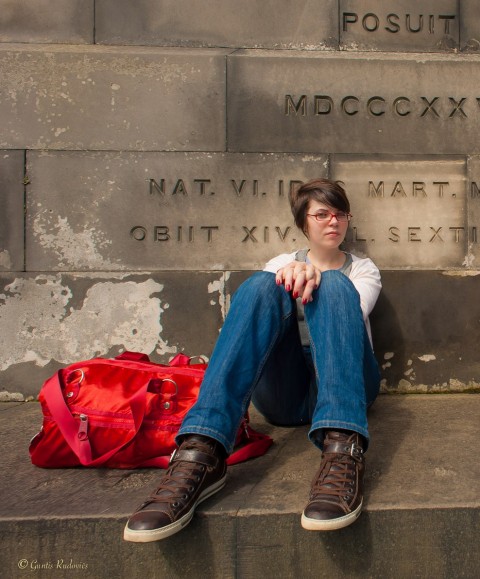
Signe studē angļu literatūru Edinburgh Napier University. Foto: Guntis Rudovičs.
The bright lights of Jelgava

image

Students getting some after hours education at Ezītis Miglā. Photo: Filips Birzulis.

The words “party central” and Jelgava are not often used in the same sentence. But this is unfair to the capital of Zemgale, because behind its gritty façade, the place has lots of ways to get an awfully sore head the next morning.

Thanks to the University of Agriculture, Jelgava has a large population of students, who like the species everywhere subsist on cheap booze and pot… noodles. And because these bright scholars go home to the farm on weekends, their big night out is Wednesday.

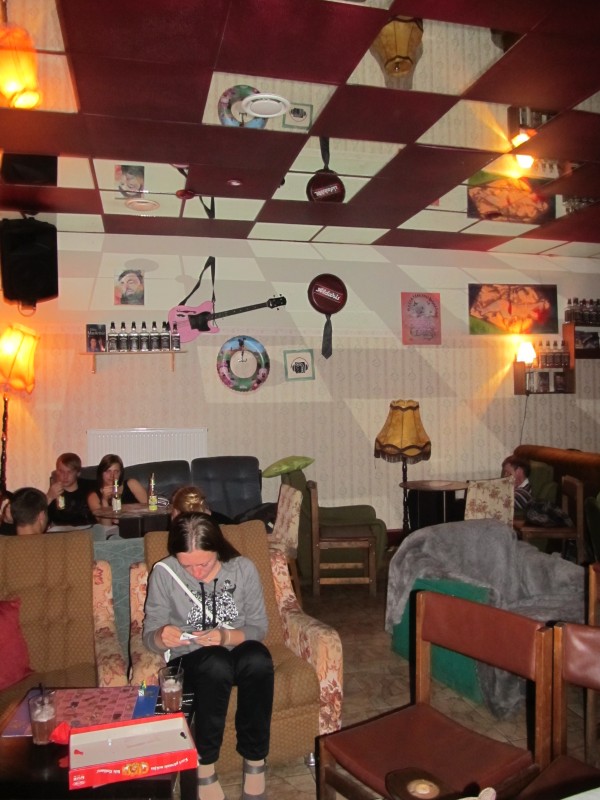
The first port of call on a typical midweek evening is Ezītis Miglā, the southern branch of the alternative club in Old Riga of the same name. Jelgava’s “Hedgehog in the Fog” is obscurely located next to a curtain shop in the middle of the town bus station, so there’s absolutely no excuse for driving home drunk. When they’re not asleep in the worn out couches, the shaggy patrons are a friendly bunch and the collection of bras hanging over the bar suggests relations may get even warmer later on.

If you thought a dive couldn’t get any skankier than Ezītis, wait until you hit Melno Cepurīšu Balerija. “Black Cap Bar/Gallery” was originally funded by the EU as a youth centre, but it’s hard to see where the Brussels money was spent. The furnishings appear to have come from the same second hand store as the patrons’ anoraks, and the graffiti “art” on the walls would not disgrace itself on a railway bridge. Still, the beer is cheap, the wi-fi is free and guest bands play everything from death metal to reggae.

A slightly classier breed of youngster can be found at Tami-Tami. Set in Jelgava’s student dormitory district, the bright lighting and posters of smiley faced 1950’s-style squares make a stark contrast to the decaying apartment blocks nearby. The filling pizzas and prompt service draw respectable locals as well as students, and when Latvia is playing hockey on TV you can barely squeeze in. Upstairs from Tami-Tami is Jelgavas Krekli, the Jelgava outpost of the veteran Riga music venue Četri Balti Krekli. Krekli opens at 10 PM on Wednesdays and patrons go epileptic to deafening Latvian pop until sunup. During our visit, the place was overrun by students holding a “doctors and nurses” party, checking newcomers over with stethoscopes and prescribing glasses of carrot juice.  Who said staying up late was unhealthy?

For an alternative place to dance ‘til dawn, head towards Jelgava Market. In addition to babushkas haggling over potatoes, this neighbourhood is home to Tonuss, the elder statesman of Jelgava nightspots. Housed in the former town swimming baths, the club recently celebrated its 18th birthday – a remarkable survival act given changing tastes and fluctuating economics. Snobbier locals swear they wouldn’t be seen dead at Tonuss, but come Monday morning they show up in photos on the club’s webpage… With gyrating go-go dancers, visiting Russian acts and local Latvian groups and three dance floors, there’s just too much fun to miss. Oh, and they recently added a ten-pin bowling centre.

If mangy dreadlocks and bottle blondes aren’t for you, Jelgava also has some more sophisticated venues. With Old Masters reproductions on the ceiling panels and sports on plasma screens to stare at, and karaoke on weeknights and live music on weekends to listen to, you’d have to have chronic ADHD not to have fun in Plate. Pronounced Plar-the, which means “LP record” in Latvian, the bar of the stately Hotel Jelgava attracts an engaging mix of foreigners and local barflies for cold beer and tasty pizza.

A few minutes’ walk away, the chef at Chocolate and Pepper tries to please everyone with a menu that swings from sushi and stir fry to burgers and “chicken chest in Chinese way.” And the barman must busy making over 100 different cocktails. But even if they are stretching themselves a bit thin, the place gets thumbs up for its soft lighting and subtle music, a stylish coffee-and-orange interior, and the high spirited Latvian yuppies celebrating a birthday there during our last visit. It seems that in Jelgava even folks over thirty know how to live it up.

By Philip Birzulis and Jared Grellet.

image

Old Masters and Jelgava barflies at Plate. Photo: Filips Birzulis

image

www.travelinlatvia.lv

Cuisine à la Valmiera

image

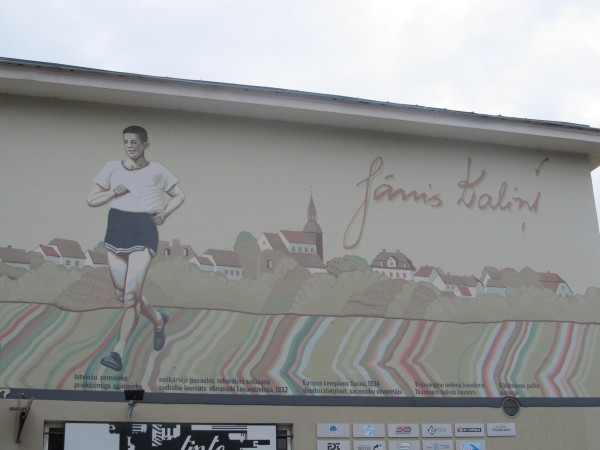
A wall mural honoring Valmiera sports legend Jānis Daliņš. Photo: Philip Birzulis.

Latvians Online is pleased to announce a new column about travel in Latvia – unusual destinations and the gastronomic delights they offer.

Flattened by frequent wars and smudged by heavy industry, Valmiera is not a beautiful looking place. But what this city of 25,000 in the heart of Vidzeme lacks in prettiness it more than makes up for with a winning attitude.

Take sports. To date, Valmiera’s athletes have brought home two Olympic golds (courtesy of BMX rider Māris Štrombergs in 2008 and 2012) plus a silver and bronze (for walkers Jānis Daliņš and Adalberts Bubenko in 1932 and 1936 respectively.) Add in a slew of medals won for Germany by champion dressage horse Rusty, born and bred near Lake Burtnieks just north of Valmiera, and Valmiera’s per capita Olympic ranking flies off the charts.

The town also excels in less sweaty ways. While the rest of Latvia struggles back after the crisis, its factories churn out stuff from fibreglass to fire extinguishers. Valmiera is home to one of Latvia’s top theatres, and a string of bars and clubs keep the students of Vidzeme University busy after school. And Valmiera is also home to a clutch of very good restaurants.

Top of the food chain is Dikļi Palace. This magnificent neo-Baroque manor just west of Valmiera hosted the first ever play performed in Latvian (a translation of Schiller’s The Robbers staged in 1818 with local peasant actors) and the first song festival in 1864, and today it is showing the nation how to cook. Celebrity chef Valters Zirdziņš creates menus based around game and produce so fresh and local you can literally watch farmers offering produce at the kitchen door. Hook some “matje herring tartar, rye bread, quail egg and cream”, swim over to “sturgeon fillet prepared in citrus butter with cauliflower puree and ginger carrot” then tipple with Valmiermuiža dark beer ice-cream with raspberries and caramel. The main dining room has a hunting lodge feel and a smart casual dress code, and if that’s a bit plebeian one may reserve the private dining suite. On the summer terrace you can savour Latvian-bred steaks and magnificent views of the manor gardens. And if you can’t move a muscle after dinner, you can crash in the four-star hotel littered with antiques or enjoy a massage with beer hops in the spa.

You can also find an elegant atmosphere and haute cuisine with local ingredients at Rātes Vārti. One of Valmiera’s oldest restaurants, the “Town Hall Gates” is a genteel, unrushed island in the centre of town. Park yourself in the Provencal-style dining room or the street-side terrace and feast on “fried river trout in herb butter” or “cheese parfait with black plumb tea sauce”. The restaurant’s owners also cater for big celebrations at the Brūtes (Sweethearts) events complex just south of Valmiera.

A few minutes’ walk from Rātes Vārti, Liepziedi un Rozmarīns is one of Latvia’s best pizzerias. Set picturesquely between Valmiera’s castle ruins and the Gauja River in a centuries-old bakery, “Linden Blossoms and Rosemary” is a marriage between fine Vidzeme produce and the Žentiņš family’s love affair with all things Italian.  You won’t find any pineapple or pickles here; only traditional toppings are used and the pies are baked to crispy perfection in a wood-fired oven. The “Al Salmone” and the “Frutti di Mare” are especially scrumptious. In summer groups of ten or more can attend the “pizza school” at the owners’ property “Vīnkalni” near Valmiera, where you learn to roll dough and sprinkle cheese amidst the rolling hills and storks’ nests. Of course, you get to eat your creations and a coffee and tiramisu are included too.

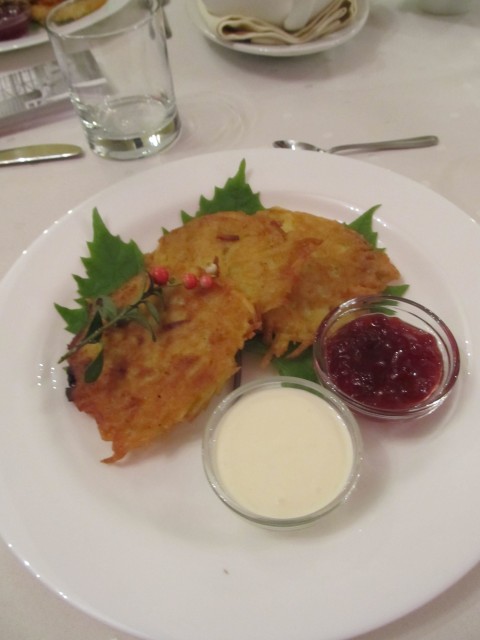
Compared to other towns its size, Valmiera positively buzzes after dark.  It even has its own theatre restaurant, Ceturtais cēliens, in the basement of the Valmiera Theatre. Joyfully mingling thespian nostalgia with voluptuous seventies furnishings, the dishes at “Act Four” like “beef-mushroom stroganoff in brandy sauce” and “dark chocolate mousse with strawberry soup” also sound a bit flared and side-burned. But an occasional time warp can be fun, and the potato pancakes we devoured last visit were outstanding. If you want to chew to a different beat, bop over to the Parks jazz club. On nights when Latvia’s top jazz, blues and rockabilly outfits play you won’t care if the food is cold (and you’ll be lucky to find a table), but when things quieten down they do nice lasagna and ribs.

image

Potato pancakes at Ceturtais Cēliens. Photo: Philip Birzulis.

image